
Trump Orders Federal Contractors to Check With White House Before Answering Congress, Threatening Their Contracts

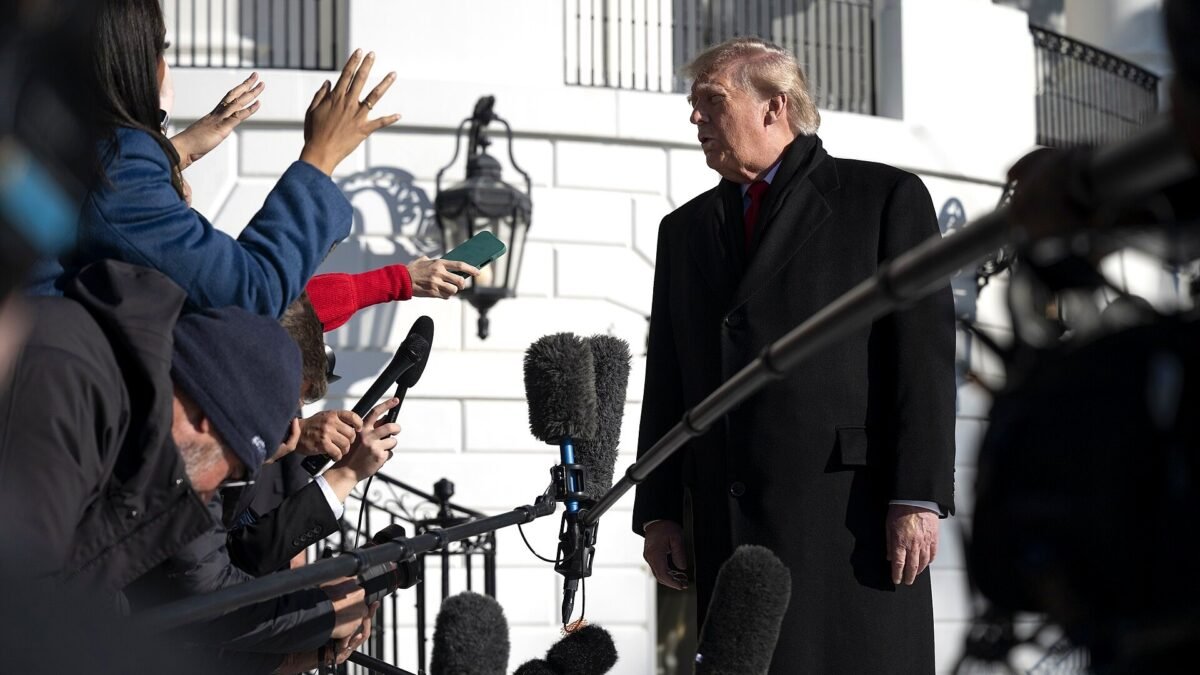
President Donald Trump has ordered every federal contractor in the United States to clear any inquiry from Congress with the White House first, and to withhold any material the administration considers privileged, in a sweeping executive order that threatens companies with the loss of their government contracts if they refuse.
Executive Order 14438, signed late on Friday and published by the White House in the early hours of Saturday, applies to all federal contractors and subcontractors — what the Associated Press described as a universe of tens of thousands of businesses. It directs them to notify the White House and the contracting agency of any pending or future congressional request concerning their communications or work with the executive branch, to coordinate with the administration on an “appropriate response”, and to “abide by any instructions” to withhold communications that the White House or the agency has determined are protected by executive privilege.
Agencies are told to inform contractors of the new obligations promptly, and the Office of Management and Budget has been instructed to develop guidance on how compliance will be enforced. The order warns that a contractor or subcontractor which fails to comply may face the termination or cancellation of its contracts and potential debarment or suspension from future federal work.
The order is the administration’s latest and most far-reaching step to resist the oversight investigations Democrats are expected to launch when they take control of Congress in January, after winning sweeping majorities in the midterm elections held on 3 November. Democrats have made government contracting one of their top investigative targets, pointing to federal money flowing to companies linked to the president’s family, particularly at the Pentagon, and have promised inquiries into subjects ranging from the Department of Homeland Security’s contracting to the construction of the White House ballroom.
Democratic leaders reacted with fury on Saturday. Representative Jamie Raskin of Maryland, who is poised to chair the House Judiciary Committee when Democrats take control in January, called the order “unprecedented and blatantly unlawful”. Representative Robert Garcia of California, the top Democrat on the House Oversight Committee, described it as part of “the administration’s blatant attack on Congress’ constitutional right to conduct oversight” and added: “We’re just getting started.”
What the order requires
The executive order, titled “Protecting the Executive’s Privileges and Enhancing Efficiencies in Federal Contracting”, rests its case on the doctrine of executive privilege, which the White House notes the Supreme Court has recognised as “inextricably rooted in the separation of powers under the Constitution”. The order argues that the executive branch must be able to work closely with its employees and contractors on sensitive matters “without fear that confidential information will be released to unauthorized third parties”.
Its central requirements, set out in Section 2, are threefold. First, every federal contractor must immediately notify the White House and the relevant contracting agency of any congressional request relating to its communications or work with the executive branch, whether the request is already pending or arrives in future, and must follow any instruction to withhold communications that the White House or the agency has decided are protected by executive privilege. Second, agencies must coordinate with the White House and with contractors on appropriate responses to such requests, including the application or assertion of any relevant privileges. Third, the same rules apply to subcontractors working on a federal contract, and agencies must make prime contractors responsible for ensuring their subcontractors comply.
Section 3 requires each agency to inform all of its contractors and subcontractors of the obligations promptly and to require compliance, while the Office of Management and Budget is directed to produce guidance on how agencies should secure compliance and coordinate with the White House. Section 4 sets out the enforcement threat: agencies “shall consider” taking all appropriate action against a contractor or subcontractor that fails to comply, “including the potential termination or cancellation of contracts and the potential debarment or suspension of contractors”.
The order also contains a severability clause, so that if any provision is struck down by a court, the remainder would stand, and a standard provision stating that it creates no right enforceable against the United States by any party.
The White House framed the move in a companion fact sheet as “protecting executive privileges from congressional overreach”. It argued that some congressional leaders had tried to intrude on executive prerogatives by “harassing private companies that contract with the federal government”, and that the order would ensure contractors protected the executive branch’s interests and rights while work was carried out economically and efficiently.
The order’s text argues that a lack of coordination between contractors and the executive branch undermines the ability of contractors to provide economical and efficient goods and services, and warns that if contractors disclose information without notice, the government may have to intervene or engage in separate litigation to defend its rights. It adds that the executive branch engages in sensitive and vital work with contractors, including on matters of national and homeland security, and that if the White House and agencies cannot be assured that communications will remain confidential, they will be “chilled from sharing sensitive information with contractors”, which would stymie critical government programmes.
Why now: the January countdown
The order lands in the middle of a rapidly escalating confrontation between the White House and the incoming Democratic majority in Congress. Democrats officially wrested control of the House on 4 November, the day after the midterm elections, and the party’s leader, Hakeem Jeffries, has already won the nomination to become Speaker, by 251 votes to 11 in the Democratic caucus. The new majority takes power in January, and its leaders have spent the weeks since the election openly preparing a wave of investigations into the Trump administration.
Government contracting sits at the centre of those plans. According to the Associated Press, Democrats have made contracts one of their top investigative targets, noting that federal money has been flowing to companies linked to Mr Trump’s family, particularly at the Pentagon. They have also said they will examine the influx of contracts granted by the Department of Homeland Security in Mr Trump’s second term. Representative Henry Cuellar, the ranking Democrat on the House Appropriations Homeland Security subcommittee, told CNN: “Once we have control, then there’s a lot more we can do on guardrails,” referring to bringing the funds under his committee’s oversight.
Democrats have also spoken of investigating the work Mr Trump has ordered across Washington, including the construction of the White House ballroom, the repairs to the Lincoln Memorial Reflecting Pool and the planned renovations of the Kennedy Center. Senator Richard Blumenthal, who will chair a key Senate investigative panel, earlier this month sent letters to a group of companies asking them to cooperate with a planned inquiry into the ballroom. Other subjects Democrats have raised include the administration’s rate of Federal Emergency Management Agency grant denials for Democratic states, its handling of the Epstein files, and the business relationships cultivated by the president’s family.
The preservation of evidence has already become a flashpoint. This week, Mr Garcia sent letters directing members of Mr Trump’s family and top administration officials to preserve documents ahead of the January investigations. The White House counsel, Will Scharf, sought to dismiss those requests, arguing in a letter to Democratic lawmakers that they are not yet in the majority and cannot compel compliance. Mr Scharf also suggested in a recent letter to Mr Garcia that some congressional investigations may amount to “blatant criminality”, and, according to reports, threatened his own criminal investigation into the Democrats’ motivations.
On Monday, Mr Scharf told federal agencies that they must seek approval from his office and the White House’s Office of Legislative Affairs before agreeing to appear before Congress. Friday’s executive order extends the same logic beyond government employees to the private companies that do the government’s work — a far larger group, and one that holds much of the paperwork, emails and billing records that investigators would want to see.
The Democratic response
Mr Raskin’s statement on Saturday was the sharpest. “Federal contractors are paid with taxpayer dollars, not Trump’s personal billions,” he said. “Public contractors have both a duty and a right to speak truthfully when Congress calls, and Congress has a duty to investigate and stamp out all the waste, fraud, kickbacks, shakedowns and corruption choking the government and driving up costs. After two years of MAGA Republicans in Congress colluding with Trump Inc., accountability and the Rule of Law are coming.”
Mr Garcia, who will chair the House Oversight Committee in the new Congress, condemned the order on Saturday as “the latest in the Trump Administration’s blatant attack on Congress’ constitutional right to conduct oversight”. He added that despite the administration’s efforts to impede investigations, “we’re just getting started”. In a statement issued after Democrats won the House on 4 November, Mr Garcia had told the administration to “lawyer up”.
The criticism was echoed by Democrats in the Senate, where Mr Blumenthal’s panel is preparing its own inquiries. The party’s argument, in essence, is that the order turns the government’s commercial leverage — the power to award or withdraw contracts worth hundreds of billions of dollars a year — into a tool for controlling what Congress is allowed to learn.
The legal questions
Whether the order can achieve what it promises is far from clear, and legal analysts quoted in early coverage of the move raised several doubts. Executive privilege is a real doctrine: presidents of both parties have long used it to resist congressional inquiries, and the Supreme Court has recognised it as a protection for the confidentiality of presidential deliberations. But the protection is far from absolute. In the landmark 1974 case of United States v. Nixon, the court held unanimously that the privilege could not be used to withhold evidence in a criminal case, and privilege claims against Congress have repeatedly produced messy, protracted legal fights over whether the doctrine applies at all.
The new order raises a question that has rarely been tested: can a private company claim the president’s privilege on the president’s behalf? Analysts noted that it is unlikely a contractor could invoke executive privilege to ignore a congressional or court subpoena, since the privilege belongs to the president, not to the company, and a subpoena is a legal compulsion backed by the courts. What the order’s notification requirement may do, however, is buy the White House time — alerting the administration the moment a request arrives so that the Justice Department can mount a legal challenge before any documents change hands.
A second question concerns existing contracts. It is uncertain whether the administration can unilaterally impose new conditions on contracts that have already been signed, or add requirements that Congress has not specifically authorised. Courts have often rejected such attempts by the executive branch to rewrite the terms of federal procurement after the fact. The order itself says it must be implemented “consistent with applicable law”, and its enforcement section says agencies “shall consider” action against non-compliant contractors — language that leaves room for argument about how much discretion agencies actually have.
A third question is practical rather than legal. Contractors caught between a congressional subpoena and a White House instruction to withhold documents would face competing legal risks: defying Congress can mean contempt proceedings, while defying the White House can mean losing the contract that sustains their business. For the tens of thousands of smaller subcontractors covered by the order — firms that may have no in-house legal team and no experience of constitutional disputes — the safest course may simply be to say nothing at all, which is precisely the chilling effect critics say the order is designed to produce.
None of these questions has been answered by a court, and none is likely to be answered quickly. Privilege disputes between the branches of government are among the slowest-moving cases in American law, and they are frequently resolved by negotiation, by the passage of time, or by a change of administration rather than by a definitive ruling.
Analysis: the contractor as the new front line
What makes this order significant is not only what it says, but whom it targets. For two centuries, fights over executive privilege have been fought between the president and Congress directly — the White House refusing to hand over documents, Congress threatening contempt, the courts refereeing. Friday’s order moves the fight onto new ground: the private sector. The federal government spends hundreds of billions of dollars a year through contractors, and those companies hold the records of how that money was spent — who was hired, what was charged, which decisions were taken and by whom. By inserting the White House between Congress and those records, the administration is seeking to control the evidence base of the investigations before they have even begun.
That is why the order’s enforcement mechanism matters so much. A directive to government employees is backed by the chain of command; a directive to a private company must be backed by something else. Here, the backing is commercial: comply, or risk losing the contract and being barred from future federal work. For a large defence or technology contractor, federal work may be a modest share of revenue; for a smaller firm, it may be everything. The order therefore creates a powerful incentive for precisely the companies with the least capacity to resist — and the least to gain from a legal fight — to do exactly what the White House asks.
The timing is equally deliberate. The order was signed on a Friday evening, six weeks before the new Congress is seated, and days after Mr Scharf’s memo to the agencies. Taken together, the two moves amount to a coordinated effort to lock down the administration’s information before the investigators arrive: first the officials, then the contractors. The Democrats’ response — preservation letters, public condemnation, promises to press ahead — shows that they understand the stakes. The preservation letters, in particular, are designed to create a paper trail that makes later destruction or concealment of documents a legal risk in itself.
There is also a longer history at work. Every modern president has clashed with Congress over access to information, and every one has argued that some confidentiality is essential to honest advice and effective government. The argument is not frivolous: advisers who believe their words will be published may stop giving candid advice, and negotiations conducted in public are often not negotiations at all. But the privilege has always been bounded by the courts, and by the practical reality that Congress controls the power of the purse. The question now is whether those bounds still hold when the claim is extended from the president’s own advisers to tens of thousands of private firms, and when the sanction for non-compliance is the loss of a livelihood rather than a court order.
What happens next will be decided, in practice, by the first test. The Office of Management and Budget’s guidance will show how aggressively agencies intend to enforce the order. The first contractor to receive a congressional request will have to choose — notify the White House and wait, or answer Congress and risk its contract. The first subpoena that meets a White House instruction to withhold will almost certainly end up before a judge. And the Democrats, for their part, have made clear that they do not intend to be deterred: Mr Raskin’s language about the rule of law “coming” and Mr Garcia’s insistence that the investigations are “just getting started” suggest that the order will be treated not as a settled rule but as the opening move in a fight that will run through the first months of the new Congress.
For the public, the stakes are concrete rather than abstract. The investigations Democrats have promised concern the spending of taxpayer money — on contracts, on construction projects, on disaster relief, on homeland security. If the order works as intended, Congress will learn less about how that money was spent, and learn it later. If it is struck down or ignored, the White House will have spent political capital on a fight it could not win, and the investigations will proceed on the evidence as it stands. Either way, the order has already achieved one thing: it has made clear, six weeks before the new Congress convenes, that the struggle over who gets to see the government’s records will be one of the defining conflicts of the year ahead.
What to watch next
Several developments in the coming days and weeks will show how far the order reaches in practice. First, the Office of Management and Budget’s guidance will reveal whether agencies are told to enforce the new rules aggressively or to treat them as a notification system. Second, contractors’ own reactions — whether trade groups or individual companies push back, seek clarification, or quietly comply — will indicate how much commercial pressure the order actually exerts. Third, the first congressional request to a contractor after the order takes effect will test whether the notification requirement works as the White House intends, and whether the Justice Department moves to block disclosure. Fourth, any legal challenge — whether from Congress, from a contractor, or from a watchdog group — will begin the slow process of judicial review, and the early rulings will shape how both sides behave. Finally, the Democrats’ own next steps, including whether they issue subpoenas before January or wait until they hold the gavels, will determine how quickly the confrontation becomes a courtroom fight rather than a war of words.
Sources
- The White House — Executive Order 14438, “Protecting the Executive’s Privileges and Enhancing Efficiencies in Federal Contracting”
- The White House — Fact Sheet: President Donald J. Trump Protects the Executive’s Privileges and Enhances Efficiencies in Federal Contracting
- Associated Press — “Trump orders federal contractors to check with White House before responding to Congress” (21 November 2026)
- CNN — “Trump directs federal contractors to coordinate with White House on congressional requests for information” (21 November 2026)

About the Author — Abdul Mannan
Related Articles

US Warns Airlines of Al-Qaeda Calls for Copycat Aviation Attacks Ahead of Thanksgiving Travel
US security agencies have warned airlines and airports to stay alert after al-Qaeda affiliates praised September's attempted flydubai…
FBI Probes Suspected Breach of National Crime Database as Hackers Hit USDA Farm Payment System
The FBI is investigating a suspected intrusion into its National Crime Information Center, while hackers breached a US…
Trump Vows ‘Tremendous Tax’ on Firms Building Data Centres Abroad in 90-Minute White House Press Conference
In a freewheeling 90-minute White House press conference, President Donald Trump threatened a 'tremendous tax' on US companies…