
Cancer Does Change You: Princess of Wales Opens Up in Deeply Personal BBC Documentary ‘Heal’

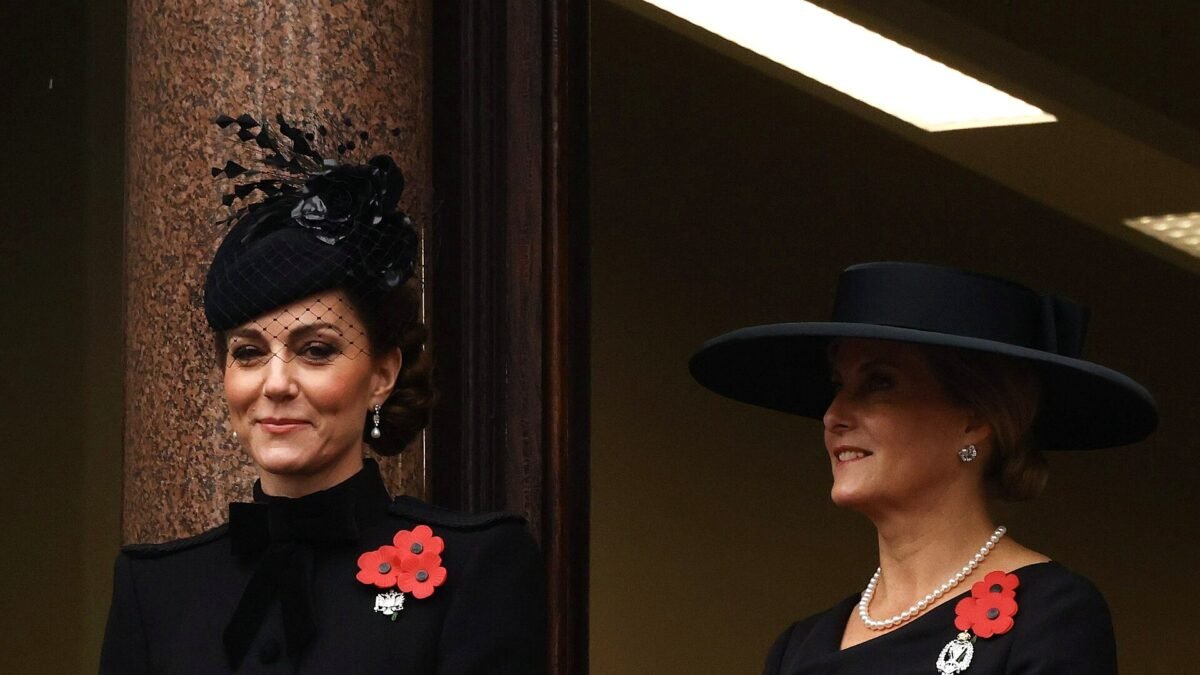
Catherine, Princess of Wales, has spoken more openly about her experience of cancer than ever before, in a new documentary that follows her as she climbed the three highest mountains in Britain in a single day. The film, called Heal, was announced by Kensington Palace on Saturday, 21 November, and will premiere on BBC One and BBC iPlayer on Sunday, 29 November, before being shown in the United States, Australia and Canada.
In a trailer released on Saturday, the 44-year-old princess says that cancer changed her in ways that went far beyond the physical. “Cancer does change you,” she says in the film, according to Reuters. “It changes your body, it changes you physically, but there is a much, much deeper part to what a cancer diagnosis shifts in you.”
The 30-minute documentary is, according to The Times, the first film of its kind that Catherine has made about her own illness. It is built around the National Three Peaks Challenge, which she completed in June in support of The Royal Marsden Cancer Charity, climbing Ben Nevis in Scotland, Scafell Pike in England and Yr Wyddfa, also known as Snowdon, in Wales within 24 hours. According to The Guardian, she became the first member of the royal family to complete all three climbs in less than a day.
Kensington Palace said the film examines the impact of serious illness on patients and on the people around them, drawing on Catherine’s own experience and on the experiences of others facing health challenges. The princess said the project was intended to help people navigate diagnosis, treatment and recovery, and to highlight approaches to care that support patients’ wellbeing during and after treatment, Reuters reported.
All of the money received through the documentary’s distribution has been directed to The Royal Marsden Cancer Charity, which supports the hospital where Catherine was treated, Kensington Palace said.
What the documentary shows
Heal follows Catherine as she undertakes the National Three Peaks Challenge, climbing the highest mountains in Scotland, England and Wales within 24 hours, with her brother, James Middleton, walking alongside her for parts of the route. The film was made by Detail Films, directed by Benji Jackson, with Will Warr as director of photography, and it is introduced by the broadcaster Kirsty Young, with an original score by Erland Cooper.
The trailer, shared on Kensington Palace’s social media accounts on Saturday, shows Catherine speaking to cancer patients at The Christie hospital in Manchester, which she visited in June, and reflecting on her own journey while walking through some of Britain’s most dramatic landscapes. In one scene she is filmed applauding Claire Lorente as she rings the bell that traditionally marks the end of chemotherapy for breast cancer at The Christie.
In another moment, Catherine reveals that she herself never rang such a bell when her own treatment ended. “I didn’t ring the bell,” she says in the trailer, according to CNN. Her brother replies: “Maybe this is your ringing of the bell.”
The film ends with the princess being greeted at the foot of Yr Wyddfa, the final peak, by her husband, Prince William, and their three children, Prince George, Princess Charlotte and Prince Louis, who run into her arms. In the trailer she is also seen hugging her family as she finishes the challenge.
“You know, healing is a journey,” Catherine says in the film, according to The Times. “How to reconnect with the things you once knew and how to find a sense of hope and joy alongside uncertainty. It’s clear we’re not meant to carry life’s challenges alone. Things can renew and grow. Often it is through pain that we realise there’s a greater beauty that lies beyond that.”
Kate Phillips, the BBC’s chief content officer, said the documentary offered “a rare insight into the Princess of Wales’s experience of serious illness and recovery, told in her own words”, and described it as “a powerful reflection of resilience, hope, and the people, places and experiences that can help us heal”.
The Three Peaks Challenge
The challenge at the heart of the film was completed in June, and at the time it was kept largely out of the public eye. Catherine climbed Ben Nevis, the highest mountain in Scotland at 1,345 metres, Scafell Pike, the highest in England at 978 metres, and Yr Wyddfa, the highest in Wales at 1,085 metres, in under 24 hours, supported on the route by mountain rescue teams.
After finishing the challenge, she posted a personal message on the social media accounts of the Prince and Princess of Wales, alongside a photograph of herself at the summit of Ben Nevis. The climb was undertaken to raise money for The Royal Marsden Cancer Charity and, as Kensington Palace put it, to “explore life beyond diagnosis”.
The choice of a physical challenge as the spine of the film is a deliberate one. The documentary is not presented as a medical account of her illness, and Catherine has never disclosed the type of cancer she had. Instead, the mountains provide a structure for a story about endurance, recovery and the slow return to normal life, and the film uses the climbs to frame conversations with other people who are living with, or beyond, serious illness.
According to Kensington Palace, the film explores “life beyond diagnosis and the many ways people find comfort, strength and hope in the face of serious illness”. Set against the backdrop of the challenge itself, the princess reflects on her own experience alongside individuals navigating their own health journeys, examining what the palace describes as the profound impact serious illness can have on the whole person, and the people, places and experiences that can help people heal.
From diagnosis to remission
Catherine’s cancer journey began, in public terms, in January 2024, when she underwent major abdominal surgery at the London Clinic. At the time, Kensington Palace said the operation had been planned and successful, and that tests had not indicated cancer. Two months later, in March 2024, she announced in a video message that post-operative tests had found cancer, and that she had begun a course of preventative chemotherapy.
The announcement, which she recorded alone and seated on a bench in the grounds of Windsor, was watched around the world and prompted an outpouring of public sympathy. She said at the time that the news had come as a “huge shock” to her family, and she asked for privacy while she completed her treatment.
In September 2024 she announced that her chemotherapy had ended, describing the previous nine months as “incredibly tough” for her family, and saying that her focus was now on staying cancer-free. In January 2025 she confirmed that her cancer was in remission, after a visit to The Royal Marsden Hospital in west London, where she had received her treatment. Catherine and Prince William are joint patrons of The Royal Marsden NHS Foundation Trust.
Her return to public duties has been gradual. She has taken on a growing number of engagements through 2025 and 2026, and earlier this week she accompanied Prince William to India for the Earthshot Prize ceremony. According to CNN, the visit marked the couple’s first official overseas trip in four years, and represented a major milestone in Catherine’s return to duties since her diagnosis.
The documentary is the most personal account she has given of that period. Until now, her public statements about her illness have been brief and carefully measured: the video announcement in March 2024, a written update in June 2024, the announcement that chemotherapy had finished in September 2024, and the confirmation of remission in January 2025. Heal is the first time she has spoken at length, on camera, about what the experience meant to her.
Why she made the film
According to Kensington Palace, the princess hopes the documentary will help others navigate diagnosis, recovery and life beyond cancer, and transform access to what the palace calls holistic cancer care, meaning care that supports a patient’s wellbeing, resilience and quality of life during and after diagnosis, rather than treating the disease alone.
That aim is consistent with the work Catherine has done for many years around early childhood, mental health and the importance of relationships and community. The film’s central argument, as presented in the trailer, is that recovery is not only a medical process but an emotional and social one, and that the people around a patient, and the places and routines that give life meaning, are part of the treatment.
“It’s clear we’re not meant to carry life’s challenges alone,” she says in the trailer. The line is the clearest statement of the film’s message, and it is also, in its own way, a description of how Catherine herself has approached the last two years: with her family close, and with a long and deliberately private recovery.
The decision to direct all of the money from the film’s distribution to The Royal Marsden Cancer Charity underlines the point. The charity funds research, equipment and support services at the hospital where she was treated, and the palace said the funds would help people living with and beyond cancer.
Analysis: Why It Matters
There are several reasons why this short documentary matters, and they go beyond the ordinary interest in a member of the royal family talking about her private life.
The first is the simplest: Catherine is the future queen, and she is speaking about an experience that millions of people share. Around one in two people in the United Kingdom will develop some form of cancer during their lifetime, according to Cancer Research UK, and the language in which the disease is discussed in public is still often clinical, euphemistic or frightening. A figure as prominent as the Princess of Wales describing, in her own words, how a diagnosis “shifts” a person, and how healing is a journey rather than a single moment, gives the public conversation a vocabulary it has not had before. Her line about not ringing the bell is a small detail, but it is the kind of detail that patients and their families recognise instantly, because the end of treatment is often presented as a finish line when, for many people, it feels like the beginning of a different and lonelier phase.
The second reason is the way the film frames recovery. Much of the public discussion of cancer focuses, understandably, on diagnosis and treatment: the surgery, the drugs, the scans, the results. Far less attention is paid to what comes afterwards, when treatment ends and a person is expected, by themselves and by others, to return to normal. Catherine’s emphasis on reconnection, on hope alongside uncertainty, and on the idea that things can “renew and grow” after pain, speaks directly to that neglected part of the experience. It is also a message that reaches beyond cancer. Serious illness of any kind leaves people changed, and the film’s argument that healing is a process of rebuilding a life, rather than simply surviving a disease, is one that will resonate with a much wider audience than cancer patients alone.
The third reason is institutional. By tying the film to The Royal Marsden Cancer Charity and to the cause of holistic care, Catherine is using her platform to press for a change in how cancer services are organised. The idea that hospitals should support a patient’s emotional wellbeing, resilience and quality of life, not only attack the tumour, is not new, but it is still unevenly applied. A royal documentary that puts that argument in front of a mass television audience, in the United Kingdom and in three other countries, is a powerful piece of advocacy, and it is one that health charities and clinicians have been quick to welcome.
There is also a constitutional dimension, though it is a quiet one. The monarchy depends, to a large degree, on the public’s willingness to see the royal family as human, and the last two years have tested that in an unusual way. Both Catherine and King Charles III have been treated for cancer, and both have spoken about it, though in very different registers. The King’s announcements were made through Buckingham Palace statements; Catherine chose to speak for herself, first in the video message of March 2024, and now, at greater length, in this film. The result is a portrait of a future queen who is willing to be vulnerable in public, and who is prepared to use her own suffering as a way of helping others. That is a significant choice, and it is one that is likely to shape how she is seen for years to come.
It is worth noting, too, what the film does not do. Catherine has not disclosed the type of cancer she had, and there is no indication in the trailer that she intends to do so in the film. That restraint is important. It preserves a boundary between public and private that she has defended throughout her illness, and it keeps the focus on the experience of illness in general, rather than on the specifics of her own case. The film is about healing, not about her medical records, and that distinction is part of its strength.
Finally, the documentary matters because of when it arrives. It comes at the end of a year in which Catherine has steadily rebuilt her public life, culminating in the trip to India this week, her first official overseas visit in four years. The film is, in effect, the closing chapter of that return: an account, in her own words, of what the last two years cost her and what she has learned from them. For a public that has watched her disappear from view and then return, it offers something that no palace statement could provide, which is her own voice, describing the experience herself.
What to watch next
Heal will premiere on BBC One and BBC iPlayer in the United Kingdom on Sunday, 29 November. It will then be shown in the United States through NBCUniversal on 30 November, in Australia on Channel 9 on 1 December, and in Canada on CTV and Noovo on 7 December. According to The Wrap, the film will also be available to stream on Peacock in the United States from 1 December.
The reaction to the film will be watched closely, both for what it says about Catherine’s own recovery and for whether its message about holistic cancer care gains traction with policymakers and health services. The Royal Marsden Cancer Charity is expected to see a surge in donations, as royal appeals often do, and the film’s international distribution means its audience will be far larger than a domestic BBC broadcast alone.
What is already clear is that the princess has chosen to mark the end of this chapter of her life not with a formal announcement, but with a film about the long road back. “Often it is through pain that we realise there’s a greater beauty that lies beyond that,” she says in the trailer. For millions of people who have faced a diagnosis of their own, that is a message worth hearing.
Sources
Reuters — “Kate, Britain’s Princess of Wales, to feature in documentary about cancer recovery”
The Wrap — “Catherine, Princess of Wales, BBC cancer documentary ‘Heal'”

About the Author — Abdul Mannan
Related Articles
Barnham Votes to Leave the UK in Symbolic Referendum Over Asylum Centre Plan at RAF Barnham
Residents of the Suffolk village of Barnham voted 257 to 16 to symbolically leave the UK in protest…
Miliband Says Rejoining the EU Is ‘On the Table’ as Burnham Plans a Year of ‘Brainstorming’ on Britain’s Future With Brussels
Foreign Secretary Ed Miliband has said rejoining the European Union will be 'on the table' in a year…
Burnham Rejects Welsh Devolution Calls in Letter to First Minister, Saying He Is ‘Not Persuaded’
Prime Minister Andy Burnham has rejected calls to devolve policing, justice, the Crown Estate and rail infrastructure to…