
COP31 Collapses in Antalya as EU Rejects Draft That Never Mentions Fossil Fuels — First Failed Summit Since Copenhagen

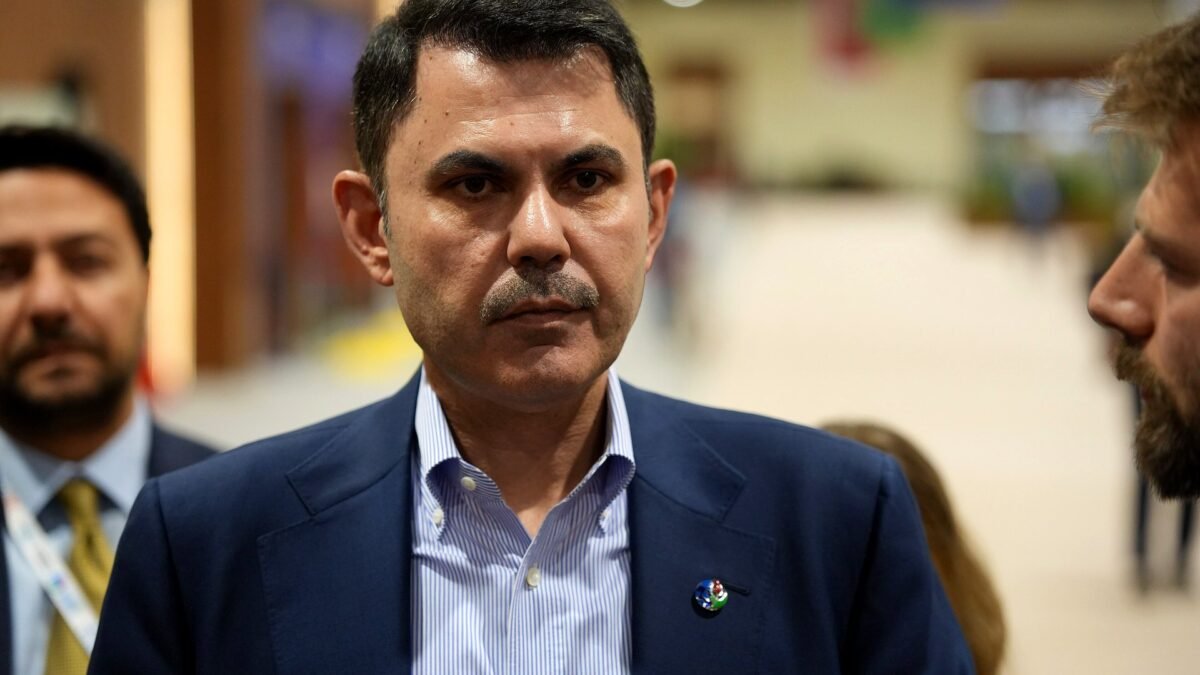
Two weeks of climate negotiations in Antalya ended in failure on Sunday, 22 November, when the COP31 summit collapsed without an agreement after the European Union and a group of vulnerable nations rejected a final draft that never mentioned fossil fuels. It was the first time since Copenhagen in 2009 that a United Nations climate summit closed with no deal adopted by all of its parties.
Turkey’s COP31 president, Murat Kurum, announced the outcome at the closing plenary, telling delegates that the text put before them had failed to win the consensus the process requires. “It is clear that there are parties in this hall who oppose this text. We recognise that there is no consensus on this document. Therefore, these decisions have not been adopted,” he said, according to Reuters.
Kurum added that no further version of the text would be produced. “There will be no new text from now on. We will not be carrying out work on a new text in an environment where there is no consensus,” he said. “There is nothing to do, we did all that we could. Since there are 196 countries, they will make the decision and we will respect their decision.” He later left the stage while country representatives were still delivering speeches, and conceded that “we missed this opportunity.”
The summit, co-hosted by Turkey and Australia and attended by delegations from nearly 200 countries, had been scheduled to end on Friday, 20 November. Instead, negotiators worked through Saturday and into the early hours of Sunday, and the conference became the longest-running UN climate summit on record, surpassing the previous record set by COP25 in Madrid in 2019.
The collapse came after a final ten-page package, known as the Antalya Pact, was circulated in the early hours of Sunday. The document, 94 paragraphs long, was presented by the presidency as a text every country could accept. Delegations were given until 03:00 GMT to lodge objections, with an approval session due to begin at 06:00 GMT. When that session opened, the objections were too many and too fundamental to overcome.
Ireland’s environment minister, Darragh O’Brien, speaking on behalf of the European Union, formally rejected the draft, saying the bloc could not support an agreement that ignored the central cause of the crisis it was meant to address. “It is unconscionable that we would have a climate act that makes no reference to fossil fuel, no reference to transitioning away from fossil fuels,” he said. In a separate statement, the EU expressed its “profound disappointment” and said: “The drafts put before us do not begin to address the climate emergency before us.”
Panama also said it could not support the text because it failed to meet the scale of the climate crisis. Norway, the Marshall Islands, Vanuatu and Belize joined the rejection, according to reports from the plenary hall. The opposition was not a matter of detail but of principle: the countries that rejected the text argued that a climate agreement that does not name coal, oil and gas cannot credibly claim to confront global warming.
How the Final Day Collapsed
The road to Sunday’s failure had been visible for days. The summit opened on Monday, 9 November, with the UN warning that national climate plans fell far short of what was needed to hold warming to 1.5 degrees Celsius above pre-industrial levels. By the second week, the divide over fossil fuels had become the defining argument of the conference, and the draft texts emerging from the presidency grew steadily weaker on the issue.
A revised draft published on Thursday, 19 November, cut the document from 144 paragraphs to 80 and removed all explicit references to moving away from fossil fuels. It also dropped a proposed target of 120 billion dollars a year in adaptation finance for developing countries by 2035, replacing it with a non-binding call to at least triple adaptation funding by the same year, with no baseline against which the tripling would be measured and no detail on how it would be calculated.
UN climate chief Simon Stiell had urged delegates in the second week to “move swiftly” as the fossil fuel divide threatened a deal. UN Secretary-General Antonio Guterres, who addressed the summit in its opening days, had warned of “mutually assured destruction” if the world failed to act. Neither warning was enough to bridge the gap.
On Saturday, the European Union’s top climate official, Wopke Hoekstra, told reporters that the summit would either produce a good deal or no deal at all. “It’s either going to be a good deal or it’s going to be no deal,” he said. By Saturday afternoon, with no new text on the table and frustration mounting, hopes of significant changes had faded. Germany’s environment minister, Carsten Schneider, captured the mood in the hall on Sunday: “We hope, of course, that we will still reach a decision. But given the last few hours, I’m sceptical that this can still succeed in the short time left, especially since many colleagues have already left, as this conference was supposed to have ended two days ago.”
Belgium’s climate minister, Jean-Luc Crucke, was blunter still. “It is unacceptable. It’s not the end of multilateralism, but there has to be courage to say no,” he said.
Kurum had defended the package at a late-night plenary before the final session, telling delegates that the presidency believed it had put forward a text every party could accept. “While no one obtained everything they might have desired, everyone can find a place for themselves within this text, that is the very essence of consensus,” he said. “I hope that the decision emerging from this hall will demonstrate to the world that multilateralism is still capable of yielding results.” Within hours, the hall had demonstrated the opposite.
A survey of summit watchers by Carbon Brief had put the median expected finish at late on Sunday night, about 28 hours after the scheduled close. In the end, the summit did not even reach that point with a deal in hand. Some decisions had already been deferred to the following year, and the next summit is scheduled for Addis Ababa, Ethiopia, in November 2027.
The Text That Nobody Could Accept
The Antalya Pact was, by the account of its critics, a document defined as much by what it left out as by what it contained. Its most striking feature was the complete absence of the words fossil fuels, oil, coal and phase-out. No previous COP outcome had gone this far in avoiding the subject. The Dubai agreement of 2023, known as the UAE Consensus, had at least called on countries to transition away from fossil fuels in energy systems. The Antalya text recalled that consensus in full, but added nothing to it, and in the view of its opponents it stepped backwards from it.
What the text did offer was a single headline energy goal: raising electricity’s share of total final energy consumption from about 21 per cent today to 35 per cent by 2035. The target was backed by some 90 countries and championed by Turkey as its signature contribution to the summit. But the target carried no requirement that the additional electricity come from renewable sources, so power generated by burning coal and gas could count towards it. That omission, for the EU and its allies, drained the goal of meaning.
The text also set a specific goal for carbon capture and storage of one billion metric tons, a technology backed by the oil industry and criticised by several delegations as expensive and unproven at scale. And it would have been the first COP outcome to acknowledge that the world will overshoot the 1.5 degrees Celsius limit set by the Paris Agreement, calling for any overshoot to be limited in size and duration. The science made that admission hard to avoid: October 2026 was 1.8 degrees Celsius warmer than the mid-1800s, according to Berkeley Earth, and the UN confirmed in October that the rise in global temperature was set to exceed 1.5 degrees.
The finance section, which matters most to the countries already living with rising seas and failing harvests, was where the compromise looked thinnest. The commitment to triple adaptation finance by 2035 was reaffirmed, but, as in earlier drafts, with no explicit baseline against which the tripling would be measured and no details on how it would be calculated. For the small island states and least developed countries, whose negotiators had spent two weeks arguing that adaptation money is a matter of survival rather than generosity, that vagueness was unacceptable.
The Greens/EFA group in the European Parliament, in a statement issued as the talks collapsed, said the negotiations had failed over disagreements on the need to phase out fossil fuels and to triple adaptation finance to support vulnerable countries. “Leaving Antalya without a deal does not mean global climate action is over,” the group said, a line that captured both the defiance and the damage limitation of the moment.
The Fossil Fuel Fault Line
The central dispute at COP31 was not new, but Antalya exposed it more starkly than any summit since Copenhagen. On one side stood the European Union, the small island states and a coalition of high-ambition countries, insisting that any credible climate agreement must name the fuels driving global warming and set out a path away from them. On the other stood Saudi Arabia and other big oil-producing nations, which observers at the venue said had pushed hard in negotiations to keep explicit mention of fossil fuels out of the text and to keep carbon removal technologies in.
A representative for the Saudi delegation told the summit he was surprised at the resistance to technology. “If indeed the climate challenge, as some have mentioned today, is so important, it makes no sense that solutions, concrete solutions, will be taken off the table,” he said. The argument, as presented by the oil producers, was that the tools for dealing with emissions matter more than naming their source. The counter-argument, made by the EU and its allies, was that carbon capture language would be used as a licence to keep pumping oil, allowing producers to promise future removal while continuing present extraction.
Scientists say removing carbon from the atmosphere, when paired with steep emissions cuts, is vital to avoiding the worst impacts of climate change. But critics of the Antalya text argued that the balance in the draft was wrong: it offered the technology without the cuts, the electrification target without the renewables, and the acknowledgement of overshoot without the commitment to limit it.
The dispute was sharpened by the absence of the United States, the world’s largest historical emitter of greenhouse gases, which stayed away from the summit for a second consecutive year. The American absence removed both a major source of pressure on the oil producers and a major source of finance for the developing world, and it left the EU carrying a weight in the negotiations it has not always had to bear alone.
The collapse also unfolded against a backdrop of competing crises that have overshadowed the climate agenda. Wars, including the continuing conflict in Ukraine, and public outcry over the cost of living dominated political attention in 2026, a year that also saw some of the most destructive impacts of global warming, from extreme heat in Europe to glacial floods in Nepal. The World Meteorological Organization has said 2026 is on track to rank among the four hottest years on record. The failure in Antalya was, in that sense, not a failure of awareness. Delegates knew what was at stake. They disagreed about what to do about it, and the rules of the process gave every one of them a veto.
What Was Agreed, and What Was Not
Not everything in Antalya failed. Decisions on carbon markets under Article 6 of the Paris Agreement were adopted on Friday evening, before the political text collapsed. Those rules govern how countries trade carbon credits, and their adoption preserves a mechanism that has taken a decade to build. But the carbon market rules were the technical scaffolding of the summit, not its political heart. The heart was the cover decision, the Antalya Pact, and that was what the plenary rejected.
The failure to agree a political declaration does not wipe out the obligations agreed by previous summits, and it does not erase the technical and legal frameworks governing multilateral action against climate change. The Paris Agreement remains in force. National climate plans remain in place, however inadequate. The emissions cuts already promised by individual countries are not undone by the absence of a new declaration. But the summit was supposed to do more than preserve the status quo. It was supposed to raise ambition at the moment when the science says ambition is most urgently needed, and on that test it failed.
The last time UN climate talks failed to end with a deal adopted by all was in Copenhagen in 2009, when countries failed to adopt the Copenhagen Accord by consensus in a setback for multilateral climate diplomacy. That failure was followed by years of rebuilding, culminating in the Paris Agreement of 2015. The question now is whether Antalya will be remembered as a similar turning point, a shock that forces reform, or as the moment when the annual summit process lost its ability to deliver.
The Greens/EFA statement pointed to the one thread of hope its authors could find: that the refusal to accept a weak text was itself a defence of the process. Teresa Ribera, the EU’s clean transition chief, put the same point on the social platform Bluesky: “No deal should mean we all remain committed to transition away from fossil fuels.” The argument is that a bad deal would have been worse than no deal, because it would have locked in a lower standard and given cover to inaction. Whether that argument holds will depend on what happens next, and in particular on whether the countries that rejected the text follow through with stronger action of their own.
Analysis: Why It Matters
The collapse of COP31 matters for three reasons, and none of them is limited to the negotiating halls of Antalya. The first is what it says about the state of multilateral climate diplomacy. The UN climate process is built on consensus: in practice, a single formal objection can stop a deal. That rule has always been both its strength and its weakness. It gives every country, including the smallest and most vulnerable, a voice that cannot simply be overridden. But it also gives every country, including the largest oil producers, a veto over the ambitions of all the rest. For thirty years, the process has managed that tension by producing agreements that were weaker than the science demanded but stronger than nothing. In Antalya, the tension snapped. The text on offer was so weak that the countries most exposed to climate change preferred no agreement to one that pretended the problem did not have a cause.
That is a significant shift. In previous summits, the pattern was familiar: long nights, a last-minute compromise, a deal that disappointed everyone a little and satisfied no one fully, and a collective sigh of relief that the process had survived. The relief was the point. The survival of the process was treated as a good in itself, because the alternative, a world in which countries stopped talking about climate change together, seemed worse. In Antalya, a critical mass of countries decided that survival was not enough, and that a summit which cannot name fossil fuels has nothing useful to say. That is a gamble. It preserves the integrity of the 2023 Dubai commitment to transition away from fossil fuels, which the Antalya text would have quietly undermined. But it also leaves the process with no new political signal at all, and it hands its critics an easy argument that the summits have become an expensive ritual with no outcome.
The second reason the collapse matters is what it reveals about the changing balance of power in climate politics. The United States, the country that has historically anchored climate diplomacy and whose absence was felt throughout the fortnight, stayed away for a second year running. Its withdrawal has created a vacuum that no single country or bloc has filled. The European Union tried to fill it in Antalya, and found that its leverage has limits when the oil producers are organised and determined. Turkey, as host, tried to broker a compromise and discovered that the middle ground it had staked out, electrification without renewables, carbon capture without cuts, was ground that neither side was willing to stand on. Australia, as co-president of the negotiations, faced the same difficulty. The result was a presidency that could not deliver its own text, and a president who ended the summit by announcing that there would be no new text at all.
The third reason is the most concrete, and the most easily overlooked in the drama of the plenary hall. The finance that developing countries need to adapt to a warming world was one of the two issues on which the talks collapsed, and it is the issue with the most immediate human consequences. The proposed 120 billion dollars a year in adaptation finance was dropped from the text before the final session, and the replacement, a non-binding call to triple funding with no baseline, was not a commitment at all. For countries facing rising seas, failing harvests and glacial floods, the failure in Antalya is not an abstract diplomatic setback. It is a decision, taken by the world’s governments, to leave them to face the costs of a crisis they did least to cause, without the money they were promised. That is the part of the collapse that will be felt first, and felt hardest, by the people who had the least say in it.
There is a counter-argument, and it deserves to be taken seriously. The defenders of the rejection say that accepting the Antalya text would have been worse than rejecting it, because it would have normalised a climate agreement that does not mention fossil fuels and would have made it harder, not easier, to demand stronger action in future. There is force in that argument. A weak deal can be worse than no deal when it gives the appearance of progress while locking in delay. But the argument only holds if the rejection is followed by action. If the countries that walked away from the text return to their capitals and do nothing more than they were already doing, then Antalya will have achieved nothing except the preservation of a principle at the cost of a year. The test of the rejection will be what happens in the twelve months before Addis Ababa.
That test will be visible in several places. The first is national climate plans: whether the EU, and the countries that stood with it, bring forward stronger targets of their own, and whether they use trade and finance policy to put pressure on the producers who blocked the text. The second is adaptation finance itself: whether the money that was not committed in Antalya is committed elsewhere, through bilateral deals or development banks, or whether it simply does not arrive. The third is the carbon market rules adopted on Friday, which will now have to carry more weight than they were designed to bear, as the main surviving output of a summit that produced little else. And the fourth is the summit process itself: whether the failure in Antalya prompts a serious debate about reform, including the consensus rule that allowed a handful of oil producers to block a text that nearly 200 countries had spent two weeks negotiating.
It is worth remembering, amid the recriminations, that the obligations already agreed by previous summits remain in place, and that the Paris Agreement, for all its flaws, still binds its parties to a framework of escalating ambition. The world is not starting from nothing. But it is starting from a worse position than it was in two weeks ago, because the summit that was supposed to raise ambition has instead demonstrated that ambition can be blocked, and that the blockers are willing to accept a collapse rather than a compromise. That is the lesson the oil producers will take from Antalya, and it is the lesson the high-ambition countries will have to answer in Addis Ababa.
What to Watch Next
The immediate question is what happens to the issues that were left unresolved in Antalya. Several decisions were already deferred to next year before the collapse, and the next summit, in Addis Ababa in November 2027, will inherit a process whose credibility is in question. The Ethiopian presidency will face the same structural problem that defeated its Turkish and Australian predecessors: a consensus rule that gives every party a veto, and a divide over fossil fuels that has now produced an outright failure rather than a weak compromise.
Watch, in the coming weeks, for the reactions of the countries that rejected the text. The European Union will come under pressure to show that its refusal was a strategy rather than a gesture, and the test will be whether it follows through with stronger domestic targets and with measures that affect the producers who blocked the deal. Watch, too, for the response of the small island states and the least developed countries, whose negotiators argued most forcefully that the text failed them, and who will now look for finance and support outside the COP process if the process cannot deliver it.
Watch for what the oil-producing nations do next. Saudi Arabia and its allies succeeded in keeping fossil fuels out of the text, but they did so at the cost of a summit that collapsed, and the reputational damage of that collapse may be greater than the damage of a text that mentioned their product. Their argument, that technology and not fuel names should be the focus, will be tested by whether they invest in the carbon removal they championed, and by whether the rest of the world accepts that argument or treats it as a delaying tactic.
Finally, watch the science. October 2026 was 1.8 degrees Celsius warmer than the mid-1800s, and the UN has confirmed that the world is set to exceed the 1.5 degree limit. The next year will bring more evidence of what that overshoot means in practice: more heat, more floods, more pressure on the countries least able to bear it. The delegates who left Antalya without a deal will return to capitals where those impacts are already being felt. The question is whether the failure of this summit makes the next one stronger, or whether Antalya will be remembered as the summit where the world’s governments stopped even pretending to agree.
Sources

About the Author — Abdul Mannan
Related Articles

Search Resumes at Indonesian Candy Factory as Dozens Remain Missing After Deadly Fire
Rescue teams returned to the burned-out PT Fonusa Agung Mulia candy factory in Cikande on Monday morning, with…

Trump Pushes Ukraine Peace Deal by Early January as Zelensky Pleads for Patriot Missiles After a Week of 2,700 Russian Drones
Washington wants a Ukraine peace deal by early January, before Democrats take Congress — but as Zelensky pleads…
Russian Corvette Merkury ‘Almost Certainly Destroyed’ in Suspected Drone Strike at Libya’s Benghazi Port
Libya's eastern government says a suspected drone attack caused an explosion aboard a Russian ship at Benghazi naval…