
Trump Pushes Ukraine Peace Deal by Early January as Zelensky Pleads for Patriot Missiles After a Week of 2,700 Russian Drones

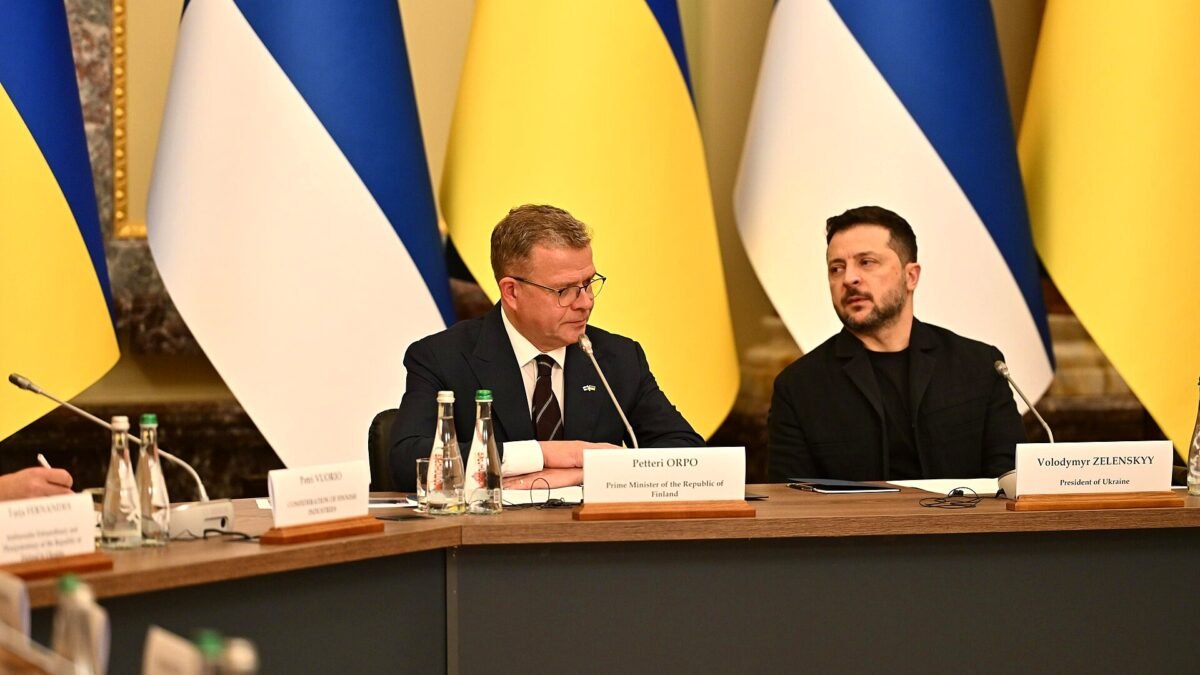
The Trump administration has told European and Ukrainian officials that it wants a peace agreement between Ukraine and Russia by early January, before Democrats take control of the United States Congress, according to the Financial Times. The reported deadline, relayed to officials in recent days by President Donald Trump’s special envoys, has sharpened the central question of the war: whether a deal struck on Washington’s timetable can be built on security guarantees that Kyiv can trust, and that Moscow will accept.
Four people briefed on the talks told the Financial Times that the administration wants the agreement reached before the new Congress is seated on 3 January 2027, after Democrats won control of both the House of Representatives and the Senate in this month’s midterm elections. The White House did not respond to the newspaper’s request for comment. The push comes as the war approaches its fifth year, with Russia intensifying its campaign against Ukraine’s energy infrastructure as winter sets in, and with Ukraine’s president publicly pleading for air-defence missiles his allies have already paid for.
According to the Financial Times, the administration’s envoys, Steve Witkoff and Jared Kushner, restarted negotiations with Ukraine and Russia in Abu Dhabi this month, ending an eight-month pause in the talks caused by the war with Iran. In recent days the two men have held a series of meetings with Russian, Ukrainian and European officials in Moscow, Dublin and Berlin, pressing for speed. One European official who met them told the newspaper: “The Americans are pushing hard and there’s some concern that it would need a great deal of Ukrainian concessions to get anywhere near a deal.” Another put it more bluntly: “The Americans are in a hurry, Putin is in no hurry.”
The reported timetable has alarmed Kyiv. A senior Ukrainian official told the Financial Times that the deadline has heightened fears that President Volodymyr Zelensky could be pushed into a deal on Moscow’s terms before the new Congress is seated. “Trump likes Putin and wants to finish this all by January,” the official said, adding that Russia “could have better terms” if an agreement were reached before then. The newspaper reported that the United States has not pressed Ukraine to make specific concessions, and that the pressure is about the timetable rather than a list of surrenders. But in Kyiv the logic is clear enough: once Democrats take Congress, they are expected to increase military aid to Ukraine and tighten sanctions on Moscow, improving Kyiv’s hand. A deal signed before January would be negotiated while that leverage is still in the future.
The January Deadline
The deadline is, in the first instance, a product of American politics rather than of anything that has changed on the battlefield. Democrats won sweeping majorities in both chambers on 3 November, and the new Congress takes its seats on 3 January. The incoming majorities have signalled that they intend to use their legislative powers to strengthen support for Ukraine and impose new sanctions on Moscow, and to use their oversight powers to scrutinise the administration’s foreign policy. That shift in the balance of power in Washington is what gives the January date its force: it is the last window in which the administration can shape a settlement without a Congress that is likely to push in the opposite direction.
The administration’s envoys have been working the problem from several directions at once. Mr Witkoff and Mr Kushner, the president’s son-in-law, resumed the Russia-Ukraine track in Abu Dhabi earlier this month, and have since met Russian, Ukrainian and European officials in Moscow, Dublin and Berlin. President Trump himself met President Vladimir Putin in Shenzhen, China, on Thursday, alongside the Chinese leader Xi Jinping, at the first-ever trilateral summit of the three leaders, and said afterwards that Mr Putin had made clear Moscow was “ready for peace”. The summit produced a four-point joint declaration on United Nations reform, nuclear risks, oil production and international law, but it made no mention of the war in Ukraine and produced no breakthrough on ending it.
The Financial Times reported that, according to two people briefed on the Kremlin’s thinking, Moscow wants to use a planned air campaign to strengthen its hand in future talks, which makes a quick deal unlikely. The talks have also only recently turned to Russia’s demands on the wider European security order, which Mr Putin has said must be part of any final agreement. European countries have sought a formal role in the negotiations and want a ceasefire before any discussion of Europe’s wider security framework. Russia has said any final deal would need European input, but Mr Putin has not committed to expanding the negotiations, and has said the Kremlin will decide only after European officials meet their Russian counterparts in Moscow.
Mr Putin set out his terms again after the Shenzhen meeting, saying Ukraine and its European allies must accept “compromises” and “realities”. Those demands include Moscow’s longstanding insistence that Kyiv give up territory in the Donbas region, a ban on Ukraine ever joining NATO, and limits on the size of its military. Russia has also pushed for a broader overhaul of Europe’s post-Cold War security order, under which NATO would pull troops and weapons back from its eastern flank.
The Guarantee at the Heart of the Talks
The most concrete idea to emerge from the latest round of talks is also the most contested: a security guarantee for Ukraine modelled on NATO’s Article 5, the collective-defence clause under which an attack on one member is treated as an attack on all. At a meeting of the Coalition of the Willing in Berlin on Thursday, hosted by the German Chancellor, Friedrich Merz, and attended by Mr Zelensky and European leaders, Mr Kushner said Washington had made progress in securing Russian acceptance of the idea. “From America’s perspective, giving an Article 5-like security guarantee is a really, really big deal,” he said, adding that Mr Trump was open to the idea, provided it served American interests and formed part of a broader security package.
“I think we’ve got the Russians comfortable with that concept where any security guarantee for Ukraine would be based on Article 5,” Mr Kushner told reporters in Berlin. He added that this came with what the Russians were saying, “which is their intention is, when this war is over, to not have another war in the future.” Mr Witkoff, who attended the Berlin meeting alongside Mr Kushner, described the discussions as “frank and productive”, and said Mr Trump was determined to end the war in a way that preserves Ukraine’s security and sovereignty and prevents a recurrence of conflict. “Important work remains,” he said.
The Berlin meeting also produced a joint statement by the leaders of Germany, France, Britain and Ukraine, reaffirming that Kyiv must receive robust, legally binding security guarantees once a ceasefire takes effect. The proposed framework could include sustained military, financial and technical assistance, participation in a United States-led ceasefire monitoring mechanism, and a European-led multinational force supported by Washington. The leaders also called for an energy ceasefire during the winter and an arrangement to protect food exports through the Black Sea, as Russian attacks threaten Ukraine’s power supplies and the war continues to disrupt maritime trade. The statement stressed that Ukraine’s sovereignty, territorial integrity and right to choose its security arrangements must be respected, and rejected changing international borders by force.
Mr Zelensky’s response to the guarantee idea was sceptical, and it went to the heart of the problem. “I’m not sure that we have a common [understanding] of Article 5,” he said in Berlin, adding that for him it means “that there are some forces of partners on your land”, and suggesting that in his view American and European forces should be based in Ukraine. On Saturday he went further, telling reporters that he had not yet seen written commitments on how the proposed guarantees would work: who would make up the collective, how it would defend Ukraine, and whether it would be prepared to repel an aggressor. “The answers must not simply be words, however eloquently they may sound, that ‘of course, nobody will abandon you’. This must be on paper. So far, I have not seen such commitments on paper,” he said, according to reports of the briefing. He added that any guarantees must last far beyond the current American administration, preferably permanently, or at least for decades, and that NATO membership remains Ukraine’s preferred security guarantee. Without membership, he said, Ukraine would need an army of around a million people, with the aircraft, artillery, missiles and air defence to go with it.
The French President, Emmanuel Macron, urged Ukraine’s allies to reconsider NATO membership rather than rely exclusively on alternative security arrangements. “Faced with the maximalist nature of the Russian position, I believe we need to reopen the question of Ukraine’s accession to NATO,” he said. The Wall Street Journal reported this week that Mr Kushner has discussed giving Ukraine NATO membership if it hands over the territory it still holds in the Donbas, in closed-door talks over recent months, and that a second scenario under discussion would freeze the conflict along the current front line and give Ukraine security guarantees through an international treaty with the United States and potentially with European allies. The Journal’s report was covered on this site on 20 November.
Moscow’s Answer: No, and Kyiv Is Ours
Moscow’s response to the Article 5 idea was swift and unambiguous. On Friday, Russia’s Deputy Foreign Minister, Sergei Ryabkov, said that even finding a formula for “quasi-membership” in NATO for Kyiv, or seeking some sort of “creative solution” in the area, was “an unacceptable option for us”. Kyiv and the West “should acknowledge the nonnegotiable nature of our demand that [Ukraine] must not join NATO,” the Russian news agency Interfax quoted him as saying. “Once that happens, I believe the question of security guarantees could, in one way or another, be discussed.”
That rejection was followed by a statement from Russia’s Foreign Minister, Sergei Lavrov, that laid bare the scale of Moscow’s ambitions. In a documentary for the Russian state television channel Channel One, released on 20 November, Mr Lavrov said that the south-east of Ukraine and most of central Ukraine, including Kyiv, are “without a doubt traditionally Russian lands”. He said Moscow must achieve its war goals in Ukraine and defeat alleged Russophobia in “the space now called Ukraine”. The Institute for the Study of War, which assessed the remarks in its 21 November update, noted that Mr Lavrov’s statement covers an even wider swathe of Ukrainian territory than the traditional concept of “Novorossiya”, the invented region Russian officials have claimed includes all of southern and eastern Ukraine. The institute said such statements are not new, noting that the Kremlin launched a concerted information campaign even before the full-scale invasion in 2022, spreading the idea that Russia would control most of Ukraine and leave a small rump state in the west, and that senior Kremlin officials have repeatedly resurfaced these aspirations since. But it added that continued statements about Moscow’s unwavering commitment to its expansive war goals are incompatible with the reported recent American proposals to end the war.
The gap between the two sides is therefore not a matter of detail. Washington is discussing guarantees modelled on Article 5, and even floating NATO membership in exchange for territory. Moscow says any form of quasi-membership is unacceptable, and its foreign minister is publicly claiming the Ukrainian capital itself as historically Russian land. Mr Putin, for his part, repeated this week that Moscow vocally opposes Western troop deployments in Ukraine as part of any security guarantees, the very deployments Mr Zelensky says a real guarantee would require.
The diplomatic effort is also drawing criticism in Washington. The senior Democrat in the Senate, Chuck Schumer, dismissed the trilateral meeting in Shenzhen as a diplomatic embarrassment, arguing that Mr Trump had secured no meaningful commitments on Ukraine or international security. Jeanne Shaheen, the top Senate Democrat on foreign policy, said defeating Mr Putin in Ukraine remained essential to American national security. Representative Gregory Meeks, the senior Democrat on the House Foreign Affairs Committee, said the summit had not advanced nuclear nonproliferation, ended Russia’s war, or addressed Chinese human rights abuses. Republican Senator Thom Tillis questioned the intentions of Moscow and Beijing, while Representative Don Bacon criticised Mr Trump’s approach, saying Republicans had traditionally stood up to Russia and China. Democratic Senator Tim Kaine introduced a resolution seeking answers from the administration about purchases of Russian fuel, sanctions relief, and delays in delivering air-defence munitions to Ukraine, arguing that buying Russian fuel risked providing Moscow with revenue to finance its war.
A Week of Strikes — and the Plea for Patriots
While the diplomats talked, the war continued at a pace that underlined why Kyiv is in no mood to accept a paper guarantee. On Sunday, Mr Zelensky said Russia had launched about 2,700 attack drones, nearly 1,460 guided aerial bombs and 165 missiles against Ukraine over the past week, across 20 regions of the country. A significant share of the missiles were ballistic, he said, including some supplied by North Korea. Ukraine’s Air Force said Russia launched 186 strike drones overnight on Saturday into Sunday, 72 of them jet-powered, and that air defences had shot down or suppressed 161 of them.
Against that backdrop, Mr Zelensky renewed his appeal for the United States to authorise the transfer of Patriot interceptor missiles that Ukraine’s partners have already paid for through NATO’s Prioritized Ukraine Requirements List, known as PURL, the programme under which allies finance purchases of American weapons for Kyiv. Transfers of American-produced Patriot missiles from third countries require authorisation from Washington, and Mr Zelensky said that authorisation has not come, even though the missiles have already been paid for. “Against this backdrop, it is particularly difficult to understand the delays in the delivery of antiballistic systems to Ukraine,” he said in a post on Telegram on Sunday. “We need to strengthen our protection.”
Ukraine is short of American-made Patriot interceptors, which can shoot down ballistic missiles, and the shortage has become more acute as Russia intensifies its campaign against critical infrastructure, particularly energy facilities, as temperatures drop. Mr Zelensky told reporters earlier in a closed-door briefing that Ukraine received an average of only 12 Patriot interceptor missiles per month from the United States throughout 2026. He first revealed that Washington was stalling supplies in mid-October. The State Department authorised the sale of 500 Patriot missiles to Ukraine, worth $2.1 billion, at the end of October, and Mr Zelensky called the approval a “strong decision”, but said the missiles could begin arriving “only in a few years”. He has called for a supplemental “winter support package” that would designate the transfer of 100 Patriot missiles each month from the United States. The picture is disputed: NATO’s top military commander in Europe, General Alexus Grynkewich, said at the end of October that deliveries paid for by allies through PURL were not delayed and that Washington had approved every request by a third country to forward American weapons. But from Kyiv’s perspective, the missiles that matter are the ones that can intercept ballistic missiles, and those are the ones that have not arrived in the numbers Ukraine needs.
The American ambassador to the United Nations, Mike Waltz, offered a different measure of the war’s trajectory on Friday, telling a podcast that Russia is suffering “unsustainable” battlefield losses, with monthly deaths outpacing recruitment. “Right now, the numbers that we have, the Russians are recruiting 20,000 to 25,000 a month of new fresh recruits,” he said. “They’re losing 30,000 to 35,000 a month, dead every single month.” He argued that both sides have worn each other down and that the war cannot be won militarily, and must end at the negotiating table.
The Dymer Apartment
The human cost of the week’s bombardment was visible on Sunday morning in Dymer, a village north of Kyiv. A Russian drone struck a five-storey apartment building early on Sunday, causing part of it to collapse and setting it on fire. Rescuers evacuated nine people and brought the fire under control, but two bodies were later recovered from the rubble, and 11 people, including two children, were still unaccounted for as search-and-rescue operations continued, according to Russia’s Interfax news agency, citing Radio Liberty. Ukraine’s State Emergency Service said two people were killed, including an 18-year-old man, and four were injured, among them a child.
A man was also killed in Russian shelling in the city of Zaporizhzhia, according to Mykhailo Semikin, the acting head of the regional military administration. Russia’s Ministry of Defence said on Sunday that its forces had struck a cargo ship north-east of Ukraine’s Black Sea port city of Odesa overnight, and that Russian drones had struck an electricity facility in Zaporizhzhia that it said supplied power to Ukrainian arms manufacturers. It reported further strikes on an oil refinery, electrical substations and a data centre, and claimed its forces had taken control of the Ukrainian village of Sosnovyi Bir in the north-eastern Kharkiv region and destroyed a launcher for Ukraine’s Neptune coastal missile system. The Russian claims could not be independently verified.
Mr Zelensky has also proposed temporary localised ceasefires to evacuate civilians from 15 settlements along or near the Dnipro River in occupied Kherson and Zaporizhia regions, nine in Kherson and six in Zaporizhia, modelled on a humanitarian evacuation from Oleshky and nearby settlements in October. The proposal, reported by the Institute for the Study of War in its 21 November assessment, is a small, practical measure in a war where the larger questions remain unanswered.
Analysis: Why It Matters
A deadline is not a deal
The most important thing to understand about the January date is what it is not. It is not an agreed date. No deal exists, no ceasefire has been agreed, and no outcome of any further talks has been predicted. The Financial Times reported a stated American aim, citing four people briefed on the talks, and the White House did not respond to the newspaper’s request for comment. What the deadline does is put a clock on a negotiation that has, until now, had none, and the clock belongs to Washington’s political calendar rather than to the battlefield. That matters because deadlines change incentives. For Kyiv, the fear is that a deadline set by the mediator becomes a deadline imposed on the victim: sign now, on terms that are available, or face a worse deal later. For Moscow, the incentive runs the other way. As one European official told the Financial Times, “The Americans are in a hurry, Putin is in no hurry.” If delay improves Russia’s terms, or if the arrival of a Democratic Congress hardens the American position, Moscow has every reason to let the clock run.
The guarantee gap is the whole negotiation
Strip away the timetable and the argument is about one thing: what, if anything, would stop Russia from attacking again. Mr Kushner says Moscow has grown “comfortable” with an Article 5-style guarantee. Mr Ryabkov says even a “quasi-membership” formula is unacceptable. Both cannot be true in the same sense, and the gap between them is not a misunderstanding that better drafting will fix. It is a disagreement about what the guarantee would mean. Mr Zelensky has put his finger on the problem: Article 5 is collective defence, and collective defence means someone is prepared to fight. His insistence that the guarantee must be written down, and must last for decades rather than one presidential term, is not a negotiating flourish. It is the lesson of every agreement Ukraine has signed with Russia since 2014, each of which was broken. A guarantee that exists only as a reassuring phrase in a press conference is worth nothing to a country that has watched its apartment blocks burn while the words were being spoken.
Lavrov’s claim is a warning, not a slip
Mr Lavrov’s statement that Kyiv and most of central Ukraine are “traditionally Russian lands” should not be treated as an eccentric aside. It was made in a state television documentary, in the middle of a negotiation, and it was entirely consistent with a position the Kremlin has held openly for years. Its significance is that it was made at all, and at this moment. It tells the American mediators, in plain language, that Moscow’s war aims have not narrowed to the Donbas, and it tells Kyiv that the price of a deal is not merely territory it has already lost. The Institute for the Study of War’s assessment is blunt: such statements are incompatible with the reported American proposals. If Moscow’s goal is control of most of Ukraine, including its capital, then a deal that trades the Donbas for NATO membership, or freezes the front line in exchange for guarantees, does not answer the question the war poses. It merely postpones it.
The war is the argument
The week’s figures make the abstract argument concrete. About 2,700 drones, nearly 1,460 guided bombs and 165 missiles in seven days, across 20 regions. A five-storey apartment building in Dymer, part of it collapsed, two people dead, 11 still missing, including two children. A man killed in Zaporizhzhia. These are the facts that frame Mr Zelensky’s plea for Patriot missiles, and they are also the facts that frame the negotiation. Ukraine is asking for the weapons to defend itself while it negotiates, and it is asking for the guarantees to be written down because it does not trust words alone. The two requests are the same request. A country that cannot defend its cities cannot negotiate from strength, and a country that has been invaded twice in a decade will not trade land for promises.
What January really decides
The January deadline, if it holds, will decide less about the terms of a peace than about who gets to set them. If a deal is reached before the new Congress is seated, it will be a deal shaped by the current administration’s priorities: speed, a settlement, and a claim of success. If the talks run past January, the Democrats’ legislative power, their promised aid increases and their threatened sanctions will enter the equation, and the terms available to Moscow will, on the Ukrainian official’s own account, be worse. That is why the deadline matters, and why it is dangerous. A timetable that is designed to beat a domestic political clock can produce a framework that schedules further talks rather than halting the fighting, and a framework that schedules talks is not a peace. It is a pause with a signature on it.
What to Watch Next
- Whether the proposed Article 5-style guarantees are put into written text, and who signs it. Mr Zelensky has said he will not accept words alone, and the question of whether Washington produces a document, and what it says, is now the central test of the talks.
- Whether the United States authorises the transfer of Patriot interceptor missiles already paid for by Ukraine’s partners under the PURL programme, and whether the monthly delivery rate rises above the 12 interceptors a month Ukraine says it received in 2026.
- Where and when the next round of talks takes place. The German Chancellor, Friedrich Merz, has suggested the United Arab Emirates as a possible neutral venue, with Europe participating alongside the United States, Russia and Ukraine.
- Whether Moscow’s position moves at all from Mr Ryabkov’s rejection of “quasi-membership” and Mr Lavrov’s claim on Kyiv, or whether the Kremlin uses the coming weeks to press its air campaign and improve its hand.
- The winter energy campaign. Russia has intensified strikes on Ukraine’s power infrastructure as temperatures drop, and the proposed energy ceasefire, and the protection of Black Sea food exports, will be early tests of whether any agreement can hold.
- The new Congress. When Democrats take control of both chambers on 3 January, their promised increases in military aid and tougher sanctions on Moscow will change the negotiating landscape, whether or not a deal has been signed by then.
- Mr Zelensky’s proposal for temporary localised ceasefires to evacuate civilians from 15 settlements along the Dnipro in occupied Kherson and Zaporizhia, which would show whether even small humanitarian measures can be agreed while the larger questions remain open.
Sources
- Radio Free Europe/Radio Liberty — “US Envoys See Ukraine Peace Progress As NATO Debate Resurfaces”
- Financial Times, via EuropeSays — “Donald Trump pushes Ukraine-Russia peace deal by January before Democrats take Congress”
- Al Jazeera, via Bytes Europe — “Zelenskyy urges US to release Patriot missiles as Russia kills 3 in Ukraine”
- Institute for the Study of War — “Russian Offensive Campaign Assessment, Nov. 21, 2026”

About the Author — Abdul Mannan
Related Articles

Search Resumes at Indonesian Candy Factory as Dozens Remain Missing After Deadly Fire
Rescue teams returned to the burned-out PT Fonusa Agung Mulia candy factory in Cikande on Monday morning, with…
Russian Corvette Merkury ‘Almost Certainly Destroyed’ in Suspected Drone Strike at Libya’s Benghazi Port
Libya's eastern government says a suspected drone attack caused an explosion aboard a Russian ship at Benghazi naval…
COP31 Collapses in Antalya as EU Rejects Draft That Never Mentions Fossil Fuels — First Failed Summit Since Copenhagen
Two weeks of talks in Antalya ended without a deal on Sunday as the European Union and island…