
Tata Steel to Sell Tubes Business and Colors Stake to APL Apollo in ₹28,000 Crore Deal

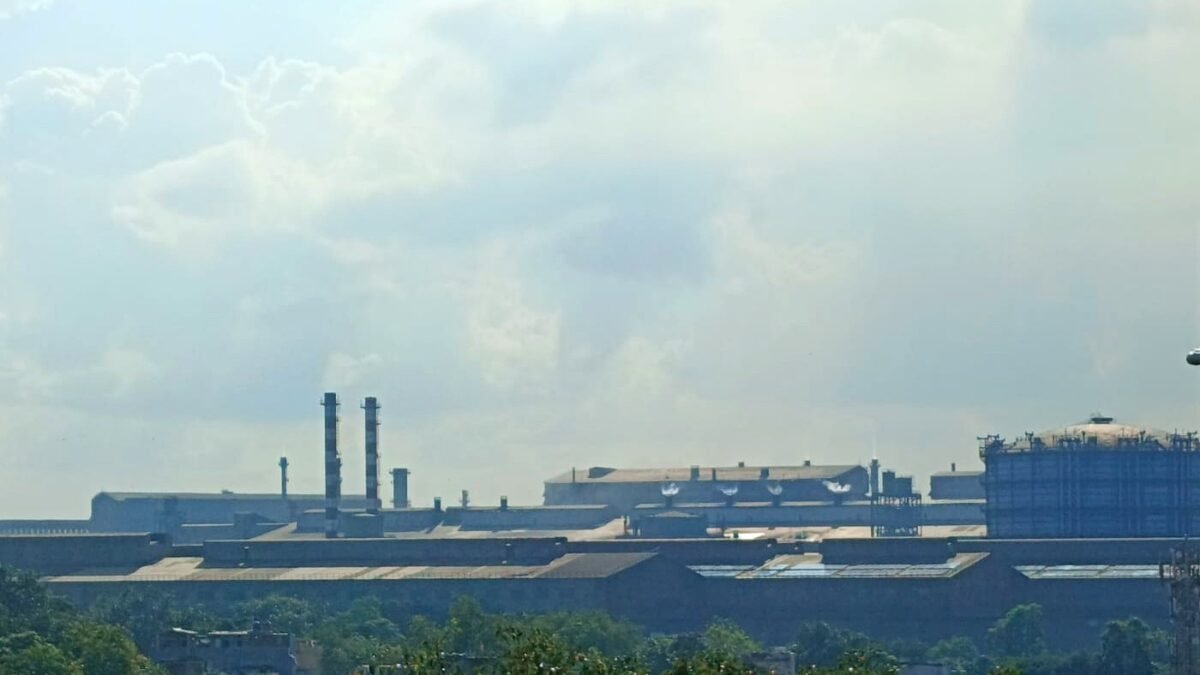
Tata Steel has agreed to sell its steel tubes business and its entire stake in Tata Steel Colors to APL Apollo Tubes in a deal worth up to ₹28,000 crore (about $3 billion), in one of the largest transactions India’s steel sector has seen this year. The board of Tata Steel approved the two linked sales at a meeting on Sunday, 22 November 2026, according to the company’s exchange filing, as reported by The Hindu BusinessLine.
The deal reshapes two companies at once. For Tata Steel, it is an exit from two downstream businesses and a large injection of cash. For APL Apollo, already India’s biggest maker of structural steel tubes, it is a leap in scale that would add businesses with combined annual sales of more than ₹16,000 crore to a company whose own turnover was about ₹23,079 crore in the last financial year.
Both transactions are all-cash, and both must close together. They are conditional on each other and on regulatory and shareholder approvals, and the companies have set 31 March 2028 as the long-stop date for completion, according to the filings cited by CNBC-TV18.
What exactly is being sold
The first transaction is the sale of Tata Steel’s tubes business. Under a business transfer agreement, Tata Steel will transfer its steel tubes and pipes manufacturing, processing, marketing, sale and distribution operations to APL Apollo on a slump sale basis — that is, as a single going concern rather than asset by asset — for a lump sum of up to ₹11,700 crore, according to The Hindu BusinessLine.
The tubes business covers manufacturing facilities at Jamshedpur, Hosur, Khopoli and Sahibabad, along with certain cold-rolling and surface-coated steel product facilities at Khopoli. The plants, contracts, licences, employees and specified liabilities will move to APL Apollo under the agreement, according to Moneycontrol’s account of the filings.
The business is a substantial one. It recorded turnover of about ₹11,375 crore in the financial year ended March 2026, accounting for 4.9 per cent of Tata Steel’s consolidated revenue, according to The Hindu BusinessLine. Its net worth stood at about ₹3,274 crore at the end of March 2026.
The second transaction is the sale of Tata Steel’s entire 100 per cent stake in Tata Steel Colors Private Limited, formerly known as Tata BlueScope Steel, for ₹16,300 crore. Tata Steel holds half of the company directly and the other half through its wholly owned subsidiary Tata Steel Downstream Products, and the proceeds will be split evenly — ₹8,150 crore to each — according to The Hindu BusinessLine.
Tata Steel Colors makes colour-coated steel products and building solutions. It reported turnover of about ₹4,680 crore in the financial year ended March 2026, up from ₹4,234 crore the previous year, and a net profit of about ₹85 crore, according to CNBC-TV18. Its net worth was about ₹1,016 crore, according to Kalkine’s summary of the filings.
There is a notable piece of recent history behind the Colors sale. Tata Steel only bought out its joint venture partner BlueScope’s 50 per cent stake in the business for ₹1,100 crore in November 2025. The unit became a wholly owned subsidiary in April 2026 and was then rebranded as Tata Steel Colors, according to The Hindu BusinessLine. Barely a year after paying to take full control, Tata Steel has now agreed to sell the whole company for ₹16,300 crore — a striking turnaround that underlines how quickly the group’s portfolio thinking has moved.
Why Tata Steel is selling
Tata Steel said the divestments are aimed at unlocking value from its downstream operations and rationalising its portfolio, according to The Hindu BusinessLine. The company describes itself as primarily a manufacturer and seller of steel and steel products, and the sale sharpens that focus: the tubes and coated-steel businesses sit downstream of the blast furnace, turning Tata Steel’s own hot-rolled coil into finished products for construction and industry.
The logic is familiar in the steel industry. Making tubes and coated products is a different business from making steel itself. It depends on distribution networks, dealer relationships, brand recognition among builders and fabricators, and a wide catalogue of small products — strengths that belong to a specialist downstream company rather than an integrated steelmaker. By selling, Tata Steel converts two minority pieces of its empire into ₹28,000 crore of cash, while keeping its core business of producing crude steel.
The seller is one of the oldest names in Indian industry. Tata Steel, formerly the Tata Iron and Steel Company, was founded on 26 August 1907 at Jamshedpur, where its main Indian plant still stands, and produced its first steel in 1912. It is part of the Tata Group and was the world’s eighth-largest producer of crude steel in 2024, with an estimated annual capacity of 35 million tonnes and output of 31.02 million tonnes, according to its company profile. Its domestic crude steel capacity is 21.6 million tonnes, making it one of India’s largest steel producers.
That scale puts the divestment in perspective. The tubes business contributed less than five per cent of Tata Steel’s consolidated revenue, and Tata Steel Colors about two per cent, according to CNBC-TV18. Selling them does not change what Tata Steel is. What it does change is the balance sheet: ₹28,000 crore of cash, received on completion, gives the company room to invest in its core steelmaking operations, including the expansion of its Indian plants and the costly shift towards lower-carbon steelmaking, and to reduce debt.
What APL Apollo gains
For APL Apollo, the deal is transformative in a way it is not for Tata Steel. The company, founded in 1986 as Bihar Tubes in Sikandrabad and renamed APL Apollo Tubes in 2011–12, is India’s largest manufacturer of structural steel tubes, with about 4.5 million tonnes of annual production capacity across 11 manufacturing facilities, according to industry profiles of the company. It claims roughly 55 per cent of India’s organised structural steel tube market.
Adding Tata Steel’s tubes business and Tata Steel Colors would give APL Apollo four more manufacturing locations, an established coated-products business with its own brands and dealer network, and combined acquired turnover of about ₹16,055 crore a year — roughly 70 per cent on top of its own ₹23,079 crore of consolidated turnover in the last financial year, according to the figures reported by Moneycontrol.
The combination also brings APL Apollo something it has chased for years: a bigger presence in value-added and coated products. Its own product range spans structural hollow sections, galvanised and pre-galvanised tubes, and building products such as door frames. Tata Steel Colors adds colour-coated coils and sheets and building solutions, a segment where margins are typically better than in plain tubes. APL Apollo said bringing similar businesses under one roof would increase capacity, broaden distribution and help scale operations, according to Moneycontrol.
The deal also lands at a moment when India’s construction and infrastructure markets are expanding fast. India is the world’s second-largest producer of crude steel, with output of 164.9 million tonnes in 2025, up 10.4 per cent on the year, according to figures from the World Steel Association. Government spending on roads, railways, housing and urban infrastructure has kept demand for structural tubes and coated steel strong, and the tubes market is projected by industry analysts to keep growing towards the end of the decade.
The funding question
The biggest open question is how APL Apollo will pay for all of this. The total consideration of ₹28,000 crore is to be paid in cash on completion, according to APL Apollo’s filing cited by CNBC-TV18. Yet the company’s cash on its books stood at only about ₹1,600 crore at the end of the September quarter — less than six per cent of the price.
That gap is the central puzzle of the deal, and it is the first thing investors will ask about when Indian markets open on Monday. CNBC-TV18 noted that it “remains to be seen” how APL Apollo will announce the funding of the transaction. The company has not yet disclosed a financing plan, and a shareholder notice will be sent to the exchanges in due course, according to NewsNation’s explainer of the deal.
There are several ways the gap could be bridged. APL Apollo could raise debt, issue new shares, or bring in a strategic or financial investor — or some combination of the three. The long-stop date of 31 March 2028 gives it about sixteen months to arrange the money, and the two businesses it is buying generate their own cash. But a purchase worth more than the buyer’s entire annual turnover is a heavy lift for any company, and the funding structure will determine whether the deal strengthens APL Apollo or strains it.
APL Apollo’s shares ended Friday 1.2 per cent lower at ₹2,121.6, according to CNBC-TV18. The stock has gained about four per cent in the last month and about 7.7 per cent so far this year. How the shares react on Monday, when the deal is digested, will be an early verdict on whether investors think the price is fair and the funding achievable.
There is also a second, potentially larger twist that may emerge on Monday itself. Moneycontrol reported, citing people familiar with the matter, that Tata Steel is nearing a deal to acquire a controlling stake in APL Apollo itself, with an announcement expected on Monday, 23 November. Moneycontrol had first reported on 19 November that APL Apollo’s promoters were looking to sell a controlling stake in the company. If that report proves correct, the relationship between the two companies would become two-way: Tata Steel would sell its downstream businesses to APL Apollo while taking control of APL Apollo itself. That part of the story is reported by sources rather than confirmed in filings, and it should be treated as unconfirmed until either company says so publicly.
Approvals and the road to closing
Neither transaction is done yet. Both are subject to customary conditions, including approval from the Competition Commission of India and other regulators, as well as shareholder approval, according to the filings cited by multiple outlets. The two deals are inter-conditional, meaning one cannot complete without the other, and the companies have proposed that they close simultaneously.
The competition review is the one to watch most closely. The combined APL Apollo would be a dominant force in India’s steel tubes market, and the regulator will examine whether the deal reduces competition in any segment. The fact that Tata Steel’s tubes business is a relatively small part of the overall steel market — and that APL Apollo’s strength is in structural tubes while Tata Steel’s tubes plants also serve other segments — may help, but clearance is not automatic.
The companies have also confirmed that neither transaction is a related-party transaction, according to Kalkine’s summary of the filings. The long-stop date of 31 March 2028 gives the process ample time, though both sides will want to move faster if they can.
Analysis: Why It Matters
This deal matters for three reasons, and each of them reaches beyond the two companies involved.
First, it is a bet on consolidation in one of India’s most fragmented manufacturing sectors. India’s steel tubes industry has long been split between a handful of large organised players and a long tail of small regional mills competing mainly on price. APL Apollo has spent four decades consolidating that market, growing from a single small plant in Sikandrabad in 1986 into a company with 11 factories and a claimed 55 per cent share of the organised structural tube segment. Absorbing Tata Steel’s tubes plants and its coated-products business would take that consolidation a large step further, giving one company a manufacturing footprint and distribution network that smaller rivals would struggle to match. For buyers of tubes — builders, fabricators, infrastructure contractors — that means dealing with a larger, more standardised supplier. For competitors, it means the bar has been raised.
Second, it is a statement about where value lies in the steel chain. Tata Steel’s decision to exit tubes and coated products is a judgement that the best returns for a steelmaker come from making steel, not from turning it into finished building products. That is a defensible view: downstream businesses earn thinner margins, need constant working capital, and live or die by dealer networks. But it is also a judgement that carries a cost. By selling, Tata Steel gives up the direct relationship with the end users of its steel and the premium that branded downstream products can command. APL Apollo is betting the opposite way — that owning the customer relationship and the product range is where the money is. Both cannot be right in the same measure, and the next few years will show which judgement was better.
Third, the deal is a test of how far India’s capital markets will stretch for a mid-sized company with a big ambition. A ₹28,000 crore all-cash purchase by a company with ₹1,600 crore of cash and annual sales of ₹23,079 crore is audacious. If APL Apollo funds it cleanly — through a mix of debt raised against the acquired businesses’ cash flows and equity raised from investors who believe in the story — it will be a landmark transaction and a template for other mid-sized Indian manufacturers. If the funding proves difficult, or if the price turns out to have been too high, the deal could become a cautionary tale instead. The sixteen months to the long-stop date will be spent answering that question.
There are risks beyond funding. The Competition Commission of India must clear a deal that creates a much larger tubes company. Integration will be complex: four Tata Steel plants with their own workforces and cultures must be folded into APL Apollo’s operations, and the Colors business must be run as a wholly owned subsidiary of a new parent. Steel prices are cyclical, and a downturn would make a large debt-funded purchase harder to carry. And the possible controlling-stake twist reported by Moneycontrol, if it materialises, would change the governance of the combined group in ways that are not yet clear.
For Tata Steel’s shareholders, the near-term question is simpler: what will the company do with ₹28,000 crore? No dividend or buyback linked to the proceeds has been announced, according to NewsNation. The money will arrive only on completion, which is at least a year away, and until then the deal is a promise rather than cash. For APL Apollo’s shareholders, the question is the mirror image: how much dilution or debt will be needed to pay for it, and whether the acquired businesses will earn enough to justify the price.
What to watch next is therefore clear. First, APL Apollo’s shares and Tata Steel’s shares when Indian markets open on Monday, and any statement from either company on funding. Second, whether the reported controlling-stake announcement from Tata Steel materialises on Monday as Moneycontrol’s sources suggest. Third, the competition filing and shareholder votes in the coming months. And finally, the funding plan itself — the document that will show whether this is a deal APL Apollo can afford, or one it merely hopes to afford.
For India’s steel industry, the deal is a sign of the times. The country is the world’s second-largest steel producer and its fastest-growing major market, and its companies are now large enough to buy and sell businesses worth billions of dollars among themselves. A decade ago, a deal of this size would have involved a foreign buyer or a state-owned giant. Today it is two Indian companies reshaping their portfolios — and that, as much as the ₹28,000 crore price tag, is what makes it worth watching.
Sources
- The Hindu BusinessLine — Tata Steel to sell tubes business, Colors stake to APL Apollo for ₹28,000 crore
- CNBC-TV18 — APL Apollo Tubes shares in focus after Tata Steel acquisitions announcement
- Moneycontrol — Tata Steel inches closer to buying controlling stake in APL Apollo as firms strike Rs 28,000-cr asset deal
- NewsNation — Tata Steel APL Apollo Tubes Deal Explained
- Kalkine — Tata Steel sells tubes business to APL Apollo: what the Rs 28,000 crore asset sale means

About the Author — Abdul Mannan
Related Articles

Bayer’s $7.25 Billion Roundup Settlement Wins Court Approval, Capping a Decade of Cancer Litigation
A Missouri judge has approved Bayer's $7.25 billion settlement of Roundup cancer lawsuits, capping a decade of litigation…

CrowdStrike in Talks to Buy Zscaler in a Deal That Would Create a $265 Billion Cybersecurity Giant
CrowdStrike is in talks to acquire Zscaler in a combination worth about $265 billion, Bloomberg reported on Friday…
Intuit Sells Mailchimp to Bending Spoons for $3.68 Billion, Less Than a Third of Its 2021 Price
Intuit has agreed to sell Mailchimp to Bending Spoons for about $3.68 billion, less than a third of…