
NHS Begins World’s Largest AI Breast Screening Trial for 700,000 Women

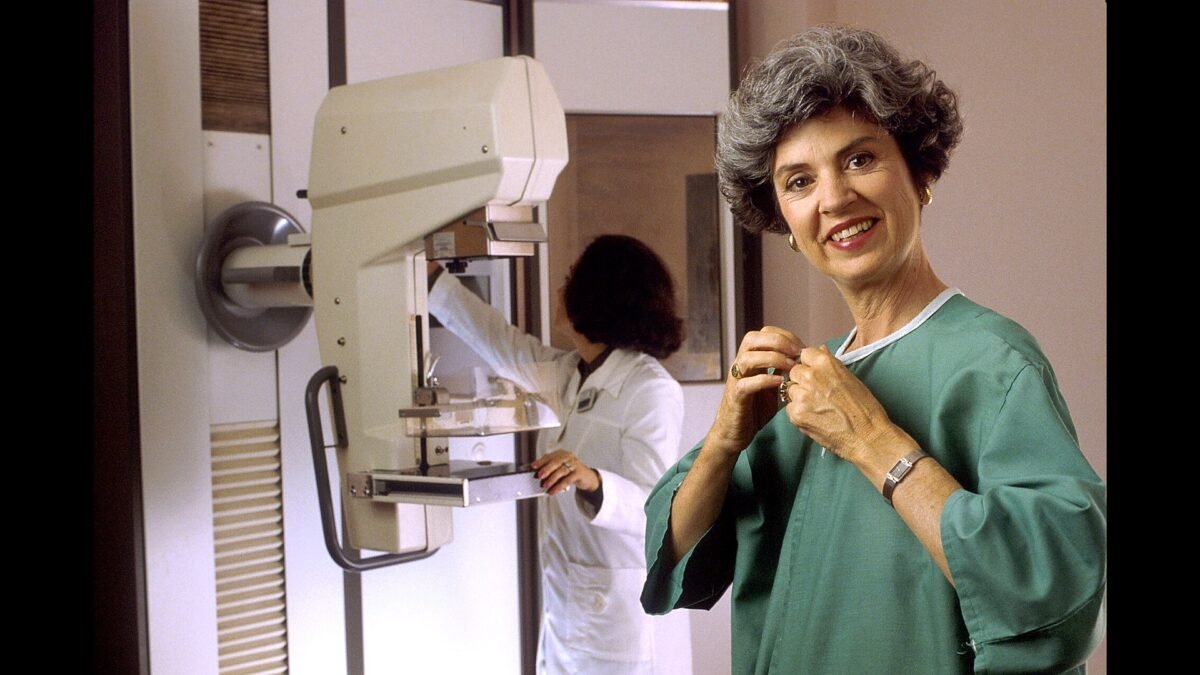
The NHS has begun recruiting women for the largest trial ever run of artificial intelligence in breast cancer screening, a study that will test whether software can safely take over part of the work now done by two human specialists for every mammogram. Nearly 700,000 women are expected to take part over the next three years at 30 screening sites across the United Kingdom, with the first women already recruited at Cambridge University Hospitals.
The trial, known as EDITH, short for Early Detection using Information Technology in Health, will examine whether AI can help radiologists spot cancers earlier, including cancers too small to see or feel, while easing the pressure on a screening service that invites millions of women for mammograms every year. Health Secretary Yvette Cooper visited the trial team at Addenbrooke’s Hospital in Cambridge, where recruitment has started, and said that if the technology succeeds, women could be diagnosed and start treatment much more quickly.
Under the NHS breast screening programme, women aged 50 to 71 are invited for a mammogram, an X-ray of the breast, every three years. At present, two highly trained specialists look at each set of images before a decision is made. EDITH will test whether an AI system can do the work of one of those two readers, freeing the second specialist for other work and potentially cutting the long waits for results that many women now endure.
“AI-assisted technology could support staff by flagging areas of a mammogram where cancer might be missed to improve early cancer detection,” said Professor Sian Taylor-Phillips, professor of population health at the University of Warwick and co-lead of the trial, according to Sky News. She stressed that every clinical decision in the study would remain with NHS staff.
The trial is led by the University of Warwick, the University of Cambridge and Cambridge University Hospitals NHS Foundation Trust, in collaboration with NHS England. It is funded by the National Institute for Health and Care Research, and NHS England described it on Monday as a £10 million study running for three years. When the trial was first announced in February 2025, the Department of Health and Social Care put the funding at £11 million.
Four different AI systems will be tested in the study. Each has been rigorously checked for accuracy before the trial began, according to Professor Taylor-Phillips. The trial will also use a research platform called AIR-SP, which NHS England built with nearly £6 million of government money to make it easier for hospitals to join AI screening studies.
Recruitment began at Cambridge University Hospitals, the first of the 30 participating sites. Thousands more women will be invited to take part at further sites in the coming months, according to NHS England. Normal screening invitations will now include details of the trial, along with the choice to opt out. Women who opt out will still be screened as usual.
The screening appointment itself will not change for women taking part. The AI only comes into play after the images have been taken, and at least one human radiologist will still review every mammogram. Officials have stressed that the study will change how screening works only if the evidence shows that AI-assisted reading is as safe and effective as the care women receive now.
How the trial works
EDITH is designed to answer a precise question, not simply whether AI can find cancer, but whether it can do so inside a real national screening programme without causing harm. To do that, women taking part will be placed in one of three groups, according to the trial’s participant information sheet published by the University of Warwick.
One group will receive standard screening, with two NHS experts reading each mammogram, exactly as happens today. A second group will have their images checked by AI after a human expert has already looked at them, with the software searching for anything the expert might have missed. In the third group, the AI will go first, sorting images by risk before they reach a specialist. If the software judges the likelihood of cancer to be low, one human expert will check the images; if it judges the likelihood to be high, two experts will check them before any decision is made about recalling a woman for further tests.
The researchers will compare the three groups on the number, size and type of cancers found, on cancers that appear between screening rounds, known as interval cancers, and on the costs and benefits of each approach. Women will be followed up for four years after their screening through the screening programme and cancer records, so the full results are still some years away.
Fewer than one in 100 mammograms leads to a cancer diagnosis, which is one reason the workload is so heavy: specialists must examine an enormous number of normal images to find the small number that contain a cancer. That is the burden EDITH is trying to lift. In Sweden, a large randomised trial found that AI-supported reading cut the screen-reading workload by 44 per cent while detecting more cancers, without increasing false positives.
The trial’s design also reflects a deliberate caution. Finding more cancers is not automatically better, and the researchers have said they want to avoid overdiagnosis, the detection of mild disease that would never have caused symptoms in a woman’s lifetime. “AI-assisted technology could help improve early cancer detection but we want to avoid the overdiagnosis of milder disease that would never have caused symptoms,” Professor Taylor-Phillips said, according to reports of the launch.
There is also the question of recalls. If AI highlights more areas as possibly cancerous than human experts do, some of those will turn out not to be cancer, and more women could be called back for tests they never needed. Those recalls bring worry, extra appointments and cost. A trial of this size is meant to show whether the benefits hold up once the tool is used in everyday clinics, rather than in the controlled conditions of a laboratory study.
A service under strain
The trial arrives at a moment when the NHS breast screening programme is busier than ever and short of the specialists it needs. NHS figures show that 2.75 million women were invited for breast screening in 2024-25, 10 per cent higher than the previous year, and around 70 per cent took up the offer. More than two million women attend screening each year, according to the BBC.
Breast cancer is the most common cancer in the UK. Around 59,000 cases are diagnosed each year, according to Sky News, and about a third of breast cancers in England are diagnosed through screening, most of them at an early stage, according to the charity Breast Cancer Now. The screening programme is credited with preventing around 1,300 deaths each year.
Yet the workforce that reads those scans is stretched thin. The Royal College of Radiologists says more than a fifth of the breast radiology workforce is due to retire by 2030, and patients are already facing long, anxious waits for scan results. Dr Stephen Harden, president of the Royal College of Radiologists, welcomed the trial but warned that it would not solve the immediate staff shortage.
“Breast screening mammograms are usually read by two highly trained clinical radiologists, and this research could show how AI can safely act as a second pair of eyes, increasing capacity and helping us deliver faster, more effective care,” Dr Harden said, according to Sky News. “But in the meantime, patients are facing long, anxious waits for scan results because of a dire shortage of radiologists.”
He added that the technology would not prove a “quick fix” and that more radiologists were still needed. That warning matters, because it sets the terms on which the trial should be judged. EDITH is a test of whether AI can make a stretched system work better, not a substitute for the people the system is missing.
Professor Fiona Gilbert of the University of Cambridge, another of the trial’s leaders, said the technology could make reviewing images more efficient, allowing specialist radiologists to spend more time with patients who do have cancer. Professor Kevin Dunbar, deputy director of public health at NHS England, said the trial would “help build the evidence we need, while ensuring patient safety, quality and the expertise of screening professionals remain at the heart of the programme”.
Hannah Maybour, from Breast Cancer Now, said it was “hugely encouraging to see trials and investment into technologies that could improve detection such as Edith”. She noted that around one third of breast cancers in England are diagnosed through screening, most at an early stage, which is why the quality of that first reading matters so much.
Speaking on her visit to Addenbrooke’s Hospital, Ms Cooper said: “If successful, this technology could help women get a breast cancer diagnosis and start treatment much more quickly, giving them the best possible chance of recovery.” She added that AI had huge potential, but that proper safeguards needed to be in place to make sure it was used safely and effectively to improve treatment and research.
What the evidence says so far
EDITH is not the first attempt to bring AI into breast screening, but it is by far the largest. The strongest evidence so far comes from Sweden, where the MASAI trial randomised 105,934 women within the national screening programme to AI-supported reading or standard double reading. The results, published in The Lancet Digital Health in March 2025, found that AI-supported screening detected 6.4 cancers per 1,000 women screened, compared with 5.0 per 1,000 under standard double reading, a 29 per cent increase, with no significant rise in recalls or false positives, and a 44.2 per cent reduction in screen-reading workload.
An earlier interim analysis of the same Swedish trial, published in The Lancet Oncology in 2023 and covering more than 80,000 women, found that AI-supported mammography analysis was as good as two breast radiologists working together at detecting breast cancer, without increasing false positives, and almost halved the screen-reading workload. The researchers cautioned at the time that the final results, looking at whether AI reduces interval cancers, the cancers detected between screenings that generally carry a poorer prognosis, were not expected for several years.
British research has pointed in the same direction. A major study led by Imperial College London and Google, published in the journal Nature Cancer, tested an AI system as the second reader in the NHS double-reading workflow. In a retrospective analysis of mammograms from 125,000 women, the AI system detected 25 per cent of interval cancers that conventional screening had missed, raised the cancer detection rate from 7.54 to 9.33 per 1,000 women, produced fewer false positives among women attending their first screening appointment, and could cut screening workloads by an estimated 40 per cent when used as the second reader. A second, prospective part of the study examined more than 9,000 cases in real time across 12 NHS screening sites in London.
Those results are encouraging, but they also explain why EDITH is necessary. Retrospective studies look backwards at scans whose outcomes are already known. Prospective trials in live clinics, with real patients and real consequences, are a harder test, and it is the test that health systems have been waiting for. More than 1,400 AI medical devices have now been authorised in the United States alone, most of them for imaging, yet few have been proven inside a national screening programme at this scale.
The four AI systems in EDITH will be tested against each other as well as against standard care, which should also help answer a question that smaller studies cannot: whether the results depend on which company’s software is used, or whether the benefit is a property of the technology itself. That matters for any health service deciding what to buy, and for regulators deciding what to approve.
Analysis: Why It Matters
The NHS is asking the right question, at the right scale
The most important thing about EDITH is not that it uses AI, but that it is designed to find out whether AI actually helps in the setting where it would be used. Too many medical AI products have reached the market on the strength of laboratory results, tested on old scans in conditions that bear little resemblance to a busy screening clinic. EDITH does the opposite. It tests the technology inside the programme itself, on hundreds of thousands of women, over three years, with follow-up for four more, and it measures the outcomes that matter: cancers found, cancers missed between rounds, women recalled unnecessarily, and cost.
The three-arm design is the key to that. By comparing standard double reading with two different ways of using AI, one as a safety net after the human reader, the other as a triage tool before them, the trial will show not just whether AI helps, but how it helps most. That distinction will decide how the NHS, and health systems elsewhere, actually deploy the technology. A safety net that catches what humans miss is a very different proposition from a triage system that decides how many humans look at each scan, and the two carry different risks.
Scale is the other part of the answer. Nearly 700,000 women across 30 sites is large enough to detect effects that smaller studies would miss, including rare harms. It is also large enough to test whether the technology works as well in different parts of the country, in screening units with different equipment and different patient populations. The trial’s sites are spread across communities in England, Scotland, Wales and Northern Ireland, including regions where health inequalities persist, and that spread is itself part of the evidence.
A workforce crisis that software alone cannot fix
It would be a mistake to read EDITH as a story about technology replacing people. The Royal College of Radiologists has been clear that it is not, and the trial’s own design makes the point: every mammogram will still be read by at least one human expert, and every clinical decision stays with NHS staff. The technology is being tested as a second pair of eyes, not as a substitute for the first pair.
The workforce figures explain why that distinction matters. More than a fifth of breast radiologists are due to retire by 2030, and patients are already waiting too long for results. If EDITH succeeds, the gain is not that the NHS needs fewer radiologists, but that the radiologists it has can spend their time where it counts most, on the images that need expert judgement and on the patients who have cancer, rather than on the large majority of scans that are normal. That is a productivity argument, not a replacement argument, and it is a more honest one.
There is also a risk in the opposite direction. If the trial is presented as a solution to the staffing crisis, it could be used as an excuse not to train more radiologists. Dr Harden’s warning that AI will not prove a “quick fix” is worth keeping in mind. The results will take years, and the shortage exists today. Software that arrives in 2030 does nothing for a woman waiting for her results this winter.
The overdiagnosis question is the real test
The most difficult question EDITH must answer is not whether AI finds more cancers, but whether the extra cancers it finds are the ones that matter. Screening has always carried this tension. Finding a cancer early saves lives, but finding a slow-growing abnormality that would never have caused symptoms can lead to treatment a woman never needed, with all the anxiety and side effects that involves.
The Swedish trial offers some reassurance. The extra cancers it found were mostly small, invasive, lymph-node-negative tumours, the kind that benefit most from early treatment, and there was no significant increase in false positives. But Sweden is not the UK, and the four systems in EDITH are not the system used in MASAI. The trial’s own researchers have put overdiagnosis at the centre of what they will measure, and that is the right call. A technology that finds more cancer is only a success if the cancers it finds are worth finding.
Recalls deserve the same scrutiny. A system that flags more images as suspicious will send more women back for further tests, and most of those women will not have cancer. Each recall is a period of fear, an extra appointment, and a cost to the service. EDITH’s size should make it possible to measure that trade-off precisely, and to say whether the extra cancers found are worth the extra recalls caused.
Trust will decide whether this works
For a trial of this kind, public trust is not a side issue; it is part of the intervention. Women are being asked to let software help read images of their bodies, and the NHS is asking them to trust that a human expert still has the final say. The opt-out arrangement, in which trial details arrive with the screening invitation and women can decline without losing their screening, is the right approach, but it only works if the information is clear and the choice is genuine.
Transparency about the four AI systems will matter too. Women, and the clinicians caring for them, should know which systems are being used, how they were trained, and what data they were trained on. The AIR-SP platform, built with public money to help hospitals join AI screening studies, is a sensible piece of infrastructure, but it also concentrates a great deal of sensitive health data in one place, and its governance will need to be as robust as the trial’s clinical design.
There is a wider point as well. EDITH is the kind of study that only a national health service can run: a single screening programme, a single set of standards, and a population large enough to answer the question properly. If it succeeds, its results will be watched far beyond Britain. Health systems in the United States, Europe and Asia are all struggling with the same problem, too many scans and too few specialists, and all of them are waiting for evidence of this kind. The NHS has a chance to provide it.
What to watch next
The first thing to watch is the pace of the rollout. Cambridge is the first of 30 sites, and thousands more women will be invited in the coming months. How quickly the remaining sites come on board, and how many women choose to take part, will determine whether the trial reaches its target of nearly 700,000 participants.
The second is the early safety picture. The trial’s design includes checks on whether AI is missing cancers or generating excessive recalls, and any early signal on either side will be closely watched. The researchers have said the NHS will change how screening works only if the evidence shows AI-assisted reading is as safe and effective as current care, and the credibility of that promise depends on the trial being willing to report bad news as well as good.
The third is the funding question. The trial was announced with £11 million of National Institute for Health and Care Research funding in February 2025, and NHS England now describes it as a £10 million study. The difference is small, but it is a reminder that the costs of running a trial of this size, and of deploying the technology afterwards, will need to be counted carefully. A system that works clinically but costs more than the service can afford is not a solution.
Finally, watch what happens elsewhere. The Swedish MASAI trial’s longer-term results on interval cancers, the endpoint that truly measures whether a screening programme is safe, are still to come, and the Imperial-Google work continues in NHS clinics. EDITH sits within a growing body of evidence, and its results will be read alongside those studies, not in isolation. The full picture will take years to emerge, but the first women have now been recruited, and the largest test of AI in cancer screening ever attempted is under way.
Sources
- Sky News: Major trial to examine if AI can help detect breast cancer earlier
- BBC News: Can AI spot breast cancer earlier? NHS launches world’s largest trial to find out
- University of Warwick: EDITH Participant Information Sheet (trial design and consent)
- University of Warwick: Warwick Professor to lead cutting-edge trial using AI to catch breast cancer early
- The Lancet Digital Health: Screening performance of the MASAI randomised trial of AI-supported mammography (PubMed)

About the Author — Abdul Mannan
Related Articles

China-Linked AI Agents Found a Zero-Day in 11 Minutes and Took Over a University Server, Amazon Reveals
Amazon says autonomous AI agents run by a suspected China-linked operator found an unknown flaw in a medical…

Apple Is Building Its Own AI Agent That Can Run Your Mac — While Tightening the Screws on Rival Agents
Bloomberg reports Apple is hiring to build a computer-using AI agent that browses the web, runs apps and…

SpaceX’s Cursor May Drop Chinese AI Models as Congress Urges Ban on PRC Models in Federal Systems
Cursor told two House committees it will explore phasing out Chinese open-weight models over geopolitical risk, as a…