
Houthis Threaten to Strike Jeddah and All Saudi Red Sea Ports After Coalition Orders Hodeidah Evacuated

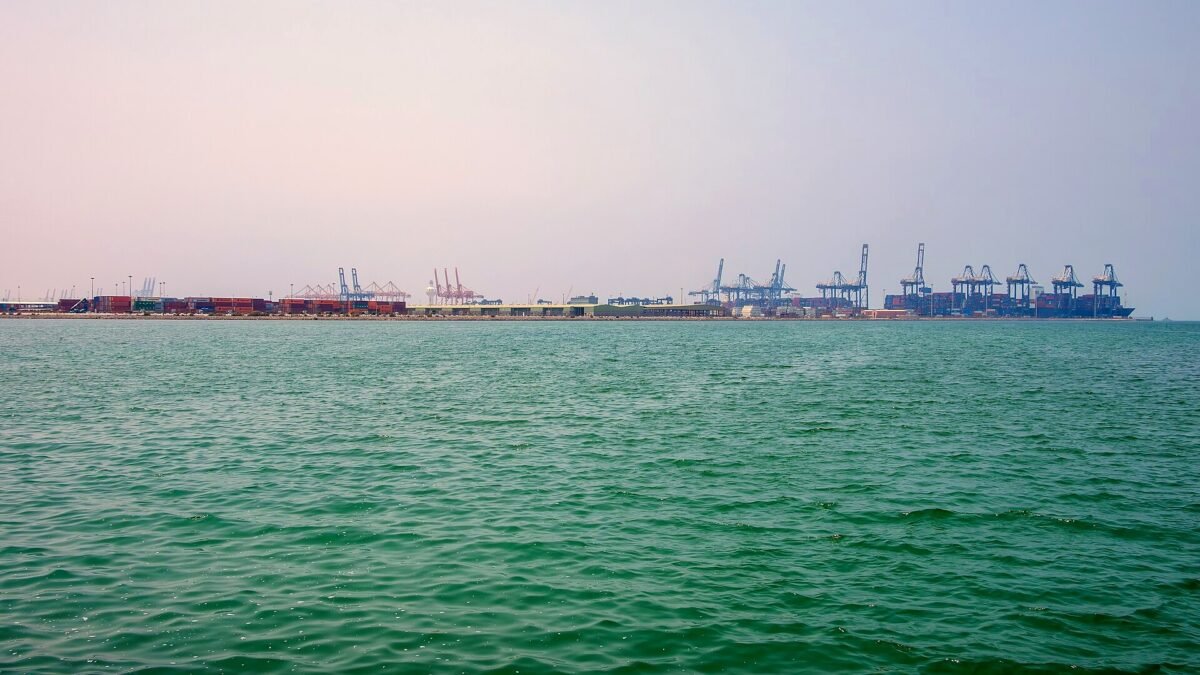
Yemen’s Houthi movement has threatened to strike the Saudi port of Jeddah and every other Saudi port on the Red Sea coast if the Saudi-led coalition follows through on its threat to bomb the Yemeni port of Hodeidah, in the sharpest exchange of warnings yet in a conflict that has escalated steadily since September.
The threat, issued on Wednesday by Houthi military spokesman Yahya Saree, came hours after the coalition’s Joint Forces Command told civilians to leave Hodeidah port “for their safety”, publishing a satellite map with the port area marked in red. By the end of the day, the coalition said it had struck what it described as operational capabilities at Hodeidah and destroyed targets in the Yemeni governorates of Saada and Amran, according to Reuters.
The two sides have now put each other’s main commercial seaports directly in the line of fire. Hodeidah is the principal gateway for food, fuel and humanitarian aid into Houthi-held northern Yemen, while Jeddah Islamic Port is Saudi Arabia’s largest commercial port and the main sea gateway for the holy cities of Mecca and Medina. The exchange marks a new phase in a war that has already shut down Riyadh’s main airport for two weeks, struck the capital’s financial district twice in less than a week, and drawn the United States’ embassies across the region into issuing fresh warnings to Americans.
The Evacuation Order and the Threat
Early on Wednesday, coalition spokesman Major General Turki al-Malki posted the evacuation warning on X, according to the Insight International. “The Joint Forces Command of the Coalition is asking civilians to evacuate the port of Hodeidah, as shown on the location map, for their safety,” he wrote, alongside a satellite image of the port with the evacuation zone shaded red.
The Houthi response came within hours. Saree said in a statement on X that Jeddah port and “all enemy Saudi ports along the Red Sea coast” would be targets if Hodeidah were attacked. He warned employees, workers and anyone near the ports to evacuate immediately and called on shipping companies to move their vessels out of the facilities, according to Reuters.
“We warn all employees, workers and anyone near these ports to evacuate immediately and stay away from them,” Saree said, according to Al Jazeera, which was cited in an ANI report carried by Daily Prabhat. “We also urge all shipping companies to immediately evacuate their ships from these ports.”
Shortly after the coalition warning, the Houthi-run Saba news agency reported that Saudi forces had attacked Hodeidah port, and local Yemeni accounts on social media reported explosions in the city. The coalition had not announced a strike on the port itself at that point, and the report could not be independently confirmed, according to the Insight International. The coalition later said in a statement on Wednesday that it had targeted operational capabilities at Hodeidah and destroyed a number of targets in Saada and Amran, Reuters reported.
The coalition also reported intercepting and destroying two drones in Saudi Arabia’s Eastern Province, according to ANI.
A Week of Escalation
Wednesday’s exchange did not come out of nowhere. It followed a drone attack on Tuesday on the Public Investment Fund tower in Riyadh’s King Abdullah Financial District, which Saudi civil defence said injured 11 people, including two Indian nationals, according to ANI. It was the second strike on a tower in the district in less than a week. Al-Malki blamed the Houthis for the attack and promised a firm response, according to the Insight International.
The same pattern played out five days earlier. On Friday 20 November, the coalition ordered civilians to evacuate Hodeidah port and struck what it described as military targets at Yemen’s main import gateway, drawing an immediate Houthi threat against Jeddah and a declaration that Saudi airspace was “unsafe”. Al Jazeera’s correspondent in the region described the 20 November campaign as the heaviest air strikes seen since the conflict began.
On that Friday, Saree’s warnings went further than the port threat. He told airlines to avoid Saudi airspace “because it will be the scene of our operations in the coming hours”, making an exception only for the airspace near the Muslim holy cities of Mecca and Medina, according to Al Jazeera. He also said the group would target a power station at Shuqaiq in southern Saudi Arabia and named a financial centre in Riyadh as a target. Shortly afterwards, the coalition said it had begun a “targeted operation” against Houthi assets it claimed were being used to target civilians in Saudi Arabia and Yemen, and said it had struck operational capabilities at Hodeidah port used for smuggling and transporting weapons and ballistic missiles.
A second wave of strikes followed on Saturday evening, 21 November, when Houthi-run al-Masirah television reported fresh Saudi strikes on Hodeidah, according to Xinhua. Saree claimed on X that Saudi warplanes and missiles had carried out 71 strikes across eight Yemeni provinces in 24 hours, and that the total had reached 5,500 since the renewed escalation began. Those figures come from the Houthi movement itself and have not been independently verified.
The Houthis have also claimed attacks on Saudi energy and port sites in recent days, including the Rabigh refinery, according to the Insight International. On Tuesday, United States embassies across the region warned Americans of an increased threat of Houthi attacks on Saudi airports and other critical infrastructure.
Why Hodeidah Matters
Hodeidah sits on a narrow peninsula on Yemen’s Red Sea coast, and its port handles roughly 70 per cent of the country’s commercial imports, according to the United Nations. It is the main entry point for food, fuel and humanitarian aid into northern Yemen, where most of the population lives under Houthi control. Any sustained disruption to the port would hit the import lifeline of the territory the Houthis govern, and the coalition knows it.
That is precisely why the port has been a battleground throughout the war. In 2018, a coalition ground offensive pushed towards Hodeidah before the United Nations-brokered Stockholm Agreement froze the front lines and placed the port under a fragile ceasefire arrangement. The agreement held, more or less, for years. The current campaign is the most serious attempt to put the port back in the line of fire since then.
The coalition’s stated reason for striking Hodeidah is that the Houthis use the port’s facilities to receive smuggled Iranian weapons and to move ballistic missiles, according to the coalition and to Yemen’s internationally recognised government, which backed the operation. The Houthis deny the charge and describe the strikes as aggression against civilian infrastructure. The movement’s telecommunications department raised its toll from strikes in Hodeidah on 23 November to 17 workers killed, according to the Silent Dossier, a figure that has not been independently verified.
What is not in dispute is that the port is the artery through which northern Yemen eats. The UN’s World Food Programme and other aid agencies have warned repeatedly over the years that damage to Hodeidah’s cranes, warehouses and fuel terminals would deepen what is already one of the world’s worst humanitarian crises. The coalition’s evacuation warning, with its satellite map and red zone, was designed to show that it intends to hit the port while limiting civilian casualties. The Houthis’ answer was to threaten the port through which Saudi Arabia eats.
Why Jeddah Matters
Jeddah Islamic Port is Saudi Arabia’s largest and most strategically significant port. It handles approximately 65 per cent of the kingdom’s sea imports and serves as the primary gateway for the western half of the country, including the holy cities of Mecca and Medina, according to shipping industry data. The port spans about 12 square kilometres, has more than 60 berths, and handles millions of container units a year, placing it among the busiest ports in the Red Sea region.
Its importance has grown in recent weeks. With shipping through the Strait of Hormuz disrupted, Persian Gulf freight has been rerouted to the Red Sea, and Jeddah has absorbed much of the diverted traffic. The port is also the logistical backbone for the Hajj and Umrah pilgrimages, handling supplies and equipment for the millions of pilgrims who visit Mecca each year. Mecca lies about 65 to 80 kilometres inland from Jeddah, and the port is the main sea gateway for pilgrims travelling to the holy city.
That is what makes the Houthi threat so pointed. A strike on Jeddah would not only hit Saudi Arabia’s main import hub. It would strike at the gateway to Islam’s holiest city, in a country that presents itself as the guardian of the two holy mosques. The Houthis were careful, on 20 November, to exempt the airspace near Mecca and Medina from their warning about Saudi airspace. But a missile or drone aimed at Jeddah’s container terminals would land a short drive from Mecca, and the political symbolism would be enormous whatever it hit.
The other Saudi Red Sea ports named in the threat include Yanbu, the oil hub on the coast north of Jeddah, and the smaller ports of the southern provinces. The coalition has already intercepted a ballistic missile aimed at Yanbu in the past, and the Houthis have claimed strikes on Saudi oil sites and airports in recent weeks. The threat, in other words, covers the whole of Saudi Arabia’s western seaboard.
The Wider War
The renewed fighting between the two sides has intensified since September, when the Houthis advanced towards the Bab el-Mandeb Strait, the strategic shipping chokepoint at the southern entrance to the Red Sea, according to Reuters. The Houthis have since stepped up strikes on Saudi airports, ports and oil facilities, while Saudi Arabia has ramped up airstrikes on Houthi targets in Yemen in response.
The escalation has unfolded in parallel with a wider regional confrontation. The United States has built up naval power in the region amid its standoff with Iran, and the Houthis, who are backed by Tehran, have tied their campaign to that wider conflict. Earlier this month, the Houthis said they had taken control of Bab el-Mandeb as Yemeni government forces pulled back to defend Aden, the southern port city that serves as the seat of the internationally recognised government.
The war in Yemen began in 2014, when the Houthis, a movement drawn from Yemen’s Zaidi Shia minority that calls itself Ansarullah, seized the capital Sanaa and drove the internationally recognised government into exile. A Saudi-led coalition intervened in March 2015 to restore the government, and the war that followed has killed hundreds of thousands of people, most of them through hunger and disease rather than fighting, and left millions dependent on aid. The United Nations has repeatedly described it as one of the world’s worst humanitarian crises.
For long stretches the war was frozen. Front lines barely moved after 2018, and a truce in 2022 brought a long period of relative calm. That calm has now broken. The Houthis resumed attacks on Saudi targets in the autumn, the coalition has answered with its heaviest bombing in years, and both sides are now threatening the commercial infrastructure the other depends on. The pattern is familiar from the worst years of the war, when Houthi missiles reached Riyadh and coalition bombs fell on Sanaa. What is new is the symmetry: each side is now threatening the other’s main port, openly and by name.
Analysis: Why It Matters
The exchange of port threats matters for three reasons, and none of them is limited to Yemen.
First, it changes the arithmetic of the war. For most of the conflict, the two sides fought over territory and military targets, and the economic war was fought indirectly, through blockades and shipping disruption. Now both sides are naming civilian commercial infrastructure as a target, and doing so in public, with evacuation warnings issued on social media. That is a deliberate escalation, and it is designed to be seen. The coalition’s satellite map of Hodeidah, with its red zone, is a message to the Houthis and to the world that the port is no longer off limits. Saree’s answer is a message of the same kind: if you bomb our port, we will bomb yours. When both sides make that threat in the open, the space for deniability disappears, and so does much of the restraint that kept the war frozen for so long.
Second, the threats reach far beyond Yemen and Saudi Arabia. The Red Sea is one of the world’s most important shipping lanes, carrying a large share of the trade between Europe and Asia through the Suez Canal. The Houthis have already shown, in their campaign against shipping in the Red Sea, that they can disrupt that trade. A sustained exchange of strikes on the ports at either end of the sea would raise insurance costs, force shipping companies to reroute, and push up prices for food and fuel across the region. Jeddah’s role as the absorber of diverted Gulf freight makes it a particularly sensitive target: if Jeddah is hit, the fallback route for Persian Gulf trade is hit too. The Houthis know this. So do the shipping companies Saree urged to pull their vessels out.
Third, the escalation complicates an already dangerous regional picture. The United States has massed naval forces in the region, and its embassies have warned Americans of an increased threat of Houthi attacks on Saudi airports and critical infrastructure. Washington has been pressing for a de-escalation in the wider confrontation with Iran, but the Houthis have their own logic and their own timetable, and their campaign against Saudi Arabia has its own momentum. A Houthi strike on Jeddah, or a coalition strike that closes Hodeidah, would each be a step towards a wider war that neither Riyadh nor Washington wants, and that the Houthis may believe they can survive.
There is also a humanitarian calculation that should not be lost in the military arithmetic. Hodeidah is not a military base with a port attached. It is a port through which food arrives for millions of people who have already endured a decade of war. The coalition says it is targeting only the operational capabilities used for smuggling weapons, and it has warned civilians to leave. But ports are not precision instruments, and the line between a crane used for grain and a crane used for missiles is not one that can be drawn from the air. If Hodeidah is damaged, the people who will feel it first are not the Houthi leadership in Sanaa. They are the families in the north who depend on the food that comes through it.
The same logic applies in the other direction. Jeddah is not a military target. It is the port through which Saudi Arabia imports its food, its medicine and its building materials, and the gateway for pilgrims to Mecca. A strike there would be felt by ordinary Saudis and by pilgrims long before it was felt by the Saudi military. Both sides know this, and both sides are threatening it anyway. That is the measure of how far the escalation has gone.
What to Watch Next
The first question is whether the coalition follows through on its evacuation warning with a sustained bombing campaign against Hodeidah, or whether the warning itself was the message. The coalition has struck the port before, on 20 November and again on 21 November, and it said on Wednesday that it had hit operational capabilities there. What is not yet clear is whether the strikes will continue, and whether they will damage the port’s civilian infrastructure.
The second question is whether the Houthis will act on their threat against Jeddah. They have made the threat twice in five days, and they have shown in recent weeks that they can reach Riyadh, which lies considerably farther from their launch areas than the Red Sea coast. The coalition’s air defences have intercepted many of the missiles and drones fired at Saudi targets, but not all of them. The PIF Tower strike on Tuesday, the second on the financial district in under a week, shows that some are getting through.
The third question is whether anyone can still pull the two sides back. The United Nations has a special envoy for Yemen, and the Stockholm Agreement still exists on paper. But the envoy’s leverage depends on both sides believing that negotiation is better than escalation, and that belief is harder to sustain when each side is publicly threatening the other’s main port. The United States, which has the most influence over Riyadh, has its attention divided by its confrontation with Iran. The Gulf states, which have the most to lose from a wider war, have so far been unable to stop the escalation.
The fourth question is the shipping one. If shipping companies heed Saree’s call and pull their vessels out of Saudi Red Sea ports, or if insurers raise their rates, the economic damage will begin before a single missile lands. Watch the statements from the major shipping lines and the insurance market in the coming days. They will tell you, faster than any military briefing, how seriously the world is taking the threat.
For now, the pattern is clear. Each side has named the other’s lifeline, and each side has said, in public, that it is prepared to strike it. The warnings have been issued. The maps have been published. What happens next depends on whether either side is willing to step back from a threat it has now made twice.
Sources
- Reuters — Yemen’s Houthis threaten to target Jeddah and other Saudi Red Sea ports
- The Insight International — Houthis threaten Jeddah and all Saudi Red Sea ports after coalition orders Hodeidah port evacuated
- Daily Prabhat (ANI) — Saudi-led coalition strikes Yemen’s Hodeidah Port after Houthis threaten Red Sea ports
- House of Saud — Coalition Strikes Hodeidah, Houthis Threaten Jeddah Port (20 November background)
- Vision 2030 Encyclopedia — Jeddah Islamic Port

About the Author — Abdul Mannan
Related Articles
Israel Kills Hamas Internal Security Chief Naeem Abu Nahel in Gaza Drone Strike
Israel killed Hamas internal security chief Naeem Abu Nahel in a drone strike in western Gaza City on…

US Sanctions 30 Targets in Iran’s Shadow Banking Network in Fresh Blow to Tehran’s War Economy
The US Treasury has sanctioned 22 entities and eight individuals tied to Iran's shadow banking networks, as Washington…

Iran Flogs Singer Parastoo Ahmadi 74 Times Over Hijab-Free Concert
Iranian singer Parastoo Ahmadi and four members of her concert team were each lashed 74 times in Qom…