
BBC Appeals Against Ruling Allowing Trump’s $10 Billion Defamation Case to Go Ahead

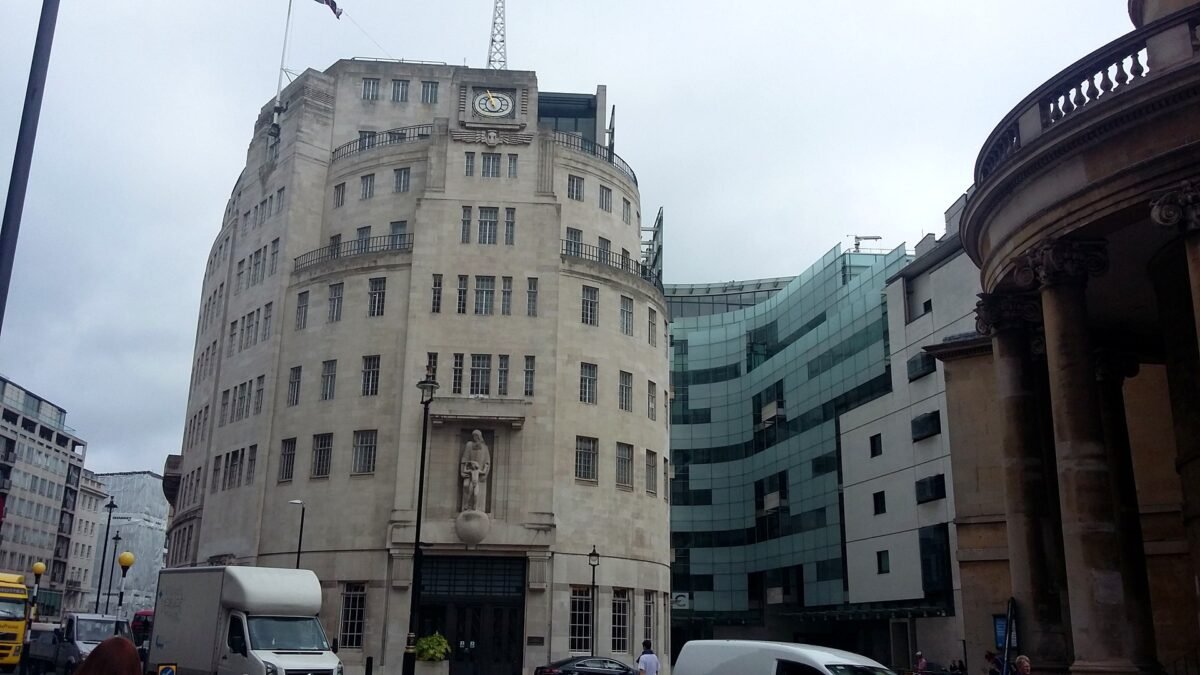
The BBC has lodged an urgent appeal with a higher United States court in an attempt to throw out President Donald Trump’s $10 billion defamation lawsuit, after a federal judge in Florida ruled earlier this month that the case could proceed to trial.
According to the BBC, the corporation filed a petition for a writ of mandamus with the United States Court of Appeals for the Eleventh Circuit on 17 November, asking the appeals court to intervene and dismiss the case. The move was first reported by The Guardian on Wednesday 25 November and confirmed by the BBC the same day.
At the heart of the appeal is a single question: does a court in Florida have any legal authority over a British public broadcaster for a documentary that was shown only in the United Kingdom?
The BBC says the answer is no. Its lawyers argue that the programme at the centre of the dispute, the 2024 Panorama documentary Trump: A Second Chance?, “never aired in the United States”, and that there is a “complete lack of evidence” that anyone in Florida ever watched it. The corporation says it took rigorous and systematic steps to prevent the documentary from being viewed in the United States, including restricting it to its British television channels and the UK-only version of its iPlayer streaming service.
“We are surprised and disappointed by the court’s decision that this case should be heard in Florida,” a BBC spokesperson said, according to the BBC. “As we have made clear from the start, the BBC broadcast this documentary in the UK – and UK only. We did not show it in Florida, nor did any other broadcaster. Given the urgency of this issue, we are now requesting a higher court review the ruling.”
The appeal follows a 40-page ruling on 10 November by US District Judge Jeffrey T. Kuntz, who rejected the BBC’s attempt to have the lawsuit dismissed and allowed the defamation claim to move forward. Judge Kuntz, who was nominated to the federal bench by Mr Trump and confirmed by the Senate earlier this year in a vote that split along party lines, found that Mr Trump had plausibly alleged that the BBC damaged his reputation and knew, or should have known, that the edited clip was misleading.
The ruling did not decide whether Mr Trump has proved his claims. It decided only that the allegations were strong enough, at this early stage, for the case to continue. But for the BBC, the decision was a serious setback, and the corporation has now turned to the appeals court in an effort to stop the case before it reaches a jury.
The edit at the centre of the case
Mr Trump sued the BBC in December 2025, claiming at least $10 billion in damages. The lawsuit centres on the way Panorama edited a speech he delivered on 6 January 2021, shortly before his supporters stormed the United States Capitol.
The documentary spliced together two parts of the speech that were delivered almost an hour apart, producing a sequence in which Mr Trump appeared to tell a crowd: “We’re going to walk down to the Capitol and I’ll be there with you, and we fight. We fight like hell.” In the original speech, the call to walk to the Capitol and the exhortation to “fight like hell” came in separate passages, separated by a long stretch of other remarks.
The BBC has admitted that the edit was misleading and apologised to Mr Trump on 13 November 2025, about a month before he filed the lawsuit. The corporation has always denied, however, that the programme defamed him. In seeking to have the case dismissed, the BBC argued that its editors had condensed a 70-minute speech for broadcast, a routine part of documentary production. Judge Kuntz rejected that argument.
The controversy over the edit has already cost the BBC dearly at home. The corporation’s director general, Tim Davie, and its head of news, Deborah Turness, both resigned in November 2025 as the scandal unfolded, and the BBC has faced months of criticism over its editorial standards and its handling of the affair.
Mr Trump’s original lawsuit sought $5 billion for defamation and a further $5 billion under Florida’s Deceptive and Unfair Trade Practices Act. Judge Kuntz dismissed the second claim, leaving the defamation claim, worth a minimum of $5 billion, as the live part of the case. In his ruling, the judge found that Mr Trump had sufficiently pleaded “actual malice” – the demanding legal standard that a public figure must meet to win a defamation case in the United States, showing that a publisher either knew a statement was false or acted with reckless disregard for whether it was true.
“Accepting the allegations in the complaint as true, the court finds Trump plausibly pled damages where Trump alleges a defamatory documentary released toward the election caused reputational harm,” Judge Kuntz wrote, according to reports of the ruling.
Mr Trump celebrated the decision on his Truth Social platform, describing it as a “huge victory against fake news BBC”.
The BBC’s appeal: jurisdiction, not the edit
The BBC’s new filing does not ask the appeals court to decide whether the edit was defamatory. Instead, it challenges Judge Kuntz’s ruling on jurisdiction – the question of whether a Florida court can hear the case at all.
Under American law, a court can only exercise power over a defendant if that defendant has sufficient connections with the state where the court sits. The BBC argues that it has no such connection with Florida: it did not produce, film or broadcast the documentary there, it did not hold the rights to show it in the United States, and no other broadcaster showed it there either.
“The BBC did not produce, film, or air the documentary in Florida. Rather, the BBC aired it on its UK TV channels, and also made it available on the UK iPlayer streaming service. The BBC never broadcast it in the US, nor did it have the rights to do so,” the corporation’s lawyers wrote in the filing, according to The Guardian.
The filing adds that the Florida court “ignored the BBC’s rigorous and systematic efforts to prevent access to the documentary and its other streaming content in the United States”, and argues that allowing the case to proceed would be “anathema to the due process requirements of personal jurisdiction and to the comity interests in allowing other sovereign nations to police their own affairs”.
The BBC also warned of wider consequences. “Any international business with an online presence, even if it also diligently worked to block US access, could be haled into court in any state, so long as a handful of third-party efforts to circumvent that geo-blocking are alleged,” its lawyers wrote, according to TheWrap, which obtained the filing.
The reference to third-party efforts is central to the dispute. Mr Trump’s amended complaint alleges that the documentary was accessed in Florida by users employing virtual private networks, or VPNs, which can make a computer appear to be in a different country. According to reports, the complaint claims the film was played at least 34 times in Florida by ten users relying on VPNs. The BBC has disputed those alleged streams and argued that unauthorised access by a handful of viewers cannot create jurisdiction over a broadcaster that deliberately kept its programme out of the United States.
A petition for a writ of mandamus is an unusual and demanding legal step. It asks a higher court to order a lower court to correct what the petitioner says is a clear legal error, rather than waiting for the ordinary appeals process after a trial. Courts grant such petitions only rarely, and only where the error is plain and there is no other adequate remedy. The BBC’s decision to take that route, rather than simply defending the case in Florida, underlines how seriously it views the jurisdictional ruling – and how determined it is to avoid a trial in a court it believes should never have taken the case.
A case that keeps moving
While the appeal is pending, the case continues in the lower court. A trial has been scheduled for May 2027 in Fort Lauderdale, Florida, according to the BBC’s petition.
Mr Trump has also been ordered to sit for a deposition – a formal session in which he is questioned under oath by the BBC’s lawyers – by 22 January, after the session was postponed. The deposition is a potentially significant moment in the case: the president will have to answer questions about the damage he says the documentary caused him, and about his own knowledge of the events it described.
The BBC’s appeal comes at a difficult moment for the corporation. It is making large cuts to its budgets at home and is in talks with the British government about its future funding, with the licence fee model under review. The corporation has also warned that the cost and uncertainty of prolonged litigation in the United States could affect the services it provides to millions of British citizens.
Mr Trump’s legal team, by contrast, has welcomed the chance to pursue the case. A spokesperson for the president’s lawyers told TheWrap that the BBC defamed Mr Trump by “intentionally, maliciously, and deceptively doctoring his speech in a brazen attempt to interfere in the 2024 Presidential Election”, adding that the “powerhouse lawsuit is holding the BBC accountable for its defamation and reckless election interference just as he has held other fake news mainstream media responsible for their wrongdoing”.
Analysis: Why It Matters
The BBC’s appeal is about far more than one documentary, one edit, or even one $10 billion claim. It is a test of how far American courts can reach into the rest of the world – and of how much protection the press enjoys when a powerful politician decides to sue.
The jurisdictional question is the first and most important issue. For decades, American courts have wrestled with a basic problem created by the internet: if a broadcaster puts a programme online, even with the intention of showing it only at home, can it be sued anywhere in the world where someone manages to watch it? The BBC’s answer is that it should not – and that a broadcaster which takes deliberate, systematic steps to block access from a country has done everything the law can reasonably ask of it.
The argument matters because of the precedent it would set. If Judge Kuntz’s ruling stands, then any media organisation anywhere in the world could, in principle, be dragged before a court in Florida – or any other American state – on the strength of a few viewers using VPNs to get around geo-blocking. That is the warning the BBC’s lawyers put at the centre of their filing, and it is one that will be read with attention by news organisations, streaming services and publishers far beyond Britain. A small broadcaster in another country, without the BBC’s resources, might simply decide that the risk of American litigation is too great, and avoid reporting on American politics altogether. That chilling effect is precisely what press freedom advocates fear.
There is also a question of fairness and of respect between legal systems. The BBC is a British institution, funded by British licence fee payers, regulated by the British broadcasting regulator Ofcom, and subject to British defamation law. The programme was made in Britain, for a British audience, about a speech that was delivered in Washington. The idea that a Florida court should decide whether it was defamatory – under American law, with American standards of proof – strikes many lawyers as a stretch, and the BBC’s invocation of “comity”, the principle that courts should respect the right of other countries to police their own affairs, is a deliberate appeal to that instinct.
Yet the BBC’s position is not as strong as it might appear. The judge who allowed the case to proceed was appointed by Mr Trump himself, and the president has made no secret of his view that the BBC is part of a hostile media establishment. But Judge Kuntz’s ruling was a careful one: it did not find that the BBC defamed Mr Trump, only that the president’s allegations were sufficiently detailed to survive an early challenge. The “actual malice” standard that Mr Trump must ultimately meet is one of the highest bars in American law, deliberately set by the Supreme Court in 1964 to protect free speech. To win at trial, Mr Trump would have to prove not merely that the edit was misleading – the BBC has already admitted that – but that the corporation either knew it was false or acted with reckless disregard for the truth. That is a difficult case to make, and the BBC will argue that a condensation of a long speech, however clumsy, is not the same thing as a deliberate lie.
The politics of the case are impossible to ignore. Mr Trump has turned litigation against the media into a central feature of his second presidency. ABC News agreed in December 2024 to pay $15 million towards his presidential library, plus $1 million in legal fees, to settle a defamation suit over an anchor’s on-air claim. Paramount, the parent company of CBS, agreed in July 2025 to pay $16 million to settle his lawsuit over the editing of a 60 Minutes interview with Kamala Harris. Meta paid about $25 million to settle his suit over the suspension of his social media accounts, X paid about $10 million, and YouTube agreed to pay $24.5 million in September 2025. According to the U.S. Press Freedom Tracker, which monitors Mr Trump’s lawsuits against the press, the settlements have alarmed press freedom advocates, who fear that media companies are choosing to pay rather than fight.
The BBC, unlike those companies, has no commercial reason to settle. It is publicly funded, it has no merger awaiting regulatory approval, and it has already paid a heavy price for the edit in the resignations of its two most senior news executives. Settling would look like an admission that the corporation’s journalism was not merely flawed but unlawful, and it would set a precedent that any foreign broadcaster can be made to pay for coverage of an American president. That is why the BBC is fighting – and why it has chosen to fight on jurisdiction, the ground where its case is strongest.
There is a deeper irony in the case. The BBC’s own reporting of the Panorama edit was the reason the scandal came to light in the first place: the corporation’s journalism exposed its own mistake, apologised for it, and saw its leaders resign. In most countries, that would be regarded as accountability working as it should. Mr Trump’s lawsuit treats it as the beginning of a legal claim worth billions. Whether the American courts agree will shape not only the BBC’s future but the willingness of broadcasters everywhere to report critically on powerful figures.
What happens next will be watched closely. The Eleventh Circuit will first decide whether to hear the BBC’s mandamus petition at all, and then whether the Florida court’s jurisdictional ruling was so plainly wrong that it must be overturned before trial. If the appeals court refuses to intervene, the case will grind on towards the May 2027 trial, with Mr Trump’s deposition in January as the next major staging post. If the BBC wins, the case could be dismissed entirely – a result that would be celebrated by media organisations around the world, and denounced by a president who has made suing the press a hallmark of his politics.
Either way, the case has already demonstrated something important about the modern media landscape: in an age when a documentary made in London can be watched, or claimed to have been watched, in Florida, the question of where journalism can be judged is no longer a technicality. It is the whole case.
Sources
- TheWrap – BBC Asks Appeals Court to Toss Trump’s Defamation Lawsuit
- The Guardian, via Finwire – BBC lodges urgent appeal against Trump’s $10bn defamation lawsuit
- Bloomberg Law – Trump’s $10 Billion Suit Against BBC Beats Dismissal Attempt
- U.S. Press Freedom Tracker – Tracking Trump’s lawsuits against the press
- The Brief – BBC asks appeals court to throw out Trump’s $10bn defamation lawsuit

About the Author — Abdul Mannan
Related Articles
MoD Bought ‘Fake C4’ Explosives for Ukraine That Contained No RDX, Financial Times Investigation Finds
A Financial Times investigation found the explosives sold as an enhanced form of C4 contained no RDX —…
Met Police Still Institutionally Racist, Misogynistic and Homophobic, Fairfield Review Finds
Three years after Baroness Casey's damning report, Dr Gillian Fairfield's 389-page progress review finds the Metropolitan Police's fundamental,…

Two Arrested After Break-In at Prince William and Kate’s Anmer Hall Home on Sandringham Estate
Two men have been arrested after a break-in at Anmer Hall, the Prince and Princess of Wales's country…