
MLB Sues Players’ Union in Pre-Emptive Court Move to Shield December 1 Lockout From Antitrust Challenge

Major League Baseball sued its players’ union in federal court on Wednesday, asking a judge to declare that the lockout the league plans to impose on 1 December does not break federal antitrust law — a pre-emptive legal strike filed six days before the sport’s collective bargaining agreement expires.
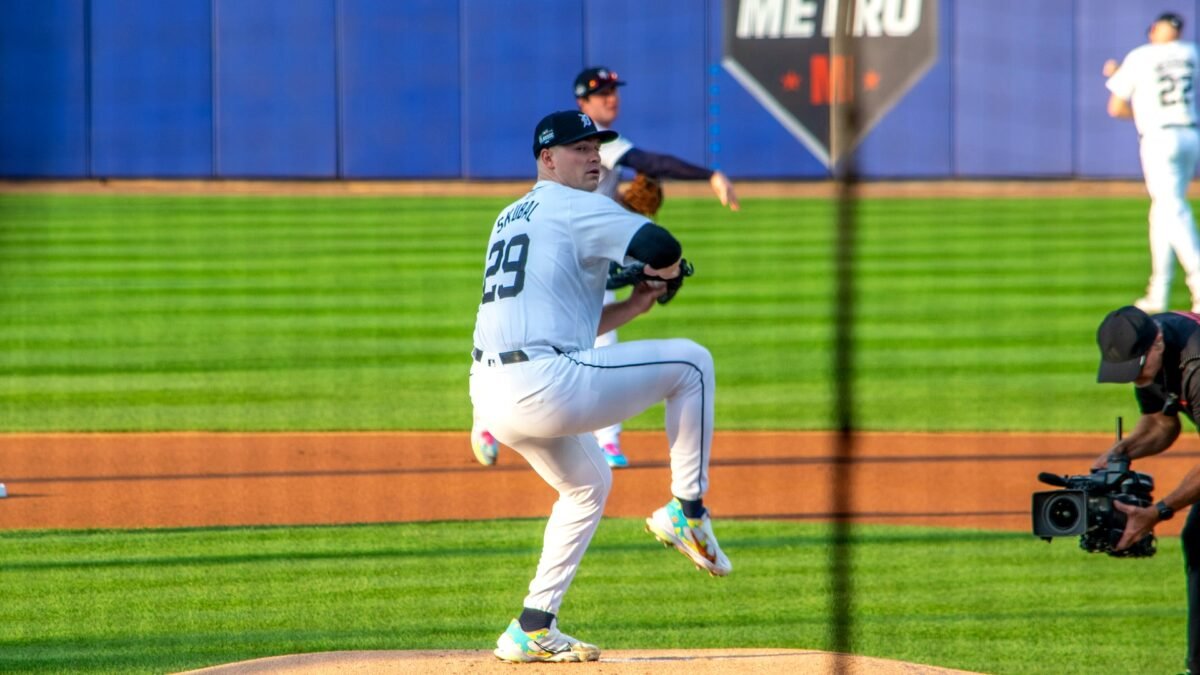
The 38-page complaint, filed in the United States District Court in Manhattan, names the Major League Baseball Players Association and the eight players on the union’s executive subcommittee as defendants, including Tarik Skubal, the pitcher who agreed a record nine-year, $450 million contract with the New York Mets only three days earlier, according to the Associated Press. The league and the corporate entities that own its 30 teams are the plaintiffs.
At the centre of the case is a fear the league states openly in its own filing. According to the complaint, Major League Baseball has a “reasonable and imminent fear” that the union will try to derail negotiations for a new collective bargaining agreement by pursuing antitrust litigation instead — a move the league says would abandon the bargaining table altogether. The lawsuit asks the court to rule before that can happen.
“MLB brings this action to keep the dispute over the next collective bargaining agreement at the bargaining table, where federal law says it belongs,” the lawsuit said, according to the Associated Press.
The current five-year agreement expires at 11:59 p.m. ET on 1 December. “MLB expects to exercise its right to implement a lockout upon expiration of the CBA at 11:59 p.m. ET on Dec. 1, 2026, in support of its lawful bargaining position,” the lawsuit said. If the lockout goes ahead as expected, it will be baseball’s tenth work stoppage since 1972, and the first since the 99-day lockout of 2021-22.
What Major League Baseball is asking the court to decide
The league is not seeking money. According to the Wall Street Journal, it is asking for a declaratory judgment — a court ruling that settles the legal question in advance. Specifically, the owners want the court to determine that a lockout does not violate antitrust law and does not amount to an unreasonable restraint of trade.
The league also asked the court to rule that the federal courts lack jurisdiction to issue an injunction against a lockout, and for an order defining the players as a legal class — a step which, if granted, could block individual players from filing their own lawsuits, according to the Associated Press.
The complaint goes further than the lockout itself. Major League Baseball said in the suit that it intends to file an unfair labour practice charge with the National Labor Relations Board, alleging that the union has refused to bargain in good faith. The league argues that the dispute therefore belongs before the labour board, not a federal court.
Among the lawyers representing the league are Paul D. Clement, who served as Solicitor General in the administration of President George W. Bush, and the firm Keker, Van Nest & Peters — which, in a twist noted by the Associated Press, represented the union itself in litigation from 2003 to 2009 against the federal government’s seizure of player drug tests. The players’ outside counsel includes Jeffrey Kessler, a lawyer whose career has run through the labour fights of several major American sports leagues.
A league spokesman, Glen Caplin, described the filing as a defensive step. “Today’s filing is a defensive measure simply intended to keep the parties at the bargaining table to work towards a new collective bargaining agreement and a full 2027 season,” Caplin said in a statement, according to USA Today. “We believe the union is preparing to follow the playbook its new leadership has used against other major professional sports leagues by pretending to ‘disclaim’ its status as the players’ bargaining process.”
The ‘nuclear option’ the league wants to take off the table
The legal manoeuvre at the heart of the case is known in American sports labour law as a disclaimer of interest — and, in the blunt language both sides now use, the nuclear option.
The mechanism works like this. Under a 1996 decision of the United States Supreme Court, Brown v. Pro Football Inc., unionised employees may not file antitrust suits against their employer and must rely on labour law instead — a principle known as the nonstatutory labour exemption. But if a union formally disclaims its status as the players’ bargaining representative, or its members vote to decertify it, the players cease to be a union for legal purposes. They can then argue in court that a lockout is an illegal group boycott by 30 supposedly competing businesses, and seek treble damages — three times their proven losses.
That is the playbook the league says the union is preparing to follow. “The lawyers and officials leading the union have no real intention of abandoning their role leading the players’ negotiating efforts,” the lawsuit said, according to the Associated Press. “Instead, those lawyers and officials will use the threat of antitrust injunctions and treble damages to try to coerce MLB into caving to their bargaining demands. If they succeed in their gambit, they will then spontaneously resurrect the MLBPA and enter into a new CBA.”
Caplin called decertification a “nuclear option” — a phrase that deliberately mirrors the union leadership’s own description of the owners’ salary cap proposal as a “nuclear bomb”, according to the Associated Press. The symmetry is not accidental. Both sides are telling the public, and each other, that the other has already reached for a weapon of last resort.
The tactic has a long history in American sport. According to the Associated Press, the league anticipates the possibility of antitrust litigation precisely because Kessler, and Bruce Meyer — who took over as the union’s head in February — worked for players’ unions at times when decertification or disclaimer attempts took place in the NFL in 1989, the NBA in 1987, 1995 and 2011, and the NHL in 2012. In the NFL’s case, the players disclaimed the union in 1989 and won a landmark antitrust case, Freeman McNeil v. NFL, which led directly to the free agency system the league operates under today.
The union’s executive subcommittee, whose eight members are named as defendants, is scheduled to meet in Phoenix on Sunday, according to USA Today — a meeting that now takes on obvious significance as the first gathering of the union’s leadership since the league went to court.
The salary cap at the heart of the fight
Behind the legal arguments sits a single economic question that has divided baseball for more than three decades: should the sport have a salary cap?
The owners have proposed a salary cap for the first time since 1994, according to the Associated Press. Their proposal, reported by USA Today, would set a hard cap of $258.2 million and a salary floor of $180.2 million, starting in 2028. Each contract would count at its average annual value — the total divided by the years of the deal.
The union considers a salary cap a non-starter, according to Reuters. Commissioner Rob Manfred said last week that he cannot imagine owners approving an agreement without a cap, while the players have vowed never to accept one — leaving the sport, in the Associated Press’s words, headed to its tenth work stoppage since 1972.
The league’s argument, as set out in the lawsuit, is about the shape of the sport rather than the size of any single contract. “The long-term health of professional baseball depends on competitive balance, on keeping smaller-market clubs viable, and on better pay for all players, not just a handful of superstars,” the suit said, according to the Associated Press.
The owners’ case, in essence, is that the gap between the richest and poorest clubs has become a competitive problem. The largest-market teams can spend several times what the smallest-market teams can, and the league argues that a cap — paired with a floor that would force low-spending clubs to invest more in their rosters — would spread talent more evenly and lift pay for the middle of the roster, not only for the stars at the top.
The union’s answer, which it has held since the cap was first proposed in 1994, is that a cap is a device for suppressing wages, not for sharing them. Players point out that baseball is the only one of the four major North American men’s sports leagues without a salary cap, and that the absence of one has not stopped the sport from producing record revenues — or record contracts. A cap, in the union’s view, would simply transfer money from players to owners, and the floor would do little to offset that because clubs could meet it by spending on mediocre veterans rather than on the young players whose salaries the union most wants to raise.
The 1994 precedent matters because it is the last time the two sides fought over this exact question — and because of what it cost. Owners proposed a salary cap in 1994, the players fought it off with a strike that lasted seven and a half months, and the dispute led to the first cancellation of the World Series in 90 years. Major League Baseball has not missed games because of a work stoppage since that strike in 1994 and 1995, according to Reuters. The fact that both sides are now using the language of nuclear weapons — “nuclear bomb” for the cap, “nuclear option” for decertification — suggests that neither has forgotten what happened the last time.
Skubal’s $450 million deal — and why it is Exhibit A
No single fact illustrates the stakes of the dispute better than the contract agreed three days before the lawsuit was filed. Tarik Skubal, a two-time Cy Young Award winner and the prize of this winter’s free-agent class, agreed on Sunday to a nine-year deal with the New York Mets worth $450 million, according to the Associated Press and CNN.
It is the most money ever committed to a pitcher, far exceeding the $325 million that Yoshinobu Yamamoto signed for with the Los Angeles Dodgers before the 2024 season, according to the Wall Street Journal. Only three players in history have signed larger contracts: the Mets’ own Juan Soto at $765 million, the Dodgers’ Shohei Ohtani at $700 million, and the Toronto Blue Jays’ Vladimir Guerrero Jr. at $500 million. The deal pays Skubal $50 million a year — also a record for a pitcher — and includes a $45 million signing bonus that Skubal will receive regardless of what happens with the lockout, plus a full no-trade clause and $30 million in deferred money, according to USA Today and CNN. There are no opt-outs, and the contract runs through the 2035 season, when Skubal will be 38.
Skubal turned 30 on 20 November. He won the American League Cy Young Award in 2024 and 2025 with the Detroit Tigers, was traded to the Dodgers in August, and has the best earned run average in baseball since 2023 at 2.47, according to the Wall Street Journal. Over the last four seasons he is 43-17 with a 2.42 ERA in 88 starts, striking out 655 batters and walking 95 in 546 innings, according to CNN.
The deal is Exhibit A for both sides. For the owners, it is proof of the spending spiral they say a cap would control: Skubal and Soto alone would account for nearly 40 per cent of the proposed $258.2 million cap on the Mets’ books, according to USA Today. The Mets opened the 2026 season with a $358 million payroll, about $100 million over the proposed cap, and finished last in the National League East at 74-88 despite owner Steve Cohen bankrolling one of the largest payrolls in the sport. For the players, the deal is proof that the market works: the best pitcher in baseball, entering free agency at 30 after two Cy Young Awards, was paid what competing clubs believed he was worth — and the Mets, who needed an ace after their starters ranked 23rd in the majors with a 4.47 ERA, got one.
The timing of the deal is also part of the story. Skubal signed nine days before baseball could shut down, and his $45 million signing bonus is shielded from the lockout — money he will be paid even if no games are played. He is not the first star to beat a lockout this way. Before the 2021-22 lockout, six of the 11 players who signed for at least $100 million did so in the last two days before it began, including Max Scherzer, who signed with the Mets at a then pitcher-record $43.33 million a year. Five years later, Skubal broke that record with the same team, the same agent, and right before another lockout, according to USA Today.
And then there is the irony that gives the lawsuit its sharpest edge. Skubal is named as a defendant in the very case his contract helped to provoke — sued by the league, alongside the other members of the union’s executive subcommittee, days after agreeing the richest pitching contract in the sport’s history. He is joined among the named defendants by Paul Skenes, the Pittsburgh Pirates ace, according to the Wall Street Journal — two of the game’s brightest young stars, sued by their own employers before a ball has been thrown in anger.
The union’s answer
The players’ union responded within hours, and its statement left no doubt about how it regards the lawsuit. “The lawsuit filed today by MLB is completely frivolous,” the union said in a statement, according to the Associated Press. “We will respond appropriately, but MLB’s decision to run to court in the middle of negotiations rather than bargain in good faith is incredibly disappointing.”
The union’s position, as reflected in the league’s own complaint, is that it has “categorically refused to engage with MLB’s salary cap and floor structure”, in the lawsuit’s words — a refusal the league characterises as a failure to bargain in good faith, and which the union characterises as a refusal to negotiate away its members’ core economic rights. “Despite the many efforts by MLB to find common ground with the MLBPA, the union has not engaged in good-faith bargaining over the central economic issues in these negotiations, even as the expiration of the current CBA is imminent,” the suit stated, according to the Associated Press.
That disagreement — whether refusing to discuss a cap is bad faith, or whether proposing one is — is now the central question in the negotiation, and it is the question the court has been asked to keep out of the courtroom. The league wants the dispute decided at the bargaining table. The union, by the league’s own account, is preparing a route to the courtroom. Both sides insist the other is the one abandoning good-faith negotiation.
What a lockout would actually mean
If the lockout begins on 2 December, as expected, baseball will stop — not on the field, where the season ended weeks ago, but in every office and transaction that keeps the sport moving through the winter.
During a lockout, all player activity is halted. Teams cannot sign free agents, make trades, or contact players on their 40-man rosters. The winter meetings, the free-agent market and the trade market all freeze. The last lockout, which began on 2 December 2021 after the previous agreement expired, instituted exactly such a transaction freeze, including the postponement of the major league portion of the Rule 5 draft.
The immediate damage would fall on the calendar. Pitchers and catchers typically report to spring training complexes in the second week of February, about 45 days before Opening Day. If no agreement is reached by then, spring training is delayed; if none is reached by early March, the regular-season schedule itself has to be revised. The 2027 season is scheduled to begin in late March, and every week of delay narrows the room to play a full 162-game schedule.
The last lockout offers a measure of what is at stake. It lasted 99 days, ending on 10 March 2022, and it delayed the start of the regular season by about a week. All 162 games were eventually played, using doubleheaders, but the spring training schedule was cut short. The agreement that ended it raised the minimum salary from about $570,000 to $700,000, raised the competitive balance tax thresholds, created a bonus pool for young players who perform well before arbitration, introduced a draft lottery, expanded the postseason to 12 teams, and brought the designated hitter to the National League.
This time the gap between the sides looks wider. The 2021-22 dispute was about the distribution of money within a system both sides accepted. This one is about whether to change the system itself — a cap and a floor that would reshape how every club builds its roster. That is why the league went to court before the lockout even began: it is trying to remove the union’s most powerful weapon before the fight starts.
A sport with a long history of stopping itself
Baseball’s labour history is the longest and most bitter of any American sport. There have been nine work stoppages since 1972 — strikes and lockouts that have wiped out games, cancelled a World Series, and driven fans away in waves.
The first came in 1972, when the players struck for 13 days over pension funding and 86 games were lost. There were spring training lockouts in 1973 and 1976 — the second of which produced free agency — and a 50-day strike in 1981 that cost more than 700 games. The 1985 and 1990 disputes were settled before games were lost. Then came 1994-95: a strike of 232 days, 938 games cancelled, and the World Series wiped out for the first time since 1904.
After 1994, baseball went more than a quarter of a century without a work stoppage — the longest peace in the sport’s labour history — until the owners locked the players out on 2 December 2021, the day after the 2016 agreement expired. That lockout was the first work stoppage since 1994-95 and the first lockout since 1990. It ended on 10 March 2022, after the league cancelled the first two series of the season on 1 March and then a second week of games, when the two sides reached agreement on a new five-year deal that preserved the full 162-game schedule by delaying Opening Day from 31 March to 7 April.
The lesson of that history is that baseball’s labour fights are rarely short and never cheap — and that the damage they do to the sport’s relationship with its fans lasts far longer than the stoppages themselves. Attendance and television ratings took years to recover after 1994. The 2021-22 lockout ended with a deal struck in the final days before the schedule would have been torn up. The question now is whether the two sides can find a similar landing place when the issue between them is not how to divide the money, but whether to cap it.
Analysis: Why It Matters
The most revealing thing about Wednesday’s lawsuit is its timing. Major League Baseball did not wait for the union to disclaim, or for the lockout to begin, or for a judge to be asked to stop it. It sued six days before the agreement expires, while negotiations are still — at least nominally — under way, and while the union’s leadership is still a week away from its meeting in Phoenix. That is not the behaviour of a side confident that the bargaining table will produce a deal. It is the behaviour of a side that has decided the bargaining table will not, and is now fighting on a second front to make sure it does not lose the first one in court.
There is a genuine legal gamble here for the league. The strategy only works if a federal judge is willing to decide, in advance, that a lockout which has not yet happened is lawful — and to do so in a case where the defendants have not yet taken the step the lawsuit is designed to prevent. Courts are often reluctant to issue advisory rulings on hypothetical disputes, and the union will almost certainly argue that there is no live controversy until it actually disclaims. If the judge agrees, the league will have spent its opening move on a case that is dismissed as premature, and the union will have its nuclear option intact. If the judge disagrees, the league will have achieved something remarkable: it will have used the courts to disarm its opponent before the opponent has picked up the weapon.
The second gamble is political, and it may matter more. Suing your own players — and naming two of the game’s most popular young stars as defendants — is a public relations risk of the first order. Skubal has just signed the largest pitching contract in history with the Mets; Skenes is one of the most marketable young players in the sport. Both are now, in the eyes of the law, defendants in a case brought by their employers. The league’s calculation is evidently that the legal advantage is worth the cost in goodwill. But baseball’s last great labour disaster, in 1994, was driven as much by public contempt for both sides as by the economics, and the sport spent years winning back fans who had decided that billionaires and millionaires arguing over money was not worth their time. Wednesday’s filing invites exactly that judgement, six days before Christmas and three months before a ball is due to be thrown in anger.
Looked at from the union’s side, the lawsuit is also a measure of how seriously the league takes the disclaimer threat — and that, paradoxically, is a form of leverage for the players. The league would not have hired a former Solicitor General and gone to federal court if it believed the threat was a bluff. The union’s new leadership, under Bruce Meyer, has a track record in other leagues of using exactly this playbook, and the league’s filing is, in effect, an admission that it believes Meyer will use it again. The players’ refusal to engage with the cap proposal, which the league calls bad faith, is from the union’s perspective the only rational response to a proposal it regards as existential: to discuss the cap is to concede that it is negotiable, and the union has spent 30 years insisting that it is not.
The deeper question is whether either side has a route back from the positions it has now taken in public. Manfred has said he cannot imagine the owners approving a deal without a cap. The players have vowed never to accept one. The league has now sued to prevent the union’s ultimate weapon; the union has called the lawsuit frivolous and disappointing. Each step narrows the space for a compromise that both sides could present as a win — and the history of baseball’s labour relations suggests that when the space narrows this far, the eventual settlement is usually imposed by a deadline rather than reached by agreement. In 2022, that deadline was the regular-season schedule. In 2027, it will be the same: pitchers and catchers in February, the schedule in March, and Opening Day at the end of it.
There is one more consideration, and it is the one that should worry anyone who cares about the sport rather than the negotiation. The 2021-22 lockout ended with an agreement that raised the minimum salary, created a bonus pool for young players, and expanded the postseason — changes that made the game better for fans and fairer for the players who earn the least. The 2026-27 dispute, by contrast, is being fought over a structural change that neither side can describe as a win for the fan in the stands. A cap would make the league more competitively balanced, its supporters say; it would suppress wages, its opponents say. Neither claim is really about the person buying a ticket. If the season is shortened or damaged, it will be because two sides who both claim to be defending the long-term health of baseball could not agree on what that health requires — and the fans, as ever, will be the ones who pay for the argument.
What to watch next
Several dates now matter more than any statement. The first is 1 December, when the agreement expires and the lockout is expected to begin. The second is Sunday’s meeting of the union’s executive subcommittee in Phoenix, where the players’ leadership will decide its response to the lawsuit — and whether to move towards the disclaimer the league is trying to prevent. The third is the league’s promised unfair labour practice charge at the National Labor Relations Board, which will open a second legal front and test the league’s claim that the union has refused to bargain in good faith.
Beyond those, the calendar takes over: spring training in February, the point in early March when the regular-season schedule would have to be revised, and Opening Day in late March. The 2021-22 lockout was settled on 10 March, with days to spare before the schedule was torn up. The two sides have roughly the same amount of time this winter — and, on the evidence of Wednesday’s filing, a considerably larger distance to travel.
Sources
- Reuters — “Baseball: MLB sues players’ union, seeks ruling that lockout is legal” (25 November 2026)
- Associated Press, via theScore — “MLB sues union to declare lockout is legal, PA calls move” (25 November 2026)
- The Wall Street Journal — “MLB Launches Legal Action Against Its Players — Before the Lockout Even Begins” (25 November 2026)
- USA Today — “MLB sues players to prevent ‘nuclear option’ as labor war gets even uglier” (25 November 2026)
- USA Today — “Tarik Skubal contract details, signing bonus and deferrals” (22 November 2026)
- Wikipedia — “2021–22 Major League Baseball lockout” (background on the previous stoppage)

About the Author — Abdul Mannan
Related Articles

Steelers Bench Aaron Rodgers for Mason Rudolph in Stunning Late-Night Move
The Pittsburgh Steelers have benched four-time NFL MVP Aaron Rodgers for Mason Rudolph ahead of Friday's game against…

Vaibhav Sooryavanshi, 15, Smashes Record 204 Off 53 Balls as India A Storm Into Rising Stars Semi-Finals
Fifteen-year-old Vaibhav Sooryavanshi smashed 204 off 53 balls — including a record 28 sixes — as India A…

Tiger Woods Is Back — and This Time the Question Is Not Whether He Can Win
Eight hundred and sixty-four days after he last teed it up in a tournament, Tiger Woods is coming…