
Second US Judge Blocks Trump’s New Birthright Citizenship Order in Fresh Blow to Immigration Crackdown

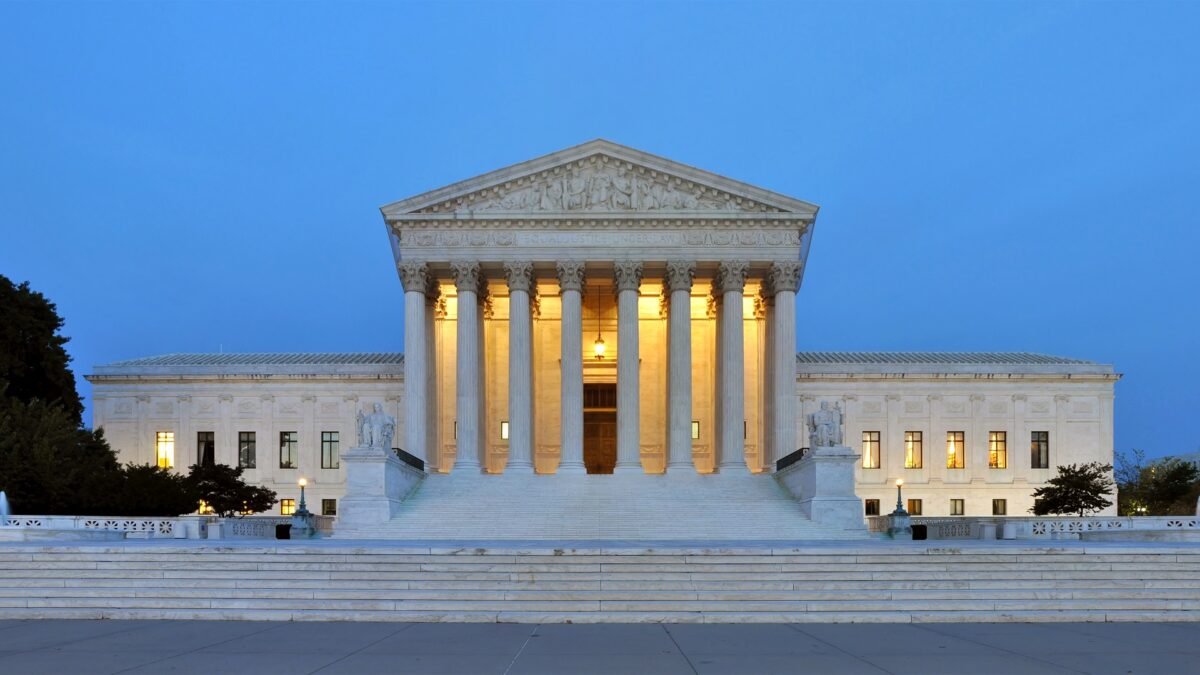
A second federal judge has blocked President Donald Trump’s latest attempt to narrow birthright citizenship, dealing a fresh legal defeat to one of the flagship policies of his administration’s immigration crackdown. The ruling, handed down on Wednesday, means the government must now overturn two separate court orders before it can enforce the policy against any child born in the United States.
According to Reuters, US District Judge Christopher Cooper in Washington, DC, issued a preliminary injunction against the executive order President Trump signed in August, which sought to deny citizenship to several categories of children born on American soil. The judge acted in a class action lawsuit brought on behalf of children who would have been stripped of citizenship under the order, a case known as Nathan v. Trump.
The injunction bars three federal agencies — the US Department of State, the US Department of Homeland Security and the Social Security Administration — from enforcing the order against any child covered by the class action, according to Reuters. The class covers children born on or after 6 August, the date the order was signed, the Washington Examiner reported.
Judge Cooper, who was appointed by former President Barack Obama, left little doubt about his view of the case. “The merits in this case are clear-cut,” he wrote, according to Reuters. “The Supreme Court has twice confirmed that all children born in this country are US citizens, save only for the small handful who are not subject to US law.”
In his ruling, Judge Cooper said the Supreme Court had already made clear that “the President cannot carve out new exceptions to birthright citizenship for children born within the United States and subject to its laws.” He also refused to put his ruling on hold while the administration appeals, according to reporting on the case.
What the August order tried to do
The order at the centre of the case, Executive Order 14418, was signed on 6 August 2026. It was President Trump’s second attempt to restrict birthright citizenship by executive action, and it was deliberately narrower than his first. Where the original order had targeted the children of undocumented immigrants and temporary visitors in general, the new order aimed at a smaller set of groups that the administration argued fell outside the protection of the Constitution’s Citizenship Clause.
According to Reuters and the Washington Examiner, the August order directed federal agencies not to recognise citizenship for children born in the United States in several categories. These included children whose parents work for foreign governments or international organisations but lack diplomatic immunity; children born through paid surrogacy arrangements; children with a parent classified as an “alien enemy”; and children whose parents were suspected members of gangs or terrorist organisations. The order also took aim at so-called “birth tourism”, in which women travel to the United States to give birth so that their children obtain automatic citizenship.
The distinction mattered to the administration because it believed these narrower categories might survive the legal test that had destroyed its first order. The White House had argued that the children of diplomats and foreign officials, for example, were never covered by birthright citizenship in the first place, and that the new order merely restated long-standing exceptions rather than inventing new ones.
Judge Cooper rejected that argument outright. In his opinion, he wrote that the ink of the Supreme Court’s decision striking down the first order had “scarcely dried” before President Trump issued the next one, according to the Washington Examiner. The court found that the categories in the August order were, in substance, new exceptions to a constitutional guarantee — and that a president cannot create such exceptions by executive order.
A second wall the administration must climb
Judge Cooper’s ruling is the second judicial block on the August order. According to Reuters, another federal judge in Maryland, Deborah Boardman, also blocked the order in September, following a challenge by immigration rights groups. The administration will now need to overturn both decisions in order to ever enforce the policy.
The two injunctions were issued in different courts, in cases brought by different plaintiffs, and they rest on overlapping but distinct legal reasoning. That makes the administration’s task harder: winning an appeal in one circuit would not be enough, because the other injunction would still stand. The government would have to prevail in both the District of Columbia Circuit and the Fourth Circuit, or persuade the Supreme Court to intervene, before a single child’s citizenship could be denied under the order.
The American Civil Liberties Union, which represented the plaintiffs in the Washington case, welcomed the ruling in blunt terms. Cody Wofsy, a lawyer at the ACLU, said in a statement that President Trump “needs to accept that birthright citizenship is the law of the land”, according to Reuters. “Enough is enough,” he added. “The Supreme Court has twice rejected efforts to gut birthright citizenship, in 1898 and again earlier this year. Third time is not the charm.”
Scott Michelman, legal director of the ACLU of the District of Columbia, said: “The court yet again affirmed that the government cannot concoct new exceptions to the constitutional principle of birthright citizenship,” the Washington Examiner reported.
The White House responded with equal bluntness. White House spokeswoman Lauren Bis called the decision “just another ruling from an activist judge appointed by (former President Barack) Obama attempting to thwart President Trump’s commonsense agenda”, according to Reuters. She said the president’s order was “consistent with the holdings and analysis set forth by the Supreme Court.”
The first order and the Supreme Court’s answer
To understand why Judge Cooper described the merits as “clear-cut”, it is necessary to retrace the legal battle that began on President Trump’s first day back in office. On 20 January 2025, he signed Executive Order 14160, titled “Protecting the Meaning and Value of American Citizenship”, which directed federal agencies to stop recognising US citizenship for children born in the country if neither parent held citizenship or lawful permanent resident status at the time of birth.
The order was challenged immediately, and district courts across the country blocked it. In Seattle, Judge John Coughenour, an appointee of former President Ronald Reagan, described the order as “blatantly unconstitutional” when he issued a temporary restraining order. Early estimates suggested the policy could have affected more than 150,000 newborns a year.
The case first reached the Supreme Court in 2025 in Trump v. CASA, but that decision dealt only with the scope of nationwide injunctions, not with whether the order itself was lawful. The court ruled that universal injunctions were unlawful, which forced the challengers to regroup. They did so through a class action, and the Supreme Court agreed to hear the case directly, without waiting for a court of appeals to rule first.
On 30 June 2026, the Supreme Court delivered its answer in Trump v. Barbara. In a 6-3 decision, the court struck down Executive Order 14160, holding that it contradicted the 14th Amendment. Chief Justice John Roberts wrote the majority opinion, joined by Justices Sonia Sotomayor, Elena Kagan, Amy Coney Barrett and Ketanji Brown Jackson. Justice Brett Kavanaugh agreed with the result but on different grounds, writing that the order conflicted with a federal citizenship statute, 8 U.S.C. § 1401(a), rather than with the Constitution itself. Justices Clarence Thomas, Samuel Alito and Neil Gorsuch dissented.
The split matters. The court was divided 6-3 on whether the order was unlawful, but only 5-4 on the constitutional question itself. Five justices held that the 14th Amendment’s Citizenship Clause forecloses any limitation on birthright citizenship based on a parent’s immigration status. Justice Kavanaugh’s separate opinion emphasised that lawmakers, not the president acting alone, would need to act to change the current statutory rule.
Chief Justice Roberts traced the Citizenship Clause to English common law and to the Reconstruction Congress’s rejection of the Dred Scott decision, which had denied citizenship to Black Americans. The court reaffirmed its 1898 decision in United States v. Wong Kim Ark, which recognised the citizenship of a child born in the United States to parents who were themselves not citizens. In his conclusion, Chief Justice Roberts wrote: “Citizenship, then and now, was the right to have rights.”
The 14th Amendment, ratified in 1868, states in its first sentence: “All persons born or naturalized in the United States, and subject to the jurisdiction thereof, are citizens of the United States and of the State wherein they reside.” For more than 125 years, that sentence has been understood to mean that birth on American soil confers citizenship, with only a narrow set of exceptions — such as the children of foreign diplomats and, historically, certain Native Americans not subject to US law — recognised by the courts.
Why the second order was supposed to be different
The August order was the administration’s attempt to learn from that defeat. Instead of challenging the general rule, it targeted groups at the edges of the doctrine, where the administration believed the Supreme Court’s reasoning might leave room. The children of international organisation staff, for instance, occupy an unusual legal position: their parents work in the United States under immunity arrangements, yet do not hold diplomatic status. The administration argued that such children were not fully “subject to the jurisdiction” of the United States, and therefore fell outside the Citizenship Clause.
Similar arguments were made about children born through commercial surrogacy to foreign parents, and about children whose parents were designated as enemies of the state. In each case, the administration’s theory was that the Supreme Court had struck down a broad ban, but had not foreclosed every narrower exception.
Judge Cooper’s ruling, and Judge Boardman’s before it, suggest that the lower courts do not accept that reading. Both judges treated the August order as an attempt to do by slices what the Supreme Court had forbidden in whole: to use executive power to decide which American-born children count as citizens. The Supreme Court’s reasoning in Trump v. Barbara had embraced Wong Kim Ark as controlling and treated its recognition of citizenship for children born to non-citizen parents as settled law admitting only a narrow, closed set of exceptions. On that reading, the categories in the August order are not part of that closed set, and a president cannot add to it.
The administration’s problem is compounded by the fact that the Supreme Court’s constitutional holding rested on five votes, not six. Justice Kavanaugh’s statutory concurrence means that the constitutional rule is one vote away from a different outcome in a future case. But that arithmetic cuts both ways: it also means the administration would need the Supreme Court to revisit the issue, and to do so on a record that now includes two lower courts rejecting its narrower order. Nothing in Judge Cooper’s ruling suggests the lower courts see the August order as a genuinely new legal question.
Analysis: a test of whether defeat changes strategy
The birthright citizenship saga has become one of the clearest tests of how this administration responds to judicial defeat. The pattern so far is not retreat but recalibration: a broad order is struck down, a narrower one follows, and the courts are asked to find the difference. It is a legitimate litigation strategy, and it is one that has worked for other administrations on other issues. But it carries a cost. Each successive defeat narrows the ground on which the government can stand, and each judicial rebuke makes the next attempt look less like a good-faith reading of the law and more like a refusal to accept the answer.
Judge Cooper’s language reflects that dynamic. When a judge writes that the ink on a Supreme Court decision had “scarcely dried” before the government tried again, he is not merely describing a timetable. He is signalling that the court sees the second order as a continuation of the first, not a fresh policy. That framing matters because it shapes how appellate courts will read the case. If the August order is understood as an attempt to relitigate Trump v. Barbara, it is likely to fail. If it is understood as a genuinely distinct question about the edges of the Citizenship Clause, it has a better chance. The two injunctions so far suggest the lower courts have chosen the first reading.
There is also a structural point that the administration cannot easily escape. The Supreme Court’s 2025 decision in Trump v. CASA limited nationwide injunctions, which was a victory for the government. But the challengers adapted by bringing class actions, and the class action in Nathan v. Trump now protects every child in the affected categories, not just the named plaintiffs. The procedural door the administration won in CASA has been closed by a different procedural device. That is how litigation works: a ruling that narrows one route often opens another.
The political stakes are equally significant. Restricting birthright citizenship has been a flagship promise of President Trump’s immigration agenda since his first term, and it resonates with a large part of his political base. The policy’s repeated failure in the courts does not diminish its political value; if anything, the conflict with the judiciary has become part of the message. The White House’s description of Judge Cooper as an “activist judge” is not only a criticism of this ruling, it is a framing device for the next election cycle, in which the administration can present itself as the side trying to enforce the will of the voters against an unaccountable bench.
That framing, however, sits uneasily with the composition of the courts that have ruled against the policy. Judge Coughenour, who called the first order “blatantly unconstitutional”, was appointed by a Republican president. The Supreme Court majority that struck it down included Justice Barrett, appointed by President Trump himself. The constitutional holding in Trump v. Barbara was 5-4, but the five included justices across the ideological spectrum. The picture is not one of a partisan bench blocking a president; it is one of a legal consensus, spanning appointments, that the Citizenship Clause means what it has meant for more than a century.
For the families caught in the middle, the ruling brings immediate relief but not certainty. The children of United Nations, International Monetary Fund and World Health Organization staff, the families who used surrogacy, and others covered by the class action will continue to receive passports and Social Security numbers while the case proceeds. But the administration has made clear it will appeal, and the injunction is preliminary, not final. A different panel of the District of Columbia Circuit could see the case differently, and the Supreme Court could yet decide to hear it again. Until the litigation ends, the citizenship of these children remains a question that the courts, not the families, will answer.
The broader lesson of the case may be about the limits of executive power itself. The Constitution gives Congress, not the president, the authority to define the terms of citizenship within the bounds set by the 14th Amendment. Justice Kavanaugh’s concurrence in Trump v. Barbara made that point explicitly: if the rules are to change, lawmakers must change them. The administration’s second order tried to sidestep that requirement by redefining the exceptions rather than the rule. Two courts have now said that a redefinition by executive order is still an executive order, and that the Constitution does not permit it.
What to watch next
The administration is expected to appeal Judge Cooper’s injunction to the US Court of Appeals for the District of Columbia Circuit, and to pursue a parallel appeal against Judge Boardman’s order in the Fourth Circuit. Either appeal could produce a ruling that conflicts with the other, which would increase the pressure on the Supreme Court to take the case. The administration could also ask the Supreme Court for emergency relief, though the court is unlikely to intervene while two preliminary injunctions are in force and no child’s citizenship is actually being denied.
Attention will also turn to Congress. The Supreme Court’s majority noted that Congress remains free to legislate in this area within constitutional limits, and Justice Kavanaugh’s opinion pointed the same way. Any legislative attempt to narrow birthright citizenship would face its own constitutional challenge, and the political arithmetic in Congress makes passage unlikely in the near term. But the invitation is now on the record, and it may shape the debate in the next session.
Finally, the case will be watched for what it reveals about the Supreme Court’s appetite for revisiting Trump v. Barbara. The decision was handed down only five months ago, and the court rarely rushes to reconsider its own recent rulings. The 5-4 split on the constitutional question, however, means that a single change in the court’s composition could alter the outcome. For now, the law of the land is what the Supreme Court said in June: children born in the United States are citizens, and a president cannot carve out exceptions by executive order. Judge Cooper’s ruling ensures that, for the moment, that law will be enforced.
Sources
- Reuters — Trump’s newest order curtailing birthright citizenship is blocked by second judge
- Washington Examiner — Judge Christopher Cooper blocks Trump’s second attempt at limiting birthright citizenship
- Bloomberg Law — Trump’s Latest Birthright Citizenship Limits Halted by Judge
- Legal 500 — Supreme Court Upholds Birthright Citizenship (Trump v. Barbara, 30 June 2026)
- Workers’ Rights News — Second federal judge blocks Trump’s new order denying citizenship to some US-born babies (Nathan v. Trump, ACLU memorandum opinion)

About the Author — Abdul Mannan
Related Articles
Hegseth Holds Up 60 Patriot Missiles for Ukraine as Zelenskyy Warns Air Defences Are Running Dry
About 60 Patriot interceptors promised to Ukraine are stuck awaiting Pentagon approval, the Financial Times reports, as President…
Kilmar Ábrego García Leaves the US for Spain, Ending His 20-Month Deportation Fight
Kilmar Ábrego García boarded a commercial flight for Spain on Tuesday, ending a nearly 20-month legal battle that…
Trump Awards Rudy Giuliani the Presidential Medal of Freedom in Private White House Ceremony
President Donald Trump has awarded the Presidential Medal of Freedom to former New York mayor Rudy Giuliani in…