
Four Days From Triumph to Doubt: What Anthropic’s Fall Below Its IPO Price Really Means

The Question Nobody Asked on the First Day
What does it take for the largest public offering in the history of capitalism to lose its shine in four trading days? Not a scandal. Not a fraud. Not even a bad quarter. Just four days — and a question the market finally asked out loud: what, exactly, did we just pay for?
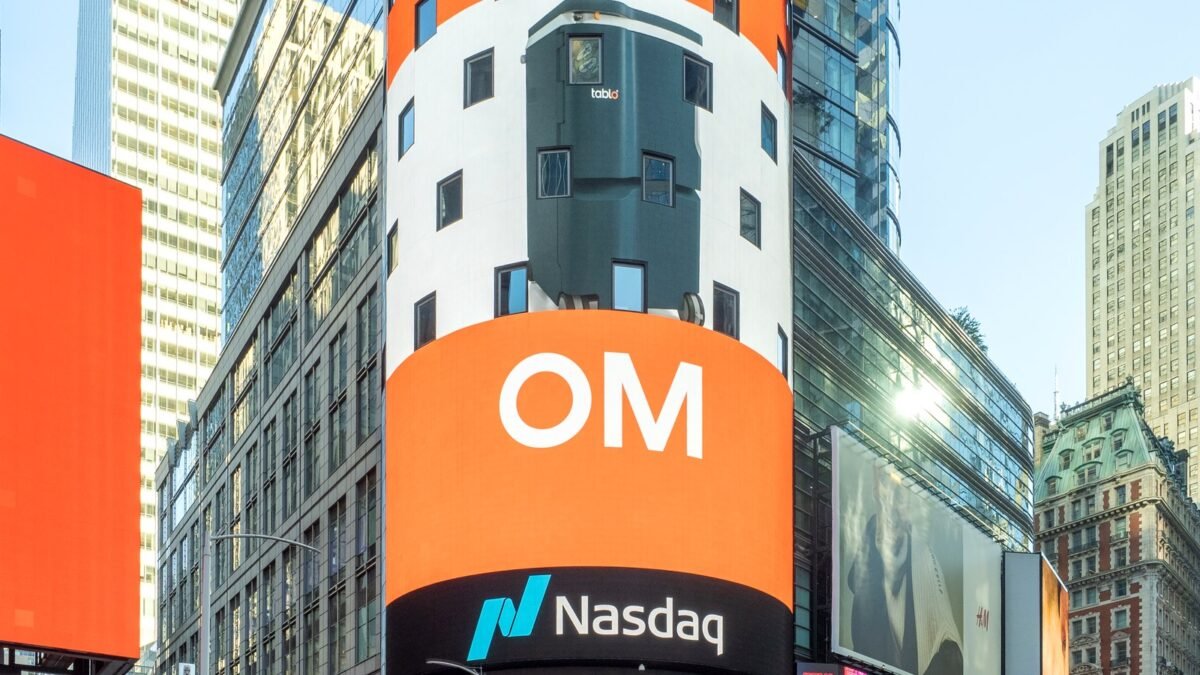
On Thursday, 19 November, the confetti was still in the air. Anthropic, the company behind the Claude chatbot, opened on the Nasdaq at $111.50 a share, touched $115.10, and closed its first day at $97.17 — comfortably above the $83 price at which its shares had been sold. The offering had raised $81.3 billion, the largest initial public offering ever recorded, surpassing even SpaceX’s $75 billion debut earlier this year. At $83 a share, the company was valued at roughly $1.5 trillion, an almost unimaginable figure for a business founded barely six years earlier. The crowd cheered. The bankers smiled. The future, it seemed, had arrived on schedule.
And then the future asked to see the bill.
By Friday the shares closed at $88.91. On Monday they slipped to $87.64. On Tuesday they fell 6.5 per cent in a single session and closed at $81.91 — below the $83 offer price for the first time, in only the fourth trading session. On Wednesday they touched an intraday low of $73.85, roughly 11 per cent below the IPO price and almost 36 per cent below the debut-day peak, briefly dragging the company’s market value under $1 trillion. Four days. That is all it took for the most celebrated listing in market history to trade at a discount to the price its own bankers had set.
Among the twelve largest American listings since 2008, only Uber and Facebook broke below their offer prices faster. I do not write this to mock Anthropic. I write it because the speed of the reversal tells us something the cheering on the first day could not: the market is no longer buying the story of artificial intelligence on faith. It is buying it on arithmetic. And arithmetic, unlike enthusiasm, does not applaud.
We Have Seen This Play Before
History does not repeat itself, but it does keep the same script and change the costumes. In 1720, shares in the South Sea Company soared on promises of unimaginable riches from trade with the Americas, then collapsed so violently that Isaac Newton — the man who had calculated the motion of the heavens — lost a fortune and is said to have remarked that he could calculate the movement of the stars, but not the madness of men. In the 1840s, Britain’s railway mania turned modest iron roads into objects of speculative worship; fortunes were made on lines that were never built, and lost when the bills came due. In 2000, the Nasdaq Composite — the very exchange where Anthropic now trades — fell nearly 78 per cent from its peak as the dot-com dream met the discipline of cash flow.
Each time, the pattern was the same. A genuine revolution arrives — ocean trade, railways, the internet, and now machine intelligence. A genuine revolution is then dressed up as a guarantee: this time, the profits will be as limitless as the promise. Money rushes in. Prices detach from earnings. And then, one morning, somebody asks the simplest question in finance — when does the money come back? — and the whole edifice discovers that it was built on an answer nobody had written down.
I am not saying Anthropic is the South Sea Company. That would be lazy, and it would be unfair. Anthropic is a real business with real revenue growing at a speed rarely seen in corporate history. But the mirror of history is useful precisely because it shows us the shape of the danger, not the name of the victim. The danger is never the technology. The danger is the price paid for it before the technology has paid for itself.
The Arithmetic the Market Is Doing Now
So let us look, calmly, at the numbers the market is staring at. In the first nine months of 2026, Anthropic generated revenue of $33.24 billion — a staggering 1,206 per cent more than the same period a year earlier. That is a genuine achievement, and no honest observer should pretend otherwise. But in the same period its net losses widened by 314 per cent to $104 billion, and its third-quarter revenue growth slowed to 47 per cent sequentially, after rising 144 per cent in the quarter before. Growth is still spectacular. It is also decelerating, and its losses are widening.
Then there is the commitment that sits behind every debate about this company. Anthropic’s own prospectus discloses long-term commitments of $900.9 billion, almost all of it for computing power and data centres, stretching to 2045 — with nearly half of it due before 2030 and about $70.7 billion falling due within the next twelve months. Against that, the company held liquidity of $146.6 billion at the end of September. The money raised in the offering — $81.3 billion, or $93.5 billion once the underwriters’ additional-share option was exercised — is real and substantial. But $900 billion is a number of a different order. It is a promise to spend, made in advance, on the faith that the revenue will arrive to cover it.
The market has begun to do that subtraction in public. Even the mechanics of the listing added to the unease. Morgan Stanley, the lead underwriter, exercised its full 147 million-share overallotment option at $83 within a single day and closed its price-stabilisation position — meaning that once the shares slipped below the offer price, no bank bid remained to defend it. Meanwhile, roughly 300 million more insider shares become tradable on 15 December, adding supply to a market that is still deciding what the stock is worth.
And yet — and this is what makes the story interesting rather than merely alarming — the buyers have not vanished. Retail investors bought about $252 million of Anthropic shares across the first three sessions. Analysts, on balance, still rate the stock a “Strong Buy”, with a mean price target of $134. MSCI will add Anthropic to its Global Standard Indexes at the close on 30 November. The company’s first earnings report as a public business arrives on 24 February. The verdict, in other words, is not in. What has happened is subtler and more important: the market has stopped treating Anthropic as a coronation and started treating it as a company.
A Great Company Is Not Always a Great Investment
Here, dear reader, is where I must speak to you directly, because this is the distinction that separates the crowd from the careful. A great company and a great investment are two different things, and confusing them is the oldest and most expensive mistake in the market.
Anthropic’s models sit at the top of the industry’s benchmarks. Its revenue has multiplied thirteenfold in a year. Its backers include the largest technology companies on earth — Google, Nvidia, AMD, Broadcom, Microsoft, Micron and TSMC agreed to buy $26 billion of its stock in a private placement alongside the offering. None of that is in doubt. What is in doubt is whether a business valued at $1.5 trillion, carrying $900 billion of future commitments, can grow into its price fast enough to reward the people who paid it. That is not a question about Claude. It is a question about cash.
Consider the telling detail of Monday, 23 November. On that day the Nasdaq rose 6.51 per cent — its best day since April 2025 — as Nvidia surged more than 31 per cent on the return of Jensen Huang as chief executive. The whole market celebrated. Anthropic fell 1.43 per cent anyway. When a stock falls on the best day its market has seen in nineteen months, the market is telling you something specific about that stock, not about the weather.
The veteran investor Bill Gurley put his finger on the wound when he observed that the buyers in the record order book were not, by and large, scrambling to actually own Anthropic — they had grown accustomed to the one-day IPO gift, the quick profit of the first session, and would all like free money. He is right, and his bluntness is a service. An offering oversubscribed almost seven times sounds like devotion. Too often, it is merely a queue for the exit.
None of this means Anthropic will fail. It means the easy money has been made, the hard questions have begun, and the company must now answer them the only way a public company can: quarter by quarter, in revenue, in margins, in cash — not in promises. The same market that paid $115 a share in excitement will gladly pay more than that again, but only when the arithmetic earns it.
The Mirror Does Not Lie
Three centuries ago, Newton lost his money and learned that the stars obey laws while men obey moods. The lesson has not changed; only the tickers have. Every generation believes its revolution is exempt from the old arithmetic, and every generation discovers that arithmetic keeps its own ledger, patiently, until the day it is presented.
Anthropic has not failed. It has been asked a question — the oldest question in business, and the fairest: show us the money. The company has until its first earnings in February, and then quarter after quarter, to answer. If the revenue keeps its extraordinary pace and the costs bend toward discipline, this week will be remembered as the moment a great company was briefly sold at a discount. If the commitments outrun the cash, it will be remembered as the week the market first saw the bill.
Either way, the rest of us should learn the older lesson. Do not buy a story. Buy a business. And when the crowd is cheering so loudly that nobody can hear the numbers, listen for the numbers anyway. They are always speaking — quietly, at first, and then all at once.
Sources & References
- CNN — Anthropic prices IPO at $83 ahead of Nasdaq debut; 980 million shares, $81.3 billion raised, largest IPO on record, ~$1.5 trillion valuation.
- Le Monde — IPO priced at $83, above the $70–$78 range; ~$900 billion long-term commitments; $70 billion spending planned over the next 12 months; Nasdaq down 12% since its October peak.
- Bessemer Trust — Weekly Investment Update, 20 November 2026: shares peaked at $115 and closed at $97.17 on the first day of trading.
- Barchart — Anthropic below its $83 IPO price after four sessions; nine-month revenue of $33.24 billion (+1,206%); net loss widened 314% to $104 billion; $900.9 billion commitments through 2045; analyst mean target of $134, “Strong Buy”.
- TradingView — Anthropic slips below IPO price; Tuesday close of $81.90, down 6.5%; MSCI index inclusion effective 1 December; first earnings on 24 February.
- Tech Times — Morgan Stanley exercised its full 147 million-share greenshoe at $83 within one day, ending price support; ~300 million insider shares become tradable on 15 December; Monday’s Nasdaq surge and Nvidia’s 31.48% gain.
- Tikr — Bill Gurley’s remarks on IPO buyers; only Uber and Facebook broke their IPO prices faster among the 12 biggest US IPOs since 2008; Amazon’s stake gains added $62.8 billion of pre-tax income in H1 2026.
- The Coin Republic — Intraday low of $73.85 on Wednesday 25 November; ~35.8% below the $115.10 debut peak; $252 million of retail buying across the first three sessions.
- The CODEW — AI-linked stocks fell for a second day on 25 November as investors weighed debt, costs and returns on AI infrastructure spending.

About the Author — Abdul Mannan
Related Articles
S&P Puts Nvidia’s AA Credit Rating on Downgrade Watch as Governance Crisis Deepens
S&P Global Ratings has put Nvidia's AA credit rating on watch for a possible downgrade, saying the board's…
Poundland Collapses Into Administration, Putting 11,000 Jobs at Risk Weeks Before Christmas
Poundland has entered administration after rescue talks failed, putting around 11,000 jobs and 600 stores at risk just…
US Unveils New Tariffs on China, EU and 12 Other Partners in Section 301 Overcapacity Crackdown
The United States proposed new tariffs on 14 trading partners after an eight-month Section 301 investigation, with China…