
Pakistan, Saudi Arabia and Türkiye Open Makkah Pact Talks in Islamabad to Turn Defence Pledge Into Working Alliance

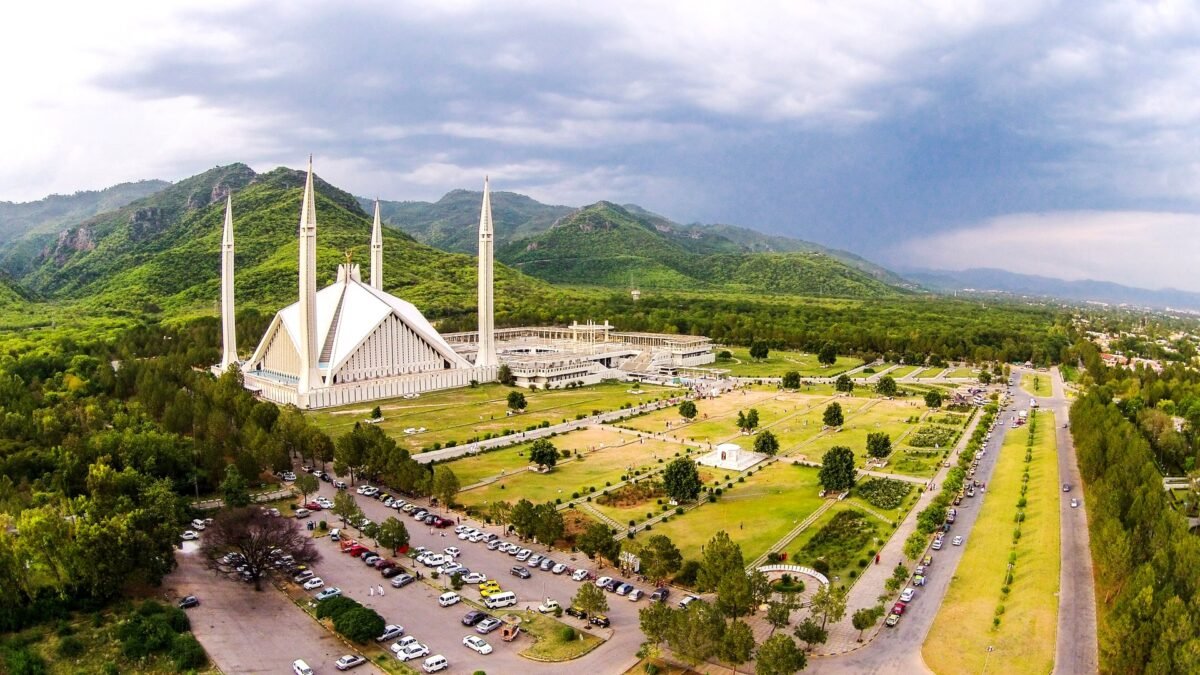
Pakistan, Saudi Arabia and Türkiye opened two days of high-level talks in Islamabad on Thursday to turn their landmark Makkah defence pact from a political declaration into a working military alliance, with air defence, intelligence-sharing and the rapid deployment of forces at the top of the agenda.
The meeting of the pact’s Strategic Political and Defense Committee, which runs on 26 and 27 November, is the first session of the alliance’s top security body since Türkiye’s ratification of the agreement took legal effect on 14 November, making all three countries full parties to the deal for the first time. It is also the first time the committee has met in the Pakistani capital since the pact was signed in the Saudi holy city of Makkah on 7 August.
Pakistan’s Deputy Prime Minister and Foreign Minister, Ishaq Dar, who will co-chair the session, confirmed the meeting on 17 November, and a senior Pakistani official confirmed the dates of 26 and 27 November to Arab News on Sunday. Pakistan’s Foreign Office subsequently confirmed that the three countries had agreed to meet, and its spokesperson, Sajjad Haider Khan, told his weekly media briefing on Friday that the talks would give the three sides a chance to review progress under the agreement, strengthen institutional coordination and discuss matters of mutual interest.
“The meeting will provide an opportunity to review progress under the agreement, strengthen institutional coordination — because you are aware that it’s in the process of evolution still — and discuss matters of mutual interest,” Khan said, according to Arab News.
The delegations arriving in Islamabad underline the weight the three governments attach to the gathering. Saudi Arabia is expected to be represented by Foreign Minister Prince Faisal bin Farhan and Defence Minister Prince Khalid bin Salman. Türkiye is likely to send Foreign Minister Hakan Fidan and Defence Minister Yaşar Güler. Pakistan’s delegation will include Dar and Defence Minister Khawaja Asif, alongside senior military officials, with Field Marshal Asim Munir also expected to take part.
The talks come at a moment when the pact faces its first real test. The agreement, signed by Prime Minister Shehbaz Sharif, Saudi Crown Prince Mohammed bin Salman and Turkish President Recep Tayyip Erdogan, commits the three countries to treating an armed attack against any one of them as an attack against all three. But the pact was invoked for the first time on 5 October, after Houthi attacks on Saudi targets, and the rebels have continued to strike since then — including missile and drone attacks on Riyadh and on Saudi energy infrastructure — raising questions about what collective deterrence means in practice when the attacks do not stop.
That question is now the central business of the Islamabad meeting. According to diplomatic sources cited by The Express Tribune, the discussions are expected to focus on practical mechanisms for implementing the collective defence commitments, including military assistance, intelligence-sharing and air defence cooperation, and on reviewing progress on the institutional framework of the agreement.
From pledge to machinery
The Makkah Joint Defence Agreement, as the pact is formally known, contains 16 articles, carries no expiry date and locks each member in for a minimum of 10 years before withdrawal is permitted, according to the treaty text seen by Reuters. On paper it is one of the most ambitious security undertakings in the region’s modern history: three large Muslim-majority states, spanning South Asia, the Gulf and Anatolia, bound together by a mutual defence obligation of the kind more usually associated with NATO’s Article 5.
But a treaty text is not a military capability. The Islamabad talks are about the machinery that has to sit underneath the words: who commands what, which forces are earmarked, how quickly they can move, whose air defences protect whom, and how intelligence is shared between three militaries that have never fought together.
At an emergency meeting in Riyadh in October, the three countries agreed to advance implementation of their collective defence commitments, including arrangements for the rapid deployment of agreed military forces and capabilities in Saudi Arabia. The partners have not publicly disclosed the scope, composition or specific nature of the proposed military assistance. Pakistan has already sent troops to Saudi Arabia under the pact, according to reporting in October, but the details of that deployment — its size, its mission and its command arrangements — have not been made public.
Turkish Foreign Minister Hakan Fidan subsequently said Ankara and Islamabad were assessing potential support for Saudi Arabia in areas including air defence, electronic warfare and technical assistance. Those issues are expected to form a significant part of the Islamabad discussions as the three partners consider how to coordinate military capabilities and respond to evolving regional security threats.
The framework extends well beyond a promise to come to one another’s aid in the event of an attack. According to The Express Tribune, it also encompasses intelligence-sharing, logistical support, joint military exercises, personnel exchanges and cooperation in defence production and technology. The Islamabad meeting could provide an opportunity to establish clearer institutional mechanisms for coordinating these areas, strengthening military interoperability and defining how assistance would be organised in the event of a security crisis.
The scale of the task is considerable. Saudi Arabia’s air defence network, Pakistan’s large standing army and Türkiye’s defence industry each bring different strengths, but they operate different equipment, different doctrines and different command cultures. Turning three national militaries into a force that can act together requires common procedures, shared communications, agreed rules of engagement and, above all, political trust that the commitment will hold when it is tested.
Why Islamabad, why now
The choice of Islamabad as the venue for the first full committee session is itself a statement. Pakistan is the pact’s military heavyweight — the only one of the three with nuclear weapons, and the owner of the region’s largest standing army — and it is also the country that has already put boots on the ground in Saudi Arabia under the agreement. Hosting the talks allows Islamabad to present itself as the pact’s operational centre of gravity, not merely a signatory.
The timing is equally significant. The meeting falls in the same week that Pakistan is hosting a series of high-level diplomatic engagements, and the capital has been placed under special security arrangements for the delegations. Islamabad and Rawalpindi announced traffic restrictions from 26 to 28 November, with heavy vehicles barred from entering the twin cities from 6pm on 26 November until 12:30am on 28 November, the Faizabad Bus Terminal closed for the same period, and Metro Bus and electric bus services between Seventh Avenue and the Pak Secretariat suspended from 10pm on 26 November.
The talks also come as the regional security picture continues to darken. Saudi Arabia faces a sustained threat from Houthi attacks launched from Yemen, and the broader Middle East remains unstable, with the war in Gaza unresolved, tensions between the United States and Iran running high, and the Red Sea shipping lanes still contested. For Riyadh, the pact is a hedge against a future in which American security guarantees can no longer be taken for granted. For Ankara, it is a route back to a central role in Middle Eastern security after years in which its relationships with the Gulf states were strained. For Islamabad, it is a chance to convert its military weight into diplomatic influence — and, potentially, into economic benefit through defence contracts and Saudi investment.
The pact’s roots lie in a bilateral agreement between Saudi Arabia and Pakistan. The two countries formalised a Strategic Mutual Defence Agreement in September 2025, codifying a security relationship that stretches back decades, during which Pakistani troops have served in the kingdom in various capacities. The Makkah pact, signed in August 2026, expanded that bilateral understanding into a trilateral framework by bringing in Türkiye, whose parliament approved the agreement before its ratification took legal effect on 14 November.
Türkiye’s entry changed the character of the arrangement. Ankara is a NATO member with a large and increasingly self-sufficient defence industry, and its participation gives the pact a bridge to Western military technology and doctrine that neither Riyadh nor Islamabad possesses on its own. It also gives the pact a European dimension that complicates how it is viewed in Washington and Brussels, where officials have watched its development with a mixture of interest and unease.
The credibility question
The most difficult question facing the three delegations in Islamabad is the one the pact’s critics have asked since it was signed: what happens when the commitment is tested, and the test is not a full-scale invasion but a steady drumbeat of missile and drone attacks?
The Houthis have not stopped firing since the pact was invoked on 5 October. Their attacks on Riyadh airport, on Saudi energy infrastructure and on targets in the Red Sea have continued, and the coalition that the pact was supposed to deter has so far not mounted a publicly acknowledged offensive operation against them. Neither Türkiye nor Pakistan has conducted a single offensive operation against the Houthis since the pact came into force, and the gap between the pact’s declared deterrence posture and the reality on the ground has become the central talking point among analysts watching the alliance.
That does not mean the pact has failed. Deterrence is a slow business, and the machinery of collective defence — the command structures, the pre-positioned forces, the air defence integration — takes time to build. The October emergency meeting in Riyadh was the first step, and the Islamabad session is the second. But the credibility of the pact will ultimately be judged not by the communiqués issued after its meetings, but by whether an attack on one member produces a visible, collective response.
The three governments are aware of this. That is why the Islamabad agenda is so heavily weighted towards practical arrangements rather than political declarations: air defence cooperation, intelligence-sharing, rapid deployment, joint exercises. These are the unglamorous building blocks of a real alliance, and they are the things that determine whether a mutual defence clause is a promise or a posture.
There is also a domestic political dimension for each of the three governments. In Pakistan, the pact has become part of a wider debate about the country’s strategic orientation, and about the role of the military in foreign policy. In Saudi Arabia, it is bound up with Crown Prince Mohammed bin Salman’s project of remaking the kingdom’s security architecture. In Türkiye, it is part of President Erdogan’s effort to position Ankara as an independent power broker between East and West.
Pakistan’s balancing act
For Pakistan, the pact presents both an opportunity and a risk. The opportunity is clear: a formal security partnership with the world’s largest oil exporter and with a rising regional military power, at a time when Pakistan’s economy remains fragile and its need for external support is acute. Defence cooperation, joint production and Saudi investment could all flow from the relationship, and the pact gives Islamabad a seat at the table in Gulf security discussions from which it has historically been excluded.
The risk is equally clear. Pakistan shares a long border with Iran, and a defence pact that is perceived in Tehran as directed against it could complicate a relationship that Islamabad has worked hard to keep on an even keel. The Foreign Office has been at pains to stress that the agreement is defensive in nature and is not aimed at any other country. “The agreement is defensive in nature,” spokesperson Sajjad Haider Khan told journalists. “It is not directed against any country. We have been repeating this. Pakistan remains fully committed to this agreement.”
Pakistan must also manage its relationships with Washington and Beijing, both of which watch the pact closely for different reasons. The United States has long been Pakistan’s largest security partner, and any arrangement that appears to dilute that relationship will be scrutinised in Washington. China, Pakistan’s closest strategic partner, has its own interests in the Gulf and will want to be sure that the pact does not draw Islamabad into conflicts that threaten Chinese investments, including the China-Pakistan Economic Corridor.
The pact also intersects with Pakistan’s domestic politics. The government of Prime Minister Shehbaz Sharif signed the agreement at a time when the country was already polarised over the imposition of emergency rule in Khyber Pakhtunkhwa, the detention of opposition leaders and a running constitutional argument about the creation of new provinces. The opposition has questioned the secrecy surrounding the pact’s terms, and the government’s reluctance to share the full text with parliament has fed suspicions about what exactly Pakistan has committed itself to.
Those questions are unlikely to be answered in Islamabad this week. The committee’s deliberations are not public, and the detailed agenda has not been formally announced. But the fact that the talks are happening at all — and at this level, with foreign and defence ministers from all three countries in the room — is itself a signal that the three governments intend the pact to be more than a piece of paper.
What to watch
The most important outcome of the Islamabad meeting will be the joint statement issued at its close. Watch for any announcement of concrete mechanisms: a standing command structure, a schedule of joint exercises, an agreed air defence arrangement, or a timetable for the next committee session. Any of these would signal that the pact is moving from declaration to implementation.
Watch, too, for what the three governments say — and do not say — about the Houthis. A statement that commits the three countries to a coordinated response to attacks on Saudi territory would be a significant escalation of the pact’s operational posture. Silence on the subject would suggest that the three capitals have not yet agreed on how to handle the threat that prompted the pact’s first invocation.
A third thing to watch is the language used about other countries. The Foreign Office has repeatedly stressed that the pact is defensive and not directed against any country, a formulation designed to reassure Iran and other neighbours. If the joint statement repeats that language, it will confirm that the three governments are still trying to manage the pact’s regional reception. If it is dropped, that would be a signal that the alliance is becoming more assertive.
Finally, watch for the economic dimension. Defence pacts of this kind are often accompanied by arms deals, joint production agreements and investment packages, and Saudi Arabia’s Vision 2030 programme includes ambitious plans to localise defence manufacturing. Any announcement of joint production or procurement cooperation between the three countries would be a sign that the pact is developing an industrial base to match its political ambitions.
The Islamabad meeting will not settle these questions. But it is the first time the three countries have sat down together as full parties to the agreement, and the first time they have had to translate a mutual defence clause into a plan. The answers they give — or fail to give — will shape how the region’s governments, and its adversaries, judge the pact in the months ahead.
Analysis: a pact searching for its purpose
The Makkah Joint Defence Agreement is an unusual document. It was signed quickly, in the shadow of a regional war, by three leaders who each had their own reasons for wanting it. It contains a mutual defence clause of unusual strength, a lock-in period of a decade, and no expiry date. And yet, more than three months after it was signed, the three countries are still working out what it actually requires them to do.
That is not necessarily a weakness. The North Atlantic Treaty, signed in 1949, took years to acquire the command structures, the integrated forces and the shared procedures that made it a real alliance. The Makkah pact is at the beginning of a similar journey, and the Islamabad meeting is best understood as the moment when the journey moves from the political to the practical.
But there are differences that matter. NATO was built around a single, clearly identified adversary, and its members shared a common political system and a common set of values. The Makkah pact has no single adversary. Its members face different threats: Saudi Arabia worries about the Houthis and about Iran; Türkiye worries about the Kurdish question, about Syria and about its position in the eastern Mediterranean; Pakistan worries about India, about Afghanistan and about the militant groups operating on its western border. A pact that is supposed to defend all three against all threats will struggle to define what counts as an attack, and what kind of response is appropriate.
The pact’s defenders argue that this breadth is its strength. A flexible arrangement, they say, allows the three countries to cooperate where their interests overlap without forcing them into commitments they cannot keep. The critics argue that it is a recipe for a paper alliance: a document that promises everything and delivers nothing, because no member is willing to fight another member’s war.
The truth probably lies between the two positions. The pact is real enough to matter — the troop deployment to Saudi Arabia, the emergency meeting in Riyadh, the ministerial sessions in Islamabad are all evidence of a genuine institutional process. But it is not yet real enough to deter. Deterrence requires an adversary to believe that an attack will be met with a response, and so far the Houthis have had little reason to believe that.
The Islamabad meeting is therefore a test of whether the three governments can close the gap between their declared intentions and their demonstrated capabilities. If they emerge with concrete arrangements — an integrated air defence plan, a rapid deployment force, a schedule of joint exercises — the pact will have taken a significant step towards becoming a real alliance. If they emerge with only a communiqué, the sceptics will have their answer.
There is a wider question, too, about what the pact means for the region’s security architecture. The Middle East has long been organised around American security guarantees, and the emergence of a regional alliance that does not depend on Washington is a significant development in its own right. Whether it succeeds or fails, it signals that the region’s major powers are no longer content to rely on outside guarantors, and are beginning to build their own arrangements.
That is a development with implications far beyond the Gulf. If the Makkah pact works, it could become a model for other regional security arrangements, and a step towards a Middle East in which the major powers take responsibility for their own security. If it fails, it will confirm the view that the region’s security still depends on the United States, and that no amount of treaty-making can substitute for American power.
For Pakistan, the stakes are particularly high. The country has invested considerable political capital in the pact, and its military has already committed forces to Saudi Arabia. If the pact succeeds, Pakistan will have secured a place at the centre of Gulf security, with all the diplomatic and economic benefits that brings. If it fails, Pakistan will have spent that capital for little return, and will have complicated its relationships with Iran and with the United States in the process.
The two days in Islamabad will not decide the pact’s fate. But they will show whether the three governments are serious about turning a signature into a system — and whether the Makkah agreement is the beginning of a new regional order, or merely a photograph of three leaders in a holy city.
Sources
- Arab News (via Emra News) — Pakistan, Saudi Arabia and Türkiye to hold Makkah pact talks in Islamabad on Nov 26-27
- The Diplomatic Insight (citing The Express Tribune) — Pakistan, Saudi Arabia and Türkiye to Discuss Operationalizing Joint Defense Pact in Islamabad
- Azaad Digital — Makkah Defence Pact: Twin Cities Issue Traffic Advisory Ahead of Saudi, Turkish Defence Chiefs’ Visit
- House of Saud — Makkah Alliance Meets in Islamabad November 2026
- Arab News Pakistan — Makkah Joint Defense Agreement coverage

About the Author — Abdul Mannan
Related Articles

Pakistan, Saudi Arabia and Türkiye Vow to Step Up Support for Saudi Security in Joint Makkah Pact Declaration
Pakistan, Saudi Arabia and Türkiye have issued a joint declaration after talks in Islamabad, condemning Houthi attacks on…

Tarar Tells Fazl to Choose Between Pakistan and the Taliban as Bilawal Turns the Referendum Debate Back on the Government
Information Minister Attaullah Tarar has told JUI-F chief Fazlur Rehman to choose between Pakistan and the Taliban, as…
Fazlur Rehman Calls Nationwide Shutdown as Sargodha Bars JUI-F Leaders and Police Detain Three
JUI-F chief Maulana Fazlur Rehman has called for a nationwide shutdown after Sargodha barred him and eight other…