
Light-Powered ‘BrainBots’ Deliver Five Times More Cancer Drug Across the Blood–Brain Barrier in Mice

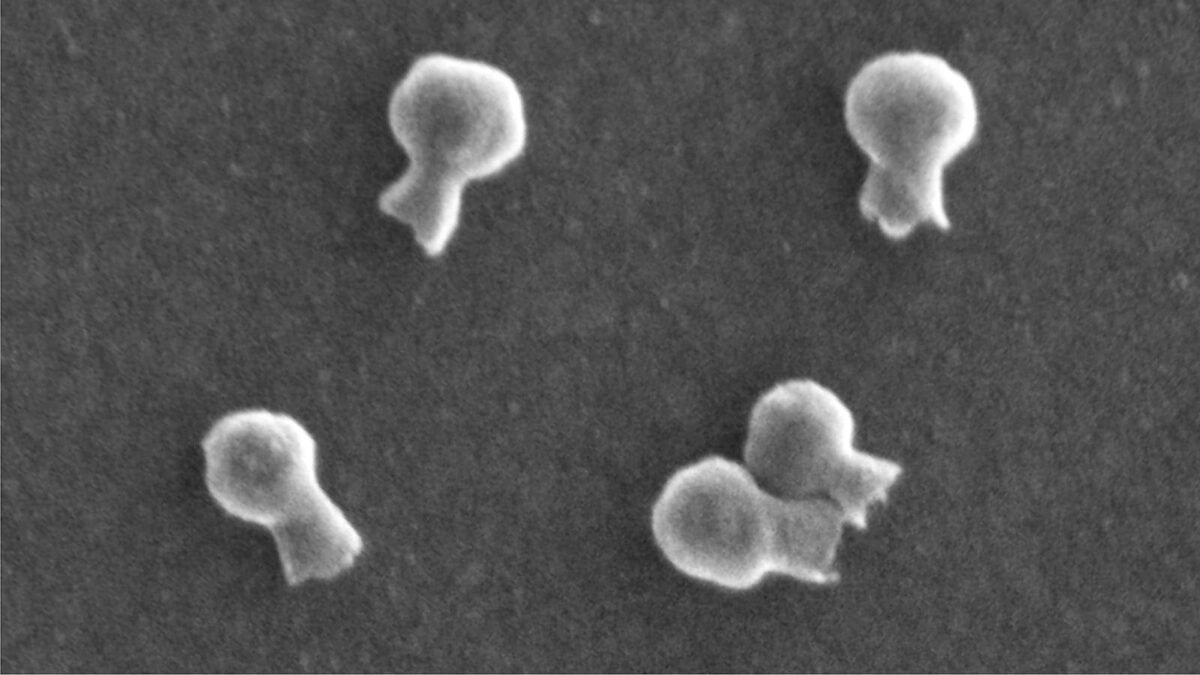
Researchers at the California Institute of Technology have built tiny, light-powered robots that can carry medicines across the blood–brain barrier, one of the toughest obstacles in all of medicine. In tests on mice, the devices — called BrainBots — delivered approximately five times more chemotherapy drug to the brain than identical particles that were not switched on, according to Caltech.
The work, led by Professor Wei Gao, was published online on 25 November in the journal Science Robotics. In mouse models of glioblastoma, the most common and aggressive form of primary brain cancer in adults, the treatment slowed tumour growth and prolonged survival, the researchers reported. Crucially, it did so without detectably damaging the barrier it had just crossed, and with less toxic effect on the rest of the body than the same chemotherapy drug given on its own.
“We showed that our BrainBots can carry medication through the bloodstream and help deliver it across the blood–brain barrier, one of the biggest challenges in treating brain diseases,” Gao said, according to Caltech. “Because the BrainBots are so small and the blood circulation is so fast, we initially were not sure how much a method based on nanoscale propulsion would increase the passage of drugs through the blood–brain barrier. We are thrilled to see it worked so well.”
The results come from animal experiments only, and the researchers are clear that much more work is needed before the approach can be tested in people. But the study is a striking demonstration of a new idea: rather than waiting for a drug to drift passively into the brain, give it a tiny engine, a steering system and a remote control.
How the BrainBots work
Each BrainBot is a capsule roughly 250 nanometres across — hundreds of times smaller than the width of a human hair. Under a scanning electron microscope they look like tiny, asymmetric balloons: a rounded chamber with a narrower neck. That odd shape is deliberate. The chamber holds ammonium bicarbonate, a compound that releases gas when it is heated, and the whole structure is sealed by a gate made from a material that melts at a precise temperature.
The capsules are built from biocompatible and biodegradable materials, according to Caltech, and their surfaces carry two further pieces of equipment. The first is indocyanine green, a dye that converts near-infrared light into heat. The second is a set of DNA molecules called aptamers, short strands engineered to recognise and latch onto the cells that line the blood–brain barrier. The paper identifies the aptamer used as hBS01, a 40-base strand selected for its ability to bind to human brain blood-vessel cells.
The journey begins with an injection into the bloodstream, much like an ordinary intravenous drug. Near-infrared light is then shone through the skull towards the brain. When the light reaches a BrainBot circulating near the barrier, the dye turns it into localised heat. The heat melts the temperature-sensitive gate, the ammonium bicarbonate breaks down and releases gas, and the burst of gas propels the capsule out of the fast-moving bloodstream and towards the wall of the blood vessel.
That push matters. Blood moves quickly, and a passive nanoparticle drifting past the brain has only a fleeting chance to make contact with the vessel wall. The BrainBots’ propulsion increases that contact, and the aptamers then do the recognising: they bind to the endothelial cells that form the barrier, and the cells take the particles up and ferry them across to the brain side, a process known as transcytosis. Once inside the brain, the capsule degrades and releases its drug payload.
According to the study, as reported in detail by the science outlet XenoSpectrum, the combination of effects is measurable step by step. In a laboratory model of the barrier built from human-derived brain blood-vessel cells, the light-activated BrainBots reached a transport rate of about 24 per cent, with the targeting aptamer, the heating effect and the propulsion each adding to the result. In the live mouse experiments, eight hours after the drug was given, the amount of chemotherapy reaching the brain stood at 2.30 per cent of the administered dose per gram of brain tissue — 5.2 times the level seen in mice given the same particles without the light.
The mouse trials
To test whether the extra delivery translated into a real therapeutic benefit, the team used mouse models of glioblastoma. They loaded the BrainBots with doxorubicin, a powerful and widely used chemotherapy drug, and compared mice whose particles were activated with near-infrared light against mice given the same particles without activation.
The activated BrainBots delivered approximately five times more medication to the brain, according to Caltech, and the treatment slowed the growth of the tumours and prolonged the animals’ survival. The researchers also reported no detectable disruption of the blood–brain barrier during treatment — an important safety signal, because a delivery method that tears the barrier open would let far more than the drug into the brain — and reduced systemic toxicity compared with conventional administration of doxorubicin alone.
Doxorubicin is a useful test case precisely because it is both potent and problematic. It is effective against many cancers, but it is kept out of the brain by the barrier, and when given through the bloodstream it can damage the heart and other healthy tissues. A system that puts more of it where the tumour is, and less of it everywhere else, attacks both problems at once.
The researchers are candid about the limits. Only a fraction of the injected BrainBots reached the brain. The remainder were expected to be taken up by organs such as the liver and spleen and to degrade there, as is typical for most nanoparticle-based drug carriers, according to Caltech. The team is now working on optimising the delivery of the near-infrared light and on evaluating the long-term safety, stability and degradation of the nanorobots inside the body.
“We’re working on optimizing the near-infrared light delivery and evaluating the long-term safety, stability, and degradation of the nanorobots in the body,” Gao said. “Although more research is needed before we can move toward human studies, we’re excited about the potential of this technology for treating brain diseases.” No timeline for human trials has been announced.
The barrier that defeats almost every drug
To understand why a five-fold improvement matters, it helps to understand what the blood–brain barrier is. It is not a single wall but a tightly sealed layer of cells lining the blood vessels of the brain, reinforced by supporting cells. It evolved to protect the brain from infections, toxins and fluctuations in the blood, and it does that job extremely well. The problem is that it cannot tell a poison from a medicine.
The scale of the obstacle is remarkable. According to the work of Professor William Pardridge of the University of California, Los Angeles, a leading authority on the subject, more than 98 per cent of all small-molecule drugs do not cross the blood–brain barrier, and essentially 100 per cent of large-molecule drugs — including most modern biological medicines — do not cross it either. Only a narrow class of small, fat-soluble molecules slips through by diffusion. For almost everything else, the barrier is a closed door.
That is why brain diseases are so hard to treat. Drugs that work brilliantly elsewhere in the body simply never arrive in the brain in useful amounts. Doctors compensate by raising doses, which raises side effects, or by injecting drugs directly into the brain or spinal fluid, which is invasive and risky. The search for a better way in has occupied researchers for decades.
Why glioblastoma is the hardest test
The team chose glioblastoma as its first target because it is the disease where the delivery problem is most acute. Glioblastoma is the most common malignant primary brain tumour in adults, accounting for nearly half of all diffuse gliomas, and it is also among the most lethal. According to a recent review of the disease, median survival is approximately 15 months despite maximal treatment — surgery, radiotherapy and chemotherapy — and the five-year survival rate is around 5 per cent. The prognosis, the review notes, has barely improved in three decades.
Part of the reason is the tumour itself: glioblastoma grows quickly, invades surrounding brain tissue with finger-like projections that surgery cannot fully remove, and resists chemotherapy. But a large part of the reason is delivery. Even the standard chemotherapy drug for glioblastoma, temozolomide, reaches the brain only in limited amounts. A tumour that is already hard to kill becomes harder still when the drugs aimed at it cannot get through the door.
That is what makes the BrainBot result worth attention. The study does not claim a cure, and it should not be read as one. It claims something narrower but still significant: that an actively propelled, targeted carrier can put several times more of an existing drug into the brain of a living animal, safely enough that the barrier itself is left intact and the animal lives longer. If that effect survives the jump from mice to larger animals and eventually to people, it would change the arithmetic of brain cancer treatment — not by inventing a new drug, but by finally delivering the drugs we already have.
From bladder tumours to the brain
The BrainBot is not Gao’s first nanorobot. In recent collaborations with Professor Mikhail Shapiro, Caltech’s Max Delbrück Professor of Chemical Engineering and Medical Engineering, Gao and his laboratory developed nanobots for targeted drug delivery and tested a version that could autonomously carry anti-tumour drugs to bladder tumours. The new study extends the same underlying approach to the brain, adding light-activated propulsion tuned to the particular problem of the blood–brain barrier.
The paper, titled “Photothermally gated nanorobots for active blood–brain barrier transcytosis and brain delivery”, lists postdoctoral scholars Jounghyun Yoo and Sukyoung Won, visiting student researcher Suhyun Kim, graduate students Hong Han, Dong Hung Truong and Xiaotian Ma, visitor Gwangmook Kim and former postdoctoral scholar Songsong Tang among its Caltech authors, with Gao as corresponding author. The research was supported by the Heritage Medical Research Institute, the Korea Health Technology R&D Project through the Korea Health Industry Development Institute, the National Research Foundation of Korea and the Korea Basic Science Institute.
Analysis: Why It Matters
The BrainBot study matters for a reason that goes beyond its headline number. It represents a shift in how scientists think about getting drugs into the brain: from chemistry to engineering.
For most of the history of brain drug delivery, the strategy has been chemical. Researchers have tried to redesign drugs so that they slip through the barrier, or to disguise them as nutrients the brain actively imports, or to attach them to antibodies that hitch a ride on the barrier’s own transport systems. These approaches have produced real progress, but they share a limitation: the drug is passive. Once injected, it goes where the blood takes it, and only a small fraction happens to arrive at the right place at the right time.
BrainBots add two things a passive drug does not have: motion and a trigger. The motion is the gas-powered push that drives the particle out of the bloodstream and against the vessel wall. The trigger is the near-infrared light, applied from outside the body, which decides when and where the push happens. Together they turn delivery from a matter of chance into a matter of control — at least in principle. The study’s step-by-step measurements support that reading: each element, the targeting molecule, the heating and the propulsion, contributed separately to the final result, which suggests the design is doing what its inventors intended rather than succeeding by accident.
That control is also what makes the safety findings important. A method that forces the barrier open would be easy to build and dangerous to use. The BrainBots, by contrast, appear to work with the barrier’s own machinery, persuading its cells to carry them across rather than breaking through. The reported absence of detectable disruption, and the reduction in toxicity elsewhere in the body, are the findings that make the rest of the study credible as a medical technology rather than merely a clever piece of engineering.
None of this should be overstated. The history of nanomedicine is littered with mouse successes that never became human treatments, and the obstacles between this paper and a hospital ward are formidable. The first is scale. A mouse brain weighs about half a gram; a human brain weighs about 1,400 grams, and the human skull is far thicker. Near-infrared light penetrates tissue better than visible light, which is why the team chose it, but delivering enough light evenly across a human brain, without heating healthy tissue, is an unsolved engineering problem — and it is the problem Gao’s team names first among its next steps.
The second obstacle is efficiency. Even with propulsion and targeting, only a fraction of the injected BrainBots reached the brain. For a mouse experiment that is enough to show an effect. For a human treatment, the dose, the cost and the fate of the particles that go elsewhere would all need careful accounting, particularly because the particles are designed to degrade and their breakdown products must be shown to be harmless over months and years, not just days.
The third obstacle is regulatory. A BrainBot is neither a straightforward drug nor a straightforward device. It is a drug carried by a machine, activated by a beam of light, and it would need to be approved as a combination of all three. Regulators have pathways for such products, but they are slow and demanding, and the first human trials are years away at best.
Yet the potential reach of the platform is what gives the study its longer significance. Gao is explicit that the brain is a starting point, not the limit. “Our new nanorobot is not limited to brain delivery, but we are trying to address one of the biggest problems in medicine — crossing the blood–brain barrier — as a starting point,” he said. “We targeted cancer, but there are a lot of neurological diseases, such as Parkinson’s, for example, that we hope could benefit from this technology.”
That is a large claim, but it follows logically from the design. The BrainBot is a delivery vehicle, and the cargo can change. The same chassis that carried doxorubicin to a brain tumour could, in principle, carry drugs for Parkinson’s disease, Alzheimer’s disease or other neurological conditions — the very diseases where the barrier has blocked progress for longest. It could also carry newer kinds of cargo, such as gene therapies, which are large molecules that the barrier excludes almost entirely. Each new cargo would need its own testing, but the vehicle would not need to be reinvented.
There is also a wider context. The blood–brain barrier is one of the oldest bottlenecks in medicine, and researchers have attacked it from many directions: focused ultrasound that temporarily loosens the barrier, nasal sprays that bypass it, and “Trojan horse” molecules that trick it into opening. BrainBots do not replace those approaches; they add a new one, distinguished by being externally triggerable and by combining propulsion with biological targeting. Whether it proves better than the alternatives will be decided by experiments, not by argument, and the honest test will be replication by other laboratories and success in larger animals.
What should readers watch for next? The team’s own stated priorities are the most reliable guide: improvements in how the near-infrared light is delivered, and data on the long-term safety, stability and degradation of the particles. After that, the milestones to look for are studies in larger animals, where the skull and brain are closer to human scale, and any announcement of work towards a first human trial. None of these will come quickly. But the direction of travel is clear. After decades in which the blood–brain barrier has decided which brain treatments are possible, researchers are beginning to build machines that can negotiate with it on its own terms.
What to watch next
The immediate next steps belong to Gao’s laboratory: optimising the light delivery system and completing the long-term safety studies that any move towards human trials would require. Beyond that, the field will be watching for independent replication of the five-fold delivery improvement, for results in larger animal models, and for signs that the platform can carry cargoes other than doxorubicin. For patients and families affected by glioblastoma and other brain diseases, the message of this study is neither a promise nor a breakthrough to be celebrated prematurely. It is evidence that one of medicine’s hardest doors can, in principle, be opened — and a reminder of how much work remains before anyone walks through it.
Sources
California Institute of Technology — “Tiny Robots Deliver Treatments to the Brain”
Interesting Engineering — “Light-powered 250-nm nanobots boost brain drug delivery fivefold”

About the Author — Abdul Mannan
Related Articles

Hubble Maps an ‘Ocean of Stars’ in the Milky Way’s Heart to Help Roman Weigh Distant Worlds
NASA has released new Hubble images of the Milky Way's crowded galactic bulge, the first samples of a…

Microsoft Declares ‘Code Red’ After 24-Hour Outage Exposed Failures Across Outlook and Teams
Microsoft has declared its most severe internal alarm, a Code Red, after a 24-hour outage knocked out Outlook,…

Pakistan’s First Astronaut Docks at China’s Tiangong Station as Shenzhou-24 Completes Historic Flight
Wing Commander Muhammad Zeeshan Ali became the first Pakistani in orbit and the first foreign astronaut aboard China's…