
UK Net Migration Falls to 77,000, Lowest in Nearly 30 Years, as Arrivals Plunge

Net migration to the United Kingdom fell to an estimated 77,000 in the year to June 2026, official figures showed on Thursday, the lowest annual total in nearly 30 years outside the coronavirus pandemic and a milestone that successive governments have chased for more than a decade.
The Office for National Statistics (ONS) said the figure had more than halved from 204,000 in the previous 12 months and was down 92 per cent from the record peak of 944,000 recorded in the year to March 2023. About 738,000 people moved to Britain in the year to June 2026 while 661,000 left, according to the ONS, and the statisticians said net migration had “fallen to levels not typically seen since the 1990s”.
The last time the annual figure was this low, excluding the pandemic years when travel restrictions briefly pushed it as low as 35,000, was 1997, when net migration stood at 48,000. The comparison, however, comes with a warning: in 1997 the figure was measured by surveying passengers at ports and airports, while today it is built from administrative records, and the flows of people in both directions are now more than twice as large. In 1997, 327,000 people arrived and 279,000 left; in the latest year, 738,000 arrived and 661,000 departed.
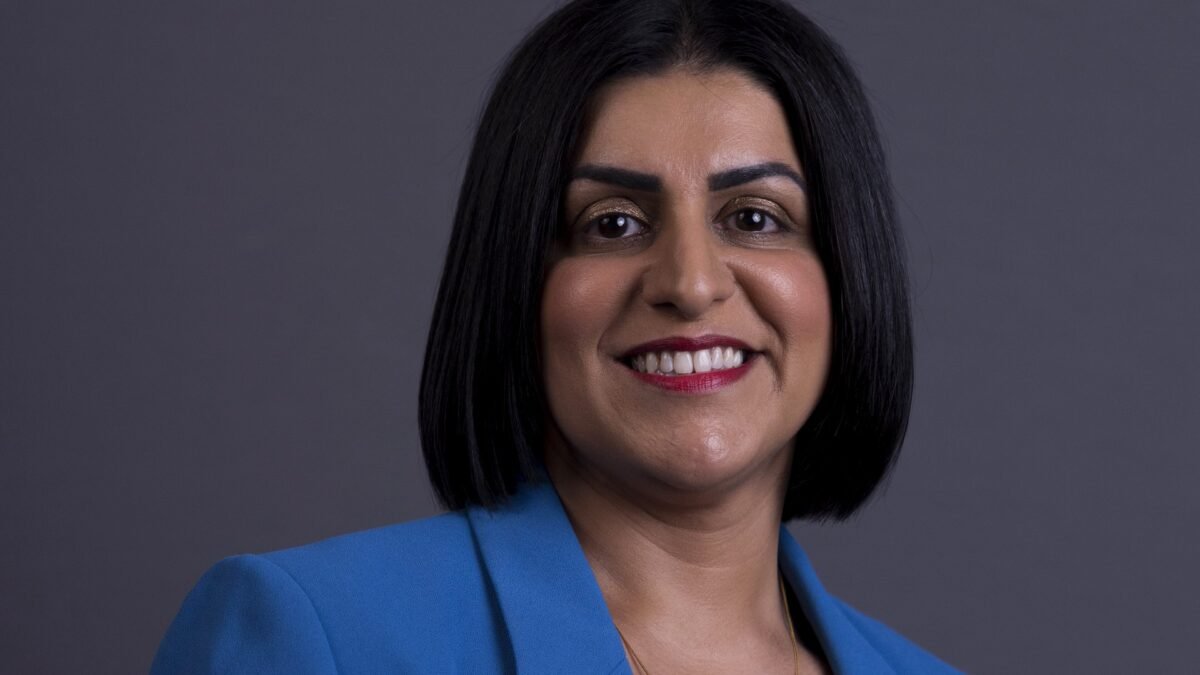
Home Secretary Shabana Mahmood seized on the numbers within minutes of their release, declaring that the government had “restored control” of the immigration system. “We have brought net migration to 77,000, down 92% from its peak under the Conservatives,” she said. “Where they failed, we have delivered for the British people.”
Her opponents were quick to dispute who deserved the credit. The Conservatives said the fall was mainly the result of visa restrictions they had introduced in their final period in office, while Reform UK said the figures were “no cause for celebration” and argued that years of high migration had already changed whole areas of the country. The row over ownership of the fall is likely to run for days, but the scale of the drop itself is not in dispute: Britain’s net migration has now fallen by roughly nine-tenths in just over three years.
The figures in detail
The ONS bulletin, published at 9.30am on Thursday, is provisional, and the statisticians were unusually open about its limits. The headline estimate of 77,000 carries a 90 per cent revision interval of 31,000 to 128,000, meaning the final figure, once more complete travel data arrive, is most likely to land somewhere in that range. The estimates for British nationals are subject to greater uncertainty than usual because the underlying Registration and Population Interaction Database, known as RAPID, was unavailable for this release, and the ONS said it would update them in May 2027.
Immigration fell by 17 per cent, from 893,000 in the year to June 2025 to 738,000, continuing a downward trend from the peak of 1,469,000 arrivals in the year to March 2023. Emigration, by contrast, was broadly stable at 661,000, against 689,000 a year earlier, though it remains far above the levels seen before the pandemic-era surge. The combination of falling arrivals and stubbornly high departures is what has driven net migration down so fast.
The fall was driven almost entirely by fewer people arriving from outside the European Union. Non-EU nationals accounted for 550,000 of the 738,000 arrivals, down from 671,000 a year earlier, and their net migration fell to 258,000 from 379,000. The ONS said the drop in non-EU arrivals was the main reason for the latest decrease, with work-related arrivals down by 45,000, study-related arrivals down by 33,000 and asylum-related arrivals down by 19,000 compared with the previous year.
Among non-EU nationals, study remained the most common reason for coming to Britain, accounting for 47 per cent of arrivals, followed by work at 25 per cent and asylum at 13 per cent. Study-related arrivals totalled 257,000, down 11 per cent from 290,000 a year earlier, with main applicants down 12 per cent to 242,000 while dependants held steady at 15,000. Work-related arrivals fell by a quarter to 135,000, from 180,000, with main applicants down 30 per cent to 60,000 and dependants down 21 per cent to 75,000. Asylum-related arrivals fell to 73,000 from 93,000.
For British and EU nationals, the picture was one of net departure. An estimated 245,000 British nationals left the UK long term while only 109,000 arrived, leaving net migration for British nationals at negative 137,000, broadly stable on the previous year. EU nationals showed the same pattern: 124,000 left and 79,000 arrived, a net figure of negative 45,000, and EU net migration has now been negative since the year to June 2022. In the words of Sarah Crofts, the ONS deputy director of migration statistics: “In 2026, non-EU citizens are the only group driving positive net migration. EU nationals are leaving in greater numbers than are arriving, as is the case with British nationals.”
Who is coming, and who is leaving
Indian nationals were the most common non-EU nationality to immigrate to the UK in the year to June 2026, and also the most common to emigrate, according to the ONS, with Pakistani, Chinese and Nigerian nationals regularly among the top five. For the top four nationalities, study was the most common reason for coming.
The emigration figures tell a story of their own. Most of the non-EU nationals who left in the latest year had originally come to study: an estimated 155,000 former students departed, reflecting the large numbers of international students who arrived in 2022 and 2023 and have since finished their courses and post-study work periods. The Times reported that the rise in overall emigration in 2025-26 was driven in part by members of the so-called “Boriswave” — the surge of arrivals after the pandemic — returning home.
Work-related emigration also rose. Some 85,000 non-EU nationals who had originally arrived for work left in the year to June 2026, with main applicants up 14 per cent to 53,000. The pattern suggests a system in which Britain is no longer simply accumulating migrants year after year, but is increasingly a place people pass through: large numbers arrive, and large numbers leave, with the balance between the two now far smaller than at any point in the post-Brexit era.
The previous set of ONS figures, published in May, put net migration at 171,000 for the year to December 2025, according to the BBC, which was then the lowest since 2012 outside the pandemic. The new figure of 77,000 is less than half of that, and for the first time since the turn of the century it falls within the “tens of thousands” target that David Cameron first pledged in 2010 and repeated throughout his premiership, a promise that became a byword for unmet immigration targets as net migration climbed past 300,000 and then, after Brexit, towards a million.
Small boats and illegal arrivals fall too
Separate Home Office figures published alongside the ONS release showed falls on the illegal migration side of the ledger as well. There were 26,581 people who arrived in the UK on small boats in the year to September 2026, the lowest figure since 2021, according to the Home Office data reported by the BBC, although the average number of people per boat rose to 67, up from 59 the previous year. The most common nationalities arriving by small boat were Eritrean, Sudanese, Somali, Afghan and Iranian.
The total number of people detected arriving in the UK by illegal routes fell to 31,077 in the year to September 2026, down from 51,244 the previous year and the lowest level in five years, with small boats accounting for 86 per cent of illegal arrivals. Asylum claims fell by a third to 74,000, although that total remained higher than in any year between 2004 and 2021.
The use of hotels to house asylum seekers also fell sharply. About 13,000 asylum seekers were in hotels at the end of September, 64 per cent fewer than a year earlier, with 52 hotels shut this year and around 140 still open, according to the BBC. At the same time, the Home Office granted settlement to 241,000 people in the year to September, up 53 per cent on the year before and the most since 2010, a reminder that the pipeline of people already in Britain moving towards permanent status continues to grow even as new arrivals fall.
Mahmood, in her statement, linked the legal and illegal figures together. “This didn’t happen by accident,” she said. “It happened because this government took action. We raised skills and salary thresholds to only attract the brightest and best and those we truly need. And we are bearing down on illegal migration. Small boat crossings are down significantly, we are rapidly closing asylum hotels, and we are removing those here illegally. There is more to do. But this Government is restoring order to our border and fairness to our migration system.”
She has also moved to tighten settlement rules, announcing changes to indefinite leave to remain earlier this month, and she refused, when asked on Thursday, to say whether the government’s aim remained to bring net migration below 100,000, according to the Press Association. The refusal was notable: with the figure already at 77,000, ministers appear reluctant to be pinned to a target they may already have beaten, or to one that future revisions could push back above.
The fight over who gets the credit
The political argument began before the ink on the figures was dry. Chris Philp, the shadow home secretary, said the fall was “mainly a result of changes made by the previous Conservative government” and called for “an annual legally binding inward migration cap”. He also argued that the composition of the figures told a different story from the headline, saying: “British and European people are leaving in their droves because of Labour’s high taxes whilst non-EU immigration remains far too high.”
The claim has a factual basis. The sharpest visa restrictions of recent years — bans on most students and care workers bringing dependants, and higher salary thresholds for skilled workers — were introduced by the last Conservative government under Rishi Sunak, and the fall in arrivals began under those rules. The Times noted that net migration had already fallen significantly after those reforms, and the BBC said the drop was likely to be attributed, at least in part, to rules tightened when Sunak was prime minister. Labour has since added its own restrictions, including the higher skills and salary thresholds Mahmood cited, and the government argues that its enforcement measures on illegal migration and asylum hotels have accelerated the decline.
Reform UK, which has made immigration its central issue, dismissed the figures altogether. Zia Yusuf, the party’s home affairs spokesperson, called them “no cause for celebration”, saying: “Whole areas of the country have been changed beyond recognition. The only way to improve quality of life for British people is to deport all those who came illegally.” The party’s position is that the level of net migration matters less than the cumulative effect of the years when it ran at 700,000 to 900,000 a year, and that only removals on a large scale would address it.
The debate matters because immigration remains one of the most potent issues in British politics. A YouGov poll published this week showed it was the second-most important concern for voters after the economy, according to Reuters, and concern about immigration helped drive the vote for Brexit in 2016. Yet the figures also show a public that may be behind the curve: Sunder Katwala, director of the British Future think tank, said the drop would surprise much of the public, many of whom still believed immigration was rising, and argued that the figures should prompt politicians to move on from debates about reducing migration and focus instead on what comes next.
Analysis: Why It Matters
The first thing to understand about the 77,000 figure is that it is both a genuine landmark and a provisional estimate. The ONS has been unusually candid about the uncertainty in this release: the British-national figures are projections built on data that was not available, the revision interval for the headline number runs from 31,000 to 128,000, and the statisticians expect to update the estimates in May 2027. The direction of travel, however, is beyond reasonable doubt. Net migration has now fallen in every release since the 944,000 peak, and the drivers — fewer work and study arrivals from outside the EU, and a steady outflow of former students — are structural rather than statistical noise.
The second point is that the fall is not the product of a single government or a single policy. It is the cumulative result of two waves of restriction: the Conservative tightening of 2023 and 2024, which ended the post-Brexit surge in dependants and low-paid care visas, and Labour’s continuation and extension of that approach, including higher salary and skills thresholds and a harder line on asylum hotels and removals. Both sides can claim a share of the credit, and both are doing so, but the honest account is that the system turned because the rules changed twice in the same direction, and because the students who arrived in the great post-pandemic wave are now leaving in large numbers.
The third point is the one the headline obscures. A net figure of 77,000 does not mean Britain has become a closed country. More than 700,000 people still arrived in the latest year, and more than 600,000 left. The churn is enormous: universities still depend on international students, the health and care sectors still recruit overseas, and Indian, Pakistani, Chinese and Nigerian nationals still arrive in large numbers for study and work. What has changed is the balance. For the first time in the modern era, the number of people leaving is almost as large as the number arriving, and the net addition to the population from migration has shrunk to a level last seen when Tony Blair was in his first year as prime minister.
That has consequences that cut in both directions. For the government, it removes the most obvious political vulnerability of the last three years: the charge, levelled relentlessly by Reform UK and the Conservatives, that ministers had lost control of the border. Mahmood’s language — “restored control”, “where they failed, we have delivered” — is aimed squarely at that charge, and the small-boats and hotel figures give her a second front on which to claim progress. But the same numbers create a new problem. A labour market that has relied on overseas workers, a university sector that has relied on overseas fees, and a care system that has relied on overseas staff must now adjust to a world in which the net inflow is a fraction of what it was. The Office for Budget Responsibility has repeatedly warned that lower migration means slower growth and weaker public finances, and the government will face questions about whether the cure is beginning to cost more than the disease.
There is also the question of who is leaving. The figures show 245,000 British nationals emigrating in a single year against 109,000 returning, a net loss of 137,000 British citizens. Philp’s argument — that high taxes are driving Britons abroad while non-EU immigration remains high — is partisan, but the underlying fact is real and uncomfortable: Britain is losing its own citizens at a steady rate even as it admits far fewer newcomers. If that outflow is driven by tax, housing costs and a sense that opportunity lies elsewhere, then the migration debate is also, in part, a debate about why people who were born in Britain choose to leave it.
Finally, the figures change the politics of the next election. For a decade, immigration was a debate about numbers going up. The Conservatives promised “tens of thousands” and delivered close to a million; Labour inherited the peak and has now presided over its collapse. The argument is shifting from “how do we bring the numbers down” to “what do we do now that they are down” — and to the harder questions underneath: who should be allowed to come, on what terms, and what Britain owes to the hundreds of thousands who arrived during the peak years and are now settling, working and raising families here. Katwala’s point, that politicians should move on from the reduction debate to what comes next, is the one that will define the next phase of this argument.
What to watch next
Several things will determine whether 77,000 proves to be a floor or a staging post. The ONS will revise these estimates in May 2027, when the missing RAPID data on British nationals becomes available, and the headline figure could move in either direction, though the revision interval suggests it is unlikely to move far. The government and the European Union are due to publish the texts of two new post-Brexit reset treaties on Thursday afternoon, including a youth experience scheme that could, over time, reopen a legal route for young Europeans to live and work in Britain.
Ministers will also face pressure to say what their target is now. Mahmood’s refusal to confirm that the aim remains below 100,000 leaves open whether the government will set a new, lower target, accept the current level as success, or argue that no single number captures a system in which students, workers and asylum seekers are governed by different rules. Reform UK will continue to argue that the stock of past arrivals matters more than the flow, and the Conservatives will press for a legally binding annual cap.
The most important test, though, will be economic. If employers, universities and the NHS begin to report shortages that they attribute to the fall in arrivals, the government will have to decide whether to loosen the rules it has just tightened — and whether it can do so without reopening the political argument it believes it has just won.
Sources
- Office for National Statistics — Long-term international migration, provisional (year ending June 2026)
- Reuters — UK annual net migration drops to 77,000 in year to June 2026
- Press Association via Glasgow Times — Net migration plummets to 77,000, ONS estimates
- The Times — UK net migration falls to lowest level in 30 years
- ONS Blog — Behind the numbers: what is driving the latest fall in net migration?

About the Author — Abdul Mannan
Related Articles

Badenoch Orders Tory Candidates to Sign Pledge Backing ECHR Exit and Net Zero Repeal
Kemi Badenoch has made signing a 'candidates covenant' a mandatory condition of standing for the Conservatives, requiring every…

DWP Cyber Incident Takes UK Benefits Services Offline as New Claims Are Blocked
The Department for Work and Pensions has taken some of its online services offline after identifying a cyber…

Bank of England Warns 6.5 Million Homeowners Face Higher Mortgage Payments as 430,000 Brace for £500-a-Month Rises
The Bank of England has warned that about 6.5 million homeowners will face higher mortgage payments as their…