
Thanksgiving Nor’easter Knocks Out Power for 800,000 and Forces Macy’s Parade Postponement for the First Time in 100 Years

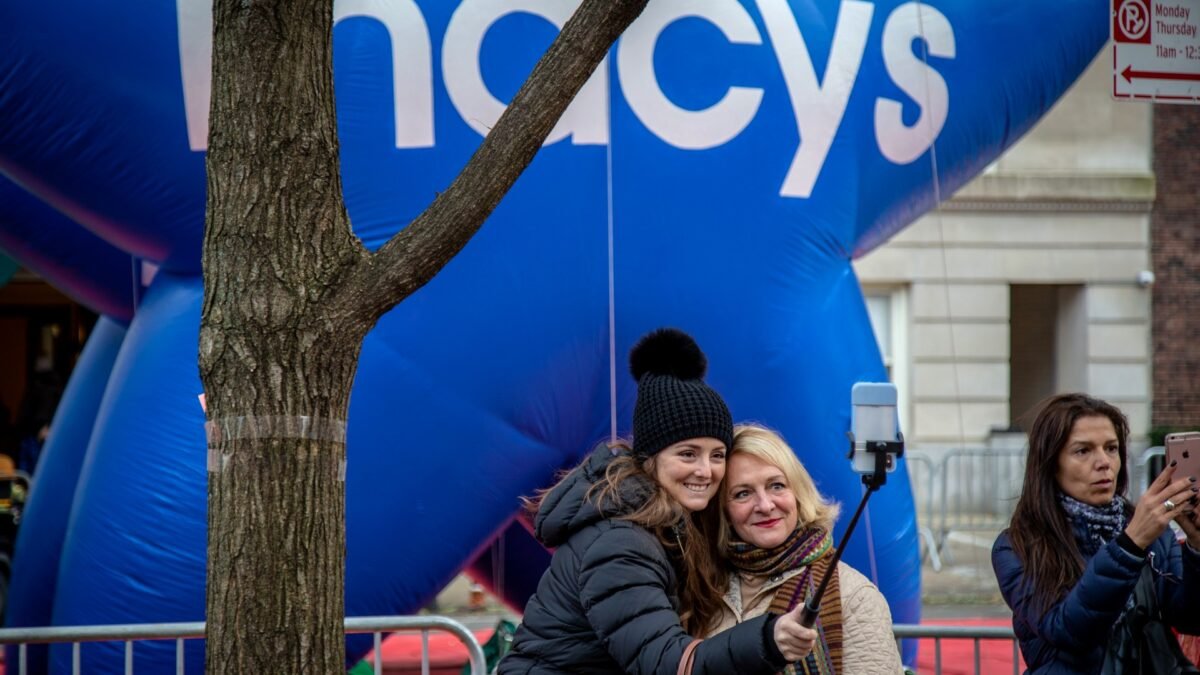
A powerful nor’easter swept up the east coast of the United States on Thanksgiving Day, knocking out power for more than 800,000 homes and businesses, flooding coastal communities, snarling holiday travel and forcing the postponement of the 100th Macy’s Thanksgiving Day Parade — the first time in the parade’s century-long history that it has ever been moved to another day.
The storm, which gathered strength off the North Carolina coast overnight and barrelled north through Thursday, 26 November 2026, brought damaging winds, heavy rain and coastal flooding from the Carolinas to New England, according to the National Weather Service. By the middle of the afternoon, more than 800,000 customers were without electricity across the country, and the nation’s most famous Thanksgiving tradition had been pushed back by two days, to Saturday morning.
“A powerful coastal storm will continue to bring severe impacts to the region through today into this evening due to damaging high winds accompanied by heavy rainfall,” the National Weather Service said in an afternoon forecast. “The storm departs overnight into Friday.”
The decision to postpone the parade was taken on Wednesday evening, before the worst of the weather arrived, after forecasters warned that gusts in New York City could reach 60 to 65 miles per hour — far beyond the limits under which the parade’s giant balloons are allowed to fly. The parade will now step off at 8.30 a.m. Eastern Time on Saturday, 28 November, Macy’s and city officials announced.
A holiday darkened by outages
The scale of the power failure grew through the day as the storm’s winds toppled trees and power lines across the Mid-Atlantic. According to USA Today, more than 800,000 power outages had been reported nationwide as of 3.30 p.m. Eastern Time, largely centred on Missouri and the East Coast. Reuters reported that wind gusts of up to 70 miles per hour had been recorded, and that nearly 200,000 homes and businesses had no power in Virginia and another 177,000 in Maryland as of 2.26 p.m., according to the tracking site poweroutage.us. Pennsylvania, New Jersey and North Carolina each had tens of thousands of customers without electricity.
In Virginia, the outages were concentrated around Newport News and Williamsburg, and videos posted to social media showed street flooding in parts of eastern Virginia, according to USA Today. The state’s largest utility, Dominion Energy, warned that broken utility poles and large trees on power lines meant it could be days before power was restored in some areas, the Wall Street Journal reported.
Maryland was hit almost as hard. Officials closed the Chesapeake Bay Bridge to travel in both directions as the wind and rain battered the span, and live traffic cameras were seen bouncing in the gale, USA Today reported. The storm also disrupted the water supply: at about 2.30 p.m., the Washington Suburban Sanitary Commission asked nearly two million customers in Maryland’s Montgomery and Prince George’s counties to “immediately conserve water” because the storm was causing intermittent power disruptions at water treatment plants in the Washington metropolitan area. Residents were asked to use water only for essential purposes to preserve supplies for fire protection and system storage.
Utilities and state officials had warned in advance that the combination of strong onshore winds and rain-soaked ground could cause widespread disruption, Reuters reported, and that warning proved accurate. The National Weather Service said strong onshore winds, combined with exceptionally high king tides, were causing coastal flooding in low-lying communities along portions of the East Coast, with “significant inundation” reported in Virginia, the Delaware Bay, parts of the Chesapeake Bay and the southern New Jersey coast.
New York’s governor, Kathy Hochul, declared a preemptive state of emergency for New York City and for Nassau, Suffolk and Westchester counties. New Jersey also declared a state of emergency on Wednesday. In New York City, gusts reached 40 miles per hour by the early afternoon, and the National Weather Service issued a high-wind warning for the area beginning at 10 a.m. on Thursday, warning that winds could topple trees and take down power lines. By Thursday afternoon, winds had intensified, reaching 56 miles per hour at LaGuardia Airport, according to New York City Emergency Management. Forecasters said gusts could reach 65 miles per hour later in the day, and warned of “widespread” power outages and of high-profile vehicles being blown over.
Further south, the winds were stronger still. AccuWeather reported that gusts had already reached 72 miles per hour at Stingray Point, Virginia, with coastal areas of New Jersey and Long Island bracing for gusts of up to 80 miles per hour as the storm pushed north, according to Bloomberg. The National Weather Service reported wind gusts of 50 to 70 miles per hour across parts of Virginia, Maryland, Delaware, New Jersey, New York and coastal New England.
The parade that could not go on
For New York, the most visible casualty of the storm was the parade itself. The 100th Macy’s Thanksgiving Day Parade, the centrepiece of the city’s Thanksgiving celebrations and one of the most watched events in American television, was postponed for the first time in its history.
“While we are heartbroken that our parade was postponed, the safety of our partners, the safety of our participants and spectators, is, and always will be, our top priority,” Macy’s executive Will Coss said on Wednesday night, according to the Wall Street Journal.
The reason was the balloons. The parade’s giant character balloons — the enormous helium-filled figures that float above the marching bands and floats — are only permitted to fly when sustained winds are under 23 miles per hour and gusts do not exceed 34 miles per hour, under New York City safety rules. With gusts forecast at roughly double that limit, there was no safe way to fly them. The balloons were deflated on Wednesday night and moved to a facility in New Jersey, to be reinflated ahead of Saturday’s rescheduled parade, according to the Wall Street Journal.
The postponement set off a scramble behind the scenes. High-school marching bands and other performers who had travelled to New York for the Thanksgiving Day appearance suddenly needed places to stay through the busiest travel period of the year, USA Today reported, and some performers may be unable to take part on Saturday because of the schedule change. Macy’s said its team was “working through the operational logistics for this change” and would share details as they were finalised.
New York City’s mayor, Zohran Mamdani, urged residents and visitors to take the storm seriously. “If you are planning to travel, budget extra time and remember that no destination is worth your safety,” he said in a social-media post, according to USA Today. “Never walk or drive through flooding. If winds pick up, go inside. These are winds strong enough to down tree limbs and power lines — so be sure to secure outdoor furniture, trash cans, and holiday decorations ahead of time.”
Philadelphia’s Thanksgiving parade was also affected. The city’s 6abc Dunkin’ Thanksgiving Day Parade, the oldest Thanksgiving parade in the United States, was cancelled as a street parade because of high-wind warnings, with gusts forecast as high as 60 miles per hour, and the show instead went ahead from a television studio.
Travel in turmoil
The storm struck at the peak of the busiest travel period of the year. According to AAA, about 81.5 million people were expected to travel at least 50 miles from home over the Thanksgiving holiday period, most of them by car. The Transportation Security Administration said it expected to screen about 17.6 million passengers nationwide between Sunday, 24 November and Saturday, 30 November, with Sunday, 29 November projected to be the single busiest day at airport checkpoints.
By Thursday afternoon, the disruption was mounting. According to FlightAware, there were 1,708 delays and 419 cancellations for flights within, into or out of the United States as of 3 p.m. Eastern Time, USA Today reported. Baltimore/Washington International Airport had the most cancellations at that time, with 47 outbound and 46 inbound flights cancelled, while John F. Kennedy International Airport in New York, Boston’s Logan International Airport and Miami International Airport also suffered significant delays and cancellations. Most airlines issued travel waivers and reminded passengers to check for delays and cancellations.
Under United States Department of Transportation rules, airlines must offer travellers a refund if their flight is cancelled for any reason, regardless of ticket type, if they choose not to fly, USA Today noted. Those who choose to continue their journey are entitled to penalty-free rebooking on the same airline, although when a cancellation is caused by weather — outside the airline’s control — rebooking or a refund is the limit of what travellers are owed.
The roads were no easier. Heavy rain, standing water and fallen trees made driving hazardous across the Mid-Atlantic, and officials in several states warned people to stay home. In Missouri, a separate storm system dumped snow: parts of southeastern Missouri saw as much as 14 inches of snow between 25 November and Thanksgiving morning, according to the National Weather Service in St. Louis. More than two inches fell in Columbia, Missouri, where the weather service said it was the snowiest Thanksgiving morning in the city in more than two decades and the “biggest Thanksgiving snowstorm” in nearly 50 years. St. Louis saw more than seven inches of snow. More than 120,000 customers were without power in Missouri, according to poweroutage.us.
The wild weather was not confined to the East. On the West Coast, dangerous coastal conditions persisted. The National Weather Service warned of moderate to major coastal flooding in the San Francisco area, with a risk of unexpected “sneaker” waves 13 to 19 feet high in some areas, USA Today reported. A portion of the Pacifica Pier near San Francisco collapsed as it was battered by high waves on 25 November, and people in the San Francisco area were told to expect road closures and flooding of low-lying areas. In the Pacific Northwest, the National Weather Service in Seattle said on Thanksgiving afternoon that a landspout tornado and penny-sized hail were possible in areas south-east of the city, including Auburn, Palmer and Cedar Falls, and a tornado warning had been issued earlier for areas including Issaquah and North Bend, Washington.
A century of Thanksgivings — and a first postponement
What makes this year’s postponement remarkable is the parade’s record. The Macy’s Thanksgiving Day Parade has been held almost without interruption since it began on 27 November 1924, when it was billed as a Christmas parade organised by Macy’s employees to kick off the holiday shopping season and to spotlight the company’s new flagship store at Herald Square in Manhattan. An estimated 10,000 people attended that first parade, which featured circus performers and live animals borrowed from Central Park Zoo, including elephants, according to the Library of Congress.
The giant character balloons for which the parade is now famous were introduced in 1927, when Felix the Cat became the first character to receive the inflatable treatment, thanks to the German-born puppeteer and illustrator Tony Sarg. In the early years, the balloons were simply released into the sky at the end of the parade; members of the public who retrieved them could claim a reward from Macy’s. That practice was abandoned after a balloon became entangled with an aeroplane in 1932, according to Guinness World Records.
The parade has been cancelled only three times, all during the Second World War. It was suspended in 1942, 1943 and 1944 because the rubber and helium needed for the balloons were required for the war effort — to build dirigible aircraft and blimps — and in 1942 New York’s mayor, Fiorello La Guardia, knifed a balloon dragon before it and six other balloons were donated for their rubber. The parade returned in 1945 with a patriotic theme, attended by two million people. It has been held every year since, and it has never before been cancelled or postponed because of the weather. The 2026 parade is the 100th edition of the event — the 100th anniversary of the first parade fell in 2024, but the three wartime cancellations mean the 100th parade itself arrives in 2026.
Weather has disrupted the parade before, but never stopped it. The balloons were grounded only once, in 1971, when high winds kept them on the ground. In 1997, strong gusts sent a Cat in the Hat balloon into a lamppost, sending debris to the ground and critically injuring a spectator; police stabbed the Barney the Dinosaur balloon to deflate it after winds that exceeded 40 miles per hour caused it to tear and collapse. Those accidents led to the wind rules that govern the balloons today. In 2006, a nor’easter forced the balloons to be lowered to a height of 17 feet. Each time, the parade went ahead. This year, for the first time, it did not.
The 2026 parade was meant to be the biggest yet: Guinness World Records, which recognises the event as the largest inflatable parade in the world — a record ratified after the 75th edition in 2001 — reported that more than 11,000 volunteers and performers were set to take to the streets of Manhattan, and that Macy’s had promised its biggest-ever collection of inflatables, 100 in all, including new balloons featuring Bluey, Snoopy and Woodstock, Spider-Man, Mickey Mouse and Buzz Lightyear. Whether all 100 inflatables make their planned appearances on Saturday will depend on the weather.
Analysis: why the call was made — and what it reveals
The decision to postpone rather than to press ahead, or to march without the balloons, tells us something important about how the parade has changed. A century ago, the Macy’s parade was a department store’s publicity stunt, staffed by its own employees and a handful of borrowed zoo animals. Today it is a piece of national infrastructure in all but name: a live television broadcast watched by tens of millions, a logistical operation involving more than 11,000 volunteers and performers, and an event whose centrepiece — the balloons — is governed by safety rules written in the aftermath of a near-tragedy.
The wind limits are not arbitrary. A giant parade balloon is, in effect, a small airship: a vast envelope of helium with an enormous surface area, held down by dozens of handlers on ropes. In a gust, that surface area becomes a sail. The 1997 accident showed what happens when the wind wins: a balloon driven into a lamppost, a shower of debris, a spectator left critically injured. The rules that followed — no flight above 23 miles per hour sustained, or gusts above 34 — are the line between spectacle and hazard. Thursday’s forecast gusts of 60 to 65 miles per hour were not a marginal call. They were roughly double the limit. There was, in truth, nothing to decide.
That the organisers chose postponement over a balloon-less parade is also revealing. They could have marched the bands and floats on Thursday and kept the balloons grounded, as happened in 1971. Instead they moved the whole event, accepting two days of logistical chaos — rebooking performers, reinflating balloons, reworking a live television schedule — because the balloons are the parade. Without them, the 100th edition would have been a diminished thing, and the centenary deserved better. It is a judgement about what the event is for: not simply a march, but a spectacle built around those inflatables.
The storm also exposed, once again, the fragility of the systems Americans rely on for an ordinary holiday. More than 800,000 people lost power on a day when millions were cooking Thanksgiving dinners, and in Maryland nearly two million people were asked to conserve water because the storm had knocked out power at treatment plants. The outages were not caused by a hurricane or a once-in-a-generation freeze, but by a strong seasonal coastal storm — the kind of event the East Coast faces most years. That a routine nor’easter, arriving on the busiest travel weekend of the year, could darken hundreds of thousands of homes and close a major bridge raises questions that go beyond this one storm: about the resilience of the grid, about the maintenance of lines and poles in the face of saturated ground and mature trees, and about how much disruption a modern holiday can absorb.
There is a climate dimension, too, that should not be overstated but should not be ignored either. Nor’easters are a natural feature of the North Atlantic winter, and this storm alone proves nothing about long-term trends. But two features of this event are consistent with what scientists expect from a warming world: the exceptional tides, driven in part by higher sea levels, that turned a storm surge into coastal flooding from Virginia to New Jersey; and the sheer volume of moisture in the system, which delivered heavy rain across the Mid-Atlantic and, where the air was cold enough, record Thanksgiving snow in Missouri. The storm was not unprecedented. The damage it did on an ordinary holiday was.
For the millions who travelled, the storm was a reminder that Thanksgiving — the most travelled holiday in the American calendar — is also one of the most weather-exposed. The 81.5 million people who set out this year did so into a forecast that was already warning of trouble, and the 1,700 delayed flights and 419 cancellations recorded by Thursday afternoon were, in the circumstances, modest. The system bent rather than broke. But the postponement of the parade, an event that survived a world war and a pandemic, is a measure of just how forceful this storm was.
What to watch next
Attention now turns to Saturday, when the rescheduled parade is due to step off at 8.30 a.m. in New York. Forecasters expect more hospitable weather, with partly sunny skies and highs in the low 50s, according to the Wall Street Journal — conditions in which the balloons should be able to fly. But the rescheduled parade will be a test in itself: whether the bands and performers who scrambled for extra nights in New York can all take part, whether the balloons, deflated and trucked to New Jersey, can be reinflated and returned in time, and whether the crowds — expected in the millions — turn out on a Saturday morning rather than a holiday.
Further south, the focus will be on restoration. Utilities in Virginia and Maryland face days of work in some areas, and the pace at which power returns will be the real measure of the storm’s aftermath for the hundreds of thousands of households that spent Thanksgiving in the dark. In Missouri, crews will be clearing snow and restoring power as temperatures fall. And on the roads and in the airports, the return journey looms: Sunday, 29 November, is projected to be the single busiest day at airport security checkpoints in the country, with millions heading home after a holiday that, for many, did not go as planned.
The storm itself will have departed by Friday, according to the National Weather Service. What it leaves behind is a Thanksgiving unlike any other in living memory: a darkened East Coast, a flooded shoreline, and a parade — a hundred years old, never before postponed — waiting two extra days to celebrate its centenary.
Sources
- Reuters — Thanksgiving storm knocks out power, disrupts flights on US East Coast
- USA Today — Thanksgiving storms leave over 800,000 without power, disrupt travel: Live updates
- The Wall Street Journal — Macy’s Postpones Thanksgiving Day Parade as Powerful Storm Sweeps East Coast
- The Times — Thanksgiving storms leave 800,000 people without power in US
- USA Today — Macy’s postpones Thanksgiving Day Parade. Has it ever been canceled?
- Guinness World Records — When pigs fly and hippos disappear: Macy’s Parade celebrates its centenary

About the Author — Abdul Mannan
Related Articles

Judge Blocks FCC’s Early Review of ABC Licences in Major First Amendment Rebuke
A federal judge has barred the FCC from continuing its early review of ABC's broadcast licences, ruling the…
Second US Judge Blocks Trump’s New Birthright Citizenship Order in Fresh Blow to Immigration Crackdown
A second federal judge has blocked President Donald Trump's latest attempt to narrow birthright citizenship, ruling that the…
Hegseth Holds Up 60 Patriot Missiles for Ukraine as Zelenskyy Warns Air Defences Are Running Dry
About 60 Patriot interceptors promised to Ukraine are stuck awaiting Pentagon approval, the Financial Times reports, as President…