
Myanmar’s Min Aung Hlaing Rejects Parts of World Court’s Genocide Ruling, Calling It ‘Inappropriate’

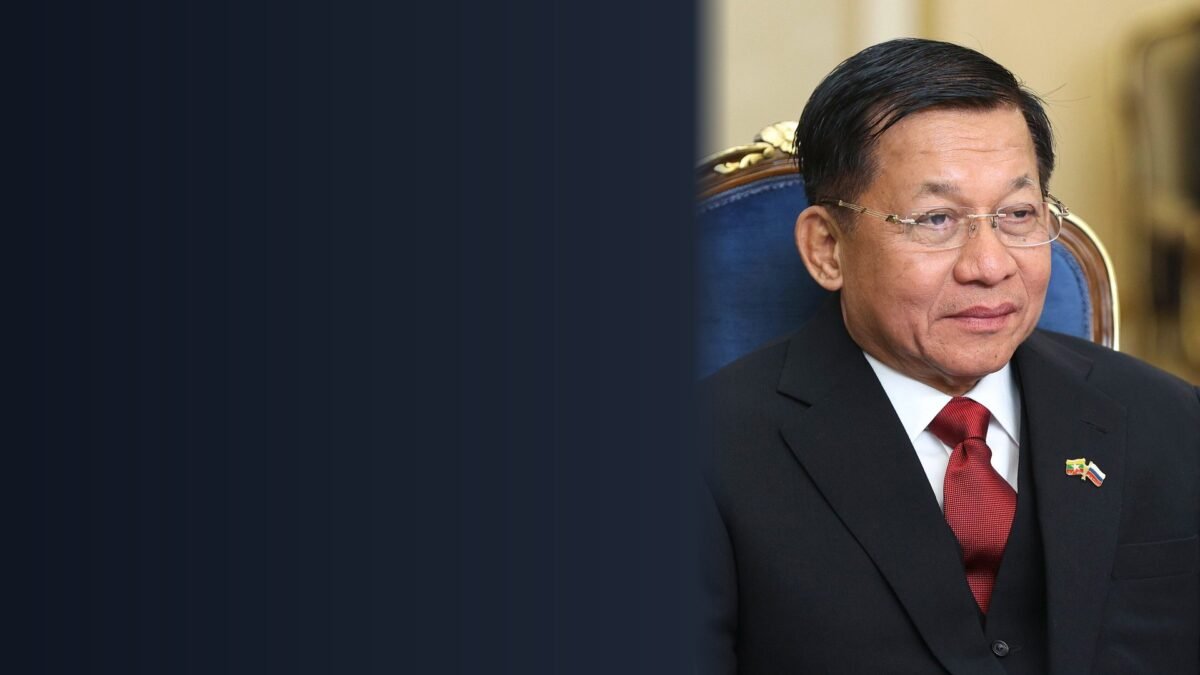
Myanmar will not comply with parts of the International Court of Justice’s landmark genocide ruling that it considers “inappropriate”, the country’s leader, Min Aung Hlaing, has said, in his first public comments since the world’s highest court found Myanmar responsible for genocide against its Rohingya minority.
Speaking at a meeting on Wednesday, 25 November, according to state media, Min Aung Hlaing rejected the verdict and said the term “genocide” had seriously damaged his country’s reputation. “Myanmar would take actions appropriate for a responsible country but would not comply with requirements it considered inappropriate,” he said, in remarks reported by Reuters and the BBC. He did not say which of the court’s orders his administration intended to disregard.
The refusal came a week after the court, sitting in The Hague, ruled on 19 November that Myanmar’s security forces had committed genocide against the Rohingya, a mostly Muslim minority, during military “clearance operations” in northern Rakhine State in 2017. It was the first time in the court’s 80-year history that it had found any state responsible for committing genocide, and the ruling is final and cannot be appealed.
The statement, carried by the state-run Global New Light of Myanmar, also described the case as a “one-sided accusation”, according to reports of the meeting. It was the first time Min Aung Hlaing had spoken publicly about the judgment since it was delivered. His government had already dismissed the ruling as unfair the day after it was handed down, but the leader himself had stayed silent until now.
The defiance sets up a direct confrontation between the court and the man who commanded the 2017 operations. Min Aung Hlaing was commander-in-chief of Myanmar’s armed forces when the crackdown took place. He seized power in a coup in February 2021, and in April 2026 he became the country’s president following elections widely described as deeply flawed. The court has ordered him, in effect, to investigate and prosecute the very chain of command he once led, to allow the survivors to return home, and to pay them compensation.
Whether any of that happens now depends less on the law, which is settled, than on politics, where almost nothing is. The court has no police, no prison and no power to seize assets. Its judgments are binding, but it cannot enforce them itself. Enforcement, if it comes at all, will have to come from the United Nations Security Council or from governments acting on their own — and both routes run into obstacles that were visible long before this week’s statement.
What the Court Ordered — and What Myanmar Is Refusing
The court’s orders were extensive. It directed Myanmar to end continuing breaches of the Genocide Convention and to take immediate and effective steps to investigate everyone reasonably suspected of involvement in the 2017 operations and, if the evidence warranted it, to prosecute and punish them. It ordered the country to give assurances and guarantees that the violations would not be repeated, and to protect the Rohingya from discrimination and persecution, including in access to citizenship and freedom of movement.
It also ordered Myanmar to allow the safe, voluntary and dignified return of displaced Rohingya to their homes, whether they are elsewhere in Myanmar or abroad, and to reunite families separated by the crackdown. It directed the country to restore or replace lost property, to help locate missing people, to provide rehabilitation to survivors, and to pay compensation for the harm caused that is not remedied through restitution. The amount and form of that compensation will be decided in a later phase of the case, and Myanmar must send the court a report within two years, by November 2028, setting out what restitution it has made and what compensation it proposes.
Min Aung Hlaing did not specify which of these requirements his administration considered inappropriate, and that silence is itself significant. The orders fall into two broad groups. Some, such as passing legislation to give full effect to the Genocide Convention, cost a government little in practice and could be performed in form while changing nothing on the ground. Others, such as investigating and prosecuting those responsible, strike directly at the military and at the leader himself. Refusing to say which ones he means allows him to reject the ruling in general terms while keeping every specific option open, and it leaves the rest of the world guessing about whether any compliance at all is on offer.
Myanmar’s position since the verdict has been consistent in its essentials, even as its tone has hardened. On 20 November, the day after the judgment, the government’s spokesperson, Khine Khine Soe, told reporters in the capital, Naypyitaw, that the ruling was unfair, pointing out that the judges had voted nine to six rather than unanimously. “Not all 15 judges agreed with the decision,” she said. “So it was not a decision made unanimously. I would say that it was unfair.” The foreign ministry issued a longer statement the same evening, saying it was disappointed because the evidence had failed to meet what it called the standard of proof required to establish that genocide had been committed.
The government’s substantive defence has not changed since the case began. It maintains that the operations undertaken by its security forces in northern Rakhine State during 2016 to 2018 were counter-terrorism actions against an insurgent group, the Arakan Rohingya Salvation Army, and were “not carried out with genocidal intent but instead were limited in scope and duration, lasting only a matter of days”, according to Reuters. The court examined that defence in detail and rejected it, finding that the operations made no distinction between civilians and fighters, that mass rape, executions, attacks on children and the systematic burning of villages were inconsistent with counter-insurgency, and that soldiers had attacked people as they fled, which undercut any claim that the aim had simply been expulsion.
The Ruling in Brief: A First in the Court’s History
The case, formally titled Application of the Convention on the Prevention and Punishment of the Crime of Genocide (The Gambia v. Myanmar), was decided under the 1948 Genocide Convention, the treaty drawn up after the Holocaust that defines genocide and obliges states to prevent and punish it. The Gambia, a small West African country more than 11,000 kilometres from Rakhine State, filed the case on 11 November 2019. It had suffered no direct harm. Its standing came from a principle the court confirmed in 2022: because every party to the Genocide Convention has a shared interest in seeing genocide prevented and punished, any of them may take another to court over it. The Gambia is a member of the Organisation of Islamic Cooperation, a 57-member body of Muslim-majority states, whose members helped fund the case. Myanmar argued that this made The Gambia a proxy and that the court lacked jurisdiction. The court rejected those objections in July 2022.
The road from filing to judgment took seven years. In January 2020 the court unanimously ordered provisional measures, a kind of emergency injunction, requiring Myanmar to prevent genocidal acts, preserve evidence and report every six months. Eleven states, mostly European, later joined as interveners to argue how the convention should be read. Public hearings on the merits, including witness testimony, ran from 12 to 29 January 2026. Over that time, three different governments defended Myanmar. Aung San Suu Kyi, then the country’s civilian leader, appeared in person at The Hague in December 2019 to defend the military. The army seized power from her in a coup in February 2021.
Reading the operative part of the judgment, the court’s President, Judge Yuji Iwasawa of Japan, set out a series of separate findings, each with its own vote. By nine votes to six, the court found that Myanmar had committed genocide against the Rohingya group in northern Rakhine State. By the same margin it found that Myanmar had failed to prevent genocide by individuals acting alongside its security forces. By eleven votes to four it found that Myanmar had failed to punish genocide and related acts, and by fourteen votes to one that it had failed to pass the laws the convention requires. By eleven votes to four it found that Myanmar had breached the court’s 2020 order to preserve evidence. By fourteen votes to one it found that Myanmar had not directly and publicly incited genocide by private individuals.
The court held that Myanmar’s security forces and other state organs intentionally committed three of the five acts listed in Article II of the convention: killing members of the group, causing them serious bodily or mental harm, and imposing measures intended to prevent births within the group. It did not find the fourth act, deliberately inflicting conditions of life calculated to destroy the group, proven to the required standard, even though it accepted that Rohingya in displacement camps had been denied adequate food and medicine.
The court’s findings on what happened in Rakhine State in 2017 are stark. It determined that about 10,000 Rohingya were violently killed during the operation, while more than 700,000 fled across the border into Bangladesh on foot or by boat. It found that approximately 815,000 people had been targeted in some way. Nearly 400 villages, roughly 40 per cent of those in the three northern townships, were partially or totally destroyed, and many sites were then bulldozed and built over with security installations and new settlements.
Judge Iwasawa described indiscriminate killings, the execution of men, widespread sexual violence, “extreme violence” against children and attacks on people as they fled. He said the killing of infants “supports the inference that Myanmar’s security forces acted with the intent to prevent births among the group”. The court also examined longer-running policies, including local restrictions limiting some Rohingya couples to two children, which it described as discriminatory. It found the reports of the United Nations’ 2017 fact-finding mission rigorous and impartial, and said it could draw inferences more readily because Myanmar had blocked investigators and destroyed evidence. It also cited Min Aung Hlaing’s description at the time of the “Bengali problem” as an “unfinished job”. “Bengali” is a term used in Myanmar to cast the Rohingya as foreign migrants from Bangladesh rather than citizens.
Six judges voted against the central finding: Vice-President Julia Sebutinde, Judges Peter Tomka, Ronny Abraham, Xue Hanqin and Georg Nolte, and Judge ad hoc Claus Kress, who had been chosen by Myanmar. All six signed a joint dissenting opinion, and several also wrote separately. The split shows how contested the question of proving intent remains, even among the world’s most senior international judges, and it is likely to be cited by anyone seeking to narrow the ruling’s reach in future cases.
How the Case Reached The Hague
The events at the heart of the case began in August 2017, when fighters from the Arakan Rohingya Salvation Army attacked more than 30 police posts in northern Rakhine State. Myanmar’s military, backed by local Buddhist mobs, responded with what it called clearance operations. The 2017 military crackdown drove more than 730,000 Rohingya from Rakhine State into neighbouring Bangladesh, where the refugee population in the sprawling camps has now swelled to about 1.2 million.
Mass killing alone is not genocide in law. What sets genocide apart is specific intent: proof that the perpetrators meant to destroy a national, ethnic, racial or religious group, in whole or in part. Lawyers use the Latin term dolus specialis. Without a written order to exterminate, intent has to be inferred from conduct, and the court has set that bar high. In its earlier cases, it ruled that intent can only be inferred if it is “the only reasonable inference” from the evidence. That test is why Bosnia and Herzegovina’s case against Serbia ended in 2007 with Serbia found responsible for failing to prevent and punish the 1995 Srebrenica genocide, but not for committing it. It is also why Croatia’s claim against Serbia, and Serbia’s counterclaim against Croatia, both failed in 2015.
Myanmar’s lawyers therefore did not need to prove that genocide had not happened. They needed to show that another reasonable explanation, such as fighting insurgents, could account for the evidence. The court did not lower its test. Instead, it clarified how the test works. Genocidal intent can coexist with other aims, it said, provided genocide remains the only reasonable way to explain the evidence as a whole. It then rejected Myanmar’s alternatives one by one.
The judgment also broke legal ground in a way that matters beyond Myanmar. Antonia Mulvey, executive director of Legal Action Worldwide, said the court had refused to accept Myanmar’s counter-terrorism defence and had found for the first time that rape and sexual violence can be an act of genocide. That finding, if it holds in later cases, widens the law in a direction that human rights lawyers have sought for decades.
It is worth being precise about which court this is, because the names cause constant confusion. The International Court of Justice, often called the World Court, settles legal disputes between states. It sits in the Peace Palace in The Hague and its 15 permanent judges are elected by the UN General Assembly and the Security Council. When a state that is party to a case has no judge of its own nationality on the bench, it can appoint a judge ad hoc for that case, which is why the panel here included Navi Pillay, chosen by The Gambia, and Claus Kress, chosen by Myanmar.
The International Criminal Court, a separate body also based in The Hague, prosecutes individuals. Myanmar is not a member of it. That distinction shapes everything about the ruling. The court judged Myanmar as a state. No general, soldier or politician was on trial, and no one will be arrested or sentenced as a direct result. What the court established is state responsibility: that Myanmar, through its forces and officials, breached its obligations under a treaty it signed. Separate tracks exist for individuals. The International Criminal Court’s prosecutor asked judges in November 2024 to issue an arrest warrant for Min Aung Hlaing for the crimes against humanity of deportation and persecution; the judges have not yet ruled publicly. A federal court in Argentina, using universal jurisdiction, issued warrants in February 2025 for 25 people, including Min Aung Hlaing and Aung San Suu Kyi.
Analysis: Why It Matters
A verdict with no enforcement arm
The most important fact about this week’s refusal is how little it changes the legal position and how much it reveals about the limits of international law. Myanmar’s statement does not alter the judgment, which is final and binding. A state cannot remove its international legal obligations simply by declaring that certain requirements are unacceptable. But the court’s inability to enforce its own orders is equally settled, and Min Aung Hlaing knows it. The court has no police, no prison and no power to seize assets, and the man who commanded the 2017 operations is now the country’s president.
Under Article 94 of the United Nations Charter, every member state undertakes to comply with the court’s decisions in cases to which it is a party. If Myanmar ignores the judgment, The Gambia can take the matter to the UN Security Council, which may make recommendations or decide upon measures to give effect to it. The Council has never used that power to enforce a court judgment, and there is little reason to expect it to start now. China and Russia, both permanent members with a veto, have repeatedly shielded Myanmar’s military, and analysts expect them to block any enforcement action. The legal machinery exists; the political will to use it does not, and the veto makes the question academic in any case.
Myanmar’s own record after the court’s 2020 provisional measures order offers a guide to what “partial compliance” is likely to mean in practice. After that order, the country complied in form but not in substance. It issued directives telling officials not to commit genocidal acts and filed every required report on time, but domestic prosecutions for 2017 have gone no further than a handful of courts martial of low-ranking soldiers. The government’s own report to the court conceded that its investigative body “has been unable to operate”. The pattern suggests that the orders Min Aung Hlaing regards as “appropriate” will be the ones that cost him nothing, while the orders that would require him to turn on his own military will be the ones he calls inappropriate.
The man at the centre of both stories
There is a second, more personal reason why this refusal matters. In most cases where a court finds a state responsible for a crime, the people who committed it are no longer in power by the time judgment arrives. Here the opposite is true. The man who commanded the operations is not merely still in office; he has consolidated his hold on the state since the operations took place, seizing power in a coup, crushing the opposition that followed, and then installing himself as president after elections that outside observers described as deeply flawed. The court has ordered him, in his capacity as head of state, to investigate and punish the chain of command he once led and still controls.
That is not a task any leader would perform willingly, and it explains the particular wording of his statement. He did not say Myanmar would ignore the ruling altogether. He said it would do what a “responsible country” would do, and refuse what it considered inappropriate. The phrase is designed to sound reasonable to a domestic audience and to the governments that have begun re-engaging with him, while conceding nothing of substance. It also reframes the issue as one of national reputation rather than of justice: the problem, in his telling, is not what happened to the Rohingya but that the word “genocide” has damaged Myanmar’s standing. That framing is consistent with the government’s position since 2017, which has always treated the accusation as a public relations problem rather than a legal one.
His silence for a week after the verdict is also worth noting. The government dismissed the ruling as unfair within a day, but the leader himself waited until he could speak at a meeting of his own administration, with state media present, in terms he controlled. The delay suggests calculation rather than hesitation: a decision to let the initial reaction come from spokespeople, and to deliver his own verdict on the verdict only once the domestic message had been settled.
A return that cannot happen yet
Even if Myanmar were willing to comply, the most important order in the judgment, the return of the displaced Rohingya, could not currently be delivered. The Arakan Army, an ethnic Rakhine armed group fighting the military, has taken control of nearly all of Rakhine State since late 2023, including the areas most refugees would return to. Even a willing government in Naypyitaw, the capital, could not currently deliver returns there. Around 400,000 Rohingya remain in Rakhine State, and nearly 1.2 million live in refugee camps in Bangladesh, where aid cuts have reduced food rations.
The practical obstacles make the legal victory feel distant for the people it was meant to help. In the camps of Cox’s Bazar in Bangladesh, refugees watched the verdict live on a big screen. “This is like formal recognition of our suffering,” said Mohammed Nowkim, who was driven out of Rakhine in 2017 and now lives in Canada. Recognition matters, and the survivors’ organisations have welcomed the judgment. But recognition is not return, and the court’s orders do not create a single safe road home. The areas the refugees fled are now controlled by a different armed group, the military that drove them out is still fighting a civil war across the country, and the aid that sustains them in exile is shrinking.
The wider context sharpens the point. Myanmar has been devastated by civil war since Min Aung Hlaing led the military coup to oust civilian leader Aung San Suu Kyi in 2021. The move turned Myanmar into an international pariah, and its military regime has faced sweeping international sanctions. Since then, Min Aung Hlaing has been trying to reintegrate Myanmar into the international community, but it remains largely shut out of key diplomatic arenas. The genocide ruling complicates that effort, because the label will now follow his diplomats into every forum. Some governments have already responded. Britain’s Foreign Secretary, Ed Miliband, said the United Kingdom would expel Myanmar’s defence attaché, summon its chargé d’affaires and take “further action in the coming days”, after MPs from several parties urged the government to resume sanctions on the military. The United States, which formally determined in 2022 that Myanmar’s military had committed genocide, said it was studying the decision to assess its implications. The United Nations Secretary-General, António Guterres, called the judgment “a powerful recognition of the Rohingya victims of genocide”. The UN human rights chief, Volker Türk, said the ruling “must now translate into real action”.
The ruling’s reach beyond Myanmar
The judgment will also be read closely in other courtrooms. The ruling forms part of the backdrop for other genocide cases before the court, including Ukraine v. Russia and South Africa v. Israel over the war in Gaza. Philippe Sands KC, the British barrister who helped bring the Myanmar case, called it a “historic judgment” and said the Israel case had been the “elephant in the room”. He was careful to add that a ruling against Myanmar did not mean the court would reach the same conclusion on Gaza. Israel says the case against it is “wholly unfounded”. Every case turns on its own evidence, and the court’s clarification of the intent test does not decide any of them in advance. But the clarification itself, that genocidal intent can coexist with other aims, and that mass rape and sexual violence can constitute acts of genocide, will shape how those cases are argued.
For the Rohingya, the judgment settles the legal question that hung over them for nine years. It does not settle where they will live, or when anyone will answer for what happened to them. Min Aung Hlaing’s refusal this week makes that gap explicit. The court has spoken, and the man it found responsible has answered that he will obey only the parts he likes. The question now is whether the rest of the world treats that answer as the end of the matter, or as the beginning of a different kind of pressure.
What to Watch Next
- The Gambia’s next move. Under Article 94 of the UN Charter, The Gambia can refer Myanmar’s non-compliance to the Security Council. Watch whether it does so, and whether China or Russia signal a veto before a resolution is even tabled.
- The compensation phase. The court will decide the amount and form of reparations in a later phase of the case, and Myanmar’s two-year report on restitution and compensation falls due in November 2028. Any figure the court sets will become a new pressure point.
- Sanctions and diplomacy. Britain has already expelled Myanmar’s defence attaché and promised further action. Watch whether the European Union, the United States or ASEAN members follow with new sanctions or restrictions, and whether governments that have been re-engaging with Min Aung Hlaing change course.
- The International Criminal Court. The prosecutor’s request for an arrest warrant for Min Aung Hlaing, made in November 2024, remains undecided. A ruling either way would change the personal stakes for the man at the centre of this story.
- Conditions in Rakhine State. Any return of refugees depends on who controls the areas they fled to. Watch the Arakan Army’s position on Rohingya returns, and whether aid cuts in the Bangladesh camps force the issue before diplomacy resolves it.
- Malaysia’s repatriation plan. Malaysia announced this week that it would send 6,803 Myanmar nationals home in December. Watch whether that plan proceeds, and whether other host countries follow, since forced returns to a country under a genocide finding would draw intense scrutiny.
- Myanmar’s own reporting. The government must report to the court within two years on what it has done. Watch whether it files anything at all, and whether it repeats the pattern of the 2020 provisional measures, complying in form while changing nothing in substance.
Sources
- Reuters, via BusinessWorld — “Myanmar says it will not fully comply with ICJ genocide orders” (26 November 2026)
- BBC News — “Myanmar refuses to comply with parts of ICJ genocide ruling” (26 November 2026)
- The Business Standard — “Myanmar says it will not fully comply with ICJ genocide orders” (26 November 2026, Reuters)
- EUobserver — “Myanmar leader rejects parts of landmark ICJ genocide ruling” (26 November 2026)
- AnewZ — “Myanmar rejects ICJ orders over Rohingya genocide” (26 November 2026)

About the Author — Abdul Mannan
Related Articles
Zelensky: Putin “Can’t Be a Friend” — Ukraine’s Warning to the West
Volodymyr Zelensky has told the BBC that American delays in delivering Patriot interceptor missiles are costing Ukrainian lives,…

Pablo Hernández de Cos Chosen as Next ECB President as Europe Faces High Inflation and French Debt Strain
Eurozone leaders have chosen Spain's Pablo Hernández de Cos to succeed Christine Lagarde as president of the European…

EU Leaders Wrestle Over €1.58 Trillion Budget and €45 Billion Ukraine Loan as Kremlin Warns Funding Threatens Peace Talks
EU leaders opened two days of talks in Brussels on a €1.58 trillion seven-year budget and a €45…