
Trump Says 98% of Somalis Should Be ‘Thrown Out’ in Thanksgiving Message Singling Out Minnesota Community

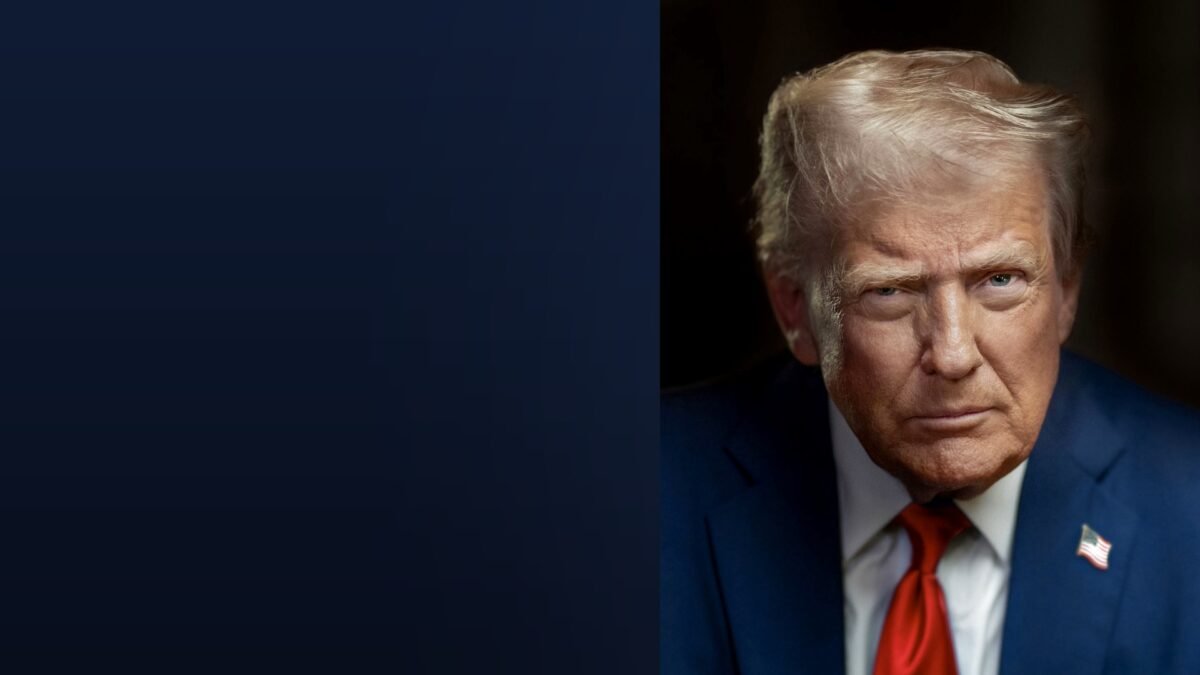
President Donald Trump used his Thanksgiving message on Thursday to single out Minnesota’s Somali community, thanking only what he described as the small share of Somalis who work without government help and demanding that the rest be “thrown out, immediately.”
The message, posted on Truth Social on Thanksgiving Day, 26 November, was the sharpest attack yet in the president’s weeks-long campaign against the community, and it drew a swift rebuke from Minnesota’s governor and condemnation from Somali community leaders. It also exposed a wide gap between the president’s figures and the official data: according to the New York Post, about 72 per cent of Somali Minnesotans aged 16 and over were in the labour force in 2024, against 68 per cent of Minnesotans overall, and roughly 95 per cent of Somalis in the state are American citizens, most of them born in the United States.
“I want to thank the 2% of our Somalian population that have a job, and are actually willing to work, without receiving Government Assistance,” Mr Trump wrote, according to Fox News. “These are wonderful American ‘citizens,’ and should be allowed to stay in our Country, and celebrate Thanksgiving with us. The others should be thrown out, immediately, thereby saving the Great State of Minnesota, which has no chance if they are allowed to stay.”
Mr Trump cited no source for the 2 per cent figure, the New York Post reported, and no federal data supports it. The message, sent from his golf club in West Palm Beach, Florida, before he telephoned service members from his Mar-a-Lago resort, mixed holiday greetings with attacks on a long list of targets, including the “Radical Far Left,” government statisticians, reporters, and the “murderers, drug dealers, and criminals” his administration has deported, to whom he wrote: “We miss you dearly.”
It was his second broadside against Minnesota’s Somalis in five days. On Sunday, he wrote that Somalis had been able to “completely taken over” the state and claimed that “almost 95% are on some form of welfare” — a figure higher than any published estimate, according to the New York Post. Days earlier, he said he would end temporary protected status for Somalis in Minnesota, a legal protection against deportation for people from designated countries.
The same day as the Thanksgiving message, the administration announced a full re-examination of green cards issued to people from Somalia and 18 other “countries of concern,” CBS News reported, and Mr Trump said his goal was to “permanently pause migration from all Third World Countries.” No formal suspension order has been issued, and any attempt to impose one would almost certainly face immediate legal challenges.
What the president said
The Thanksgiving message opened with greetings to “ALL AMERICAN PATRIOTS WHO HAVE WORKED SO HARD TO MAKE OUR COUNTRY GREAT,” according to the full text published by the Palm Beach Post, before turning to the officials who produced the government’s economic statistics. Mr Trump accused the Bureau of Economic Analysis of issuing “fake Economic Numbers, just prior to the Election,” after the bureau revised third-quarter growth sharply upwards, to 4.3 per cent on an annualised basis from an initial estimate of 3.4 per cent, and called the revision “A RECORD SETTING ERROR” that should be investigated. He offered no evidence that the original estimate had been deliberately understated, and the bureau’s own record shows revisions of nearly a full percentage point have happened at least four times in the past 25 years.
From there, the message moved to the people Mr Trump said had worked to bring the country to the “Radical Far Left” and to those he said wanted to change the court system to that of Sharia law and redistribute property. Then came the passage about Minnesota’s Somalis, the part of the message that drew the most attention and the strongest reaction.
Mr Trump also used a slur for people with intellectual disabilities to describe Minnesota Governor Tim Walz, and used racially and religiously prejudiced language against Representative Ilhan Omar, the Somali-born Democrat who represents Minneapolis, according to reports of the message. He called Ms Omar the worst member of Congress in the country. Mr Walz responded on X with a single line: “Release the MRI results” — a reference to Mr Trump’s claim last month that he had undergone an MRI during a medical check-up and received “perfect” results.
The message closed by addressing the people the administration has deported since Mr Trump returned to the White House. “Most importantly, thank you to the murderers, drug dealers, and criminals of all shapes, sizes, and colors, who illegally entered our Country from other countries’ jails, prisons, mental institutions, and places unknown, to rape, plunder, and kill American Citizens in record numbers,” he wrote. “They are mostly gone now, brought back to their point of origin and, hopefully, living a beautiful and idyllic life, and promising, ideally, never to kill innocent people again, but we won’t have to worry about that, because they are GONE.”
The numbers behind the claim
The central claim in the president’s message — that only 2 per cent of Somalis in the United States work without government assistance — does not survive contact with the official figures. Census Bureau estimates cited by the New York Post show that about 72 per cent of Somali Minnesotans aged 16 and over were looking for work in 2024, compared with 68 per cent of Minnesotans overall. Minnesota Compass, a research project of Wilder Research, puts the employment rate among working-age Somali adults in the state at about 70 per cent, with Somali men employed at a rate of about 76 per cent.
The state demographer has reported that 84 per cent of the Somali diaspora in Minnesota received cash assistance, food stamps or Medicaid at some point between 2019 and 2023 — a broad measure that counts anyone who received any of those forms of help over a five-year period, and one that leaves about 16 per cent who received none. That figure is a long way from the president’s suggestion that 98 per cent of the community depends on the state, and it says nothing about whether the people concerned are working: many households combine low-paid work with benefits, as millions of American families do.
The most important figure for what the president is actually demanding, however, is the one about citizenship. Roughly 95 per cent of Somalis in Minnesota are United States citizens, and most were born in the United States, according to the state demographer. American citizens cannot be deported, and cannot be “thrown out” of the country by presidential order. The demand, taken literally, would apply at most to a small minority of the community — and even for non-citizens, removal requires an individual legal process, not a social media post.
Minnesota is home to the largest Somali community in the United States, numbering more than 108,000 people, according to the New York Post, with other estimates putting the figure at around 80,000 to 84,000. The community grew out of the refugee arrivals of the 1990s, when Somalis fled civil war, and it is concentrated in the Minneapolis–St Paul area, where Somali-owned businesses, mosques and community organisations are a visible part of the city. Almost three-fifths of Somalis in Minnesota were born in the United States, and 87 per cent of those born abroad have become naturalised citizens, according to figures cited by the Associated Press.
One statistic the president’s allies have cited is genuine. During a House Oversight Committee hearing in January, Representative Brandon Gill, a Texas Republican, highlighted data showing that 54 per cent of Somali-headed households in Minnesota receive food stamps, Fox News reported. That figure is high, and it reflects the real economic hardship in parts of the community. But receiving food stamps is not the same as not working, and it is not the same as the president’s claim that 98 per cent of Somalis neither work nor support themselves.
Why Minnesota, and why now
The president’s focus on Minnesota’s Somalis did not begin with the Thanksgiving message. It has intensified since federal prosecutors charged dozens of defendants, most of them of Somali ancestry, with defrauding programmes meant to feed children and house people with disabilities. The cases, which involve the alleged theft of hundreds of millions of dollars from government nutrition and housing schemes, are among the largest fraud prosecutions in the state’s history, and they have given the president a concrete set of crimes to point to.
Minnesota’s Somali community leaders have repeatedly said the fraudsters should be prosecuted, while objecting to the blame being spread across an entire community. That distinction — between the defendants and the community — is the one the president’s message erased. By sorting the whole Somali population into the 2 per cent who may stay and the 98 per cent who should go, the message treated an entire national-origin group as a single category, judged by the alleged crimes of a fraction of its members.
The other strand of the campaign concerns Representative Omar. She is under investigation by a federal grand jury, and Homeland Security agents searched her Washington home on 12 October. Records unsealed on Monday, 24 November, say prosecutors believe she committed unspecified “crimes over decades.” Ms Omar has not been charged with any offence, denies wrongdoing, and won a fifth term in Minnesota’s 5th District on 3 November. The president has attacked her for years, and the Thanksgiving message was only the latest instalment.
The timing also matters. The message came three weeks after the midterm elections of 3 November, and days after the administration’s immigration crackdown widened sharply. On 26 November, the same day as the Thanksgiving message, an Afghan man attacked two National Guard officers in Washington, killing one of them, and the administration used the attack as the occasion for a new round of immigration restrictions, including the green-card review and a halt to processing Afghan-related immigration requests. The president has linked the Somali community to the wider argument that the previous administration allowed millions of people to enter the country without proper vetting, a claim he repeated in the days around the holiday.
The green-card review and the migration freeze
The concrete policy moving alongside the rhetoric is the review of green cards. The director of US Citizenship and Immigration Services, Joseph Edlow, announced that his department would conduct a comprehensive re-examination of all green cards issued to people from 19 “countries of concern,” CBS News reported. The list matches the 19 countries named in the president’s June proclamation restricting travel: Afghanistan, Myanmar, Burundi, Chad, the Republic of the Congo, Cuba, Equatorial Guinea, Eritrea, Haiti, Iran, Laos, Libya, Sierra Leone, Somalia, Sudan, Togo, Turkmenistan, Venezuela and Yemen.
Mr Edlow said the review would take account of “negative, country-specific factors,” including the reliability of identity documents issued by the countries concerned. The department has also indefinitely suspended processing of immigration requests related to Afghan nationals and is re-examining asylum cases approved under the previous administration. Immigration lawyers say the review could mean delays, denials or even revocation of legal status for people who have lived, worked and paid taxes in the United States for years, although no list of criteria, timetable or process has yet been published.
Mr Trump has said his administration’s goal is to “permanently pause migration from all Third World Countries,” and the Thanksgiving message repeated the vow to suspend immigration from those countries “to allow the US system to fully recover.” No such suspension has been formally ordered. A blanket halt on immigration from much of Africa, Asia and Latin America would require an executive order or proclamation, and would almost certainly be challenged in court within days. The green-card review, by contrast, is already under way, and it is the part of the announcement with the most immediate consequences for lawful permanent residents.
The distinction matters. A social media post, however widely shared, changes no one’s legal status. A departmental review of existing green cards does. The two arrived together, and the post gave the policy its public framing: an entire community described as a burden on the state, and a bureaucracy instructed to re-examine the papers of people from the countries on the list.
Reaction in Minnesota and beyond
The reaction in Minnesota was swift. Governor Walz, who has denounced the president’s attacks on the state’s Somali community before, answered the Thanksgiving message with his single-line reply on X. Somali leaders in the state, as well as Democratic lawmakers and advocates, have spoken out against the president’s attacks on the community, and the dispute has become one of the defining political fights in the state.
Minnesota’s Somali community is not an abstraction in the state’s politics. Its members run businesses, staff hospitals and schools, and vote in large numbers in Minneapolis, and Ms Omar’s re-election on 3 November was itself a measure of the community’s political weight. The president’s message landed in a state where the Somali community has been the subject of national argument for months, and where the fraud prosecutions have already strained relations between the community and the state government, which Republicans say failed to act quickly enough against the fraud.
Republican leaders in Minnesota have largely stopped short of endorsing the president’s language while insisting that the fraud itself must be the focus. The state’s Republican House Speaker, Lisa Demuth, who is running for governor, has said that no community is all bad and that what is needed is to hold the fraudsters in any community accountable. That careful distance — condemning the fraud, not the community — is the line the president’s message crossed, and it is the line other Republicans have been unwilling to cross with him.
The condemnation has spread beyond Minnesota. Lawmakers in Ohio, which has the second-largest Somali population in the United States, have also spoken out against the president’s attacks. Disability advocates have objected to the slur used against Mr Walz, and immigrant advocates have warned that the rhetoric is already having practical effects, with Somali families reporting fear about encounters with immigration enforcement and about the status of relatives whose papers are now under review.
Analysis: a holiday message with a purpose
Presidents have used Thanksgiving messages to strike a unifying note for as long as the holiday has been a national institution. Mr Trump has used them for the opposite purpose: as an annual vehicle for grievance, aimed at his opponents and at the groups he has chosen as targets. This year’s message was the most pointed yet, because it named a specific American community and set a numerical test — 2 per cent — for who deserves to belong.
The choice of Thanksgiving was not accidental. The holiday is, for many Americans, a celebration of arrival and of refuge: the story the country tells about itself is one of people who came from elsewhere and were fed. To use it to demand the expulsion of 98 per cent of a community that is overwhelmingly made up of citizens, many of them born in the country, is a deliberate inversion of that story, and the deliberateness is the point. The message was designed to be quoted, and it was quoted everywhere within hours.
It is also worth asking what the message is for. As a policy instrument, it is almost useless: the president cannot deport citizens, and he announced no order, no directive and no agency action in the post itself. As a political instrument, it is far more effective. It forces opponents to defend a community that the fraud prosecutions have put on the defensive, it keeps immigration at the centre of the political argument, and it signals to the president’s supporters that the crackdown will keep widening. The green-card review, announced the same day, gives the rhetoric an administrative edge, and the combination of the two — the post and the policy — is the pattern of this administration’s immigration politics.
The 2 per cent figure deserves attention in its own right. It is not a statistic drawn from any published source; it is a number invented for the message, and its function is not to describe reality but to license a conclusion. If only 2 per cent of a community are worth keeping, then the other 98 per cent can be dismissed without further argument, and the question of who they are — citizens, neighbours, business owners, parents of American children — never has to be asked. The figure is false, but its falsity is almost beside the point: it was never offered as a fact to be checked, but as a permission slip for a policy already decided.
That is why the fact-checking matters, and why it is not enough on its own. It matters that 72 per cent of Somali Minnesotans are in the labour force, and that 95 per cent are citizens, because those figures establish that the community the president described does not exist. But the message was not written to be corrected; it was written to be repeated. The correction reaches the people who read the reporting. The message reaches everyone else.
There is also a longer history here. The president has attacked Minnesota’s Somalis before — last December he called the community “garbage” and dismissed the state as a “hellhole,” drawing a denunciation from Mr Walz — and each attack has been sharper than the last. The progression from insult to a numerical test for belonging, and from a numerical test to a demand for mass removal, is the direction of travel, and it is worth naming plainly. A president who once described a community as “garbage” is now saying that 98 per cent of it should be thrown out of the country. The language has consequences of its own, whatever the policy outcome.
Why it matters
The immediate stakes are practical. Hundreds of thousands of lawful permanent residents from the 19 countries on the list now face a re-examination of their green cards, with no published criteria and no timetable. Somali families in Minnesota, most of them citizens, face a president who has said publicly that almost all of them should be removed. The gap between what the president said and what the law allows does not make the statement harmless: it makes it a source of fear, and fear has practical effects on whether people go to work, send their children to school, or cooperate with the authorities.
The wider stakes concern the way immigration politics is conducted. If a president can single out an entire national-origin community, most of whose members are citizens, and demand their removal on the basis of a figure with no foundation, then the argument is no longer about immigration policy at all. It is about who counts as an American, and on what terms. The answer the Thanksgiving message gave — that belonging depends on the president’s approval, measured by a number he invented — is one that should worry people well beyond Minnesota, and well beyond the Somali community.
What happens next will be decided in several places at once. The courts will decide whether the green-card review and any future suspension of immigration can stand. Congress will decide whether to object, and Minnesota’s politicians will decide how far to go in defending the community. The community itself will decide how to respond, as it has before, by organising, by voting, and by insisting on the distinction between the fraudsters who should be prosecuted and the hundreds of thousands of people who should not be blamed for their crimes.
The Thanksgiving message will be remembered, if it is remembered at all, as a test of that distinction. The president’s answer was to erase it. The response from Minnesota — from the governor, from the community’s leaders, and from the voters who returned Ms Omar to Congress — has been to insist on it. That argument is not over, and it will not be settled by a social media post. But the post has made it impossible to pretend that the argument is about anything other than who belongs in America, and who gets to decide.
Sources
Palm Beach Post — Trump’s Thanksgiving greeting a grievance cornucopia. Read it here.
The Wrap — Trump Gives Thanks to American Patriots and His Usual Suspects
Washington Examiner — Trump wishes America, including the ‘Radical Far Left,’ a happy Thanksgiving

About the Author — Abdul Mannan
Related Articles
Trump Calls Pre-Election GDP Figures ‘Fake’ and Demands Investigation of Commerce Department
President Donald Trump has accused his own Commerce Department of deliberately publishing false growth figures before the midterm…

Thanksgiving Nor’easter Knocks Out Power for 800,000 and Forces Macy’s Parade Postponement for the First Time in 100 Years
A powerful nor'easter battered the US East Coast on Thanksgiving Day, leaving more than 800,000 without power and…
Judge Blocks FCC’s Early Review of ABC Licences in Major First Amendment Rebuke
A federal judge has barred the FCC from continuing its early review of ABC's broadcast licences, ruling the…