
Bilawal Calls PTI a ‘Political Reality’ and Offers Reserved Seats as First Step Towards a Democratic Reset

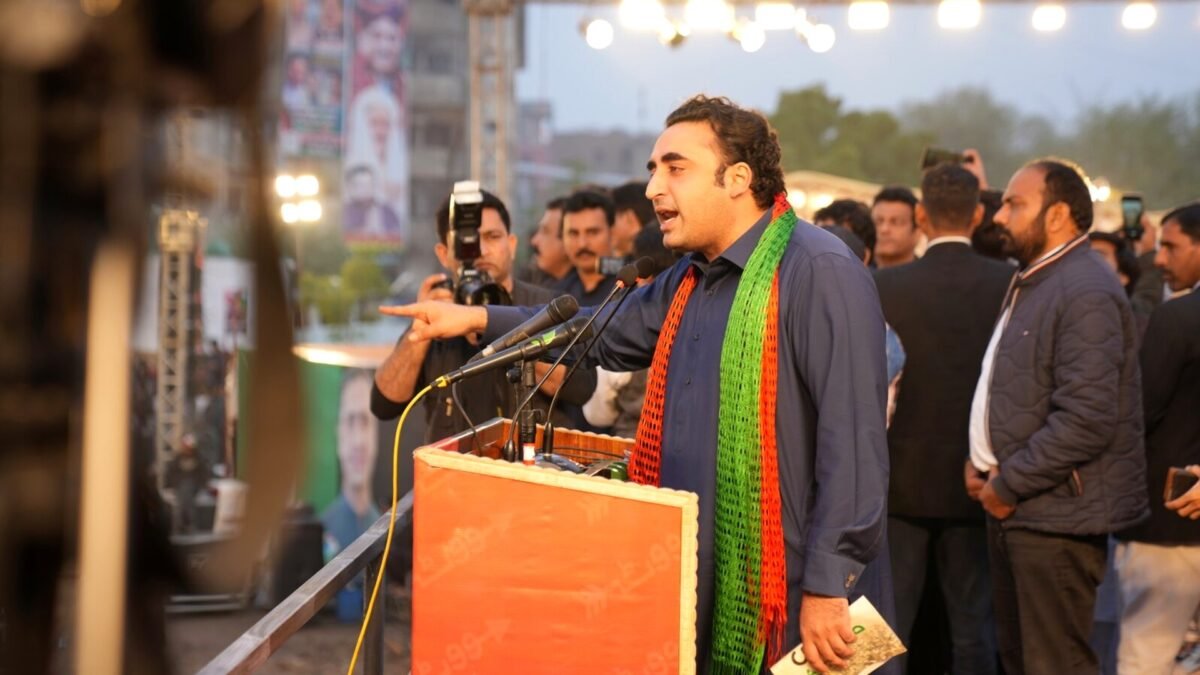
Pakistan Peoples Party chairman Bilawal Bhutto Zardari has said Pakistan needs a democratic reset decided in parliament, not outside it, and has put a concrete offer on the table: return the Pakistan Tehreek-e-Insaf’s disputed reserved seats as a first confidence-building step, and recognise the PTI as a political reality that no reset can succeed without.
Speaking at a Meet the Press event at the Multan Press Club on Thursday, 26 November, Bilawal argued that the country’s political crisis could only be resolved through democratic and political means, with the government, its allies and the opposition all involved. According to The News, he said the reset must restore public confidence and help the country face the crises ahead, and he warned that if the reset were decided by “certain anchors, media owners and industrialists”, the common man would not be their priority.
“Whatever opinion you may hold about Khan sahib, even if you think he is not a political prisoner, there is no denying the fact that PTI is a political reality,” Bilawal said, according to The Global Times. He added that the party must be given the opportunity to play its constitutional and parliamentary role, and that until its trust in the system was restored, the reset being discussed could not take place in that manner.
The remarks are the most detailed version yet of a proposal Bilawal has been developing in public for more than a fortnight, and they go further than his earlier speeches in one important respect: they name a specific, negotiable concession. Returning the reserved seats, he said, would be a confidence-building measure, and he described the issue as “low-hanging fruit”, according to The Global Times. If the PTI reached an agreement, he added, the PPP would ask the prime minister to reverse governor’s rule in Khyber Pakhtunkhwa immediately.
The reserved seats offer
The reserved seats at the centre of Bilawal’s offer have been disputed since the February 2024 general election. PTI-backed candidates contested as independents after the party lost its electoral symbol, and later joined the Sunni Ittehad Council. The Election Commission of Pakistan allocated the reserved seats for women and minorities to other parties, a decision the Supreme Court overturned in July 2024 when it ruled the PTI eligible for the seats. In 2025, however, the Supreme Court’s Constitutional Bench reversed that ruling, and the seats went to the coalition parties.
Bilawal said he personally believed the PTI should have received the reserved seats, questioning the logic of allocating them to other parties on the grounds that PTI candidates had contested under the Sunni Ittehad Council platform. According to The Global Times, he argued that if the PTI was denied the seats because its candidates had not contested under its own electoral identity, the same reasoning could not automatically justify their allocation to the Pakistan Muslim League-Nawaz, the PPP or the Jamiat Ulema-i-Islam.
He said political parties should negotiate the matter, approach the courts or introduce the necessary reforms to resolve it, and added that he was personally uncomfortable with another political party being deprived of its electoral symbol. Goodwill gestures were necessary to overcome mistrust, he said, and political reconciliation could not be achieved through statements alone but required concrete steps by the government and other stakeholders.
The offer is striking because the PPP is itself one of the beneficiaries of the disputed allocation. Bilawal acknowledged as much, naming his own party among those that received the seats. That makes the proposal a test of his own argument: a reset, in his telling, cannot be a speech, and the first step has to cost somebody something.
He also made clear that the offer has a limit. The PPP had accepted emergency measures despite their unpopularity because terrorism was a red line, he said, and the reversal of governor’s rule was conditional on the PTI reaching an agreement. The linkage turns the reserved seats from a legal dispute into a bargaining chip in a wider negotiation about how the opposition returns to parliament.
A new Charter of Democracy
Beyond the seats, Bilawal called for a fresh Charter of Democracy built on parliamentary supremacy, political reconciliation, constitutional governance and mutual respect among political parties. According to The Global Times, he said the proposed reset should be a democratic and political exercise involving the government, its coalition partners and all opposition parties, rather than an arrangement designed or imposed through non-political channels.
The reference reaches back to the original Charter of Democracy, signed in London in 2006 by his mother, Benazir Bhutto, and Nawaz Sharif, which committed the two parties to civilian supremacy, an independent judiciary and an end to the politics of vendetta. Bilawal has repeatedly presented that document as unfinished business. The 26th Amendment, he said in Multan, was part of the Charter’s unfinished agenda, and he said he had worked “day and night” to incorporate opposition input into it.
He also addressed the opposition’s part in the bargain. Opposition parties should treat parliamentary participation as a responsibility rather than a choice, he said, and join the parliamentary committee on electoral reforms. According to The News, he asked what they had gained through their boycott of committees, and said elections would remain controversial unless all parties had confidence in the process. The previous election, he noted, was criticised by both opposition and government members, and no reset could succeed without electoral reforms. He acknowledged, too, the opposition’s role in parliament’s weakness.
According to The Global Times, he urged opposition members to take part actively in parliamentary committees dealing with finance, the judiciary and electoral reforms, instead of staying away from important legislative discussions, and to contribute to budget-making and offer proposals on unemployment, inflation and poverty. “All decisions have to be made in Parliament alone,” he said, warning that decisions taken outside the legislature would weaken democratic institutions and leave the country ill-equipped to deal with its mounting challenges.
Provinces: no referendum, South Punjab through parliament
Bilawal also used the Multan appearance to draw a firm line in the debate over new provinces. He opposed holding a referendum on the creation of new provinces, saying it would be the “most controversial” in the country’s history and that parliament could take up the matter instead. “We can create a province through parliament without wasting time on a referendum,” he said, according to The News. “If a referendum can take place on this issue, it should take place on every other issue as well.”
He welcomed the debate on new administrative provinces but said it must take place in parliament, with consensus and in line with constitutional procedure. He said he was seeking views within his party on the referendum proposal but believed it would not be accepted.
On South Punjab, he was explicit. The Seraiki case was different, he said, because people had struggled for it for a long time and resolutions had been passed in the respective houses. The PPP’s Province Commission, led by Farhatullah Babar, had made “wonderful and historic” recommendations, and the government could adopt its report as a foundational document. It proposed the name Bahawalpur South Punjab Province, he said.
He said the PPP held the same position on Punjab and Sindh and would stand by both provincial assemblies’ decisions. He said he had never advocated splitting Punjab into four parts. He added that consensus also existed on provincial status for Gilgit-Baltistan, whose people had awaited the promised referendum since 1947.
The position threads a narrow path. It keeps the door open to a South Punjab province, a longstanding PPP demand with support in the region where Bilawal was speaking, while closing it to a referendum that could be used to divide Sindh, where the provincial assembly has rejected division several times. It also answers, without naming it directly, the proposal for a sweeping redrawing of the map into a dozen or more provinces that has driven much of the reset debate since the summer.
The economy at the centre of the argument
Bilawal tied the political argument directly to the economy, and his language on living standards was the bleakest of the appearance. Pakistan faces an economic catastrophe unlike any he has seen in his lifetime, he said, according to the Express Tribune, and he claimed politicians and the media were avoiding the subject. People struggle to get paid for their work, arrange daily meals and pay for healthcare for vulnerable family members, he said, and young people find it hard to get jobs even after completing two degrees.
“The people are bogged down by the rising cost of living,” he said. According to Daily Jang, he said the economic crisis did not look likely to improve and that more difficulties may follow, with no improvement in the global situation visible soon. He also said farmers, labourers and workers were not getting fair returns for their work, and that politicians must work to reduce the burden on the public.
He warned that regional geopolitical tensions could worsen the situation, hinting at the conflict involving the United States and Iran, according to the Express Tribune. According to The Global Times, he said rising energy costs, inflation, unemployment and regional tensions had further complicated the country’s economic situation, placing an enormous burden on low-income households, and that people were struggling to meet basic food requirements, educate their children and arrange medical treatment for elderly family members.
The economic framing matters because it is the bridge between Bilawal’s two audiences. To the government, he is saying that political instability is itself an economic cost, diverting national attention from the problems confronting ordinary people. To the opposition, he is saying that the reset is not an abstract constitutional debate but a route to decisions on wages, jobs and prices that parliament is currently too divided to take.
Amendments, consensus and the judiciary
Bilawal also returned to the two constitutional amendments that have defined the coalition’s record, and his treatment of them showed the tension in his own position. He called the passage of the 27th Amendment by a two-thirds majority a success, pointing to the equal representation it gave the provinces in the courts, according to The News. At the same time, he acknowledged that the opposition’s lack of trust in the judiciary could not be ignored, and he called for dialogue among political parties, judges, lawyers and other stakeholders to identify ways of rebuilding it.
He clarified his earlier remark about a “brute majority”, saying it had been misrepresented, and added that laws passed by consensus carry greater strength. He described the passage of the 27th Amendment by a two-thirds majority as a parliamentary success but acknowledged that it had not enjoyed the same level of political consensus as the 1973 Constitution and the 18th Amendment, according to The Global Times.
He said the causes of the system’s collapse must be identified first, arguing that the 1973 Constitution had been repeatedly made to collapse rather than collapsing on its own. He called the 18th Amendment uniquely strong but said he was not suggesting the document be discarded. According to The Global Times, he said constitutional legislation passed through broad political consensus carried greater democratic legitimacy and strength than measures adopted merely on the basis of numerical superiority.
The passage is best read as Bilawal trying to hold two things at once: defending the coalition’s legislative record, in which he played a central role, while conceding the opposition’s central complaint, that the record was built on numbers rather than agreement. The call for a new Charter of Democracy is, in effect, his proposed way out of that contradiction, a fresh consensus document that would do by agreement what the recent amendments did by majority.
Fazl, the press and the politics of tolerance
Bilawal also spoke about the government’s treatment of its critics, and his remarks on Maulana Fazlur Rehman were pointed. He said it was the Maulana’s patriotic duty to criticise the government and that politicians should have “thick skin”. He condemned the Maulana’s house arrest and said he would try to meet him soon, according to The News.
The remarks come after weeks in which the Jamiat Ulema-i-Islam chief has faced mounting pressure: his state security was withdrawn in mid-November, he was confined to his Lahore home, and his party has called a nationwide shutdown. Bilawal’s intervention puts a coalition partner on record against the treatment of an opposition leader, and it echoes the argument he made about the PTI, that excluding or punishing opponents does not strengthen the state.
He also called for a serious conversation on media freedom, saying a free press holds power to account. According to The Global Times, he expressed concern over what he described as the shrinking space for independent journalism and called for serious dialogue to restore the strength and independence of the press. Referring to the Prevention of Electronic Crimes Act, amended in January 2025 amid protests by journalists’ organisations, he said the country had reached a point where press freedom was virtually non-existent, and he said the media should be allowed to report independently on economic difficulties and issues affecting people at the grassroots level rather than merely repeat the positions of those in power.
On security, Bilawal said terrorism was engulfing the country from Balochistan to Khyber Pakhtunkhwa and no new faultlines should emerge. After Pakistan’s peace efforts in the Iran conflict, he said, even the “Zionist lobby” was targeting the country. The PPP had no role in May 9, he said. “We cannot have a hard state with thin skin.” He said the PPP had shed its own blood across generations but never that of others. Karachi’s peace had come after a long struggle, he said, and the release of Baldia Factory perpetrators would be a cause for alarm. He said the government, the prime minister and the Punjab chief minister should be strengthened, not weakened.
He added that Sindh’s local government completes its term next year, and that the chief minister had been directed to introduce changes in line with elected representatives’ wishes. “We will implement the most powerful local government system in the country’s history,” he said.
How the reset debate reached this point
The word “reset” entered Pakistan’s political vocabulary this year through the government’s own side. In July, Interior Minister Mohsin Naqvi called for the creation of new administrative units, arguing that the existing governance structure had collapsed and needed a reset, and proposals circulated for redrawing the map into twelve or fourteen provinces. The idea alarmed the PPP, which has long opposed the division of Sindh and warned that a restructuring imposed from above would deepen, not resolve, the crisis.
Bilawal answered on 17 November at the Karachi Press Club, arguing that the system had not collapsed on its own but had been “made to collapse”, and warning that a forced division of Sindh could trigger bloodshed. On 12 November, Naqvi said he and Bilawal were almost on the same page on resetting the system, a claim that suggested the debate was moving from confrontation towards negotiation.
On 19 November, Bilawal went further in a television interview, demanding electoral reforms and fresh elections within six months, and calling a referendum on new provinces unconstitutional. On 23 November, in Karachi, he said any reset should be democratic and rebuild trust in parliament, the judiciary and elections. The Multan appearance on 26 November is the fullest statement of that position so far, and the first to attach a specific concession to it.
The backdrop is a parliament in which the opposition’s standing has been contested since the 2024 election, a province under governor’s rule since October, and a JUI-F leadership under pressure from the state. Bilawal’s argument, taken as a whole, is that none of these problems can be solved separately, and that the order in which they are solved matters: confidence first, through a visible concession, then the structural questions, through parliament.
Why the reserved seats became the test case
The reserved seats dispute is, in legal terms, a narrow question about the allocation of a few dozen seats set aside for women and minorities. In political terms, it has become the shorthand for everything the opposition says is wrong with the 2024 election. The PTI says the seats were taken from it by a chain of decisions, the loss of its electoral symbol, the Election Commission’s allocation, and finally the Constitutional Bench’s 2025 reversal of the Supreme Court’s earlier ruling in its favour. The coalition says the courts have spoken and the matter is closed.
That is why Bilawal’s choice of the seats as his “low-hanging fruit” is significant. He is not proposing to reopen the election result, which no government would accept, and he is not asking the PTI to drop its claims, which it would not do. He is proposing a negotiated settlement of a single, bounded dispute, through negotiation, the courts or reforms, as a demonstration that the system can still correct itself. If the government agrees, it gains a cooperative opposition in parliament. If it refuses, Bilawal has put the refusal on the record, and the PPP can say it tried.
The proposal also reveals the limits of Bilawal’s leverage. He can offer the seats, and he can offer to ask the prime minister to end governor’s rule, but he cannot deliver either on his own. The seats would require either a political agreement among the parties that hold them, including his own, or a legal route back through the courts. Governor’s rule is a presidential act on the advice of the federal government. His offer is therefore best understood as a public commitment device, a way of binding himself, and by extension the PPP, to a negotiating position before the talks he wants have even begun.
Analysis: Why It Matters
The Multan speech matters less for what it demands than for what it concedes. For months, the reset debate has been conducted in abstractions, new provinces, a new charter, a new consensus, with each side accusing the other of wanting to dismantle the system. Bilawal has now attached the abstraction to a price tag, and the price tag is one his own party would partly pay. That is a different kind of politics from the speeches of the past fortnight, and it is the first sign that the debate may be moving from positioning to negotiation.
There are three reasons to take the offer seriously, and three reasons to doubt it will work.
First, the offer is cheap in the only sense that matters in a negotiation: it is specific, bounded and reversible in its effects. Returning the reserved seats does not change who governs, does not reopen the election, and does not require a constitutional amendment. It changes the composition of the opposition benches and, more importantly, the opposition’s belief that parliament is a place where it can win anything at all. A government that wants the PTI inside parliament rather than outside it has reason to accept.
Second, the offer is addressed to the right problem. The central fact of Pakistan’s politics since the 2024 election is that the largest opposition party does not accept the legitimacy of the institutions it is expected to work within, parliament, the Election Commission and the courts. Bilawal’s diagnosis is that this distrust is not a mood but a condition, and that it cannot be talked away. It has to be answered with something the opposition can point to and say changed. The reserved seats are the smallest change that would still count as a change.
Third, the offer gives the government a way to say yes without admitting fault. A negotiated return of the seats can be presented as magnanimity rather than correction, as a confidence-building measure rather than a reversal. That framing matters, because governments rarely concede that a court-backed allocation was wrong, but they often agree to revisit an issue in the name of national reconciliation.
Against that, the obstacles are formidable. The PTI has heard offers before, and its experience of negotiations with this government has not encouraged trust. Its founder remains in prison, its leadership in Khyber Pakhtunkhwa governs under governor’s rule, and its supporters have been the target of the same accountability system Bilawal criticises. A handful of reserved seats may look, from the PTI’s side, like a small price for returning to a parliament it believes was constructed to exclude it. The party may also calculate that staying outside, and letting the government own the crisis, serves it better than a deal that legitimises the present arrangement.
The government, for its part, has shown no appetite for concessions to the PTI, and the coalition parties that hold the disputed seats, including the PPP itself, would have to agree to give them up. Bilawal’s own party would lose seats it currently holds. That is a real cost, and it is not yet clear that the PPP’s parliamentary party, rather than its chairman, has signed up to paying it.
Finally, the reserved seats are a symptom, not the disease. The deeper dispute is about the 2024 election itself, the role of the courts, and the balance between civilian government and the institutions that stand behind it. A settlement on the seats would not resolve any of those questions. It would only create the conditions under which they could be discussed, in parliament, by parties that trusted the forum enough to attend it. That is a modest ambition, but in the present state of Pakistani politics, it may be the only realistic one.
The referendum line is the other half of the speech, and it deserves as much attention as the PTI offer. By rejecting a referendum while endorsing a South Punjab province through parliament, Bilawal is drawing a constitutional boundary around the reset debate. His argument is that the map of the country cannot be redrawn by plebiscite, because a plebiscite on one province invites a plebiscite on every province, and the federation would not survive the precedent. The counter-argument, which the proponents of new provinces will make, is that parliament has had decades to create South Punjab and has not done so, and that a referendum is the only way to break the deadlock. The Multan speech does not resolve that argument. It states, clearly and for the first time, which side of it the PPP is on.
There is also a personal dimension that should not be ignored. Bilawal is the only major political figure in Pakistan who is simultaneously inside the government’s coalition and outside its inner circle, a position that lets him criticise the government without leaving it. His speeches over the past fortnight, the Karachi warning, the call for fresh elections, and now the Multan offer, read as a sustained attempt to claim the middle ground, the politician who will talk to the opposition without joining it, and defend the government without owning its hardest decisions. Whether that ground exists, or whether it is simply the space between two camps that have both decided against compromise, is the question the coming weeks will answer.
What to watch next
The first test is the PTI’s response. The party has not yet formally answered the reserved seats offer, and its answer will reveal whether it regards the proposal as a genuine opening or as a trap. A positive response, even a conditional one, would move the debate into the parliamentary committee on electoral reforms that Bilawal wants the opposition to join. A rejection would leave the PPP chairman exposed, having offered a concession his own party would have to pay for, with nothing to show for it.
The second test is the government’s. The prime minister and the PML-N have said nothing in public about returning the seats, and the coalition parties that hold them have no obvious incentive to give them up. If the government stays silent, Bilawal’s offer becomes a speech rather than a negotiation, and the reset debate returns to abstraction.
The third test is Maulana Fazlur Rehman. Bilawal said he would try to meet him soon, and the JUI-F chief’s response to the Multan speech, and to the shutdown his party has called, will show whether the opposition is prepared to act together or whether each party will pursue its own grievances separately. A joint opposition position on the electoral reforms committee would be a significant development. Separate positions would confirm that the opposition is as divided as the government is wary.
Finally, watch the referendum question. The proposal for new provinces has not gone away, and the government has not yet said whether it will pursue it through parliament or through a referendum. Bilawal’s answer, parliament only, is now on the record. If the government chooses the other route, the PPP will have to decide whether its objection is a negotiating position or a red line. That decision, more than any speech, will determine whether the reset Bilawal is proposing is a real programme or a rhetorical one.
Sources
The News – “System reset through parliament, not powerful quarters: Bilawal”
The Global Times – “PTI a Political Reality, Must be Part of Democratic Reset: Bilawal”

About the Author — Abdul Mannan
Related Articles
Pakistan, Saudi Arabia and Türkiye Vow to Step Up Support for Saudi Security in Joint Makkah Pact Declaration
Pakistan, Saudi Arabia and Türkiye have issued a joint declaration after talks in Islamabad, condemning Houthi attacks on…
Tarar Tells Fazl to Choose Between Pakistan and the Taliban as Bilawal Turns the Referendum Debate Back on the Government
Information Minister Attaullah Tarar has told JUI-F chief Fazlur Rehman to choose between Pakistan and the Taliban, as…
Fazlur Rehman Calls Nationwide Shutdown as Sargodha Bars JUI-F Leaders and Police Detain Three
JUI-F chief Maulana Fazlur Rehman has called for a nationwide shutdown after Sargodha barred him and eight other…