
Regulators Shut United Fidelity Bank in Biggest US Bank Failure in Two Years as First Citizens Takes Over

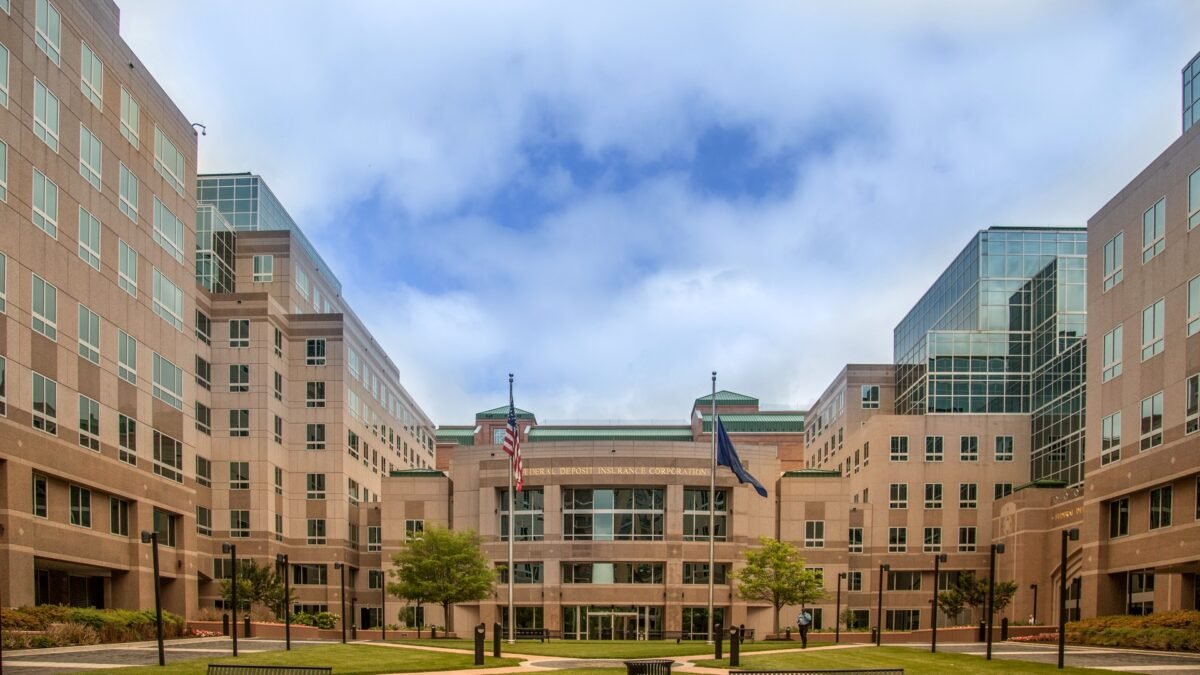
United States regulators closed United Fidelity Bank on Friday, in the biggest American bank failure in more than two years, and handed its branches, deposits and loans to First Citizens Bank in a deal that will cost the federal deposit insurance fund an estimated $1.83 billion.
The Office of the Comptroller of the Currency, the federal regulator that supervised the Evansville, Indiana-based lender, said the bank was in an “unsafe or unsound condition” and was likely unable to pay its obligations, according to Reuters. The regulator closed the bank and appointed the Federal Deposit Insurance Corporation (FDIC) as receiver to wind it down and protect depositors.
First-Citizens Bank & Trust Company, based in Raleigh, North Carolina, agreed to take over substantially all of the failed bank’s deposits and buy substantially all of its assets, the FDIC said in a statement on Friday. The deal covers $5.9 billion in assets, $4.5 billion in deposits and $3.1 billion in loans, based on United Fidelity’s balances as of 30 September 2026.
It is the largest failure of an American bank since Philadelphia-based Republic First Bank closed in April 2024 with $6 billion in assets, according to FDIC data cited by Reuters, and the second-biggest since the regional banking crisis of 2023, when Silicon Valley Bank and First Republic both collapsed. For the customers of a mid-sized Midwestern bank, the practical message from regulators was reassuring: their money is safe, their branches reopen under a new name on Saturday, and they do not need to do anything.
For the banking system, the message is more complicated. The $1.83 billion estimated cost to the Deposit Insurance Fund represents about 31 per cent of United Fidelity’s total assets, an unusually high loss rate that points to deep trouble inside the bank’s loan book, and it arrives after a year in which six smaller banks had already failed. The bill for this single failure is more than seven times the combined cost of all six of those earlier failures.
What happened on Friday
Bank failures in the United States almost always happen on a Friday evening, after branches have closed for the week, so that regulators and the buyer have the weekend to move accounts and reopen on Monday. United Fidelity followed that pattern. The Comptroller’s office announced the closure on Friday evening, 27 November, and the FDIC immediately entered into its agreement with First Citizens.
“United Fidelity Bank, fsb, Evansville, Indiana (United Fidelity) was closed today by the Office of the Comptroller of the Currency, which appointed the Federal Deposit Insurance Corporation (FDIC) as receiver,” the FDIC said in its press release. “The FDIC entered into an agreement with First-Citizens Bank & Trust Company, Raleigh, North Carolina (First Citizens) to assume substantially all deposits and purchase substantially all assets of United Fidelity.”
The FDIC said depositors of United Fidelity will become depositors of First Citizens, “so customers do not need to change their banking relationship and will retain all of their funds and deposit insurance coverage”. The regulator stressed that depositors could still reach their money on Friday evening and over the weekend, including by writing cheques, visiting cash machines and using their debit cards, and that cheques drawn on United Fidelity would continue to be processed. Loan customers were told to keep making their payments as usual.
United Fidelity’s 22 branches will reopen as branches of First Citizens, the FDIC said. Locations that normally open on Saturdays were due to open as First Citizens branches on Saturday, 28 November, with all branches open during normal business hours on Monday, 30 November. Twenty of the branches are in Indiana, Illinois, Colorado and Florida, and two more operate in the US Virgin Islands under the Bank of St. Croix name, a division of United Fidelity.
The deal also includes United Fidelity’s subsidiaries, including its real estate development and management unit, Pedcor Homes Corporation, according to First Citizens.
Neither the Comptroller’s office nor the FDIC has said what caused the trouble inside United Fidelity, and Reuters reported that it could not reach the bank for comment outside regular business hours. The Evansville Courier & Press reported that the bank’s local social media account was still promoting business as usual on Friday evening, and that United Fidelity is the first Evansville bank to fail since Integra Bank in 2011.
The deal in numbers
The headline figures tell the story of a bank that was far weaker than its balance sheet suggested. As of 30 September 2026, United Fidelity held approximately $5.9 billion in total assets and $5.4 billion in total deposits, according to the FDIC. First Citizens agreed to assume $4.5 billion of those deposits and $3.1 billion of the bank’s loans.
The gap between the $5.4 billion of deposits the bank held and the $4.5 billion First Citizens agreed to take on is explained, in part, by brokered deposits. The FDIC said the deposit accounts transferring to First Citizens exclude “certain brokered deposits”, but it did not disclose how many accounts are affected or why. Brokered deposits are funds placed with a bank through a third-party broker rather than directly by the customer, and they are often treated differently in a failure because they can be large, short-term and quick to leave.
First Citizens said it was chosen through a competitive bidding process run by the FDIC, and that its winning bid included an asset discount of approximately $2.6 billion and no premium for the deposits. A deposit premium is the amount a buyer normally pays for the right to take over a bank’s customer deposits; paying none, while also demanding a discount of $2.6 billion on the assets, is a clear signal that the buyer expects heavy losses on the loans it is acquiring.
First Citizens described the transaction as a whole-bank purchase. “We believe this transaction is both financially and strategically compelling,” the bank’s chairman and chief executive, Frank B. Holding Jr, said in a statement, “and we look forward to welcoming our new customers, earning their trust and positioning our company for continued success.”
Customers will continue to use their existing branches until First Citizens completes the systems changes needed to process the accounts through its own network, the FDIC said. The regulator set up a toll-free call centre for customers with questions about the takeover, open through the weekend and into the following week.
Why the bill is so big
The most striking number in the failure is not the size of the bank but the size of the loss. The FDIC estimates that resolving United Fidelity will cost the Deposit Insurance Fund $1.83 billion. That is about 31 per cent of the bank’s $5.9 billion in total assets, a loss rate that CNN described as unusually high.
To put that in context, the six banks that failed earlier in 2026 cost the fund an estimated $243.3 million between them, on combined assets of about $1.45 billion, according to a count of FDIC records by Axis Intelligence — a loss rate of roughly 17 per cent. United Fidelity alone will cost the fund more than seven times as much as those six failures put together, and its loss rate is nearly double theirs.
The $2.6 billion asset discount in First Citizens’ bid points in the same direction. First Citizens agreed to take on $3.1 billion of loans, but only after pricing in a discount almost as large as the loan book itself. That suggests the buyer believes a large share of those loans will not be repaid in full, whether because borrowers are in difficulty, collateral values have fallen, or the loans were made on terms that no longer hold up.
Regulators have not disclosed which parts of the loan book caused the damage, and it would be wrong to speculate about specific borrowers. What the figures do show, however, is that this was not a failure caused by a sudden run of depositors withdrawing their money. A bank that fails because depositors panic usually leaves behind assets that are broadly sound and can be sold near their book value. A bank that costs the insurance fund 31 cents on every dollar of assets is a bank whose assets were already badly impaired before the regulator stepped in.
That distinction matters because it shapes what happens next. The FDIC, as receiver, will now work through United Fidelity’s remaining assets, including the loans and deposits that First Citizens did not take, and try to recover as much as it can. The $1.83 billion figure is an estimate, and the final cost could move in either direction as that work proceeds.
First Citizens, the repeat rescuer
First Citizens is no stranger to this role. In March 2023, at the height of the regional banking crisis, it bought the remains of Silicon Valley Bank from the FDIC, a deal that roughly doubled its size and turned a conservative North Carolina lender into one of the twenty largest banks in the United States. It has now stepped in as the distressed buyer again, three years later, for a much smaller institution.
The bank is the wholly owned banking subsidiary of First Citizens BancShares, which is listed on the Nasdaq stock exchange. It describes itself as a top-20 US financial institution focused on consumers, businesses and entrepreneurs. Its willingness to take on United Fidelity’s branches across five states and territories, along with the failed bank’s real estate development subsidiary, suggests it sees lasting value in the franchise even after pricing in the damage to the loan book.
There is also a practical logic for regulators in choosing a buyer of this kind. A bank that has already absorbed a failed institution knows the mechanics: moving accounts over a weekend, reassuring customers, keeping branches open, and working through a troubled loan book without disrupting the communities the branches serve. First Citizens’ experience with Silicon Valley Bank, a far larger and more complex failure, is likely to have counted in its favour in the FDIC’s competitive bidding process.
A year of small failures — and one very different one
Before Friday, 2026 had been a year of small bank failures. Six FDIC-insured banks had failed, according to FDIC records counted by Axis Intelligence: Metropolitan Capital Bank and Trust of Chicago in January, Community Bank and Trust of West Georgia in May, Kentland Federal Savings and Loan of Indiana in July, Small Business Bank of Kansas in July, Tioga-Franklin Savings Bank of Philadelphia in August, and Nano Banc of Irvine, California, in September. Nano Banc, with $736 million in assets, was the largest of the six. Between them they held about $1.45 billion in assets.
Six failures in a year is the most in any single year since 2017, according to the same count, and it is a step up from the two failures recorded in each of 2024 and 2025. But the scale of those failures was modest, and the system absorbed them without alarm. United Fidelity changes the picture. At $5.9 billion in assets, it is roughly four times the size of the previous six failures combined, and its $1.83 billion cost to the insurance fund dwarfs their combined $243.3 million.
That does not, on its own, mean a broader banking crisis is under way. The American banking system has more than 4,200 FDIC-insured institutions, and the fund that protects depositors held $157.4 billion at the end of March 2026, with a reserve ratio of 1.43 per cent, according to the FDIC’s Quarterly Banking Profile. The fund is financed by the banks themselves through assessments, so the cost of this failure will ultimately be borne by the industry, not by taxpayers, and the FDIC has said no depositor has ever lost a penny of insured deposits since the agency was created in 1933. The standard insurance limit is $250,000 per depositor, per insured bank, for each ownership category.
Even so, the pattern is worth watching. The 2023 crisis produced five failures that cost the fund about $34.59 billion in total. The two years that followed were quiet, with two failures each. Now 2026 has produced seven failures, and the seventh is by far the biggest and the most expensive. The FDIC’s Problem Bank List, its tally of institutions with financial, operational or managerial weaknesses, stood at 54 banks in the first quarter of 2026, about 1.3 per cent of all insured institutions. That number had been falling, but a failure of this size is a reminder that the list exists because some banks do reach the point of no return.
What happens next for customers
For the people and businesses who banked with United Fidelity, the immediate future should feel mostly unchanged. Their deposits have moved to First Citizens, their branch is open under a new name, their debit cards and cheques still work, and their deposit insurance coverage continues. The FDIC’s message to customers was explicit: they do not need to change their banking relationship.
There are two groups who should pay closer attention. The first is anyone whose deposits were held through a broker, since the accounts transferring to First Citizens exclude certain brokered deposits, and the FDIC has not said how many accounts are involved. Those customers should check directly with the FDIC’s call centre. The second is anyone with deposits above the $250,000 insurance limit, since uninsured deposits are not automatically protected in a failure, although in this case First Citizens has assumed the great majority of deposits.
Over the coming months, First Citizens will convert the former United Fidelity accounts onto its own systems, a process the FDIC said will take place at a later date. Branch staff, signage and account details will change gradually. The FDIC, as receiver, will continue winding down what is left of United Fidelity, selling off remaining assets and settling claims, a process that can take years.
Regulators and analysts will also be watching for the explanation of what went wrong. The Comptroller’s office found the bank in an “unsafe or unsound condition”, but the specific findings — whether the damage came from commercial property lending, a concentration of loans to a single sector, weak underwriting, or something else — have not been made public. When the FDIC publishes its post-mortem material, as it does for failed banks, that picture should become clearer.
Analysis: Why It Matters
Bank failures are often reported as isolated accidents, and in one sense United Fidelity’s closure is exactly that: a single mid-sized lender, in one Indiana city, that got into trouble its regulator decided it could not trade its way out of. No other bank has failed alongside it, no depositors have lost insured money, and the system for handling failures worked as designed — a buyer was found, branches reopened within a day, and the insurance fund absorbed the loss.
But the numbers attached to this failure make it hard to treat as routine, and they are the reason it deserves attention beyond Evansville.
First, the loss rate. When a bank fails and the insurance fund loses 31 per cent of the bank’s assets, it means the bank’s problems were deep, long-standing and poorly understood by the market. Healthy banks do not fail at a 31 per cent loss rate. The $2.6 billion discount First Citizens demanded on a $3.1 billion loan book is the market’s own verdict on the quality of those loans, and it is a severe one. Whatever went wrong inside United Fidelity, it went wrong over a long period, and the regulator’s decision to close the bank on a Friday evening suggests that by the time it acted, there was no plausible path back.
Second, the timing. This is the seventh American bank failure of 2026, and the first in the final quarter of the year. The six that came before it were small community banks, the kind of failures that happen most years without attracting national attention. United Fidelity is four times their combined size. A year that was shaping up as a modest uptick in small failures now has a headline failure in it, and the question regulators and investors will ask is whether it is the last of the year or a sign that more mid-sized banks are carrying similar damage.
Third, the cost, and who pays it. The $1.83 billion will be charged to the Deposit Insurance Fund, which is financed by assessments on the banks themselves. In practice that means the cost will be spread across the industry, with larger banks paying the largest share, and it will eventually show up, in small ways, in the fees and rates banks charge their own customers. That is how deposit insurance is supposed to work, and it is far better than the alternative of depositors losing their savings. But it is also a reminder that a single failure of this size is not free, and that the fund’s $157.4 billion balance, while large, is not infinite. The 2023 crisis cost the fund roughly $34.59 billion across five failures; one more failure on the scale of United Fidelity would be absorbed, but a run of them would start to matter.
Fourth, the buyer. First Citizens has now made a business of buying failed banks, and it is good at it. Its purchase of Silicon Valley Bank in 2023 was one of the most consequential deals in modern American banking, and it has now added a second rescue to its record. That is reassuring in the short term, because an experienced buyer makes resolutions smoother and cheaper. It is also, in a quieter way, a sign of consolidation: each failure hands branches, deposits and customers to a larger survivor, and the number of independent banks in America keeps shrinking. There were more than 4,200 insured institutions at the start of 2026, but the direction of travel has been downward for decades, and failures accelerate it.
Finally, there is the question the regulators have not yet answered: what actually happened inside United Fidelity. A bank with $5.9 billion in assets does not reach a 31 per cent loss rate by accident, and the public deserves to know whether the damage came from a lending strategy that went wrong, from a local economy under strain, or from governance failures that should have been caught earlier. The FDIC’s post-mortem will matter not because it will change what happened to United Fidelity, but because it will show whether other banks are making the same mistakes. Until that picture emerges, the most honest conclusion is a measured one: the system worked, the depositors are safe, and the bill — $1.83 billion, 31 cents on the dollar — is a warning that should not be ignored.
Sources
- Federal Deposit Insurance Corporation — First-Citizens Bank & Trust Company Assumes Substantially All Deposits and Purchases Substantially All Assets of United Fidelity Bank, fsb, Evansville, Indiana (press release, 27 November 2026)
- Reuters — United Fidelity Bank shut in biggest US bank failure in 2 years, First Citizens buys assets (28 November 2026)
- CNN — Federal regulators shut $6 billion Indiana lender in biggest bank failure in over two years (27 November 2026)
- First Citizens Bank (via PR Newswire) — First Citizens Bank Enters into Whole Bank Purchase of United Fidelity Bank, fsb (27 November 2026)
- Axis Intelligence — US Bank Failures 2026 (FDIC records count: six failures before United Fidelity)

About the Author — Abdul Mannan
Related Articles

Wall Street Caps Best Week in Over a Year as Black Friday Rally Lifts Stocks
Stocks surged on Black Friday, giving Wall Street its best week in more than a year as chip…

SAP Weighs Cutting at Least 10,000 Jobs in AI-Driven Overhaul of Europe’s Biggest Software Maker
SAP is considering eliminating at least 10,000 positions — about 9 per cent of its workforce — as…

Global Markets Rebound as Beijing Sends In Its ‘National Team’ and AI Fears Ease
Chinese shares posted their best day in more than two years after Beijing pledged to deploy its state-backed…