
Huw Edwards Says He Sometimes Regrets Pleading Guilty in First Interview Since Conviction

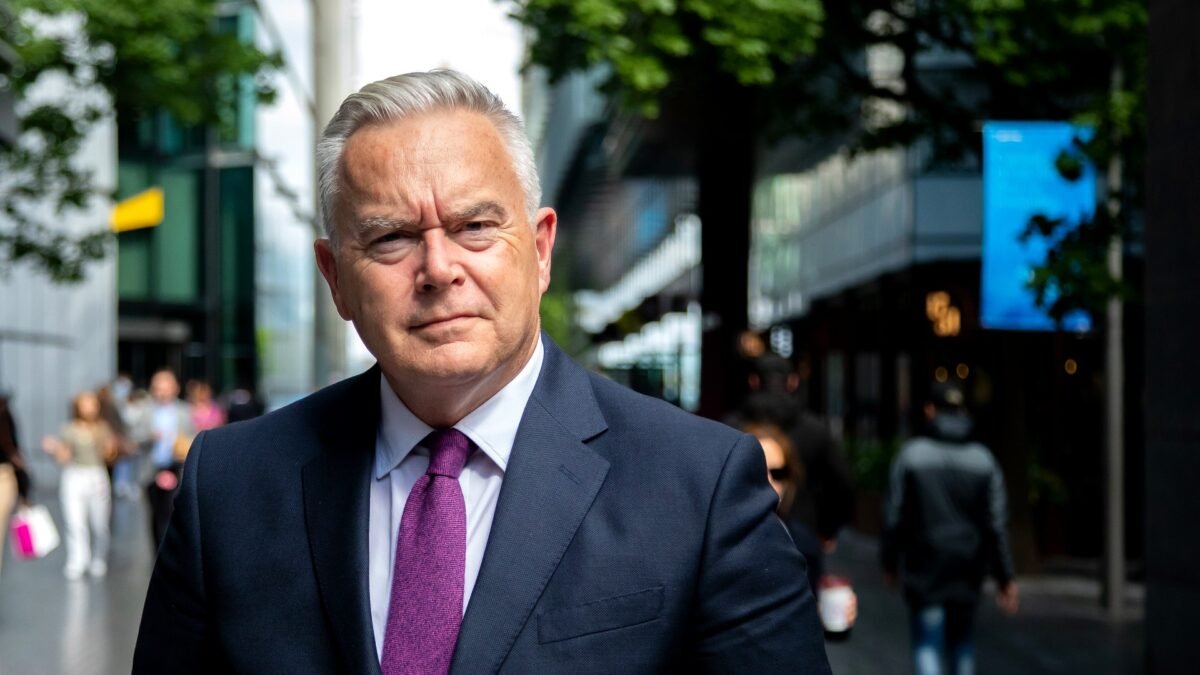
Disgraced former BBC newsreader Huw Edwards has said he sometimes wishes he had not pleaded guilty to making indecent images of children, in his first interview since his conviction in 2024. The interview, published by the Observer on Sunday 29 November, is the first time Edwards has spoken at length about his crimes since he admitted three counts at Westminster Magistrates’ Court in July 2024.
Edwards, 65, also told the newspaper he will not repay the £200,000 in salary the BBC has asked him to return, unless the corporation acknowledges his years of service and restores programmes he appeared in to its archive. The remarks come days before a Channel 4 documentary about his downfall, Huw Edwards – Guilty, is due to be broadcast on Tuesday 1 December, and they have already drawn fierce criticism from the government, survivors’ charities and politicians.
According to the BBC, Edwards denied that the interview was an attempt to rehabilitate his public image. But the reaction to it, and to the documentary, has reopened one of the most painful questions in British broadcasting: whether a convicted sex offender should be given a platform at all, and what accountability looks like once the sentence has been served.
What Edwards said about his guilty plea
The interview was conducted by the Observer’s editor, Ceri Thomas, and is presented by the paper as the result of an investigation 18 months in the making. According to the account published on Sunday, Thomas first contacted Edwards in the summer of 2025 and spoke to him over more than a year at his home in south Wales. Thomas is a former editor of the BBC’s Today programme and Panorama, and the Observer said there was a “public interest in re-examining his story” in an editorial published alongside the interview.
Asked whether he regretted admitting the charges, Edwards told the paper that some days he did. “Do I wake up some days and wish I hadn’t [pleaded guilty]? Yes. Of course I do,” he said, according to the BBC’s report of the interview. “But I’ve got to put myself back in the shoes I was in then – family in great distress, my mum really upset, and I just thought ‘I’ve got to put a stop to this’.”
He added: “And I was prepared to say I’m guilty because I did click on the files, you know?” Under the law, opening an indecent image of a child on a device counts as “making” it, which is why the offence carries that name.
Edwards was also asked why he had not reported Alex Williams, the man who sent him the images, to the police. “I didn’t even consider it as an option – and I’m ashamed to say it but I might as well be honest about it… I should have done it, but I wasn’t thinking in those terms. I’m thinking in terms of survival,” he told the Observer.
He said that by clicking on the images he had become complicit in the abuse of the children in them. “That bit absolutely kills me,” he said, according to the BBC. “By clicking on the images, he said he had been ‘complicit in this horrible trade of people'”, the BBC reported.
Edwards also set out his own account of what happened: that he did not seek the images, that he deleted them, and that he told Williams not to send more. The Observer noted that the sentencing judge had accepted that he deleted the images and told Williams not to send further material, although the judge believed this happened later than Edwards now says. The court also heard at sentencing that after receiving one video in August 2021, Edwards asked Williams whether he had any more, before telling him not to send illegal images when Williams said they were illegal.
Despite the conviction, Edwards remained defiant about his standing as a broadcaster. “The fact that I’ve been convicted for a crime doesn’t erase your achievements in broadcasting,” he told the Observer.
The £200,000 the BBC wants back
The second strand of the interview concerns money. The BBC has asked Edwards to repay the salary he was paid between his arrest in November 2023 and his resignation five months later, a sum of around £200,000. So far he has refused.
BBC chairman Samir Shah said in 2024 that Edwards was the “villain of the piece” who “acted in bad faith” when he knew what he had done but still took licence fee money. Edwards told the Observer he would not hand over the money at the moment. “I just thought, you know, ‘You really think I’m gonna hand you two hundred grand if you’re calling me a liar in public?’ I mean, forget it,” he said.
According to the detailed account of the interview, Edwards said he had told the BBC it should deal with Shah’s remarks, the archive and recognition of his service before any payment was discussed, and that he had not heard back.
The row over the money has become a focal point for critics of the interviews. Dame Caroline Dinenage, the Conservative chair of the Commons culture and media committee, told the BBC that any programme featuring Edwards “needs to properly challenge his past actions”, including unanswered questions about whether he will return more than £200,000 the BBC paid him after his arrest.
The Channel 4 documentary and the Observer podcast
The Observer interview is one of three pieces of work announced on Thursday 26 November. The others are the Channel 4 documentary Huw Edwards – Guilty, which airs at 9pm on Tuesday 1 December, and an appearance on the Observer’s Tortoise Investigates podcast, also due on Tuesday.
Channel 4 describes the documentary as a “stark exploration of a disgraced public figure in the aftermath of a shocking fall from grace”, covering his “criminal actions, betrayal of public trust and abuse of power”, and says it asks “what accountability really means in the wake of a serious criminal conviction”. It was directed by Patrick Forbes and filmed over close to a year at Edwards’s home in rural Wales. The broadcaster says Edwards was not paid and had no editorial control. The film replaces a repeat of Grand Designs in the Tuesday night schedule.
A 20-second trailer released on Thursday gave a sense of the tone. Forbes asks Edwards what he was doing when he received the images. “Oh, you want me to analyse what I was doing? I mean, seriously?” Edwards replies. Pressed again, he says: “I’d lost the plot.” When Forbes responds with an exasperated “Oh, come on”, Edwards snaps back: “No, not come on.” The exchange has been clipped and shared widely, and it has not helped him. Critics have read it as a man irritated at being asked the only question that matters.
Forbes has defended the project as “an important film to make”, saying it is rare to find a subject touching on so many contemporary issues, from celebrity culture to the power of the media and questions of crime and punishment. Channel 4’s senior commissioning editor, Sacha Mirzoeff, said the channel had a reputation for tackling controversial subjects through exemplary film-making, and described the documentary as a quest for answers “from a man who is trying to come to terms with his abuse of power”.
In the clip released for the Observer podcast, Edwards says: “Lots of the advice I’ve had is just be quiet, don’t say anything.” Thomas said he had been “deeply curious about how it was that a man of such prominence had got himself into this unbelievable, terrible fix”. That phrase drew an immediate rebuke from the senior newspaper journalist Rosamund Urwin, who wrote that “an ‘unbelievable terrible fix’ is quite the euphemism for someone viewing child abuse images of victims as young as 7”.
Tortoise Media, which owns the Observer, has an arrangement to carry some of its podcasts on BBC Sounds. The BBC said on Thursday that the Edwards series would not be among them. The Observer, like Channel 4, said Edwards received no payment and had no editorial input.
The backlash
The reaction to the announcement of the interviews was immediate and came from several directions at once.
Downing Street said on Friday that it had “no interest in hearing” what Edwards had to say. “Our thoughts first and foremost will be with the victims of child sexual abuse and exploitation. We have no interest in hearing what he has to say,” a spokesperson said, according to the BBC. The spokesperson added that broadcasters were “expected to act responsibly and have appropriate regard to their audiences when making decisions”, but said Channel 4 was editorially independent and decisions about individual programmes were a matter for it.
Anna Turley, a government minister, said in a radio interview that she was “deeply uncomfortable” with the interviews and that “for too long, so many of these people in the public eye have been able to have a sort of free pass”. Rebecca Paul, the shadow culture secretary, said: “This man shouldn’t get a minute of airtime.”
The mother of the young person at the centre of the 2023 allegations against Edwards said in a television interview: “It’s absolutely disgusting Channel 4 has given a convicted paedophile a platform. I don’t understand what he has to say or what his side of the story really is.”
Three people who had previously spoken to BBC News about allegations of Edwards’s inappropriate behaviour also criticised the interviews. One person, who is anonymous and not connected to the criminal case, told BBC News on Thursday that Edwards was “clearly trying to do a bit of damage repair” and that they were “annoyed that he’s being able to air these opinions”.
An open letter to Channel 4, from a coalition of charities, sexual abuse victims and the broadcasting union, said: “Giving airtime to a convicted child sex offender is irresponsible journalism.” The letter, posted by the arts organisation Viv Gordon Company, which aims to amplify the voices of survivors, continued: “As survivors of sexual violence and child sexual abuse, together with allies we are uniting to demand that Channel 4 pulls the broadcast of Huw Edwards – Guilty… It is deeply distressing and an insult to every survivor in the UK carrying the trauma of these crimes.” It was signed by 18 people, including Mike Peirce, founder of the abuse charity Southmead Project; Duncan Craig, chief executive of the charity We Are Survivors; and Dr Lucy Martin, founder of the CSA Survivors’ Fund, which raises money for child sexual abuse victims.
The letter added: “In a cultural moment when networks should be proving they have learnt from these failures, Channel 4 is offering airtime to an offender whose excuse for his crimes is that he had ‘lost the plot’.”
Lee Cooper, a photographer and childhood sexual abuse victim who signed the open letter, also started a petition on Change.org urging Channel 4 to delay its documentary “until it answers survivors’ questions”. Cooper, whose photographic project Victorious Voices tells the stories of 56 child sexual abuse victims, had written on LinkedIn that the documentary was an “abhorrent commissioning decision”. He then received a message from Edwards telling him to watch the show before judging it. In the message, seen by The Sunday Times, Edwards wrote: “I don’t hide from the appalling nature of my crimes. I make no excuses. None. I try to explain how it happened. But that’s a waste of time if people of your mindset refuse to listen.”
On Friday evening, Edwards wrote on his free Substack newsletter, which he launched in June, that he was “not” and had “never been” a paedophile.
Channel 4’s statement did not retreat. “Huw Edwards was a prominent public figure who has never publicly answered questions about his criminal actions,” it said, adding that the film’s “highly experienced director holds him to account, with no questions off limits”. Louisa Compton, Channel 4’s director of news, digital and audience, said there was a clear public interest in confronting Edwards in a documentary. “Nothing about making this film diminishes the seriousness of that harm, nor does Edwards’ participation entitle him to sympathy, redemption or rehabilitation,” she said. She insisted that Edwards’s account was “there to be tested, not accepted”.
What Edwards was convicted of
The facts established in court are not in dispute, and they frame everything that follows. Edwards was arrested in November 2023 and pleaded guilty at Westminster Magistrates’ Court on 31 July 2024 to three counts of making indecent images of children. The charges related to 41 images sent to him on WhatsApp between December 2020 and August 2021 by Alex Williams, a convicted paedophile who was himself given a suspended sentence earlier in 2024. Seven of the images were in the most serious category.
On 16 September 2024 the chief magistrate, Paul Goldspring, sentenced Edwards to six months’ imprisonment suspended for two years, ordered him to complete a sex offender treatment programme, and told him that his “long-earned reputation is in tatters”. He was placed on the sex offenders register for seven years. The court heard that he had sent Williams money, which the defence characterised as occasional gifts in the low hundreds of pounds, and that on at least one occasion he told Williams not to send underage material.
The prosecution told the court that police were unable to find the phone on which he viewed the material. The court heard that while Edwards communicated on platforms other than WhatsApp with Williams, police could not access any conversations or images that might have been sent on these. He also did not answer any of the police questions when he was arrested, giving them a statement about his mental health issues instead.
Edwards had been the BBC’s most senior news presenter, and for two decades he was the face of its flagship News at Ten, presenting some of the biggest stories in modern British life, including the announcement of the death of Queen Elizabeth II in September 2022. He resigned from the BBC on medical advice in April 2024, three months before his guilty plea, and the corporation subsequently said he had betrayed not only the BBC but the audiences who trusted him.
The separate 2023 allegations
The 2024 conviction was separate from the allegations that first ended his BBC career. In July 2023 The Sun reported that a senior BBC presenter had paid a young person, then 17, for sexually explicit images. Edwards was named by his wife, who said he was in hospital with serious mental health problems, and the Metropolitan Police later said no criminal offence had been committed in relation to that complaint. Edwards has always disputed the principal allegations in that story.
The distinction between the two matters is central to Edwards’s own account. In his blog post on Thursday, he wrote: “My difficulties became front-page news, and the account that took hold was, in places, misleading or simply untrue. I was left with a choice: to let that faulty account stand forever, or to offer my own.” He added that “those promoting false narratives are also, unsurprisingly, the ones questioning my right to set the record straight”, and said of the Channel 4 film: “I want viewers to know that I did not avoid a single question, and that I answered each as honestly as I could, including those about deeply personal matters: my relationships, my temperament, my sexuality.”
Whether the interviews keep the distinction between the 2023 allegations, which he disputes, and the 2024 conviction, which he admitted, clear is the test they will face. His critics’ objection is not that he wants to correct the record on the first; it is that any platform that lets him do so also lets him frame the second.
The road back into public view
Edwards has been edging back into public view for most of 2026. In March he attacked Channel 5’s two-part drama Power: The Downfall of Huw Edwards, in which Martin Clunes played him, saying the production company had made “no attempt” to check the truth of its narrative and that the drama was “hardly likely to convey the reality of what happened”. In April he said he would challenge “misleading or fabricated claims” about him, and it was reported that he intended to make his own documentary or podcast. In July he launched a Substack newsletter promising candour about mental health and commentary on the news, which child-safety campaigners said should be taken down.
His own answer, posted on his blog on Thursday, is that “silence is toxic”. Channel 4’s answer is that he has never publicly answered questions about his crimes, and that a documentary which holds him to account is journalism rather than rehabilitation. The clip released so far suggests the film will be uncomfortable for everyone involved, including its subject.
Analysis: a platform or a reckoning?
The row over Huw Edwards’s return to the airwaves is not really a row about one man. It is a row about what British broadcasting owes the people who trusted it, what it owes the victims of the crimes it is reporting, and what it owes the public’s right to understand how a fall from grace of this scale happens.
Start with the facts that nobody disputes. A man who for two decades was the most trusted face on British television, the presenter the nation turned to on the night a queen died, pleaded guilty to making indecent images of children. He was given a suspended sentence, placed on the sex offenders register for seven years, and told by the judge that his reputation was in tatters. That is the record, and nothing in the interviews changes it. Edwards himself, in his message to Lee Cooper, wrote that he did not hide from “the appalling nature of my crimes” and made “no excuses”.
What is disputed is what should happen next, and here the two sides are talking past each other. Channel 4 and the Observer argue that there is a difference between giving someone a platform and putting them in the dock, and that a documentary titled Guilty is plainly the second. Their case is that Edwards has never been questioned in public about his crimes, that the public has a legitimate interest in hearing him answer for them, and that a serious, adversarial interview is a form of accountability, not a reward. Louisa Compton’s formulation, that his account is “there to be tested, not accepted”, is the clearest statement of that position, and it is a serious one. Journalism has a long tradition of interviewing people who have done terrible things, and the interview is not the same as an endorsement.
The critics’ case is equally serious, and it rests on a different reading of what a platform does. Their argument is that airtime is itself a form of status, whatever the questions asked, and that giving it to a convicted child sex offender tells survivors that their pain counts for less than a famous man’s story. The open letter’s phrase, “irresponsible journalism”, is a moral judgement, not a legal one, and it is backed by people who work with survivors every day. When the mother of the young person at the centre of the 2023 allegations says she does not understand what Edwards has to say or what his side of the story is, she is speaking for a group whose voice is almost never heard in these debates: the people whose lives were damaged, and who did not choose to be part of a national story.
There is also a narrower, more practical question that the critics keep returning to, and it may be the most damaging one for Edwards. It is the question of the £200,000. Whatever the merits of the Observer’s argument about the public interest, it is hard for a man who refuses to repay money the BBC says he took in bad faith to present himself as a man who has faced up to what he did. Dame Caroline Dinenage put her finger on it when she said the programme needed to challenge him on the money as well as on the crimes. If the documentary does not press him hard on why he kept the salary, and why he is making its return conditional on the BBC praising his service and restoring his programmes to the archive, then Channel 4’s claim to be holding him to account will look thin. If it does, the film may be genuinely uncomfortable viewing, for Edwards most of all.
The BBC, meanwhile, faces its own reckoning, and the interviews bring it back into focus. The corporation paid Edwards for five months after his arrest, while he knew what he had done, and its chairman has said he acted in bad faith. The BBC’s decision not to carry the Tortoise podcast on BBC Sounds is a small, telling detail: the corporation does not want to be the vehicle for its former star’s return, even as a platform it does not control. Yet the BBC is also the organisation that reported the interview most prominently on Sunday, because it is news, and because its audience has a right to know what its former presenter is saying. That tension, between institutional self-protection and the duty to report, is one the BBC has not resolved, and the £200,000 remains unpaid.
There is a further question, quieter but important, about the two stories that have been tangled together since July 2023. The 2023 allegations and the 2024 conviction are different matters, and the police said no criminal offence had been committed in relation to the first. Edwards has always disputed the principal allegations in the Sun’s story, and he is entitled to say so. But the interviews give him the chance to do something more than correct the record on the first story: they give him the chance to shape how the second is remembered. That is the risk the Observer and Channel 4 have taken on, and it is why the precise wording of the interviews matters so much. If Edwards confines himself to the 2023 allegations, his critics will say he is using a legitimate grievance to launder an illegitimate one. If he answers fully on the conviction, as he says he has done, then the interviews may do what their makers claim, and give the public a fuller picture of a man who abused the trust placed in him.
What happens next will be decided, in large part, on Tuesday night. The documentary airs at 9pm, and the podcast is released the same day. Ofcom has not commented and no complaint has been reported, though the regulator’s rules on the portrayal of crime would apply to the broadcast. The judgements about whether Edwards shows remorse, challenges the court’s account or confines himself to the 2023 allegations cannot fairly be made until the full interviews are seen, because so far only a trailer and a single podcast clip have been released.
But one thing is already clear. Two years after his conviction, Huw Edwards has decided that silence is no longer an option, and British broadcasting has decided, for now, that it will listen to him. The question that will hang over Tuesday’s broadcast, and over the debate that follows it, is whether listening to him is the same as holding him to account, or whether it is the first step back towards the status he lost. The answer will depend on the questions he is asked, the answers he gives, and whether the people who were harmed are heard as clearly as the man who harmed them.
Sources
- BBC News (Lucy Manning) — Huw Edwards says he sometimes regrets pleading guilty to making indecent images of children (full text via The Muslim Press reproduction)
- BBC News (Ian Youngs, Lucy Manning and Larissa Kennelly) — Huw Edwards gives first interviews since child abuse image conviction (full text via CDS News reproduction)
- The Times — Huw Edwards documentary must not air, abuse victims tell Channel 4
- Taylor Tailored — Huw Edwards Interview: Channel 4 Documentary and Backlash (detailed account citing the Observer, BBC News, the Crown Prosecution Service and Press Gazette)
- AllNews — Huw Edwards says he sometimes regrets guilty plea, denies Observer interview is rehab effort

About the Author — Abdul Mannan
Related Articles
More Than 50 Labour MPs and Peers Urge Burnham to Pave Way for New Assisted Dying Law Within a Decade
More than 50 senior Labour MPs and peers have written to Prime Minister Andy Burnham urging him to…
England’s Schools Told to Set Aside Daily Time for Reading for Pleasure in Biggest Curriculum Overhaul in a Decade
Education Secretary Lucy Powell will tell Parliament on Monday that every primary school in England must build daily…
Badenoch Orders Tory Candidates to Sign Pledge Backing ECHR Exit and Net Zero Repeal
Kemi Badenoch has made signing a ‘candidates covenant’ a mandatory condition of standing for the Conservatives, requiring every…