
Hot September Inflation Puts Fed Rate Hike Back on the Table as Markets Tumble

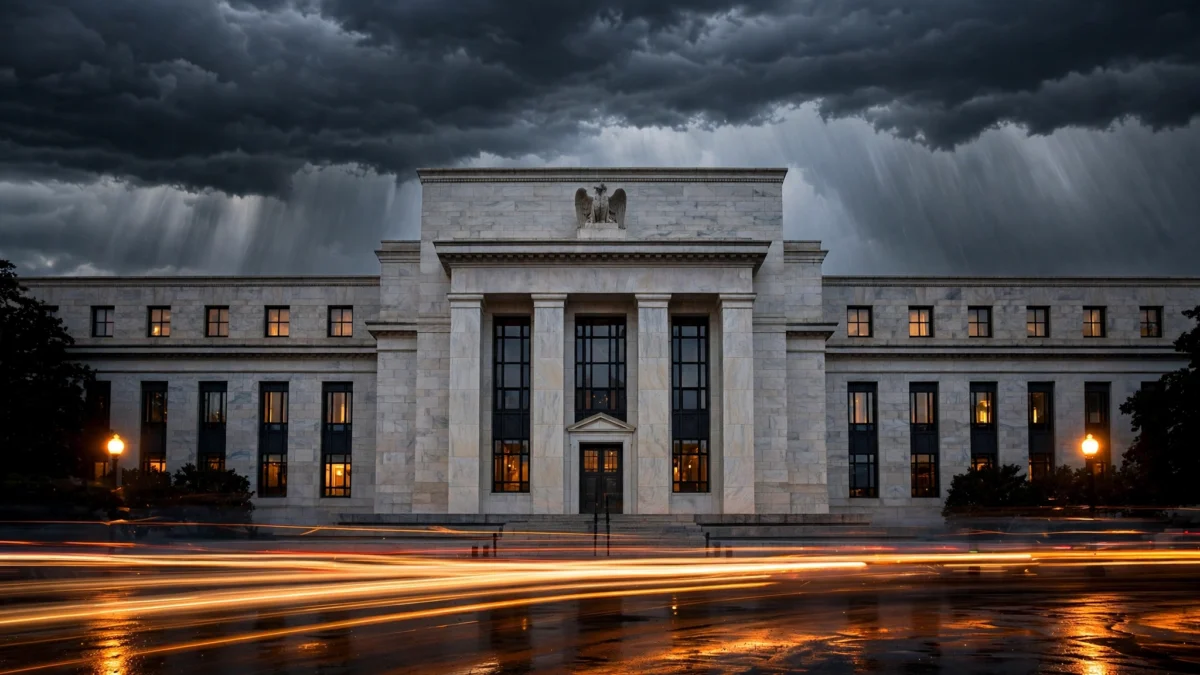
U.S. consumer prices accelerated more than expected in September, delivering a hotter-than-forecast inflation report that has suddenly put an interest-rate increase back on the table when the Federal Reserve meets in two weeks. The consumer price index rose 0.6 percent in September and 3.7 percent over the past 12 months, the Labor Department’s Bureau of Labor Statistics said Wednesday, while underlying price pressures showed signs of broadening beyond energy.
Economists had forecast a 3.6 percent annual increase, according to Reuters, but the final reading came in at 3.7 percent, up from 3.4 percent in August. On a monthly basis, the index climbed 0.6 percent after rising 0.4 percent the month before. Gasoline prices were the main driver, surging 7.1 percent in September, according to data from the U.S. Energy Information Administration cited by Reuters.
What worried analysts more was the measure that strips out volatile food and energy costs. Core CPI gained 0.3 percent for the month, matching August’s pace but exceeding the 0.2 percent economists had expected. Over 12 months, core inflation climbed to 2.6 percent from 2.4 percent, topping the 2.5 percent consensus forecast. Shelter costs rose 0.4 percent, while airfares climbed 1.2 percent and used-vehicle prices rose 0.7 percent, according to Reuters and market analysis by Seeking Alpha.
“Today’s CPI report will add to the Fed’s concerns around the inflation picture,” said James McCann, senior economist for investment strategy at Edward Jones, in comments carried by Reuters. He noted that core inflation is now running at 3.4 percent annualized over the past three months, and that broad-based price increases for autos, airfares, education and recreation could signal stickiness in underlying inflation.
The report landed just two weeks before the Fed’s October 27-28 policy meeting. Futures markets that settle to the central bank’s policy rate are now pricing roughly a 44 to 49 percent chance that the Fed will raise rates this month, up from about 20 percent — or one in five — before the data was released, according to Reuters and CME FedWatch data cited by CoinDesk. The odds of two rate increases by year-end have jumped to 44 percent from just 13 percent a week ago.
That repricing would have been almost unthinkable only weeks ago. Following weak employment data and a run of dovish comments from Fed officials, investors had largely written off any chance of a hike in October. The central bank raised rates in September for the first time in three years, lifting its policy rate to a range of 3.75 to 4.00 percent as it battled what it called “persistently elevated inflation,” according to Investor’s Business Daily. Markets had expected the Fed to wait until December for its next move — but the hot CPI data has reopened the debate.
Wall Street reacted swiftly. The Nasdaq opened down 0.6 percent and the S&P 500 fell 0.4 percent on Wednesday, according to Reuters, with the Nasdaq bearing the brunt of the declines — down 1.6 percent in afternoon trading, the Wall Street Journal reported. Economically sensitive corners of the market such as small caps, real estate and consumer discretionary shares underperformed, the Journal said. Chipmakers, data-center operators and other stocks tied to the artificial-intelligence boom sold off for a second straight day.
Bond markets told the same story. The yield on the two-year Treasury note, which is highly sensitive to expectations for interest rates, rose about 13 to 14 basis points to roughly 4.92 to 4.93 percent, while the benchmark 10-year yield climbed to around 5.30 to 5.31 percent, according to Reuters and the Wall Street Journal. The U.S. dollar index strengthened to 102.75, an 18-month high, and gold fell 1.6 percent to about $4,088 an ounce.
Bank Earnings Add to the Drama
The inflation data landed on one of the busiest earnings days of the quarter, and the spotlight fell on Bank of America. The bank’s shares plunged roughly 6 to 7 percent in Wednesday trading after it reported third-quarter results weighed down by a massive regulatory penalty, according to Barron’s and Investopedia.
The day before earnings, the U.S. Treasury Department announced that its Financial Crimes Enforcement Network had fined Bank of America $1.2 billion for failing to mitigate and report priority national-security risks, including Chinese money-laundering networks and illicit finance along the southwest border. It is the third-largest penalty in Treasury Department history, behind only Binance’s roughly $4 billion settlement in 2023 and TD Bank’s approximately $3 billion settlement in 2024, according to LinkedIn News reporting on the action.
The Treasury said the bank failed to report more than $5 billion in suspicious transactions, over $1 billion of which were connected to national-security risks. The bank admitted that it willfully violated the 1970 Bank Secrecy Act, which requires banks to help detect and prevent money laundering. The Office of the Comptroller of the Currency added a $750 million civil penalty — the largest the OCC has ever imposed — which is credited toward the $1.21 billion total, and the Treasury’s Office of Foreign Assets Control added an $11.6 million settlement over 475 apparent sanctions violations involving Russia, Iran, narcotics and terrorism, according to the same reporting.
“When a bank of this size fails to meet its anti-money laundering and sanctions obligations, the consequences extend far beyond its own walls, exposing the entire U.S. financial system to significant illicit finance risks,” Treasury Secretary Scott Bessent said in a statement quoted by Investopedia.
On the earnings front, Bank of America reported third-quarter net income of $6.9 billion, or 91 cents a share, down from $8.3 billion a year earlier. The fine cost the bank about 17 cents a share; excluding it, earnings would have been $8.1 billion, or $1.08 a share. Revenue rose 3 percent to $30 billion, but that missed analyst expectations of around $30.6 billion, according to CNBC reporting cited in the day’s coverage. The bank said it has devoted substantial resources to fixing the compliance failures.
Not every bank suffered. BlackRock shares climbed nearly 4 percent after the world’s largest asset manager beat Wall Street expectations, reporting assets under management of $15.5 trillion — a record, up 15 percent from a year earlier — with $205 billion in quarterly net inflows, according to Barron’s and TradingKey. Morgan Stanley also beat analysts’ estimates on strong investment-banking and wealth-management performance, though its shares still slipped about 2 to 3.4 percent in the broad selloff.
Elsewhere on Wall Street, Dutch chip-equipment maker ASML topped earnings targets and raised its full-year guidance, but its shares still dipped 0.6 percent as investors kept dumping chip stocks — the PHLX Semiconductor Index has now fallen five straight days, according to Barron’s. Hewlett Packard Enterprise dropped 5.1 percent after Barclays downgraded it, along with Dell Technologies and NetApp, saying the stocks show no meaningful AI inflection yet. And Netflix fell 1.4 percent after telling employees it will cut 6 percent of its staff, roughly 1,000 positions globally, in its largest layoffs since 2022.
Analysis: Why It Matters
Strip away the daily market noise and this report tells a story that should concern anyone who buys groceries, fills a gas tank, or borrows money: America’s inflation problem is no longer just about energy. It is spreading.
Start with what the numbers actually say. Headline inflation at 3.7 percent is driven largely by gasoline — prices at the pump jumped 7.1 percent in a single month, and diesel costs are climbing too. That part is visible in every household budget. But the more important figure for the Federal Reserve is core inflation, which excludes the noisy food and energy categories precisely so policymakers can see the underlying trend. At 2.6 percent annually — and, more worryingly, 3.4 percent annualized over the last three months — the core reading is moving in the wrong direction. Shelter, airfares, used cars, apparel, medical costs and recreation all rose in September. As Navy Federal Credit Union chief economist Heather Long put it in comments carried by CoinDesk, big jumps in those categories mean “the energy shock is spreading.”
That broadening matters because of how inflation expectations work. When households and businesses begin to expect that prices will keep rising across the board — not just at the gas station — they change their behavior: workers demand higher wages, companies raise prices preemptively, and the inflation becomes self-sustaining. The Fed’s entire fight is to prevent exactly that spiral. A one-month energy spike is something a central bank can look through. A three-month acceleration in core inflation is something it cannot ignore.
The second thing that matters is the policy trap the Fed is walking into. Having raised rates in September for the first time in three years, the central bank signaled it would likely raise again by year-end. But markets had quietly bet that October was off the table — until Wednesday morning. Now the Fed faces its next decision in two weeks with inflation running hot, energy prices rising, and a war still straining oil markets. Hike in October and it risks tightening into a weakening labor market; wait, and it risks looking soft on inflation. Several strategists quoted by Reuters are split: some see no October hike but a December move, while others — like Peter Cardillo of Spartan Capital Securities — now see a chance the Fed raises by as much as half a percentage point in December if oil stays high.
Third, the report exposes an underappreciated force pushing prices higher: the AI boom itself. Donald Calcagni of Mercer Advisors pointed out that computer software and accessories prices were up 25 percent year over year, which he called indicative of the data-center boom. The same AI buildout that ASML’s record €11.7 billion quarter reflects is bidding up hardware, power and talent — costs that eventually filter into the prices consumers pay. Seeking Alpha’s analysis made a similar connection, citing energy price shocks, tech and AI data-center demand, and wage trends as forces that could push inflation higher. It is an irony worth sitting with: the technology sector is simultaneously the economy’s biggest growth engine and an emerging source of cost pressure.
Fourth, the Bank of America episode is a reminder that the financial system’s plumbing matters for the real economy. A $1.2 billion fine for anti-money-laundering failures at the country’s second-largest bank is not just a shareholder problem. Regulators have essentially told the industry that compliance spending is non-negotiable, and those costs — plus the reputational overhang — land in the lap of the same institutions the Fed is trying to keep healthy as it tightens policy. The bank’s net interest income did rise 8 percent to $16.4 billion, a sign that higher rates still benefit lenders’ core business, but the compliance mess muddied what would otherwise have been a solid quarter.
Finally, there is the global dimension. With Brent crude around $105 a barrel and the dollar at an 18-month high, the rest of the world is importing America’s inflation fight. A stronger dollar squeezes emerging markets and makes dollar-denominated debt more expensive; expensive oil keeps pressure on Europe and Asia. As the Seeking Alpha analysis noted, Strait of Hormuz tensions and elevated fuel prices are feeding through into a broader range of categories globally. What happens at the Fed’s October 27-28 meeting will move markets from Tokyo to London.
What to Watch Next
First, the Federal Reserve’s October 27-28 meeting. The two-week countdown is now the single most-watched event in global markets. Watch not just the decision but the statement and the press conference: the Fed’s language about whether inflation is “broadening” will signal whether a December hike is baked in.
Second, the PCE inflation reading. The Fed’s preferred inflation gauge, the Personal Consumption Expenditures price index, is released after the October meeting — a quirk of timing that several analysts flagged. If PCE confirms the CPI’s message, a December hike becomes far more likely.
Third, energy prices. Gasoline drove more than half of September’s monthly inflation jump. With Brent crude elevated and Middle East tensions — including the Houthi strikes on Saudi energy infrastructure reported earlier this week — keeping oil markets on edge, any further supply disruption would feed straight into October’s numbers.
Fourth, the rest of earnings season. Bank results so far show consumers generally staying on top of loan payments, according to Barron’s — but the banks also note their portfolios skew toward higher-credit-score borrowers. What non-bank companies say about pricing power and consumer demand will show whether inflation is being passed through or absorbed.
Fifth, the labor market. The Fed is tightening because of inflation, but weak employment data is the reason many investors doubted an October hike in the first place. If job numbers deteriorate while inflation stays hot, the central bank could face the dreaded stagflation dilemma — the policy equivalent of choosing which fire to fight first.
Sources
- Reuters: Hot September CPI sends rate-hike bets soaring (via WNCY)
- Wall Street Journal: Stock Market Today — Stocks Turn Lower, Yields Rise After Hot Inflation Reading
- Barron’s: Stocks That Explain Today’s Market — Bank of America, BlackRock, ASML
- Investopedia: Bank of America Stock Slumps After Revenue Miss, $1.2B Treasury Fine

About the Author — Abdul Mannan
Related Articles

ASML Posts Record €11.7 Billion Quarter as AI Chip Demand Outruns Supply Through 2028
ASML reported record third-quarter sales of €11.7 billion and warned its planned supply for 2027 and 2028 will…
Bank Earnings Season Opens Today as JPMorgan, Goldman Sachs, Citigroup and Wells Fargo Face a 5% Yield Test
Wall Street's biggest banks report third-quarter results on Tuesday amid generational-high Treasury yields — the first test of…

Asian Markets Slide as Chip Sell-Off, Rising Oil and Earnings Anxiety Trigger Risk-Off Tuesday
Asian equities fell sharply on Tuesday as a chip sell-off, rising oil prices and a packed week of…