
Trump Says Military Leakers “Should Be Shot” Over Alleged Iran Strike Leak at Arizona Rally

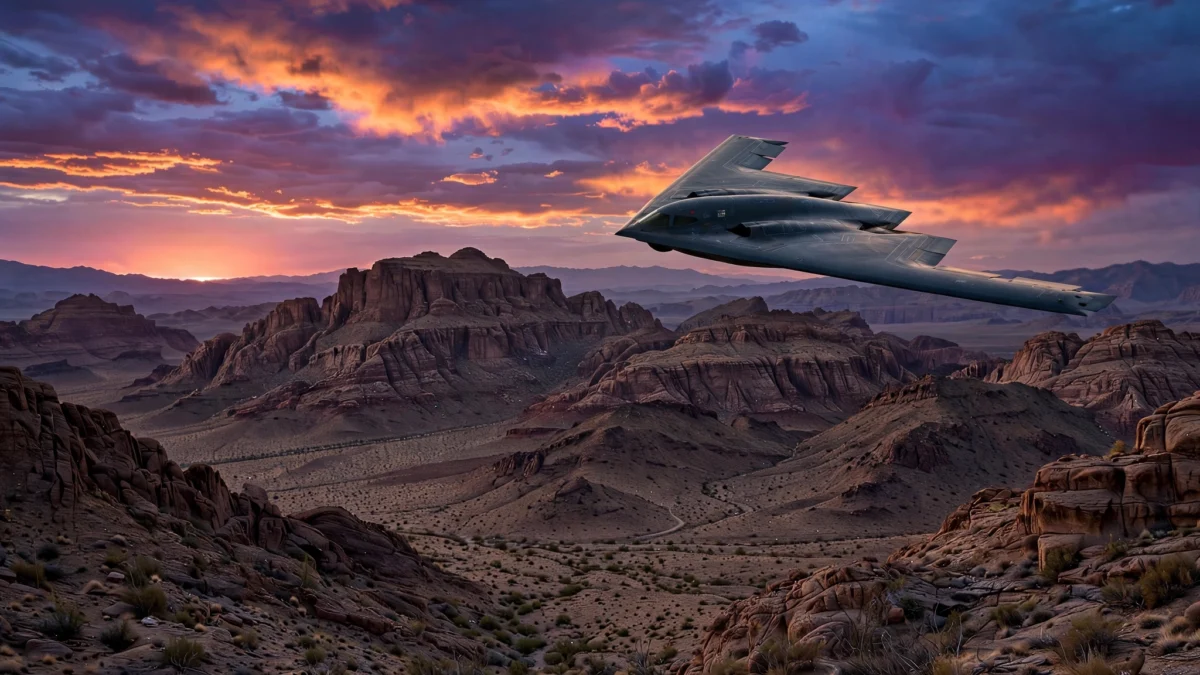
President Donald Trump declared at a campaign rally in Arizona on Wednesday that people who leak sensitive military information “should be shot,” saying the disclosure of operational details surrounding American strikes on Iran had endangered a classified mission and forced him to alter the timing of an attack.
“In my opinion, leakers should be shot,” Trump told supporters gathered at the Laughlin/Bullhead International Airport in Bullhead City, Arizona, according to multiple outlets that covered the rally. “In the old days we used to shoot leakers, you know?”
The rally was held to boost Republican gubernatorial candidate Representative Andy Biggs, who faces incumbent Democratic Governor Katie Hobbs in the November 3 midterm elections, and Trump used much of the appearance to defend his administration’s war with Iran, which has driven gasoline prices to record highs and become a political liability for Republicans ahead of the vote.
According to USA Today, the New York Post, and the Daily Mail, Trump said a “sleazebag” leaker had revealed the departure and arrival times of B-2 stealth bombers to The New York Times and CNN before a planned strike on Iranian nuclear facilities, prompting him to call off the raid after consulting General Dan Caine, the chairman of the Joint Chiefs of Staff.
“Somebody leaked, some sleazebag. They ought to go to jail and be shot. For the rest of their life, they should be in jail,” Trump said. “They leaked that we were leaving at 12:07 from Missouri, and it was in The New York Times, CNN. They leaked the time that we were leaving, the time that we were arriving.”
Trump said he aborted the mission and ordered the bombers relaunched two days later at the same planned time, telling the crowd that pilots who had prepared for the assignment were “miserable” about the delay. He did not identify the alleged leaker, present evidence establishing who had disclosed the information, or say whether any formal investigation had identified a suspect, according to the reports.
The president appeared to be describing the run-up to Operation Midnight Hammer, the June 2025 American bombing campaign that targeted three Iranian nuclear sites. Trump has previously said the operation justified itself as an act of defense. “When they leak what time you’re going to attack a country, and the reason you’re attacking is really for defense, because you don’t want them to have a weapon that can blow up millions of people at one shot — no, leakers should be dealt with very, very strongly,” he said. “To me, they’re the scum of the earth.”
Remarks extended to journalists
Minutes after calling for leakers to face execution, Trump turned his criticism toward the press, comparing reporters to the people he had just said should be shot. “They’re almost as bad as a leaker because they leak. They leak false information — that makes them a leaker — oftentimes without a source,” he said, according to USA Today.
The comments drew swift condemnation from press freedom and civil liberties advocates, who said no modern American president had publicly called for leakers to be shot. Critics also noted the irony that Trump himself has faced Espionage Act-related charges in a separate case, and argued the remarks signaled a further erosion of protections for whistleblowers and journalists.
Trump has clashed with The New York Times and CNN for more than a year over their coverage of the Iran strikes. He threatened to sue both outlets in 2025 after they reported on a preliminary intelligence assessment that contradicted his claim that Iran’s uranium enrichment sites had been “completely and totally obliterated” by American bombs, according to USA Today.
“Very soon”: Trump predicts a quick end to the Iran war
Beyond the leaker remarks, Trump used the Arizona rally to offer his most expansive public account yet of the war with Iran, now in its eighth month, predicting it would end quickly and insisting American forces were winning.
“That’s going to end very soon,” Trump told the crowd, according to reports of the rally, arguing that once the fighting stopped, gasoline prices would fall “to even lower than it was before.” He linked the anticipated end of the conflict directly to expected relief at the pump for American households.
Trump claimed American strikes had severely degraded Iran’s naval and air capabilities and asserted that the United States had established full control over the Strait of Hormuz, the critical waterway through which roughly a fifth of the world’s crude oil and liquefied natural gas trade flowed before the war. He described the American naval blockade as a “wall of steel” and claimed more oil was now moving through the strait than before the conflict began.
That claim sits uneasily alongside independent shipping data. According to figures from maritime tracking firm Kpler cited by Al Jazeera, just 2.9 million barrels of oil passed through Hormuz on October 11, down from nearly 20.8 million barrels on October 8, after a surge of attacks on tankers. The UK Maritime Trade Operations centre separately recorded 15 attacks in the strait between October 6 and October 14, with 11 of them in a four-day span.
A Reuters report published October 14, based on interviews with two senior Iranian officials, said Tehran had begun deploying new tactics to target ships in the strait about ten days earlier, with the explicit aim of keeping oil prices high and influencing the American midterm elections. “The aim is to frustrate efforts by the United States and its allies to bring down global oil prices,” one official told Reuters. A US military official confirmed to Reuters that Iran’s Revolutionary Guard Corps had changed tactics after the destruction of much of its radar capability, using unarmed spotters in small boats to identify targets.
Trump also acknowledged, in unusually candid terms, the difficulty of finding Iranian counterparts for any settlement talks after months of American strikes on the country’s leadership. “I might have gone too far. I don’t know who the hell to deal with,” he said, an apparent reference to the successive layers of Iranian leadership removed since the war began. “I’m sorry, because I don’t know who the hell we’re dealing with anymore.”
On the economy, Trump cited a 1.7 percent inflation rate over the preceding three months and compared current gasoline costs favorably with prices under former President Joe Biden, while arguing that the economic pain of the war was a justified price for stopping Iran from obtaining a nuclear weapon. He claimed that before the June 2025 strikes, Iran had been just two weeks away from such a weapon — an assessment he presented as the core justification for the entire campaign.
Context: the firing-squad execution order
Trump’s call for leakers to be shot came roughly a week after he approved the execution of convicted Fort Hood shooter Nidal Hasan by military firing squad, reviving a method of execution the American military has not used in decades.
Hasan killed 12 US service members and one civilian and wounded 32 others during a November 2009 shooting rampage at the Texas Army base. Defense Secretary Pete Hegseth announced plans to livestream the execution, scheduled for December 3, a proposal that drew a letter of protest from 72 retired American generals and admirals who called the broadcast plan “barbaric” and warned it would stain the honor of the military.
The proximity of the two decisions — approving a firing-squad execution and then publicly musing that leakers deserve the same treatment — has sharpened the debate over how far the administration is willing to go in projecting toughness on matters of military discipline and secrecy.
Background: Operation Midnight Hammer
The operation Trump was describing Wednesday night was the largest B-2 bomber mission in American history. On the night of June 21-22, 2025, seven B-2 Spirit stealth bombers from the 509th Bomb Wing at Whiteman Air Force Base in Missouri flew an 18-hour mission to Iran, dropping 14 GBU-57A/B Massive Ordnance Penetrators — 30,000-pound bunker-busting bombs used in combat for the first time — on the Fordow and Natanz nuclear enrichment facilities.
To preserve surprise, at least six additional B-2s flew west over the Pacific as a decoy while the strike package headed east. A US Navy Ohio-class guided-missile submarine launched more than two dozen Tomahawk cruise missiles at tunnel entrances and surface targets at the Isfahan nuclear complex. F-22 and F-35 fighters provided escort, with electronic-warfare aircraft suppressing Iranian air defenses.
Gen. Caine, then and now the chairman of the Joint Chiefs of Staff, told a Pentagon briefing the next morning that “the element of surprise was total” and that “Iran’s fighters didn’t fly, and their air defenses didn’t see us.” The Pentagon presented the operation as a devastating blow to Iran’s nuclear program, and Trump declared the three sites “completely and totally obliterated.”
That assessment was quickly contested. A preliminary American intelligence report, first described by The New York Times and CNN, concluded the strikes had set Iran’s program back by months rather than destroying it outright — reporting that infuriated Trump and set off the running feud with both outlets that resurfaced at Wednesday’s rally.
Independent analysts have since offered a more qualified verdict. The Institute for Science and International Security has assessed that the roughly 22,000 centrifuges at Natanz and Fordow were almost certainly wrecked, but that Iran’s stockpile of enriched uranium — estimated by the International Atomic Energy Agency at about 970 pounds enriched to 60 percent in June 2025 — may have survived, along with spare parts and technical personnel. The IAEA has said it lost track of the whereabouts of that stockpile.
Background: eight months of war
The June 2025 strikes were a prelude to a far larger conflict. On February 28, 2026, the United States and Israel began coordinated air strikes on Iran — the American operation codenamed Epic Fury, Israel’s Roaring Lion — in a campaign that killed Supreme Leader Ayatollah Ali Khamenei and other senior officials in its opening hours, according to multiple timelines of the war.
Iran answered with missile and drone attacks on Israel and American bases across the Gulf, in an operation Tehran called True Promise IV, and within days shut the Strait of Hormuz. Iran’s Assembly of Experts chose Mojtaba Khamenei, the late supreme leader’s son, as his successor on March 8.
The war has run in phases: open warfare from February to April, a Pakistan-brokered ceasefire and talks, an American naval blockade of Iranian ports, the Islamabad Memorandum of Understanding of June 17, and its collapse on July 7-8 over shipping disputes. Since September, the fighting has centered on a tanker war in the Strait of Hormuz and, from October, attacks near the Bab-el-Mandeb at the mouth of the Red Sea. As of mid-October 2026, no ceasefire is in force.
The conflict has also spilled across the region. The Houthi movement in Yemen, an Iranian ally, has escalated its war against Saudi Arabia, including an October 10 missile attack on Riyadh’s airport that killed 12 people, and this week completed the encirclement of Taiz, Yemen’s third-largest city, prompting United Nations warnings of a looming humanitarian catastrophe.
Trump has pledged that no American strikes on Iran would take place before the November 3 midterms, and Iran on October 11 called the American reply to its conditions for talks insufficient — leaving the war’s endgame, which Trump now says is “very soon,” entirely undefined.
Analysis: Why It Matters
A sitting American president publicly saying leakers “should be shot” would be a remarkable statement in any era. In the middle of a war, eight months into a conflict that has killed a supreme leader, choked the world’s most important oil chokepoint, and pushed gasoline above four dollars a gallon for a record number of days this year, it lands differently — as both a window into how this White House thinks about wartime secrecy and a test of how much rhetorical escalation the public and the press will absorb.
The law is not on the rhetoric’s side. The Espionage Act, the principal federal law governing unauthorized disclosure of national defense information, carries severe penalties — but it does not prescribe the death penalty for leaking classified information to the press. Leakers in the modern era, from Daniel Ellsberg to Chelsea Manning to Edward Snowden, have been prosecuted, imprisoned, or exiled — never executed. Trump’s formulation, “in the old days we used to shoot leakers,” invokes a military-justice tradition of executing spies in wartime, not a legal reality that applies to the press disclosures he was describing. The gap between the rhetoric and the law matters because the audience was not a courtroom; it was a campaign crowd that cheered.
The press is the real target. The most consequential passage of the night may not have been about leakers at all, but about journalists. By declaring reporters “almost as bad as a leaker” and folding “false information” into the definition of leaking, Trump collapsed the distinction between disclosing classified operational details — which the law does punish — and publishing reporting he dislikes, which the First Amendment protects. That collapse is the mechanism of a chilling effect: it does not require a prosecution to work. It requires only that sources and reporters calculate the risk of being labeled enemies of wartime secrecy and decide that some stories are not worth the danger.
The leak story itself is unverified. Everything about the alleged disclosure — that The New York Times and CNN published B-2 departure and arrival times, that Iran’s military was “waiting,” that a raid was called off and relaunched two days later — comes from Trump’s account alone. No suspect has been named, no evidence presented, no investigation confirmed. Both outlets did report B-2 movements before the June 2025 strikes; whether that reporting constituted a leak that endangered the mission, or simply open-source observation of aircraft already tracked by aviation enthusiasts, has never been independently established. A newsroom built on verification cannot treat a rally anecdote as settled fact, however vividly told.
The Hormuz claims deserve the same skepticism. Trump’s “wall of steel” — more oil flowing, full American control — is directly contradicted by the shipping data of the past two weeks: tanker attacks at their highest level since the war began, oil transits collapsing from nearly 21 million barrels to under 3 million barrels in three days, and a Reuters investigation quoting Iranian officials who say keeping prices high through the midterms is the entire point of their new tactics. A president telling voters the blockade is working while insurers, tanker operators, and the Pentagon’s own anonymous briefers describe a waterway under siege is not a minor discrepancy. It is the central credibility question of the war’s home-front politics.
The calendar explains the timing. With the midterms less than three weeks away and record numbers of days above $4-a-gallon gasoline this year, the war’s domestic cost is the single greatest threat to Republican prospects. Wednesday’s rally was, by design, a midterm rally: the leaker tirade, the “very soon” promise, the oil-price optimism, and the inflation statistics were all aimed at voters feeling the war in their wallets. The pledge of no strikes before November 3, the prediction of a swift end, and the rosy Hormuz narrative form a coherent pre-election story — one that will be testable, brutally, against events the day after the votes are counted.
What to Watch Next
First, whether the administration takes any concrete step toward investigating or prosecuting the alleged 2025 leak — or whether the “should be shot” line remains rally rhetoric. Second, whether press freedom groups and newsroom lawyers respond with litigation or public campaigns, and how the White House press operation handles the “journalists are leakers” framing. Third, the December 3 firing-squad execution of Nidal Hasan and whether the Pentagon proceeds with the livestream over the retired generals’ objections. Fourth, the Strait of Hormuz: if Iranian attacks continue at their current pace, the gap between Trump’s “wall of steel” and the tanker data will become impossible to sustain. And fifth, November 3 — the midterms, the self-imposed deadline after which the pledge of no strikes expires and the war’s next phase begins.
Sources
- USA Today — “Trump says people in government who leak to media ‘should be shot'”
- New York Post — “Trump says ‘leakers should be shot’ for exposing US military secrets”
- Daily Mail (Nikki Schwab) — “Trump unleashes ‘leakers should be shot’ call in rambling tirade about run-up to Iran strikes”
- IANS — “Trump says people leaking sensitive military info should be shot”
- Reuters — “Iran shifting tactics to step up attacks on shipping before US vote, officials say”

About the Author — Abdul Mannan
Related Articles
Trump Pardons Two Alaska Diesel Mechanics Onstage at Wasilla Rally, Turning Clemency Into Campaign Theater
President Donald Trump signed unconditional pardons onstage for two Anchorage diesel mechanics convicted of Clean Air Act violations,…
Trump Asks U.S. Ambassador to Greece Kimberly Guilfoyle to Resign After Reports of Cash-for-Access Misconduct
The White House on Tuesday asked Kimberly Guilfoyle to resign as ambassador to Greece after Wall Street Journal…
Judge Blocks Trump’s White House Ban on CNN, MS NOW and Politico, Finding Likely First Amendment Violation
A federal judge has granted a preliminary injunction preserving White House access for CNN, MS NOW and Politico,…