
Trump Calls Off Livestream of Fort Hood Shooter Nidal Hasan’s Execution, Reversing Pentagon Plan

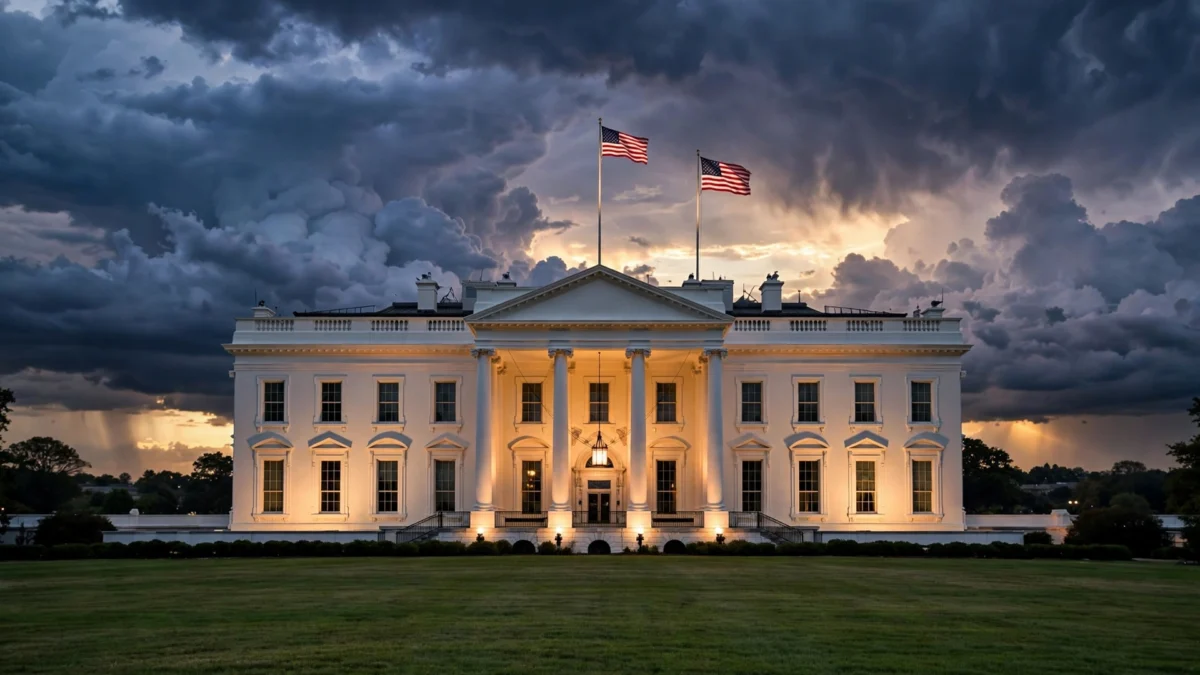
President Donald Trump announced Thursday that the Pentagon will not livestream the December 3 execution of former Army psychiatrist Nidal Hasan by firing squad, overruling the plan his defense secretary unveiled last week and ending a week of mounting opposition that stretched from the vice president and the House speaker to 72 retired generals and, according to fresh polling, four in five American adults.
The announcement, made in a post on Trump’s Truth Social platform, keeps the death sentence itself intact. “He will die, as scheduled, by firing squad, but this event will not be streamed,” Trump wrote. He added that the immediate families of the victims of Hasan’s 2009 rampage at Fort Hood would be allowed to witness the execution in person if they chose: “They deserve to witness JUSTICE!”
Trump said he had weighed the deterrent value of a broadcast — he wrote that showing the world how America dealt with “terrorists and SCUM like Hasan” might have been a strong deterrent — but concluded that “many very good and well meaning people would rather not watch him die, through streaming, or through any other visual device,” according to the post.
Reversing Hegseth’s Plan
The decision directly reverses what Defense Secretary Pete Hegseth announced on October 8 in an interview with conservative influencer Jack Posobiec. Hegseth said soldiers would carry out the firing squad — the first such military execution since World War II — and that it would be broadcast live, arguing that the public needed to see that such crimes carried serious consequences, according to the New York Post.
But the announcement had not gone through the usual channels. Multiple officials told CNN this week that Trump had not known Hegseth was about to reveal the livestream plan and was unsure what to make of it at first. People across the Pentagon and the Army were caught off guard by the interview, CNN reported. Trump was nevertheless fully behind the execution decision itself, which he approved weeks ago, saying Hasan “deserves it,” according to USA Today.
CNN also reported earlier this week that Trump had remarked privately that he did not initially know Hasan was paralyzed from the waist down — a detail that underscored how thin the president’s briefing on the case appeared to be, even as he defended the death sentence in public.
The Pentagon did not immediately respond to a request for comment on the reversal, according to USA Today.
The Backlash That Built in a Week
The livestream proposal drew near-immediate bipartisan criticism. Vice President JD Vance said he would not watch and publicly doubted the Pentagon would ultimately follow through with its plan. House Speaker Mike Johnson said he would not watch either and acknowledged that some of his colleagues “have concerns,” according to USA Today.
On Wednesday, a group of 72 retired senior US officers — 45 generals and 12 admirals — released an open letter calling the livestream idea a “barbaric abuse of authority” and urging the government to abandon it. The signatories included retired Maj. Gen. Tony Taguba, who led the Army’s investigation into abuses at Abu Ghraib; retired Air Force Col. Moe Davis, a former Guantanamo prosecutor; retired Marine Maj. Gen. Charles Bolden, later the head of NASA; and retired Lt. Gen. Claudia Kennedy, the Army’s first female three-star general. Their objections ranged from the Eighth Amendment’s ban on cruel and unusual punishment to the warning that a televised killing would turn Hasan into a martyr and hand adversaries ready-made propaganda.
Religious leaders weighed in as well. Archbishop Timothy Broglio, who oversees the spiritual care of Catholic members of the armed forces, objected to the plan, and Pope Leo condemned capital punishment in all its forms, Reuters reported.
The victims’ families were among the strongest voices against the broadcast. Keely Cahill Vanacker, whose father Michael Cahill was killed in the 2009 attack, told The Times that livestreaming the execution would turn tragedy into entertainment, arguing that extremism only breeds extremism and that revelling in a man’s death was “not defence.”
Public opinion was lopsided. An ABC News/Washington Post/Ipsos poll released Thursday found 80 percent of US adults — including 64 percent of Republicans — said the execution should not be livestreamed, CNN reported. CBS News reported Tuesday that no final decision had been made and that officials were leaning against a broadcast.
The Case Behind the Sentence
Hasan, now in his mid-50s, was a US Army psychiatrist when he opened fire at Fort Hood, Texas, on November 5, 2009, killing 13 people and wounding dozens more. USA Today described it as the largest mass murder at a US military installation. He was shot by police during the attack and has been paralyzed since.
A military jury of 13 officers convicted him in 2013 and sentenced him to death. The execution is scheduled for December 3 at 1 p.m. at Fort Hood — USA Today notes the same day of the week, location and hour as the 2009 attack — and would be the US Army’s first execution in 65 years, according to The Times. The last soldier executed by firing squad was in 1945, during the Second World War, and the United States has not staged a public execution since the 1930s, according to the New York Post. Reuters adds that no country is known to televise or livestream judicial executions.
Analysis: Why It Matters
Start with the argument Trump himself offered, because it collapses on its own terms. The idea that broadcasting a killing deters terrorism sounds intuitive in a television-era logic — show the world what happens to terrorists. But it rests on a theory of terrorism that almost nothing supports: people who plan mass-casualty attacks are not held back by fear of televised consequences, and, as the 72 retired officers argued in their letter, a state-produced video of a firing squad would be far more useful to enemy propagandists than to any American deterrence campaign. Trump’s post keeps the deterrence claim alive rhetorically while abandoning it practically — he frames the cancellation as deference to people’s feelings rather than as a substantive judgment that the idea was wrong. The rhetorical dance lets him reverse course without conceding error, which is politically useful but analytically hollow: the plan was not defeated by sentiment, it was defeated by every serious constituency that weighed in.
Then consider the subplot that may matter more than the headline: how little coordination preceded Hegseth’s announcement. A defense secretary unveils a plan to televise a firing squad on a podcast-style interview; the president learns of it after the fact and is, in CNN’s reporting, unsure what to make of it; the Pentagon and the Army are caught off guard. Whether or not this level of dysfunction is new, it played out in public over a death-penalty case — the kind of matter where process failures are least forgivable. It also raises an obvious question that no official has answered: who, exactly, signed off on a proposal that no nation on earth has ever carried out?
The politics are the least mysterious part of the story. With midterm elections on November 3, the ABC News/Washington Post/Ipsos poll’s numbers — 80 percent opposed, including nearly two-thirds of Republicans — made the livestream a pure political liability. Vance and Johnson distancing themselves within days was the tell: this was never going to survive contact with voters. The cancellation, on this reading, is less a moral conversion than a cost-benefit calculation. That does not make it wrong. It does mean the episode is best understood as a stress test that the system passed only because the political costs of failing it were obvious in time.
It is also worth being precise about what changed and what did not. The sentence stands. December 3 stands. The families’ right to witness the execution in person stands. The 65-year drought in Army executions ends regardless. What died was only the broadcast — the most historically extreme element of the whole enterprise, given that no nation televises judicial executions and America has not held a public one since the 1930s. In a sense, the week’s drama was about whether the United States would invent a new category of punishment spectacle; the answer, after seven days, is that it will not, at least not this time.
That “this time” matters, because the speed of the arc is the real story for the history books. From Hegseth’s interview to Trump’s reversal took about a week. The institutions that pushed back — retired brass, the military chaplaincy, the victims’ families, the polling — won, and the 20th-century settlement against public executions held. But the episode demonstrates how thin the line can be when the spectacle instinct of the social-media age meets a Pentagon willing to feed it. Norms that took a century to build can be tested in a podcast interview and survive only because the poll numbers arrived in time. That is worth remembering the next time a plan like this surfaces — because the logic that produced it has not disappeared with the plan.
What to Watch Next
- Will Hegseth formally withdraw the Pentagon’s plan? The Pentagon had not commented on Trump’s announcement at the time of writing; a formal rescission would close the episode cleanly.
- Will the victims’ families attend on December 3? Trump’s offer puts the choice in their hands, and their statements in the coming weeks will set the tone of the coverage.
- How will the execution itself be handled publicly? Fort Hood logistics, media access rules, and whether any imagery emerges despite the ban will be closely watched.
- Are there any last legal moves? Watch for military-justice appeals or last-minute challenges from Hasan’s counsel — and how the administration, which insists he “deserves it,” responds.
- Does the cancellation settle the question? The political logic that made the livestream attractive to its supporters has not disappeared; whether the debate resurfaces in another form is the longer-term test.
Sources
- Reuters — Trump says military execution will not be livestreamed
- USA Today — Trump says Pentagon will not livestream execution of Fort Hood shooter
- CNN — Trump calls off livestream of Fort Hood shooter’s firing squad execution
- The Times — Fort Hood shooter’s execution will not be livestreamed, says Trump
- New York Post — Trump announces execution of Fort Hood shooter Nidal Hasan will not be livestreamed

About the Author — Abdul Mannan
Related Articles
Eight US States Sue OpenAI, Accusing ChatGPT of Harming Children and Misleading Parents
Eight U.S. state attorneys general have sued OpenAI in coordinated lawsuits, accusing the company of marketing ChatGPT as…
72 Retired Generals and Admirals Urge Pentagon to Scrap ‘Barbaric’ Livestream of Nidal Hasan’s Execution
Seventy-two retired senior officers, including 45 generals and 12 admirals, have written an open letter urging the US…

Trump Says Military Leakers “Should Be Shot” Over Alleged Iran Strike Leak at Arizona Rally
Trump told an Arizona rally that leakers of military secrets "should be shot," claiming B-2 bomber timing was…