
72 Retired Generals and Admirals Urge Pentagon to Scrap ‘Barbaric’ Livestream of Nidal Hasan’s Execution

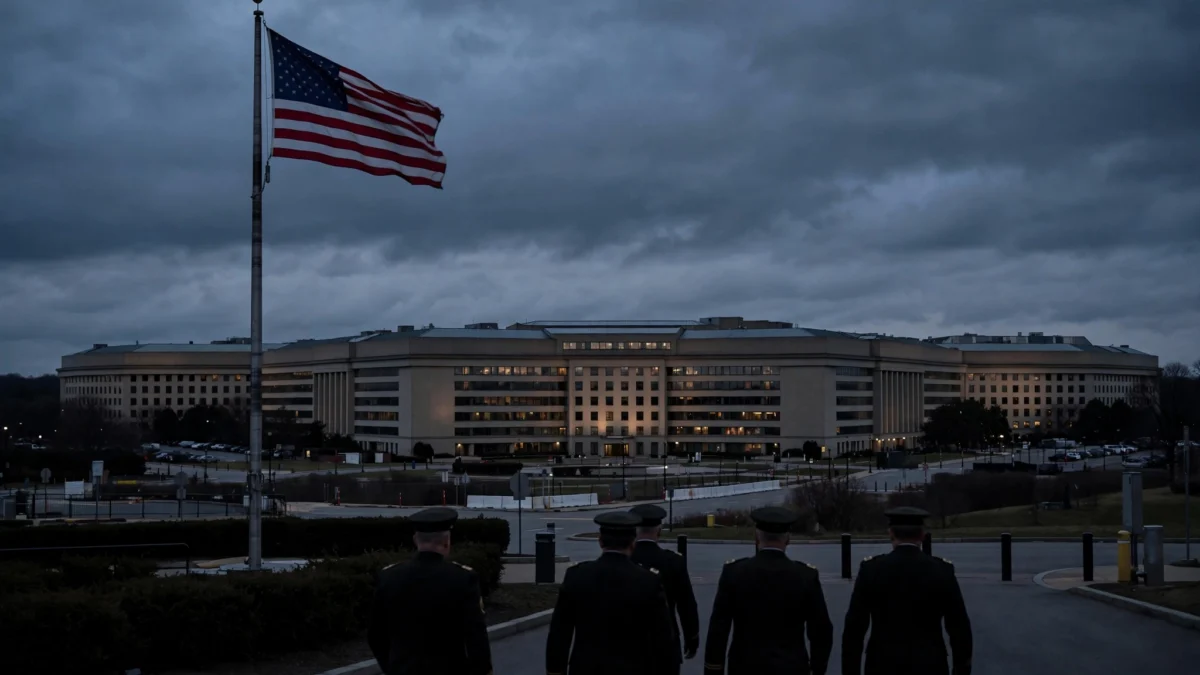
Seventy-two retired senior American military officers, including 45 generals and 12 admirals, have written an open letter urging the US government to abandon plans to broadcast the firing-squad execution of Nidal Hasan, warning that a public showing would be a “barbaric abuse of authority” that would dishonour the armed forces and turn the convicted Fort Hood gunman into a martyr, according to BBC News.
The letter, released on Wednesday and reported on Thursday, represents the most significant institutional pushback yet against the Pentagon’s plan to livestream Hasan’s death on 3 December. The signatories span every military service and include officers who retired during President Donald Trump’s first term as well as veterans of the wars in Iraq and Afghanistan, the BBC reported.
Hasan, a former Army psychiatrist, is due to be put to death by firing squad at Fort Hood in Texas for shooting dead 13 unarmed soldiers at the base in November 2009, an attack the BBC described as the deadliest non-combat assault on an American military base. President Donald Trump has said he approved of showing the execution publicly, although CBS News reported that some administration officials are now leaning the other way and that he had not reached a final decision as of Tuesday, according to the BBC.
The Letter and Its Signatories
The group was explicit about one point: its objection is to the broadcast itself, not to the sentence being carried out, the BBC reported. The letter asks “the President, our Congressional representatives, and our fellow citizens” to “act to prevent this barbaric abuse of authority,” language that frames the planned broadcast as a misuse of state power rather than an extension of justice.
Alongside the 45 generals and 12 admirals, the signatories include several former judge advocates general — the military’s most senior lawyers — according to the BBC. Their professional backgrounds give particular weight to the letter’s constitutional argument, which contends that broadcasting the execution would breach protections against cruel and unusual punishment.
Among the names on the letter are retired Major General Tony Taguba, who led the Army’s inquiry into prisoner abuse at Abu Ghraib; retired Air Force Colonel Moe Davis, who served as a prosecutor at Guantanamo Bay; Charles Bolden, a Marine Corps major general who later led NASA; and retired Lieutenant General Claudia Kennedy, the first woman to reach three-star rank in the Army, according to the BBC.
The proposal, announced by Defence Secretary Pete Hegseth, has also drawn criticism from lawmakers in both parties, religious leaders, academics and other experts, the BBC reported. If it proceeds, the broadcast would be the first public execution in the United States in almost a hundred years.
The Constitutional and Moral Case Against the Broadcast
The former officers argued that a public broadcast would turn what they described as a “solemn and grave punishment” into a spectacle for onlookers, undermining human dignity, according to the BBC. “This type of exploitative broadcasting — that debases human dignity — will taint the honor of the military that employs it, and a nation that allows it,” the letter stated, as reported by the broadcaster.
In one of the letter’s most pointed passages, the officers warned that the broadcast would convert the execution into a “carnival for the enjoyment of voyeurs and spectators,” according to multiple reports of the letter’s contents.
The letter also advanced a national-security argument: that opponents of the United States would exploit the footage to stir hatred, put American troops and civilians at greater risk, and help ensure that Hasan is remembered as a martyr, the BBC reported.
That martyr warning draws directly on Hasan’s own account of his crimes. He told a court that he carried out the Fort Hood shooting because he believed he was defending Muslims and the Taliban in Afghanistan against the American military, according to the BBC. He was shot by police during the attack and now uses a wheelchair.
Yale military-law expert Eugene Fidell told The Times that it would be unprecedented to livestream or televise an execution. He added that the Supreme Court has never addressed the question of whether a public broadcast of an execution violates the Constitution — a point that, if the broadcast goes ahead and Hasan seeks to block it, could force the federal courts into entirely new territory, according to The Times.
A Family’s Opposition: “Tragedy Into Entertainment”
The letter arrived alongside a separate, deeply personal rebuke from the family of one of Hasan’s victims. Keely Cahill Vanacker, whose father Michael Cahill was among the 13 killed at Fort Hood, told The Times that a broadcast of Hasan’s death was “not what the [victims] families want” and would turn “tragedy into entertainment.”
Cahill, a civilian physician’s assistant who was 62 when he died, was hailed as a hero for charging at Hasan with a chair during the attack in an attempt to protect the soldiers around him, according to The Times. He was honoured in 2011 with the Army Award for Valour, and his family later received the Secretary of Defence Medal for the Defence of Freedom, the civilian equivalent of the Purple Heart.
“Extremism leads to extremism and violence only leads to violence,” Vanacker told The Times from her home in Kerrville, Texas. “They don’t fix each other. This is not defence. We are not defending ourselves by livestreaming an execution and revelling in death.”
Vanacker said the families were never consulted about the broadcast plan. “None of us were consulted or asked, ‘Would this be OK? What are your thoughts on this?'” she told The Times. “We just found out in the media the same day everybody else did.” She said several families planned to write to the Pentagon to voice their concerns, telling the newspaper: “We want to say in a direct way that we are not supportive of this livestreaming at all. This is not healthy for us, it’s not healthy for our family and it’s not what our country needs to move on.”
Vanacker will not be attending the execution and said she may travel further away that day. “I don’t want to be anywhere near it,” she told The Times. “I don’t need the execution for my closure. [Hasan] was dead to me the moment that court martial was ordered.”
She also offered a stinging assessment of the broadcast’s likely optics. President Trump was reported to have expressed private reluctance about the broadcast after learning that Hasan is paralysed, according to The Times. “Trump wants to imagine that we look like these big, strong heroes against these big, bad guys but Hasan is paralysed, he’s weak, he’s an older man now. I think Trump realises the optics won’t be good,” Vanacker said.
How the Livestream Plan Came About
The execution itself has been in motion since the Pentagon announced on 5 October that Trump had approved death by US Army firing squad for Hasan, on the recommendation of Hegseth. The 56-year-old former Army major was sentenced to death in 2013 after a military jury found him guilty of 45 counts of premeditated murder and attempted premeditated murder, according to The Times.
On 8 October, the Pentagon confirmed that the execution, set for Thursday 3 December at 1 p.m. at Fort Hood, would be livestreamed — deliberately matching the day of the week, approximate time and location of the 2009 shooting. Hegseth said the public should be able to watch, arguing that people needed to understand there were serious consequences for such crimes.
If carried out, the execution would be the US army’s first execution of a soldier using rifles since the Second World War and its first imposition of the death penalty on a former member of the armed services in 65 years, The Times reported.
Public executions have become exceedingly rare worldwide. Iran, Iraq and Afghanistan under the Taliban are among the countries to have carried them out in recent years, according to The Times — a comparison the plan’s critics have seized on.
The Broadening Revolt: From Bishops to the Vice President
Opposition to the broadcast has been building for days. The Catholic archbishop for the US military, Timothy P. Broglio, condemned the execution and the livestream proposal in a 12 October statement, asking Catholic military members assigned to the firing squad to seek to be “excused from this action contrary to the teaching of the Church,” according to USA Today. The Pentagon declined to comment on his statement.
Vice President JD Vance has cast public doubt on whether the livestream will actually happen, telling reporters he did not know “if that’s actually going to happen” — and adding, “I’m not going to be watching it,” according to The Times. House Speaker Mike Johnson said there were “policy implications” the administration should consider before going ahead, The Times reported.
CBS News reported that Trump had not yet made a final decision on the livestream as of Tuesday, with some administration officials leaning against it, according to the BBC — a shift from his earlier statement that he “absolutely” approved of the plan.
The practical complications are also mounting. Assigning and training troops for the execution will be largely uncharted territory for the US army, The Times noted. Some American states have turned to firing squads in recent years with mixed results: South Carolina put to death two inmates with a three-member firing squad last year, but attorneys for one of the men, Mikal Mahdi, accused the shooters of prolonging his death by missing his heart, according to reporting cited by The Times.
Analysis: Why It Matters
The generals’ letter matters less for what it says about Nidal Hasan than for what it says about the institution being asked to carry out the broadcast. When 45 generals, 12 admirals and a clutch of former judge advocates general sign a public letter accusing the civilian chain of command of a “barbaric abuse of authority,” the objection is not coming from the usual corners of the anti-death-penalty movement — it is coming from inside the house. The signatories took care to stress that they do not oppose the sentence itself. Their argument is narrower and harder to dismiss as ideology: that the method of display, not the punishment, is what dishonours the military.
That distinction — between execution and exhibition — is the moral engine of this story. An execution is the state at its most solemn: order, ritual, finality. A livestream is the state at its most content-hungry: viewers, clips, commentary. The letter’s “carnival” charge captures what happens when those two registers collide. Whatever deterrent value the Pentagon imagines in showing “serious consequences,” the format hands the audience the vocabulary of entertainment — and hands the subject’s sympathisers the vocabulary of martyrdom. Hasan told a court he acted to defend Muslims and the Taliban; the footage the Pentagon broadcasts for deterrence is precisely the footage his cause would broadcast for recruitment. The letter’s warning that enemies will “exploit the footage to stir hatred” is not an abstraction. It is the predictable second life of every image the internet has ever been given.
There is also a hard-eyed optics problem the letter makes impossible to ignore. The Pentagon has choreographed a ritual of symmetry — Thursday, 1 p.m., Fort Hood, the same stage as the crime. But the man at the centre of the ritual is a 56-year-old paralysed prisoner in a wheelchair, not the figure of menace that such choreography presupposes. Keely Cahill Vanacker’s observation that Trump himself may have grasped this — that “big, strong heroes” lose their framing when the condemned is “paralysed, he’s weak, he’s an older man now” — points to the gap between the image the broadcast is supposed to project and the image it would actually produce. Spectacles require villains; this one supplies a hospital patient.
Politically, the letter gives the White House something it may quietly want: a respectable off-ramp. CBS News is already reporting that the decision is not final and that officials are leaning the other way. Vance’s public distancing and Johnson’s “policy implications” suggest the administration’s own senior ranks are cooling on the idea. A letter signed by seventy-two flag officers makes reversal look like deference to the military’s professional judgment rather than a retreat — a framing a president facing midterm elections in under three weeks may find useful.
Finally, there is the precedent. The first military execution in 65 years and the first public execution in the United States in almost a century would not be one news cycle’s provocation; they would be a line in the country’s institutional memory. The Supreme Court has never ruled on whether a broadcast execution violates the Constitution, as Yale’s Eugene Fidell notes. What the Pentagon does on 3 December will answer that question in practice before any court answers it in law. The generals are, in effect, asking the government to weigh the permanent against the theatrical — and they have put their stars on the argument.
What to Watch Next
- The White House decision. Trump said he “absolutely” approved the livestream, but CBS News reported no final decision as of Tuesday. Whether the generals’ letter moves him — and how he frames any reversal with midterm elections under three weeks away — is the single most consequential unknown.
- Hasan’s legal options. Eugene Fidell told The Times that Hasan would need to sue in federal court to block the public display of his death. An Eighth Amendment challenge to a broadcast execution would break entirely new legal ground.
- The families’ letters. Several victims’ families planned to write to the Pentagon opposing the livestream, according to The Times. A coordinated family intervention could carry moral weight no administration could easily ignore.
- The firing squad’s logistics. The Army must select and train troops for an execution method it has not used in eight decades — while its own Catholic archbishop is urging members to seek excusal. How the service staffs the squad will be closely watched.
- The 3 December mechanics. The Pentagon has released few details of how the livestream would actually work — platform, access, restrictions. Those details, or their absence, will signal whether the plan is advancing or quietly dying.
Sources
- BBC News (via World Right Now) — “Retired US generals call on Pentagon to cancel ‘barbaric’ execution livestream”
- The Times — “The Fort Hood shooter killed my father. The world shouldn’t see his execution”
- USA Today — “Military archbishop condemns plan to livestream Fort Hood shooter execution”
- Ghanaian Radar (BBC-sourced) — “Retired US generals call on Pentagon to cancel ‘barbaric’ execution livestream”

About the Author — Abdul Mannan
Related Articles

Trump Says Military Leakers “Should Be Shot” Over Alleged Iran Strike Leak at Arizona Rally
Trump told an Arizona rally that leakers of military secrets "should be shot," claiming B-2 bomber timing was…
Trump Pardons Two Alaska Diesel Mechanics Onstage at Wasilla Rally, Turning Clemency Into Campaign Theater
President Donald Trump signed unconditional pardons onstage for two Anchorage diesel mechanics convicted of Clean Air Act violations,…
Trump Asks U.S. Ambassador to Greece Kimberly Guilfoyle to Resign After Reports of Cash-for-Access Misconduct
The White House on Tuesday asked Kimberly Guilfoyle to resign as ambassador to Greece after Wall Street Journal…