
FBI Investigates Suspicious Mailings Sent to Election Offices and Senate Nationwide Weeks Before Midterms

The Investigation
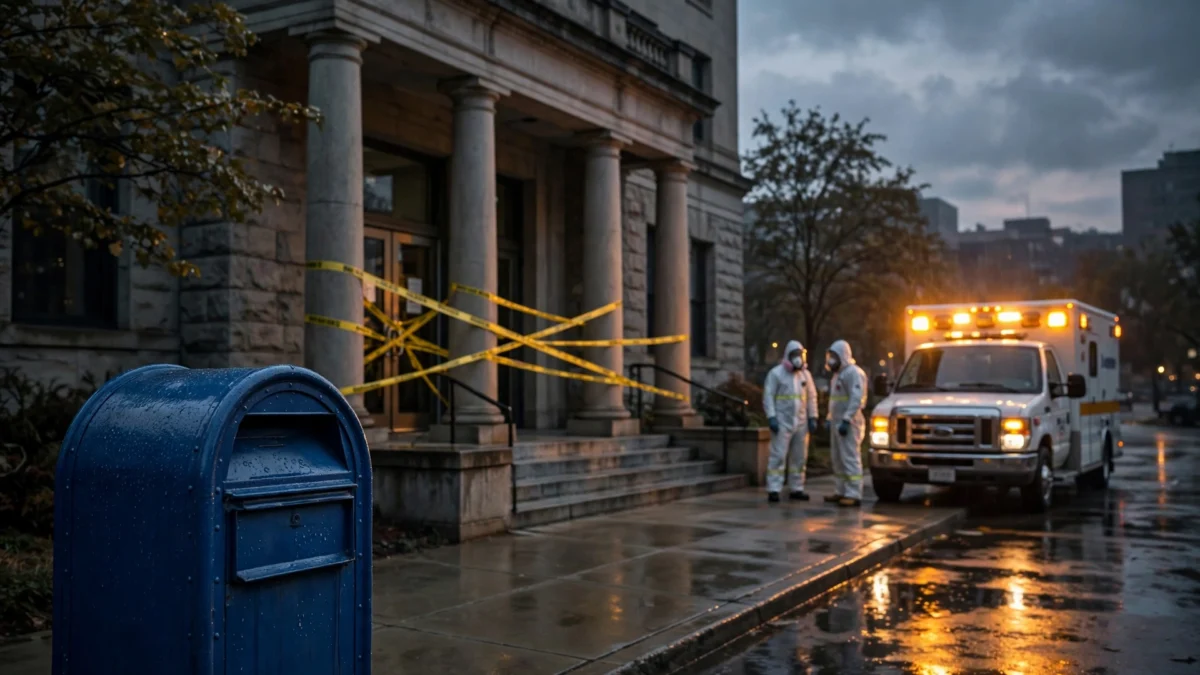
Federal authorities are investigating a wave of letters containing suspicious substances that were mailed to election offices and congressional offices across the United States, just weeks before voters head to the polls for the midterm elections, according to the Federal Bureau of Investigation.
The inquiry, being carried out by the FBI, the U.S. Postal Inspection Service, and the U.S. Capitol Police, was first disclosed on Thursday in a message from the Senate Sergeant at Arms to Senate offices that was obtained by The Associated Press. The notice urged recipients to treat the mailings as “potentially hazardous” and said law enforcement officials were working to intercept any additional letters, while warning that “it is possible that some letters may reach their destinations,” according to the AP.
In a statement, the FBI said the bureau and the Postal Inspection Service were “investigating a series of suspicious mailings sent to various addresses nationwide, including Secretary of State offices and their related election offices.” The statement added that some of the letters contained “an unknown substance” and that investigators were working to identify the individual or individuals responsible, the AP reported.
The FBI did not disclose the individual locations that received the mailings, according to The Wall Street Journal, but multiple states confirmed incidents earlier in the week. Within Congress, the threat appeared limited to the Senate, though the House was monitoring the situation, according to a person familiar with the matter who was not authorized to discuss the investigation publicly, the AP reported.
What Happened in the States
The mailings surfaced in several states over the course of the week, prompting evacuations, emergency medical precautions, and intercept operations by postal investigators.
In Louisiana, an employee at the secretary of state’s office in Baton Rouge was taken to the emergency room as a precaution on Tuesday after opening a letter containing white powder, a spokesperson for the office said. Law enforcement conducted tests and found no evidence of harmful substances, according to The Wall Street Journal.
In Oklahoma, the State Election Board received an envelope on Tuesday containing what officials described as a “suspicious white powder,” prompting an evacuation of the office while the Oklahoma Highway Patrol assessed the situation. Board secretary Paul Ziriax said in a statement that no staff members were harmed and moved to reassure voters, saying the incident would not affect the board’s ability to conduct elections and that election officials remained committed to safe and secure elections.
In Ohio, Secretary of State Frank LaRose said on Wednesday that his office had been the intended recipient of a suspicious mailing containing a “powdery white substance,” but investigators with the Postal Inspection Service pre-empted the letter’s delivery before it reached the office. LaRose noted that similar mailings had been sent to election officials in multiple states, the Journal reported.
According to the AP, numerous states stretching from Idaho to Florida said their election offices either received letters or had them intercepted by the Postal Service. The Wisconsin Elections Commission said in a statement that it received a letter and that the white powder enclosed in it tested as not hazardous. “Let this be very clear: this incident will not shake us,” Wisconsin elections administrator Meagan Wolfe said.
Several reports also described suspicious packages at other government sites: emergency response communications indicated that the New York State Capitol in Albany and the Wyoming State Capitol in Cheyenne received suspicious packages, according to reports compiling official statements.
Senate Offices Targeted
The investigation extends beyond election administration. Two U.S. senators have confirmed that their offices were among the targets.
Senator Alex Padilla, a Democrat from California, said in a statement that his office was among those targeted. “My office is in touch with the FBI, U.S. Postal Service and Senate security officials following a suspicious package the U.S. Postal Service intercepted before reaching our office,” Padilla said. “Thankfully, no threat was posed to my staff or our office.”
“Still, this incident is a stark reminder of the very real dangers facing those who serve the public and who help administer our elections in the face of increasingly hostile political rhetoric,” Padilla added, according to NPR.
Reports also indicated that Senator Chris Murphy of Connecticut received a suspicious envelope that was stopped before reaching his office. Deputy Chief Inspector Brendan Donahue of the U.S. Postal Inspection Service told reporters on Thursday that the agency had been able to stop the delivery of at least one of the mailings.
The National Association of Secretaries of State and the National Association of State Election Directors issued a joint statement condemning the mailings. “Threats against election officials and workers have no place in our democracy,” the groups said. “Those who administer our elections should never fear for their safety while carrying out their essential duties.”
A Disturbing Pattern
The current wave of mailings is not without precedent. Federal investigators have been here before, and the history suggests a recurring tactic aimed at the machinery of American democracy.
In 2023, election offices in several states received mailings containing white powder, and in some cases the powder included traces of the powerful opioid fentanyl, according to the AP. The FBI and the Postal Inspection Service said at the time that four of the letters contained fentanyl, and four county election offices in Washington state were evacuated while employees were processing ballots, delaying the vote count. The episode was serious enough that some election offices stocked up on the overdose-reversal medication naloxone.
In September 2024, election officials in 17 states received suspicious packages, according to reports compiling official accounts, underscoring that the tactic has become a recurring feature of election seasons.
The Wall Street Journal noted that in mid-2023, more than 100 suspicious letters containing white powder were sent to public officials, including Supreme Court Justice Clarence Thomas and Representative Lauren Boebert, though the powder in those cases did not appear to be dangerous.
The darkest chapter of mail-borne threats in the United States remains the anthrax attacks that followed the September 11, 2001 terrorist attacks, when letters laced with anthrax were sent to government offices and newsrooms, killing five Americans and sickening 17, according to the Journal. The current investigation has produced no evidence of any such agent, and authorities have emphasized that some substances remain unidentified while others have tested harmless.
No suspects have been named and no motive has been established in the current investigation, officials said.
Analysis: Why It Matters
Mailing a suspicious envelope to an election office is, in one sense, a cheap and crude act. But it is worth taking seriously for reasons that go well beyond the contents of any single letter.
First, consider the timing. These mailings arrived roughly three weeks before Election Day, with the midterm elections set for November 3. That is the window when election offices are at maximum strain: voter registration deadlines have passed or are imminent, mail-ballot processing is underway or about to begin, and any disruption, even a half-day evacuation, compounds. Whoever sent these letters chose the moment when a few hours of lost work and a few frightened employees would carry the greatest weight. The timing looks less like coincidence and more like targeting.
Second, there is the matter of who is being frightened, and to what end. Election administration in the United States is carried out largely by thousands of ordinary civil servants and temporary workers in county and state offices. These are not people who signed up for hazard duty. When an envelope of unknown powder lands on a sorting desk, the office must be evacuated, emergency crews must respond, and everything stops while tests are run. The sender benefits twice: once from the disruption itself, and once from the message it sends to every other office that hears about it. If enough mailrooms decide that opening suspicious envelopes is a gamble not worth taking, the disruption scales far beyond any single package.
Third, the expansion to congressional offices matters. In Congress, the threat appears limited to the Senate so far, and the House is merely monitoring, but the involvement of the Senate Sergeant at Arms and the Capitol Police signals that investigators are treating this as more than a local nuisance. A campaign that simultaneously targets election administrators and federal lawmakers suggests an intent to blur the line between threatening the people who run elections and threatening the people who legislate about them. That is a wider intimidation net, and it invites a wider federal response.
Fourth, the official response has been notably disciplined. The FBI and the Postal Inspection Service confirmed the investigation, described the scope in measured terms, and declined to disclose locations — a deliberate choice to avoid handing the sender a scoreboard of successful hits. Postal investigators, for their part, appear to have intercepted several letters before delivery, which means the mail stream itself is now a detection system. The public statements from officials like Ohio’s Frank LaRose and Oklahoma’s Paul Ziriax struck a consistent balance: acknowledge the incident, reassure voters that elections remain secure, and refuse to amplify panic. That restraint is itself a form of counterstrategy.
Finally, history counsels caution against both panic and complacency. The 2023 fentanyl episode showed that some of these mailings can contain genuinely dangerous material. But the majority of such campaigns, including the mid-2023 wave of more than 100 letters to public officials, turned out to involve harmless powder. The danger is that repeated hoaxes condition people to treat the next envelope as routine — and the fortieth envelope looks exactly like the previous thirty-nine. Fatigue, not fear, may be the sender’s most reliable accomplice. Election offices must therefore keep treating every incident as real while somehow keeping the work of democracy moving. That is an exhausting posture, and it is worth remembering that exhaustion may be precisely the point.
What to Watch Next
- Whether more letters surface: Investigators have warned that additional letters may still reach their destinations despite interception efforts. The count of affected states, currently described as numerous from Idaho to Florida, is likely to grow.
- Laboratory results: The FBI said some letters contained an “unknown substance.” Identifying what was inside each mailing — and whether any contained anything genuinely dangerous — will shape both the criminal charges and the public understanding of the threat.
- Whether investigators name a suspect: No one has been identified publicly. A coordinated nationwide mailing campaign requires logistics — envelopes, postage, timing — that often leave forensic traces, and the Postal Inspection Service has a long record of solving mail-based crimes.
- The election-offices response: With the midterms weeks away, watch whether targeted offices alter mail-handling procedures, bring in additional screening, or request federal security support — and whether any of that slows ballot processing.
- Official briefings: The Senate Sergeant at Arms notice was the first public disclosure. Further statements from the FBI, the Capitol Police, or the National Association of Secretaries of State could clarify the scope of the campaign and any guidance for voters.
Sources
- Associated Press — “Authorities investigate letters with ‘suspicious substances’ sent to congressional, election offices”
- The Wall Street Journal — “FBI Investigates Mailings with ‘Unknown Substance’ Sent to Election Offices”
- NPR — “Suspicious mailings to election officials, congressional offices under investigation”

About the Author — Abdul Mannan
Related Articles

Florida Sues Discord, Accusing Messaging Platform of Endangering Children and Deceiving Parents
Florida's attorney general has sued Discord, calling it a "hotbed for predatory and exploitative activities," and is seeking…
Maduro Pleads Not Guilty to New US Torture Conspiracy Charges in New York Court
Ousted Venezuelan President Nicolás Maduro and his wife Cilia Flores pleaded not guilty in a Manhattan federal court…
Trump Calls Off Livestream of Fort Hood Shooter Nidal Hasan’s Execution, Reversing Pentagon Plan
President Trump reverses the Pentagon's plan to livestream the December 3 firing-squad execution of Fort Hood shooter Nidal…