
Maduro Pleads Not Guilty to New US Torture Conspiracy Charges in New York Court

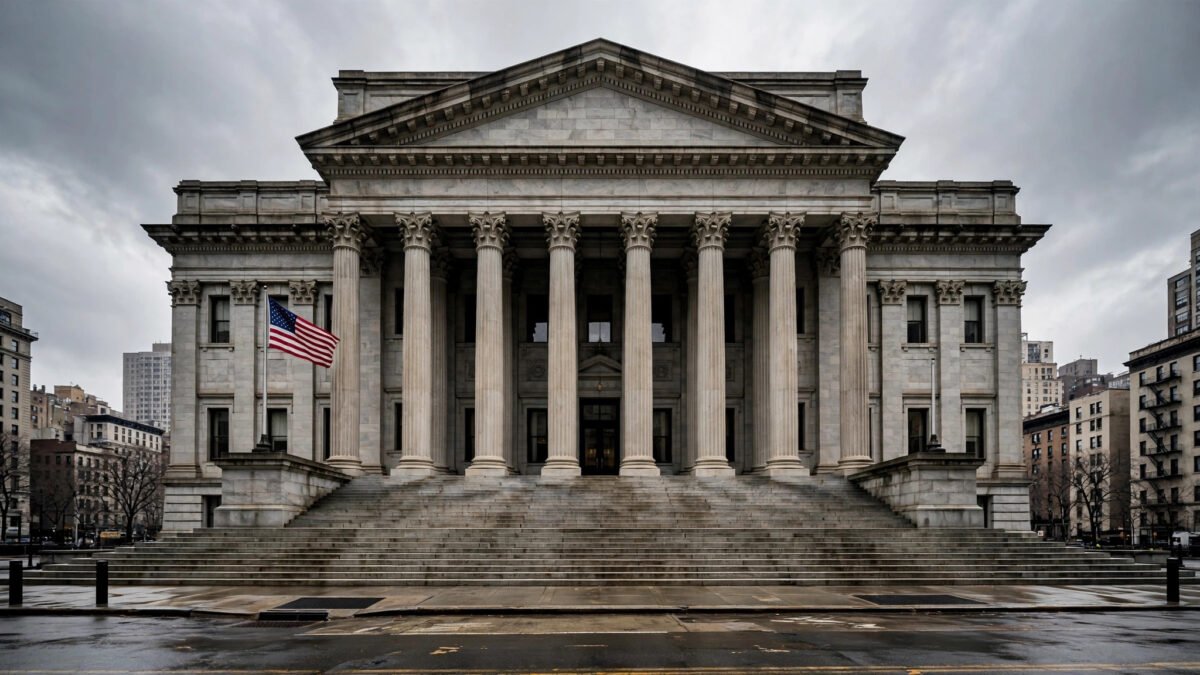
The Arraignment
Nicolás Maduro, the ousted former president of Venezuela, stood in a Manhattan federal courtroom on Thursday and rejected a new set of United States charges accusing him of conspiring to torture political opponents — including three American citizens — only to be cut short by the judge, who entered a not-guilty plea on his behalf.
Maduro, 63, and his wife, Cilia Flores, appeared before U.S. District Judge Alvin Hellerstein in the Southern District of New York for a formal arraignment on a 30-page superseding indictment filed on October 8 that adds a conspiracy-to-commit-torture count to the drug-trafficking case they were already fighting. Both defendants entered with shackles on their ankles, according to reports from the courtroom, and greeted the judge in Spanish through an interpreter.
When asked for his plea, Maduro launched into a rambling rejection of the charges rather than answering directly. Through a Spanish interpreter, he called the indictment “a collection of previously presented false allegations” and told the court, “I reject this document in its entirety,” according to the New York Post. Judge Hellerstein, who had asked for a simple answer, interrupted him and declared, “A plea of not guilty will be entered on behalf of Mr Maduro.”
Flores was more succinct. “I am completely innocent, not guilty,” she told the court, according to courtroom reports.
The hearing marked the most dramatic courtroom appearance yet for a case with no modern precedent: a former head of state, seized in January by the U.S. military in a nighttime raid on Caracas and flown to the United States, now being prosecuted in an ordinary American federal court on allegations of crimes committed on foreign soil against both Venezuelans and Americans.
The New Charges
The superseding indictment expands what began as a narcoterrorism case into one of systematic state-sponsored repression. Prosecutors allege that Maduro and Flores oversaw, for more than 25 years, a system of arbitrary detention and torture used to hold onto power — targeting political opponents, military figures suspected of disloyalty, and others, including American citizens, according to the indictment described by federal prosecutors.
The indictment names nine victims, three of them U.S. citizens. The alleged methods include electric shocks, beatings, suffocation and asphyxiation, sexual assault, prolonged isolation, food deprivation, forced nudity, and threats against victims’ family members, including minors, according to accounts of the indictment. Prosecutors do not accuse either Maduro or Flores of personally carrying out acts of torture; instead, they allege a command role — that the couple ordered, encouraged, and monitored the abuse.
The indictment cites specific episodes, according to reporting by the Associated Press. In one instance from 2014, Maduro allegedly urged his enforcers to intensify the interrogation of detained military personnel, saying, “Squeeze them harder,” when some remained defiant. In other episodes, he is accused of suggesting particular techniques, including sleep deprivation and pouring water on detainees, and of requesting updates on the treatment of specific victims. The indictment further claims he watched a video of a forced confession and personally threatened the killing of one prisoner’s child as a form of psychological torture.
Flores, who served as attorney general and as a legislator before becoming first lady, is accused of helping design the repressive system and of ordering the torture of specific individuals, according to the indictment.
“This is the epitome of corruption,” said Jamie McDonald, the U.S. Attorney for the Southern District of New York, when the charges were filed last week, adding that the updated indictment “alleges conduct that is truly unthinkable” and that thousands of Venezuelans, and some Americans, were tortured to keep the couple in power, according to the Associated Press. Attorney General Todd Blanche has said the Justice Department has been working since the January capture to uncover the full extent of the alleged crimes, while FBI Director Kash Patel said the Maduro regime subjected American citizens to torture in Venezuelan custody, including electric shock, sexual assault and more, according to the Daily Caller.
The new torture-conspiracy count carries a maximum sentence of 20 years in federal prison, according to the Washington Examiner. Combined with the earlier charges — conspiracy to commit narcoterrorism, conspiracy to import cocaine, and possession of machine guns and destructive devices — the couple would face a mandatory minimum of 50 years in prison if convicted on all counts, according to Reuters.
From Caracas to Brooklyn
The arraignment is the latest chapter in one of the most extraordinary law-enforcement operations in modern history. In the early hours of January 3, the U.S. military, acting on orders from President Donald Trump, raided the presidential compound in Caracas and seized Maduro and Flores in an overnight operation dubbed “Operation Absolute Resolve” that lasted less than three hours, according to the Washington Examiner. The couple was flown directly to New York, where they have been held ever since at the Metropolitan Detention Center in Brooklyn.
At their first court appearance in January, days after the capture, both pleaded not guilty to the drug charges and have denied wrongdoing since their detention. “I am innocent. I am not guilty. I am a decent man. I am still president of my country,” Maduro told the court at that earlier hearing, while characterizing the U.S. operation as a kidnapping. Their lawyers have sought to have the case dismissed on the grounds that the couple enjoy immunity as the leader and first lady of a foreign country.
Anti-Maduro demonstrators gathered outside the courthouse on Thursday during the arraignment, according to the New York Post. Maduro entered the courtroom through a side door in a tan jail jumpsuit, reportedly in high spirits, smiling and waving toward the spectator gallery — a marked contrast to the gravity of the charges being read against him.
Maduro ruled Venezuela for 13 years after taking office in 2013. His re-elections, most recently in 2024, were repeatedly contested by opposition figures and outside monitors. Since his removal, the country has been led by interim President Delcy Rodríguez, his former vice president, who initially condemned the U.S. operation as an “illegal, illegitimate kidnapping.”
Analysis: Why It Matters
What happened in Judge Hellerstein’s courtroom on Thursday was an arraignment, not a verdict — the distinction matters, and so does the trajectory this case is now on. The addition of torture charges fundamentally changes the character of the prosecution of Nicolás Maduro. It began, in its earliest form years ago, as a narcoterrorism indictment: an accusation that a Venezuelan leader conspired with drug traffickers to push cocaine into the United States. That framing was, in a sense, about offenses committed against America. The new indictment reaches back into Venezuela itself and alleges something different — a machinery of state repression maintained over a quarter-century, with American citizens among its alleged victims.
This shift carries legal weight beyond the extra years in a potential sentence. Drug cases are transactional; they turn on shipments, ledgers, and intermediaries. The torture case is institutional. It argues that the abuse was not incidental but structural — designed, monitored, and refined from the top, with Maduro requesting progress reports and proposing techniques. Prosecutors are, in effect, asking an American jury to sit in judgment on how Venezuela was governed. That is an ambitious theory of command responsibility, and the defense will attack it precisely there: the indictment’s most vivid episodes — the interrogation directives, the suggested methods, the prisoner’s threatened child — will each have to survive cross-examination about context, translation, and sourcing.
The second, and arguably more consequential, front is immunity. Maduro’s lawyers have asked for the case to be dismissed on head-of-state immunity grounds, and a hearing on that motion is scheduled for November 17. The argument will test one of the most sensitive questions in American law: a sitting foreign head of state, seized by military force rather than extradited through treaty process, prosecuted in a domestic courtroom for acts performed while in office. The prosecution’s answer is straightforward — torture and narcoterrorism are not legitimate acts of state. The defense’s answer is that they were, at least formally, acts of a sovereign government, and that a courtroom is the wrong forum for resolving disputes between states. Whatever Judge Hellerstein decides in November will likely be appealed, and it could define whether this case proceeds to trial at all.
Then there is the political dimension, which cannot be separated from the legal one however much courtroom etiquette demands it. No modern American president has ordered the military seizure of a foreign sitting president and then had him put on trial in Manhattan. The January raid collapsed, in a single night, the boundaries between foreign policy, military action, and criminal justice. Thursday’s arraignment is that collapse playing out in slow motion: diplomacy by indictment, with a trial date calendared for June 2027. For as long as this case runs, Venezuela’s future — its oil, its opposition, its interim government under Rodríguez — will be negotiated in the shadow of a Brooklyn jail cell.
For Venezuela itself, the case presents a mirror with no easy reading. To Maduro’s supporters and to governments that denounced the January raid as unlawful, the prosecution is victor’s justice dressed in due process. To the Venezuelan opposition and to the families of the alleged victims, it is the first forum in which the abuses they describe will be examined as evidence rather than dismissed as propaganda. Both readings can be sincerely held, and the trial — if it reaches one — will be as much a reckoning about the January raid as about the conduct alleged in the indictment.
What to Watch Next
Five developments will determine where this case goes from here:
- The November 17 immunity hearing: the defense’s sovereign-immunity dismissal motion is the single most important near-term event. A ruling against immunity clears the path to trial; a favorable ruling for the defense would send the case into appellate limbo.
- Pretrial motions and discovery: the defense will demand the full evidentiary basis for the indictment’s most specific claims, including the 2014 “squeeze them harder” episode and the alleged video of a forced confession.
- Trial scheduling: the case is currently calendared for trial in June 2027. Given the complexity of the charges and the near-certain appeals on immunity, that date should be treated as provisional.
- Caracas’s posture: interim President Delcy Rodríguez’s government has been quiet since the initial condemnation. Whether it cooperates with, ignores, or denounces the proceedings will shape the case’s political backdrop.
- Further indictments: the October 8 superseding indictment was the second expansion of this case. Prosecutors have signaled, through Blanche’s comments, that the investigation is ongoing.
Sources
- Associated Press via WHRO: New U.S. indictment charges former Venezuelan President Nicolás Maduro with torture (October 8, 2026)
- Reuters (Luc Cohen) via WIXX: Venezuela’s Maduro due in court over new US torture charge (October 15, 2026)
- New York Post: Judge cuts off ex-Venezuela dictator Nicolás Maduro’s rambling NYC court speech rejecting new torture rap (October 15, 2026)
- Al Jazeera English via DownUnder Voices: Nicolás Maduro tells New York court new torture allegations are ‘false’ (October 15, 2026)

About the Author — Abdul Mannan
Related Articles
Trump Calls Off Livestream of Fort Hood Shooter Nidal Hasan’s Execution, Reversing Pentagon Plan
President Trump reverses the Pentagon's plan to livestream the December 3 firing-squad execution of Fort Hood shooter Nidal…
Eight US States Sue OpenAI, Accusing ChatGPT of Harming Children and Misleading Parents
Eight U.S. state attorneys general have sued OpenAI in coordinated lawsuits, accusing the company of marketing ChatGPT as…
72 Retired Generals and Admirals Urge Pentagon to Scrap ‘Barbaric’ Livestream of Nidal Hasan’s Execution
Seventy-two retired senior officers, including 45 generals and 12 admirals, have written an open letter urging the US…