
Pakistan Stands ‘Shoulder to Shoulder’ With Saudi Arabia as Houthi Strikes Test Makkah Defence Pact

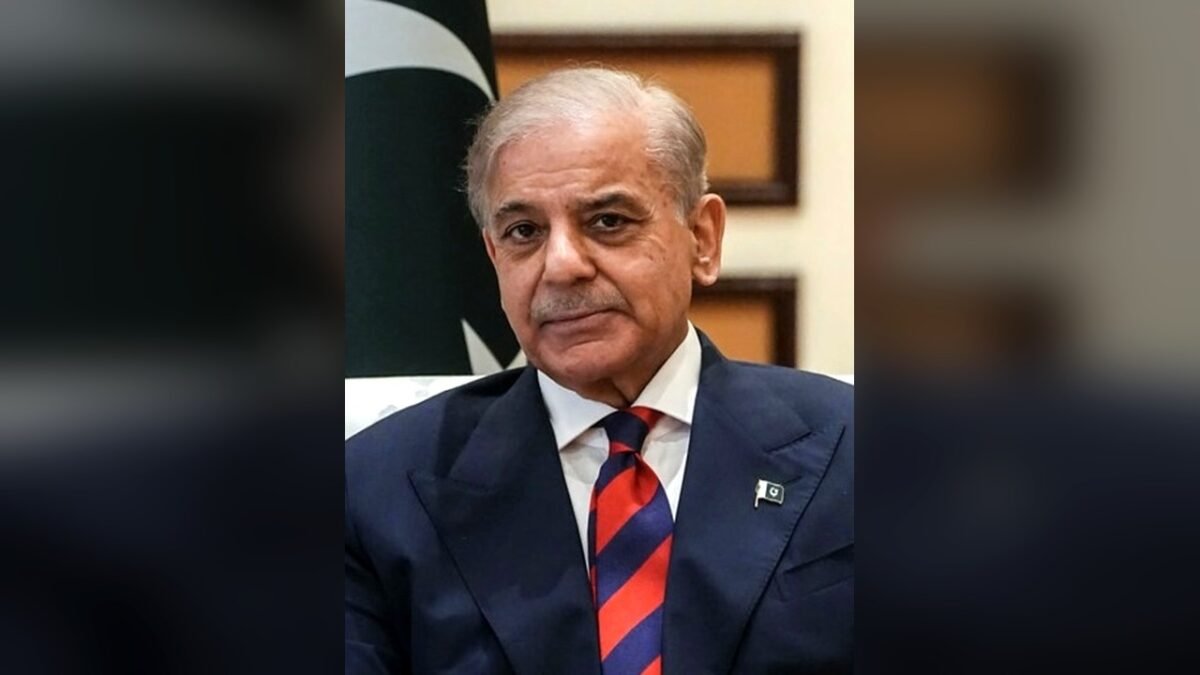
Pakistan’s Prime Minister Shehbaz Sharif has pledged that his country stands “shoulder to shoulder” with Saudi Arabia as Houthi missile and drone attacks on the kingdom intensify, invoking two defence pacts that now face their first real-world test. The commitment came during a meeting in Islamabad on Friday, October 16, with the newly arrived Saudi ambassador, Dr Rajeh Tami Albugamy, as Houthi strikes on Saudi airports, ports and oil facilities surged through the month.
According to a statement issued by the Prime Minister’s Office, Sharif strongly condemned what he described as the recent escalation in Houthi attacks against the kingdom, which he said had resulted in the loss of life and injuries to scores of innocent people, including Pakistani nationals. He told the envoy that Pakistan and Saudi Arabia had always stood by each other and described the Strategic Mutual Defence Agreement and the Makkah Joint Defence Alliance as historic milestones in the two countries’ longstanding fraternal relations, reflecting what he called a shared commitment to regional peace and security.
The prime minister also thanked the Saudi leadership for its longstanding economic and financial support to Pakistan and reaffirmed Islamabad’s commitment to strengthening existing institutional mechanisms to deepen and broaden bilateral cooperation across various sectors, according to the statement. Welcoming Albugamy to Islamabad, Sharif congratulated him on assuming his new responsibilities and assured him of Pakistan’s full support and cooperation in further strengthening the ties between the two countries.
A pledge under live fire
The meeting took place against a backdrop of one of the most intense Houthi campaigns against Saudi Arabia in years. The Saudi-led military coalition said the Houthis had launched 20 attacks on King Khalid International Airport in Riyadh this month, killing 17 people and wounding 333 others, according to figures cited by the coalition’s spokesperson Turki al-Maliki and reported by Pakistani media. The Houthi militia has claimed responsibility for strikes on Saudi airports and has warned airlines and passengers against using the kingdom’s airports and airspace, according to reports.
Earlier this month, a strike claimed by the Houthis on the Riyadh airport killed 13 people and wounded more than 300, Reuters reported. A further attack on October 11 killed one person and injured about a dozen, the agency said. Pakistan’s own nationals have been caught in the violence: Pakistan’s Foreign Minister Ishaq Dar said six Pakistani nationals were injured in the October 10 attack and directed the Pakistani embassy in Riyadh to coordinate assistance, according to regional reporting.
Pakistan’s Foreign Office reinforced the prime minister’s message a day earlier. Speaking at the Foreign Office’s weekly press briefing on Thursday, October 16, spokesperson Tahir Andrabi said Islamabad remained deeply concerned about the attacks and reiterated Pakistan’s solidarity with the kingdom, according to reports of the briefing. He said attacks against civilian populations and critical infrastructure were unacceptable and posed a serious threat to regional peace and security. Pakistan also expressed condolences to the families of those killed and sympathies to those injured, and reaffirmed its commitment to Saudi Arabia’s sovereignty, territorial integrity, security and stability, including under the Makkah Agreement for Joint Defence.
Islamabad has also carried the argument into multilateral forums. Pakistan’s representative at the United Nations Security Council, Jadoon, condemned the Houthi attacks and demanded an immediate halt, while saying Pakistan remained committed to advancing dialogue and diplomacy to help de-escalate tensions and promote lasting peace and stability in the region.
The pacts behind the promise
The significance of Sharif’s pledge lies less in the words than in the instruments behind them. The Makkah Joint Defence Agreement, signed by Pakistan, Saudi Arabia and Turkiye on August 7, 2026, treats an armed attack against one member as an attack against all — the most ambitious collective defence arrangement the Gulf region has seen, reported Reuters. At an emergency meeting in Riyadh on October 5, the three countries agreed to implement their collective defence commitments and ensure the rapid deployment of agreed military forces and capabilities in Saudi Arabia, subject to their national laws.
A broader diplomatic front has also been assembled. The so-called R4 group — Pakistan, Saudi Arabia, Egypt and Turkiye — issued a joint statement on October 11 condemning the continuing Houthi attacks, including the strike on King Khalid International Airport, describing them as a dangerous escalation that cannot be justified or accepted under any pretext. The group held the Houthi militia fully accountable for the results of the attacks and demanded an immediate and unconditional halt.
Yet the three signatories of the Makkah pact are moving at visibly different speeds. Turkish Foreign Minister Hakan Fidan said on October 15 that Ankara was assessing how it could help Saudi Arabia but ruled out troop deployment and Turkish participation in offensive operations, Reuters reported. Officials had earlier told the agency that Ankara was sending mainly defensive and technical support to Riyadh. Moreover, the joint defence pact has not yet been officially ratified by Turkiye’s parliament, where it was expected to be submitted in the coming days, according to President Tayyip Erdogan’s statement on October 13. Turkish support has so far been largely bilateral.
By contrast, Pakistan has offered the fullest political backing of the three — though with important limits. Pakistani officials have said Islamabad’s contribution remains defensive, with Saudi forces conducting combat operations, and no public timetable or specific troop movements have been announced. The political backing is unambiguous; the operational commitments remain to be disclosed.
Why Islamabad’s commitment matters
Pakistan is not just any signatory. It is a nuclear-armed state with the Muslim world’s most battle-hardened military, deep institutional ties to the Saudi armed forces built over decades, and a diaspora of millions of Pakistanis working across the Gulf. The kingdom has long been among Pakistan’s most important economic lifelines, providing deposits, oil facilities and financial support at moments of acute need — support Sharif explicitly thanked Riyadh for during Friday’s meeting.
The context in Yemen makes the test especially sharp. The country’s civil war reignited in July after a United Nations-brokered truce collapsed, ending a fragile calm and reopening a conflict in which hundreds of thousands of Yemenis have already been killed by fighting and famine. The Houthis have since advanced to seize the Red Sea chokepoint of Bab el-Mandeb, raising the stakes for regional shipping and energy routes. The 2022 ceasefire between the Saudis and the Houthis unravelled over the summer, and fighting has escalated steadily since.
For Pakistan, the geography of the crisis is painfully personal. Pakistani citizens live and work across Saudi Arabia and the Gulf states; some have already been injured in the attacks. Any Pakistani military contribution would place Islamabad on a collision course with Iran, which supports the Houthis and with which Pakistan shares a volatile border, vital trade routes, and electricity imports for parts of Balochistan. Islamabad has also historically served as a diplomatic channel between Iran and the United States — a role that a visible Saudi military commitment would complicate.
Domestic history also shadows the decision. In 2015, Pakistan’s parliament voted to maintain neutrality in the Yemen conflict after Riyadh requested Pakistani troops, a resolution born of deep public and political reluctance to entangle the country in another country’s war. That vote remains the political template any government must now reckon with if the “rapid deployment” agreed in Riyadh moves from paper to reality.
Analysis: Why It Matters
The most important thing about Sharif’s “shoulder to shoulder” pledge is not that it was made — Pakistani prime ministers have stood by Saudi Arabia rhetorically for decades — but that this time it is attached to a written mutual-defence obligation whose fine print is now being tested in real time. The Makkah Joint Defence Agreement was designed to be the region’s boldest security instrument, and its credibility depends entirely on what happens in the next weeks: whether “an attack on one is an attack on all” produces visible Pakistani and Turkish deployments, or whether it quietly becomes another parchment promise.
On that measure, the early returns are mixed — and revealing. Turkiye, the pact’s NATO-member signatory, has drawn a bright line: defensive and technical support, no troops, no offensive operations, and a parliament that has not yet ratified the agreement at all. Pakistan, meanwhile, has offered maximal political commitment while keeping the operational details — what forces, where, when — undisclosed. Both countries are doing the same thing, in essence: signalling loyalty to Riyadh while keeping their boots off the ground. The contrast between Islamabad’s warm words and Ankara’s cautious hedging tells the same story from opposite ends: nobody wants to be the first to turn a defence pact into a deployment.
That caution is rational, and it exposes the structural weakness of the whole enterprise. The pact’s architects wanted a credible collective deterrent; what they may have built is a collective action problem. If Houthi strikes continue and Saudi patience wears thin — the kingdom has already vowed a “serious” response — the pressure on Islamabad and Ankara to convert solidarity into steel will grow. And the first deployment, when it comes, will be the most politically expensive one, because it will set the precedent every future attack will be measured against.
For Pakistan specifically, the stakes cut in two directions at once. On one side sits the kingdom that has repeatedly rescued Pakistan’s economy — a relationship Sharif’s statement of gratitude acknowledged with unusual candour. On the other sits Iran, a neighbour Pakistan cannot afford to antagonise, and a domestic public that has already said, in 2015, that it does not want Pakistani soldiers dying in Yemen. The government’s answer so far — defensive contribution only, Saudi forces in the lead — is an attempt to square that circle. Whether the circle stays squared depends on how long “defensive” remains a sufficient answer if the attacks escalate.
Finally, the episode marks a quiet but significant shift in how Middle Eastern security is being organised. The R4 grouping and the Makkah pact represent an attempt to build regional defence architecture that does not depend on Washington — even as the United States weighs its own involvement after the airport attacks. A nuclear-armed Pakistan anchoring a Gulf mutual-defence treaty is a genuinely new fact in the region’s security geometry. The question hanging over Sharif’s pledge is the same one hanging over the entire arrangement: whether the architecture is real steel, or stagecraft. The Houthis, by continuing to fire, will force an answer.
What to Watch Next
- Concrete deployments: Whether Pakistan or Turkiye announces specific forces, equipment or personnel movements to Saudi Arabia under the October 5 rapid-deployment understanding — and how Islamabad frames them domestically.
- Turkish ratification: Whether and when Turkiye’s parliament ratifies the Makkah Joint Defence Agreement, which would convert Ankara’s bilateral support into a formal treaty obligation.
- The Houthi response: Whether the Houthis continue targeting Saudi airports and expand to ports and oil facilities, and whether their warnings to airlines begin to disrupt Gulf air travel further.
- Iran’s posture: How Tehran reacts to visible Pakistani military cooperation with Riyadh, and whether border cooperation and electricity flows to Balochistan are affected.
- Parliamentary debate in Islamabad: Whether Pakistan’s parliament demands a say on any deployment, reviving the 2015 neutrality debate that still shapes Pakistani public opinion on foreign wars.
Sources
- Islamabad Post — “Pakistan stands ‘shoulder to shoulder’ with Saudi Arabia, vows PM amid Houthi attacks” (October 16, 2026)
- Abb Takk News — “Pakistan stands firmly with Saudi Arabia to protect its sovereignty, says PM Shehbaz” (October 16, 2026)
- Reuters — “Turkey, Pakistan, Egypt, Saudi Arabia condemn Houthi attacks on Riyadh airport” (October 12, 2026)
- The News — “Saudi Arabia vows ‘serious’ response after deadly airport attacks” (October 13, 2026)
- Asia Daily — “Pakistan Faces Saudi Defence Test as Houthi Attacks Escalate” (October 16, 2026)

About the Author — Abdul Mannan
Related Articles
Peshawar High Court Sets October 20 Hearing as Battle Over KP Emergency, Governor’s Rule Moves From Parliament to the Courts
The Peshawar High Court has fixed October 20 to hear petitions challenging the federal emergency and governor's rule…

Islamabad High Court Gives PTI More Time to Respond in Case Seeking Ban on Imran Khan’s X Account
The Islamabad High Court has adjourned a petition seeking a ban on Imran Khan's official X account until…
Pakistan’s Parliament Backs Emergency and Governor’s Rule in Khyber Pakhtunkhwa With 214-56 Joint-Sitting Vote
Pakistan's joint parliamentary sitting endorsed the October 11 emergency and governor's rule in Khyber Pakhtunkhwa by 214 votes…