
Peshawar High Court Sets October 20 Hearing as Battle Over KP Emergency, Governor’s Rule Moves From Parliament to the Courts

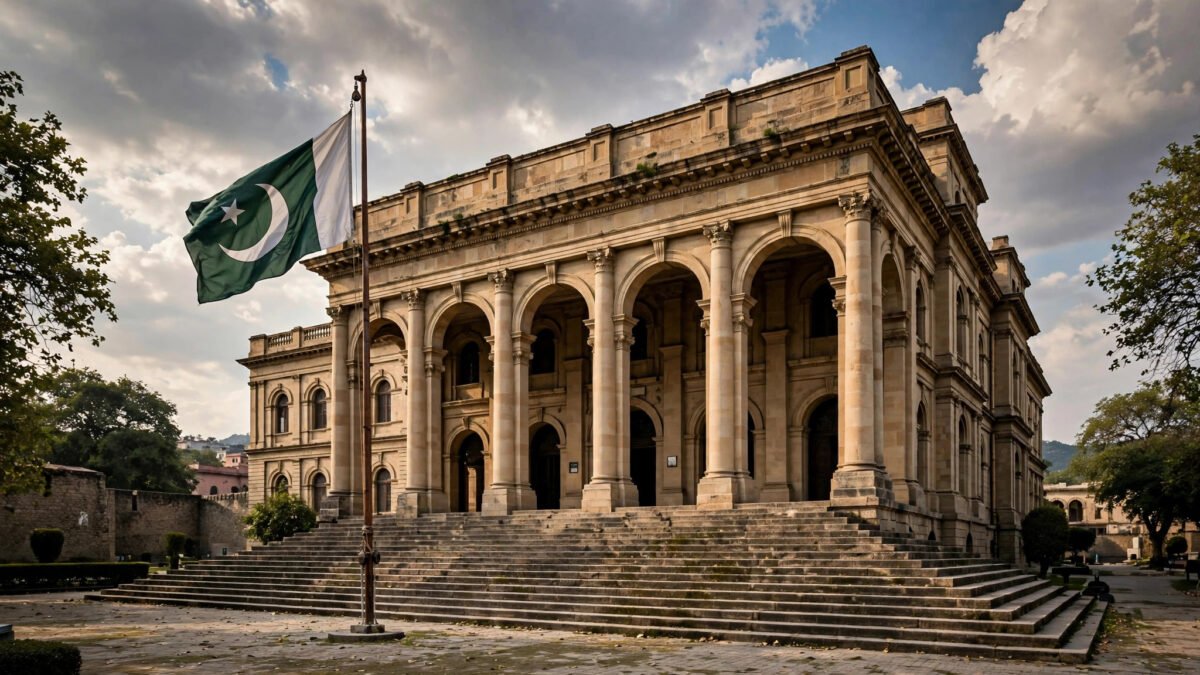
The Peshawar High Court has scheduled October 20 for hearings on separate petitions challenging the imposition of a federal emergency and governor’s rule in Khyber Pakhtunkhwa, shifting Pakistan’s most consequential political confrontation of the year from the floor of Parliament into the courtroom, according to The News.
The petitions, filed by PTI Chairman Barrister Gohar Ali Khan and Advocate Salman Khan in separate proceedings, name the Federation of Pakistan, the president, the prime minister, the Khyber Pakhtunkhwa governor and other relevant authorities as respondents. The opposition alliance Tehreek Tahaffuz Aiyeen-e-Pakistan (TTAP) has filed its own petition, brought by MWM chief Allama Raja Nasir Abbas, National Assembly Opposition Leader Mahmood Khan Achakzai and other leaders, The News reported.
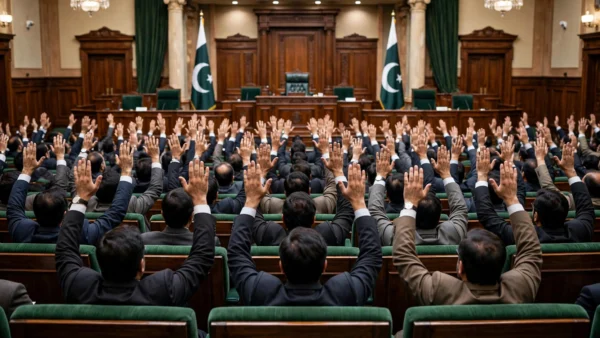
The hearing date, announced on Friday, comes one day after a joint sitting of Parliament approved the emergency and governor’s rule in the province by 214 votes to 56, giving the federal government the parliamentary backing the Constitution requires for the measures imposed on October 11.
In the petition filed through lawyer Ali Zaman, the PTI asks the court to declare the imposition of the emergency and governor’s rule unconstitutional and set them aside. The party argues that using terrorism as the stated grounds to curtail the powers of an elected provincial government amounts to discriminatory treatment, and maintains that the federal government cannot strip a provincial administration of its powers on the basis of political differences, according to The News.
The petition draws two pointed comparisons: it notes that no governor’s rule has been imposed in Balochistan despite terrorism and loss of life there, and that Khyber Pakhtunkhwa itself saw no such measure between 2007 and 2015, a period of intense militancy. The party says it supports counterterrorism operations and efforts to restore peace, but alleges that accusations of failing to take effective action against terrorism are being used to increase political pressure on it.
The PTI further maintains that it secured a two-thirds majority in KP in the 2024 general elections, and argues that the imposition of governor’s rule must meet the constitutional requirements and procedure laid down in Article 234. The emergency declaration, it says, should be examined under Article 232 and the relevant parliamentary requirements. The petition also states that no illegal action had been planned during the party’s long march — the protest march the PTI had been preparing from KP toward Islamabad to demand the release of its jailed founder, Imran Khan.
The parliamentary approval
The emergency and governor’s rule were proclaimed on October 11 after President Asif Ali Zardari approved the move on the advice of Prime Minister Shehbaz Sharif, under Articles 232 and 234 of the Constitution. The federal cabinet had recommended the measures that day, citing the provincial government’s “deliberate disengagement” from counterterrorism efforts and the province’s deteriorating security situation.
On October 14, the National Assembly and the Senate each endorsed the emergency in separate votes. A day later, the joint sitting adopted two resolutions moved by Federal Minister for Parliamentary Affairs Tariq Fazal Chaudhry — the first approving the proclamation of emergency under Article 232(7), the second endorsing governor’s rule under Article 234(3) — after a heated debate, according to The News and WE News.
The October 15 session was marked by sharp opposition protest. Lawmakers entered the chamber wearing black armbands and carrying placards reading “Emergency na manzoor” (Emergency is unacceptable). When opposition members challenged the counting, Speaker Sardar Ayaz Sadiq ordered a full count, which produced the 214-to-56 result, as reported by multiple Pakistani outlets.
Defending the measures in the House, Law Minister Azam Nazeer Tarar said the government had followed the constitutional procedure and cited the worsening security situation, telling lawmakers that 3,787 terrorist incidents had been recorded in Khyber Pakhtunkhwa over the past year. Interior Minister Mohsin Naqvi said the government had made repeated efforts to reach an understanding with the KP government on counterterrorism before deciding to act, and that negotiations had continued until late at night, according to The News.
PTI Chairman Barrister Gohar Ali Khan rejected the terrorism allegations in the House, saying the party condemned terrorism in all its forms and opposed the emergency and governor’s rule. “An entire provincial government was removed out of fear of one meeting,” he said — a reference to the long march — adding that the PTI stood with the Constitution, democracy and the people’s right to vote, The News reported.
Prime Minister Shehbaz Sharif renewed his invitation to the opposition to resume negotiations during the sitting, meeting Achakzai and warmly shaking hands with him. The premier also expressed concern over the year-long delay in appointing the chief election commissioner and members of the Election Commission of Pakistan, urging the opposition not to politicise the matter.
Underscoring how far the two sides have moved apart, TTAP announced earlier on October 15 that it was ending all negotiations with the federal government over what it called “unconstitutional steps,” a decision taken at a meeting chaired by Achakzai and attended by the PTI’s top leadership, according to The News.
Who governs Khyber Pakhtunkhwa now
Under the measures now in force, Governor Faisal Karim Kundi of the Pakistan Peoples Party has taken charge of running the province on behalf of the federal government, assisted by an 11-member technocratic KP Advisory Council. The chief minister, provincial cabinet ministers and other office-holders have ceased to exercise their previous functions, and Parliament has assumed the legislative powers of the Khyber Pakhtunkhwa provincial assembly.
The Interior Ministry has also authorised the deployment of Pakistan Army troops in aid of civil power in the province under an order citing Article 245 of the Constitution, for the duration of the emergency.
An administrative reshuffle is already underway in the province. According to details reported by Samaa TV, commissioners across six divisions have been transferred and 16 deputy commissioners removed from their posts, as the new administration stamps its authority on the provincial machinery.
In the courts, the Federal Constitutional Court on Friday disposed of a petition by Sher Afzal Marwat challenging the appointment of Sohail Afridi as KP chief minister, with a bench led by Chief Justice Aminuddin Khan declaring the plea infructuous following the imposition of governor’s rule, according to Samaa TV and Dunya News.
Reactions on Friday
Friday brought a fresh round of political reaction. Interior Minister Mohsin Naqvi claimed that former chief minister Sohail Afridi had feared the political cost of fighting terrorism, while opposition voices kept up their attacks: PPP leader Sherry Rehman said the PTI had lost a “golden chance” of finding a way out of what she described as a blind alley, and ANP leader Aimal Wali Khan argued that the same principle should apply to the Centre if a provincial government could be ousted over terrorism, according to Samaa TV and Dunya News headlines.
Prime Minister’s Adviser Rana Sanaullah said talks with the PTI remained possible if the party adopted a constitutional and legal approach, Dunya News reported — a conditional opening that fell far short of the unconditional dialogue the opposition alliance has demanded.
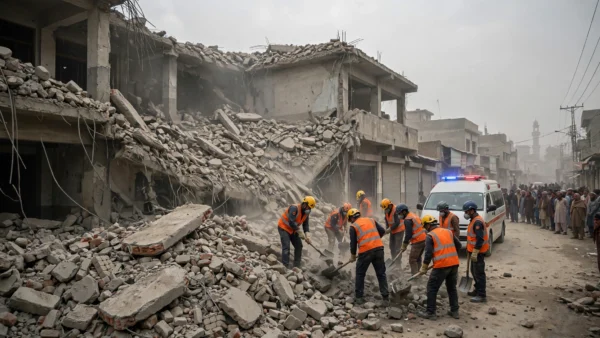
The week has also carried a heavy toll beyond politics. On Thursday, the roof of a private school collapsed in Peshawar, killing 34 children and a teacher and injuring around 45 people, according to Samaa TV citing rescue officials; the school owner has been arrested, and the KP governor has sought a report from the relevant authorities. Lawmakers in Parliament offered prayers for the victims, and the tragedy has sharpened public scrutiny of governance in a province now under federal rule.
Analysis: Why It Matters
The October 20 hearing at the Peshawar High Court matters because it will test, for the first time in years, the judiciary’s willingness to examine the substantive grounds of an emergency proclamation — a question Pakistan’s courts have historically treated with extreme caution. The PTI’s petition does not merely dispute procedure; it asks the court to look behind the Centre’s stated security rationale and ask whether counterterrorism concerns can justify displacing an elected provincial government that commands, by its own account, a two-thirds majority. If the court grants even an interim order, it would immediately unsettle the entire architecture of governor’s rule the Centre has just built. If it declines, the federal government’s position will be enormously strengthened, and the political battle will shift decisively back to Parliament and the streets.
The discriminatory-treatment argument at the heart of the petition is politically potent even if legally difficult. By pointing to Balochistan — where violence has been severe but no governor’s rule was imposed — and to KP’s own past, the PTI is forcing the government to explain why this province, this government, and this moment. The Centre’s answer, that KP’s administration had “deliberately disengaged” from the counterterrorism fight, is an unusually direct accusation of bad faith against an elected government, and it invites the kind of evidentiary scrutiny that makes politicians nervous. The 3,787-incidents figure the law minister cited cuts both ways: it demonstrates a genuine security crisis, but it also raises the question of whether the federal government, which controls intelligence agencies, the military and significant security resources, shares responsibility for that crisis rather than owning it exclusively as a charge against the province.
The federalism dimension may prove the most enduring. Pakistan’s Constitution divides power between the federation and the provinces precisely to prevent the centre from removing governments it finds inconvenient. Governor’s rule under Article 234 exists, but it has always been understood as an exceptional instrument, not a tool for managing political disagreement. The PTI’s framing — that terrorism is being used as a pretext to neutralise the one province the opposition fully controls, on the eve of a planned march on Islamabad — will resonate with anyone who remembers how rarely the instrument has been used and how often its past invocations have later been judged political. The Centre, for its part, will argue that a province whose government will not fight the state’s battles against militancy forfeits the ordinary protections of federalism. That is the real constitutional debate of the coming weeks, and October 20 is its first formal airing.
The political timing cannot be separated from the security justification. The measures landed just as the PTI was preparing its long march to demand Imran Khan’s release — a march the party insists was planned as lawful protest and the government feared would become something else. Gohar’s remark that a government was removed “out of fear of one meeting” is crude but strategically sharp: it recasts a counterterrorism operation as a counter-politics operation. Naqvi’s counter-claim that the former chief minister feared the “political cost” of fighting terrorism completes the mirror image — each side accusing the other of putting politics above security. Voters in KP will decide which version they believe, and the advisory council now administering the province will have to govern under the glare of that suspicion.
There is also the question of precedent. If the emergency and governor’s rule survive judicial scrutiny, future federal governments will have a tested template for taking over provinces governed by rivals, provided they can assemble a security case persuasive enough for Parliament. If they fall, the bar for any future invocation rises substantially, and the Centre’s counterterrorism leverage over recalcitrant provinces narrows. Either way, the October 20 hearing is the hinge on which that precedent turns.
Finally, the human backdrop cannot be ignored. The school roof collapse that killed dozens of children in Peshawar on Thursday is a reminder that the province the Centre has taken over to “fix” is one where basic governance — building safety, regulatory enforcement, school inspection — failed catastrophically in full public view. Governor’s rule will now be judged not only on its legality but on its performance, and the first test is already here: the investigation into the collapse, the promised inspections of private schools, and the accountability the new administration delivers will matter more to the people of Peshawar than any constitutional clause.
What to Watch Next
- The October 20 hearing itself. Watch whether the Peshawar High Court issues notices to the respondents, grants any interim relief, or sets a longer timetable — each outcome carries a different political signal about how seriously the judiciary takes the PTI’s challenge.
- Any Supreme Court move. Given the constitutional stakes, either side could seek to move the dispute to the Supreme Court. A suo motu notice or a transfer petition would raise the profile — and the pressure — considerably.
- The advisory council’s first decisions. Governor Kundi’s 11-member technocratic council will soon reveal its priorities, particularly on counterterrorism coordination with the military and on the school-safety inspections ordered after the Peshawar tragedy. Early moves will set the tone for the entire period of federal rule.
- Whether talks genuinely resume. Rana Sanaullah’s conditional offer and the prime minister’s handshake with Achakzai keep a door open, but TTAP’s decision to end negotiations means the opposition returns only on terms the government has not yet offered. Watch for backchannel signals in the days before October 20.
- The long march question. With the province under governor’s rule and the army deployed in aid of civil power, the PTI’s planned march on Islamabad faces a fundamentally different security environment. Whether the party recalibrates, postpones, or proceeds will be the clearest indicator of where the confrontation goes next.
Sources
- The News — PHC fixes PTI plea against KP emergency, governor’s rule for October 20
- The News — Parliament approves emergency, governor’s rule in KP after TTAP ends talks
- WE News English — Pakistan’s Parliament Approves Emergency, Governor’s Rule In KP
- The Destination — PHC October 20 Hearing Set on PTI Plea Against KP Emergency

About the Author — Abdul Mannan
Related Articles

Islamabad High Court Gives PTI More Time to Respond in Case Seeking Ban on Imran Khan’s X Account
The Islamabad High Court has adjourned a petition seeking a ban on Imran Khan's official X account until…
Pakistan’s Parliament Backs Emergency and Governor’s Rule in Khyber Pakhtunkhwa With 214-56 Joint-Sitting Vote
Pakistan's joint parliamentary sitting endorsed the October 11 emergency and governor's rule in Khyber Pakhtunkhwa by 214 votes…
At Least 27 Children and a Teacher Killed in Peshawar School Roof Collapse
The roof of a private school in Peshawar collapsed while classes were in session on Thursday, killing at…