
CPJ Urges Pakistan to Scrap PEMRA Ban on Live TV Coverage of Terror Attacks and ‘Unpleasant’ Incidents

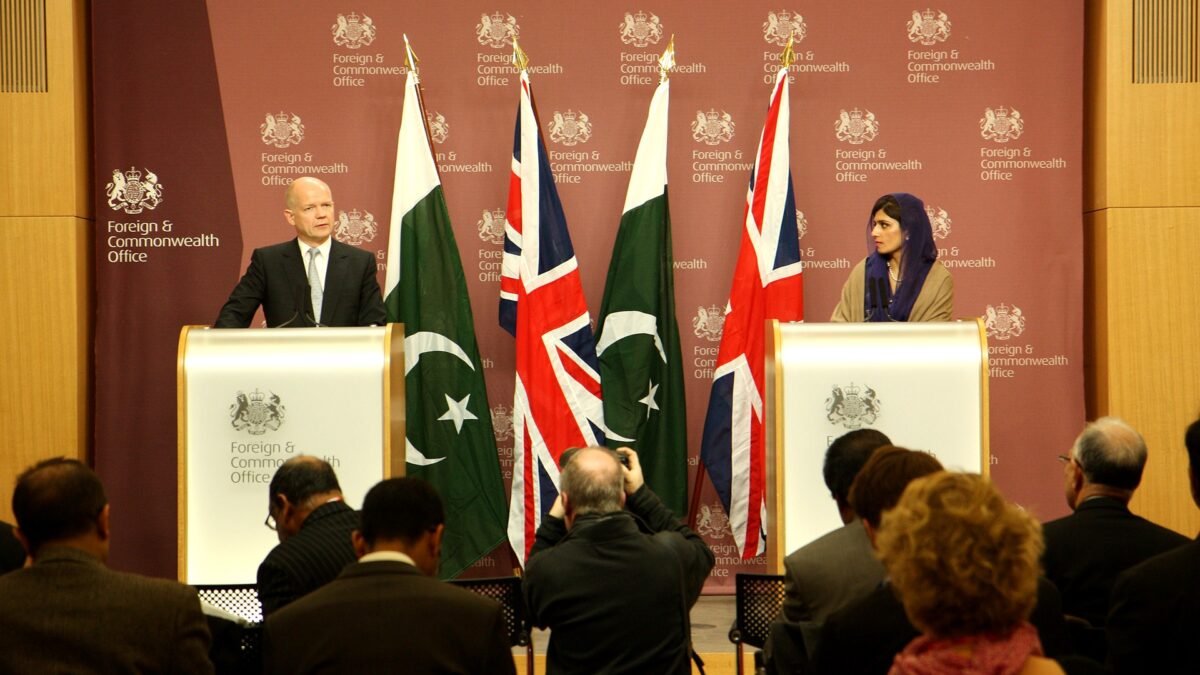
The Committee to Protect Journalists has called on Pakistan to withdraw sweeping restrictions that bar the country’s television channels from broadcasting live coverage of terrorist attacks and other vaguely defined “unpleasant” incidents, warning that the rules risk turning legitimate security reporting into a mechanism of official censorship.
In a statement issued from New York on October 16, the press-freedom organisation urged Pakistani authorities to rescind a directive circulated by the Pakistan Electronic Media Regulatory Authority (PEMRA) on October 13, which instructed all satellite television channels to refrain from broadcasting, rebroadcasting, or airing live coverage of what it described as “unfortunate” or “unpleasant” incidents, including explosions, blasts, shootings, and terrorist attacks, according to a copy of the order reviewed by CPJ.
The regulator warned broadcasters that failure to comply could invite legal action. Under the directive, channels may air only information that has been verified by the relevant government departments or law enforcement agencies, and they have been told to introduce broadcast delays and maintain independent editorial boards, CPJ said.
“Preventing journalists from independent reporting of major security incidents and requiring them to rely on information authorized by state and security agencies risks turning legitimate safety safeguards into a system of official information control and censorship,” said Waliullah Rahmani, CPJ’s Afghanistan and Pakistan representative. “Pakistani authorities must rescind these sweeping restrictions and allow newsrooms to make responsible editorial decisions without fear of regulatory retaliation.”
The latest order reiterates restrictions PEMRA first imposed in February 2023, when the regulator accused television channels of broadcasting unverified and speculative information during militant attacks, according to CPJ.
What the directive orders
The language of the October 13 notification is deliberately broad. “All satellite TV channel licensees are once again hereby directed to refrain from broadcasting, rebroadcasting, and live coverage of any unfortunate/unpleasant incident such as explosion, blast, firing, terrorist attack, etc. Satellite TV channels must broadcast only such verified information, warranted by the concerned department/law enforcement agency,” the notification read, according to reporting by Pakistani daily The Express Tribune cited by the IANS news agency.
That single sentence does three things at once: it prohibits live pictures, it reserves the definition of what counts as “unpleasant” entirely to the regulator, and it hands the power to declare any fact “verified” to the very departments and law-enforcement bodies that are participants in the incidents being covered. Channels that disobey face legal consequences, the notification warned.
The directive also requires broadcasters to use time delays and to maintain independent editorial boards, requirements that on paper sound like standard editorial safeguards but which, in the context of a ban on live coverage, function as an additional layer of compliance pressure on newsrooms.
CPJ said Pakistan’s Ministry of Information and Broadcasting did not respond to its email seeking comment on the directive.
A rule with a history
This is not the first time Pakistan’s television regulator has tried to keep cameras away from the scenes of violence. In February 2023, PEMRA issued a prohibition barring news, current affairs, and regional-language channels from broadcasting or rebroadcasting live coverage of such incidents, accusing them of airing unverified and speculative information during militant attacks. The October 2026 directive is, in CPJ’s words, a reiteration of that earlier order — the second formal reinforcement of the same curb.
Between those two orders lies a decade of steady tightening. Pakistan’s broadcasters have long operated under PEMRA’s licensing regime, which allows the regulator to fine, suspend, or pull channels off air. The February 2023 ban came after a string of high-profile militant attacks in which coverage by news channels drew official complaints. The 2026 version arrives at a moment when the country is under arguably greater political and security strain than at any point since.
Media advocates have argued that the practical effect of such bans is not to protect the public from distressing images — the stated justification — but to control the narrative of violent events. When cameras are switched off and only official statements may be aired, the public record of what happened during an attack becomes whatever the authorities say it was.
The August squeeze on foreign journalists
The PEMRA directive is the second front in what journalists describe as a two-sided squeeze on independent reporting. In August 2026, Pakistan’s Ministry of Information and Broadcasting introduced the Foreign Media Facilitation Guidelines 2026, requiring foreign journalists and their associates in Pakistan, as well as those working with international media, to register with the ministry and obtain a certificate before undertaking reporting assignments outside Islamabad, Lahore, and Karachi, CPJ said.
Several media bodies criticised the guidelines as a “direct assault on press freedom,” according to IANS. Rahmani warned at the time that the rules opened the door for Pakistani authorities to further restrict international media coverage, prevent journalists from reporting freely outside the country’s three main cities, and expose them to administrative retaliation.
He described the guidelines as yet another “appalling blow to press freedom in Pakistan, where journalists are already facing an intense crackdown,” with particular concern for those reporting on unrest in Pakistan-administered Kashmir, IANS reported.
Taken together, the August and October measures target both ends of the reporting chain: foreign correspondents are fenced out of the provinces where the most contested stories unfold, while domestic television channels are barred from showing the public what is happening on the ground.
The timing: emergency in Khyber Pakhtunkhwa
CPJ explicitly linked the latest directive to Pakistan’s heightened political and security instability, noting that it comes after the imposition of emergency rule in Khyber Pakhtunkhwa province.
On October 11, President Asif Ali Zardari, acting on the advice of Prime Minister Shehbaz Sharif’s cabinet, imposed a state of emergency and governor’s rule in the province under Articles 232 and 234 of the Constitution, suspending the provincial government led by jailed former prime minister Imran Khan’s Pakistan Tehreek-e-Insaf (PTI) party. The government said the PTI administration had deliberately disengaged from counterterrorism efforts; PTI spokesperson Zulfikar Bukhari called the move a “coup disguised as an emergency,” according to earlier reporting.
The days since have seen violent street confrontations between police and PTI supporters, arrests of senior party figures, and a joint session of parliament endorsing the emergency amid opposition protests. It is precisely the kind of unfolding crisis in which television channels would normally go live — and precisely the kind of coverage the October 13 directive now forbids.
For critics, the sequence is difficult to read as coincidence: within days of suspending an elected provincial government and deploying security forces against protesters, the federal government’s media regulator reminded broadcasters that their cameras must stay pointed at officially verified statements.
Analysis: Why It Matters
The most consequential word in the PEMRA directive is not “terrorist” but “unpleasant.” Terrorism is at least a recognisable category, however contested its legal definition; “unpleasant” is not a category at all. It is a feeling, assigned by the regulator after the fact. Under this wording, a police crackdown on protesters, a collapsed building, a hospital emergency — anything the authorities find inconvenient to have filmed — can be retroactively classified as an “unpleasant incident.” Vagueness is not a drafting flaw here; it is the point. The broader the definition, the wider the silence it can be stretched to cover.
Equally important is who is empowered to declare a fact “verified.” The directive does not ask broadcasters to verify information through multiple independent sources, as professional standards demand. It requires them to accept only information “warranted by the concerned department/law enforcement agency” — the same security apparatus whose conduct during an incident may itself be the story. When a PTI supporter is shot during a protest, or when casualties mount after a bombing, the official casualty count and the police’s account become the only legally air-able facts. Independent verification is not just discouraged; it is prohibited.
The third element of the directive — broadcast delays and independent editorial boards — deserves attention precisely because it sounds reasonable. Delayed broadcasting is a legitimate safety practice in hostage situations and live attacks. But a time delay imposed by a regulator that has already banned live coverage and criminalised unverified reporting is not a safety measure; it is a second lock on a door that is already bolted. Newsrooms will have to choose between compliance and their licence.
Timing converts this from a regulatory footnote into a political event. The directive was issued on October 13, two days after emergency rule descended on Khyber Pakhtunkhwa and as PTI supporters were clashing with police in Bara and elsewhere. When a government suspends an elected administration and simultaneously orders television channels to show only official accounts of what follows, the two moves belong in the same frame. The camera ban does not merely coincide with the crackdown; it sanitises it.
Finally, the directive’s lineage matters. Because it merely reiterates the February 2023 order, the government can present it as housekeeping rather than escalation. But context is what makes a repeated rule new. In 2023 the ban landed on a press corps already accustomed to PEMRA’s discipline; in 2026 it lands alongside the Foreign Media Facilitation Guidelines, an emergency regime in a major province, and a political crisis centred on the country’s most popular opposition figure, Imran Khan, who has been imprisoned since 2023. A rule that once narrowed the frame now threatens to close the shutter.
What to Watch Next
- Enforcement. The decisive question is whether PEMRA will punish a broadcaster for breaking the directive. Fines, suspensions, or a pulled licence would confirm that this is operational policy rather than regulatory posturing — and would trigger the legal fight the government may want to avoid.
- A legal challenge. Pakistan’s media bodies and bar associations have challenged PEMRA orders in the courts before. Watch for a constitutional petition arguing that the blanket ban on live coverage violates the freedom of expression guaranteed under Article 19 of the Constitution.
- The KP emergency’s endgame. The governor’s rule arrangement runs for an initial six months, to about April 2027. Any extension of the emergency, or fresh clashes between police and PTI supporters, will test the directive under live conditions.
- The government’s response. CPJ’s statement went unanswered by the Information Ministry. Whether Islamabad formally defends the directive, amends its wording, or lets it sit as a standing threat will signal how seriously it takes the international criticism.
- International monitoring. CPJ rarely issues statements in isolation. Watch for follow-up reporting from Reporters Without Borders and other watchdogs, and for whether the directive surfaces in Pakistan’s next universal periodic review at the United Nations.
Sources
- Committee to Protect Journalists: “Pakistan media regulator orders new restrictions on TV coverage of attacks and other ‘unpleasant’ incidents” (primary statement, October 16, 2026)
- IANS: “Pakistan: New restrictions on TV coverage of attacks and other ‘unpleasant’ incidents condemned” (October 17, 2026)
- Nation Press: “CPJ condemns Pakistan’s ban on live coverage of terror attacks” (October 17, 2026)

About the Author — Abdul Mannan
Related Articles
Pakistan Stands ‘Shoulder to Shoulder’ With Saudi Arabia as Houthi Strikes Test Makkah Defence Pact
Prime Minister Shehbaz Sharif has pledged Pakistan's full backing for Saudi Arabia under the Makkah Joint Defence Agreement…
Peshawar High Court Sets October 20 Hearing as Battle Over KP Emergency, Governor’s Rule Moves From Parliament to the Courts
The Peshawar High Court has fixed October 20 to hear petitions challenging the federal emergency and governor's rule…
Islamabad High Court Gives PTI More Time to Respond in Case Seeking Ban on Imran Khan’s X Account
The Islamabad High Court has adjourned a petition seeking a ban on Imran Khan's official X account until…