
Pope Leo XIV Urges Putin to Agree Oleshky Ceasefire So Aid Can Reach Besieged Civilians

A Friday Phone Call From the Pope’s Hospital Room
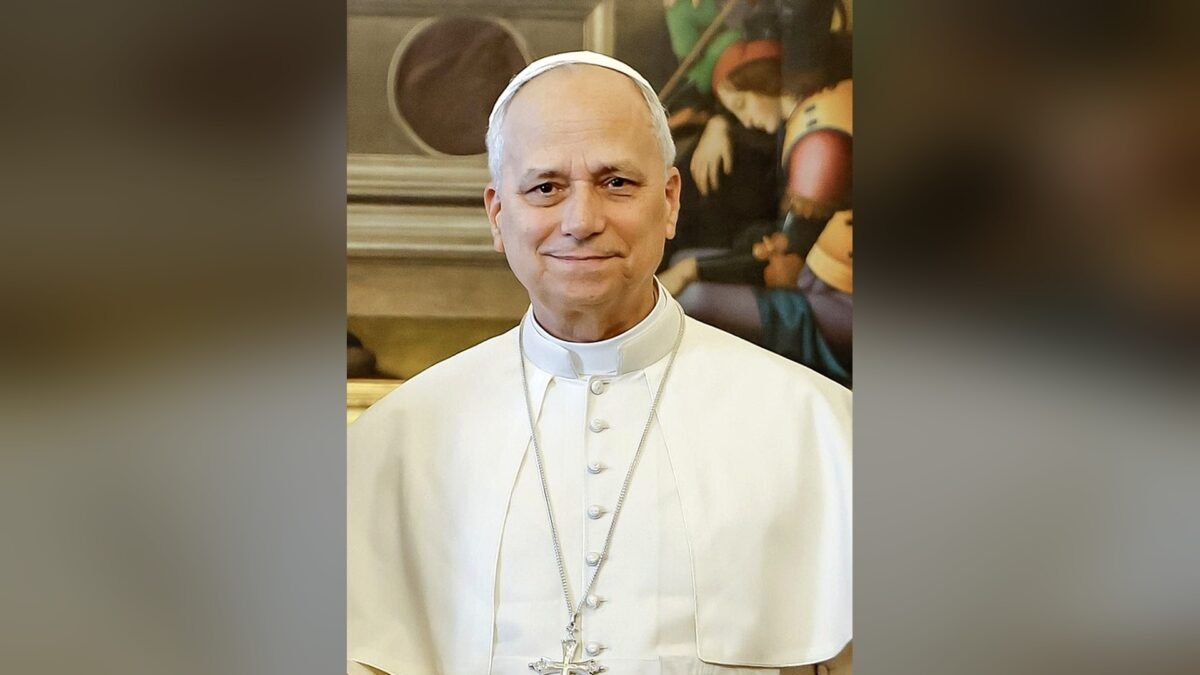
Pope Leo XIV telephoned Russian President Vladimir Putin on Friday, 16 October, to press for a ceasefire around the frontline town of Oleshky in southern Ukraine, so that food, medicine and aid workers can reach the civilians trapped there. The call, the second known telephone exchange between the two leaders, took place while the pontiff is recovering in Rome’s Gemelli Hospital from major lung surgery earlier in the week, according to the Holy See Press Office and Reuters.
The Vatican said the 71-year-old Pope expressed his “deep concern about the grave humanitarian situation in the city of Oleshky, in the Kherson region,” and appealed directly to Putin to agree to a truce. The purpose, the statement said, was to allow “the delivery of food and medical assistance, and the voluntary and safe evacuation of the civilian population,” according to reporting by Capital FM.
The Kremlin confirmed the conversation and said Putin told the Pope he “supported” the Vatican’s intention “to help create the conditions necessary to ensure the safety of the town’s population and to organise vital supplies,” adding that “it has been agreed to cooperate on this matter,” Reuters reported. Russian news agencies said Putin also wished the Pope a speedy recovery, according to the Time Bulletin.
The two men had spoken once before, on 4 June 2025, roughly a month after Leo’s election as the first American-born pope following the death of Pope Francis. That earlier call was itself notable: Pope Francis had been unable to secure direct contact with the Russian president after Moscow’s full-scale invasion of Ukraine in February 2022, the Time Bulletin reported.
What the Vatican Asked For
The Vatican’s request was specific and deliberately narrow. Rather than a general appeal for peace, Pope Leo asked for a localized ceasefire covering Oleshky alone, so that humanitarian supplies could get in and civilians who want to leave could do so voluntarily and safely, according to the Holy See Press Office statement reported by Capital FM.
Vatican Secretary of State Cardinal Pietro Parolin, speaking on the sidelines of a conference at the Catholic University of the Sacred Heart, said it was the Pope himself who had taken the initiative. “It was the Holy Father who took the initiative to plead the case of this besieged city, where some 2,000 civilians need humanitarian routes through which they can leave,” Parolin said, according to Capital FM.
“The Pope called for a ceasefire to allow humanitarian aid, especially food, to reach the city and to enable those who wish to leave to be evacuated,” Parolin added.
The cardinal expressed hope that Putin would respond positively to the appeal, and suggested that the Russian leader’s willingness to take the call could itself be grounds for optimism. “I hope that, in response to the Holy Father’s request, President Putin will agree to do what the Pope has asked,” Parolin said. “The fact that he accepted the call and spoke with the Pope may, I hope, be a sign that the Pope’s request will indeed be carried out,” according to Capital FM.
The Vatican’s statement did not indicate whether Putin had agreed to the proposed ceasefire or to the establishment of humanitarian evacuation routes, Capital FM noted. The statement reiterated the Holy See’s commitment to promoting dialogue and peace.
How the Kremlin Answered
The Kremlin’s account of the conversation was warmer in tone than the Vatican’s carefully non-committal framing. According to the Kremlin statement reported by Reuters, Putin said the Vatican’s intention to “help create the conditions necessary to ensure the safety of the town’s population and to organise vital supplies” had been “supported,” and that it had been “agreed to cooperate on this matter.”
That wording matters. Cooperation on “creating conditions” and “organising vital supplies” is not the same as a ceasefire — the thing the Vatican actually asked for. The Kremlin statement, as reported, does not confirm a truce, a pause in fighting, or the opening of any humanitarian corridor. It confirms a willingness to work with the Vatican on the humanitarian question in principle.
Times Now World reported that, in the Kremlin’s account, Putin extended well wishes for the Pope’s health and that the Russian leadership attributed the difficulties in Oleshky to the actions of the Kyiv government, with an agreement said to have been reached on coordinating efforts for the safety of the local population and the distribution of aid.
Reading the two statements side by side, the shape of the exchange is clear: the Pope asked for a specific, time-bound humanitarian pause; Putin answered with a general expression of support and a promise of cooperation. Whether the two positions converge into anything a civilian in Oleshky can actually feel is the open question of this story.
Oleshky: A Frontline Town Under Two Siege Narratives
Oleshky sits on the eastern bank of the Dnipro River in Ukraine’s Kherson region, close to the front line, in territory that has been under Russian occupation since the opening days of the 2022 invasion, according to multiple outlets including Capital FM and Reuters.
It is a town that has already endured one catastrophe in this war. When the Kakhovka dam was destroyed in June 2023, the resulting floodwaters devastated low-lying settlements along the Dnipro, and Oleshky was among the worst-hit towns on the Russian-occupied bank, with Ukrainian officials at the time reporting that large parts of the town were submerged and that the occupation authorities provided little rescue assistance.
The current humanitarian picture is contested, as almost everything in this war is. Ukrainian officials and international monitors cited by the Nile1 outlet say no food deliveries have reached the city since May, and that residents are surviving without reliable electricity, natural gas or running water, with the local hospital barely functioning. Cardinal Parolin put the remaining civilian population at around 2,000 people who need safe routes out.
Russia and Ukraine both accuse each other of blocking supplies to the town’s population, Reuters reported, and Ukrainian forces have made no secret of their desire to retake Oleshky, which gives both sides a military reason to control who and what moves through it. Protesters in Kyiv have recently staged demonstrations outside City Hall demanding that Western allies pressure Moscow into opening a humanitarian corridor for the trapped population, according to Nile1.
That is the essential difficulty of the Pope’s request: a humanitarian corridor in a place both armies are fighting over requires the cooperation of both of them, and neither side’s account of who is blocking what can be independently verified from the outside.
A Pope Calling From a Hospital Bed
The setting of the call is itself part of the story. Pope Leo remains at Rome’s Gemelli Hospital, where he underwent surgery on 13 October to remove the lower lobe of his right lung following a lung cancer diagnosis earlier in the week, according to Capital FM and other outlets. Doctors have reported steady improvement in his postoperative recovery, Capital FM said, and Times Now World reported that the Pope celebrated Mass on Friday in a makeshift hospital chapel, appearing in liturgical vestments and distributing Communion to medical staff and Vatican security personnel.
It is an unusual image for papal diplomacy: a pontiff less than a week out of a lobectomy, spending his convalescence pleading by telephone for a town of 2,000 people most of the world has never heard of. The Vatican made sure the timing and the setting were known — the Holy See Press Office announced the call on Friday itself, and Cardinal Parolin publicly underlined that the initiative was the Pope’s own.
Leo XIV, born Robert Francis Prevost in Chicago and elected on 8 May 2025 after the death of Pope Francis, has now managed twice in sixteen months what his predecessor could not manage once in more than four years of war: a direct conversation with Vladimir Putin. Whether that reflects a change in Moscow’s calculations, a different Vatican approach, or simply the diplomatic luck of the moment is impossible to say from the outside. But the fact of the channel itself is now established, and Friday’s call used it for a concrete, testable purpose rather than a general appeal.
The Vatican’s Ukraine Diplomacy So Far
Friday’s call fits a long-established Vatican pattern in this war: moral authority deployed in the service of humanitarian specifics, with the Holy See’s neutrality — a doctrine, not a mood — kept intact even when it frustrates one side or the other.
Under Pope Francis, the Vatican’s most visible Ukraine initiative was the peace mission entrusted to Cardinal Matteo Zuppi in 2023, which took him to Kyiv, Moscow, Washington and Beijing. The Holy See also worked behind the scenes on prisoner exchanges and on the return of Ukrainian children taken to Russia, efforts the Vatican pursued quietly and rarely claimed credit for in public.
What Francis did not achieve was direct contact with Putin. After Russia’s full-scale invasion began on 24 February 2022, his attempts to establish a direct line to the Russian president were unsuccessful, according to the Time Bulletin. That history makes Leo’s two calls — the first in June 2025, the second on Friday — a genuine departure, even if their practical results so far are measured in statements rather than outcomes.
The Vatican’s approach also carries its own risks. The Holy See’s insistence on dialogue with Moscow sits uneasily with many in Ukraine, including within the country’s Greek Catholic community, who read Vatican neutrality as moral equivalence between aggressor and victim. Kyiv’s government, for its part, has at times bristled at Vatican statements that did not name Russia as the aggressor. Friday’s move — an appeal to Putin personally, made public — is the Vatican betting that its neutrality is precisely what gives it access, and that access is worth more than the approval of either side.
Analysis: Why It Matters
The first thing to notice about this story is its scale. The Vatican did not ask for peace in Ukraine. It asked for a ceasefire in one town, for long enough to get food and medicine in and willing civilians out. That modesty is deliberate. After the grand-bargain diplomacy of the Zuppi mission produced statements but no settlement, the Holy See has shifted to what might be called micro-diplomacy: small, testable, humanitarian asks in single localities. If a 2,000-person corridor in Oleshky works, the template travels. If it fails, the failure is contained and instructive. The Vatican has learned what many mediators learn: in an unwinnable argument, shrink the question until it becomes answerable.
The second thing is the setting of the call, which is not incidental. A pope telephoning from a hospital bed, days after cancer surgery, carries a moral weight that no press release can manufacture. Whether intended or not, the image — a 71-year-old pontiff spending his convalescence on a besieged town on the Dnipro — frames the request as pastoral rather than political, and that framing is the Vatican’s entire diplomatic capital. It is also worth being honest about the other side of it: the Holy See chose to publicize the call, the hospital setting, and the Pope’s personal initiative. Moral authority is most useful when it is seen.
The third thing is the Kremlin’s answer, which deserves a slower read than it will get. “It has been agreed to cooperate on this matter” is the kind of sentence that sounds like a commitment while committing to nothing. The Vatican asked for a ceasefire; the Kremlin agreed to cooperate on “creating conditions” and “organising vital supplies.” Between those two formulations lies everything that can go wrong: cooperation that never becomes a pause, supplies that are organised but never delivered, conditions that are created in press statements rather than on the road into Oleshky. The honest reading is that Friday produced a channel and a promise, not a corridor.
The fourth thing is the Francis comparison, and what it may and may not mean. Leo has now spoken to Putin twice where Francis could not get through at all. It is tempting to read that as a breakthrough in Vatican-Russia relations, and in one sense it is — the channel exists and has been used twice. But channels are not outcomes. The June 2025 call produced no publicly known result, and Friday’s call has so far produced a Kremlin statement about cooperation. The Vatican’s achievement is real but narrow: access. What access is worth will be measured in trucks, not transcripts.
The fifth thing is the hardest one, and it concerns Oleshky itself. A humanitarian corridor in a frontline town is never just humanitarian. Both sides accuse each other of blocking supplies, and neither claim can be checked by outsiders. A corridor that works would be a genuine relief for the civilians inside — and a small, rare proof that even this war’s front lines can be negotiated around for human purposes. A corridor that is agreed and then fails, with each side blaming the other, would become one more argument in a war already drowning in them. The Vatican has placed its bet that the attempt is worth the risk. The next days will show whether the bet pays.
What to Watch Next
- Does any aid actually reach Oleshky? The Vatican’s statement announced no agreement and no timeline. The first test of Friday’s call is material: trucks, medicine, food — or silence.
- Does Russia declare a localized pause — and hold it? The Kremlin spoke of cooperation, not a ceasefire. Watch for any Russian announcement of a humanitarian pause around Oleshky, and whether fighting actually stops.
- What does Kyiv say? A corridor needs Ukraine’s cooperation too, and Ukrainian forces want to retake the town. Watch for the Ukrainian government’s response to the Vatican initiative — endorsement, silence, or rejection will each mean something.
- Follow-up diplomacy. Cardinal Parolin said publicly that he hopes Putin will act on the Pope’s request. Watch whether the Vatican names an envoy, schedules follow-up contacts, or publishes further details of the cooperation the Kremlin promised.
- The Pope’s recovery and the tempo of his diplomacy. Leo chose to make this call from his hospital bed. Watch whether, as he recovers, he sustains this direct personal engagement — or whether Friday’s call was a one-off gesture of convalescent pastoral care.
Sources
- Reuters: Kremlin says Putin told Pope Leo he backs Vatican idea to help civilians in Oleshky (16 October 2026)
- Capital FM: Pope Leo appeals to Putin for ceasefire, humanitarian aid in besieged Ukrainian city (17 October 2026)
- Times Now World: Pope Leo Holds Diplomatic Talks with Putin from Hospital During Recovery (17 October 2026)
- Time Bulletin: Pope Leo XIV urges Putin to agree to truce in besieged Oleshky (16 October 2026)

About the Author — Abdul Mannan
Related Articles
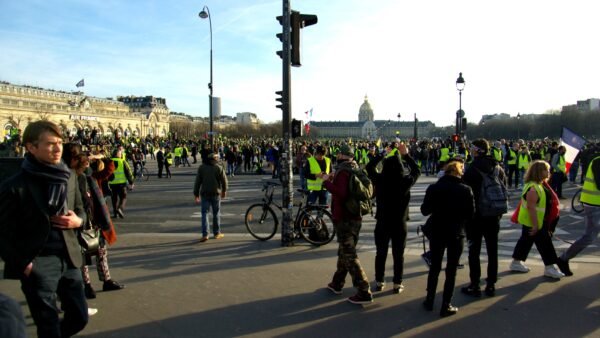
Yellow Vests Return as France Is Engulfed by Cost-of-Living Protests — 166 Arrested, Tear Gas in Paris
Yellow-vest protesters joined students and unions on France's streets on Saturday in a nationwide cost-of-living day of action,…
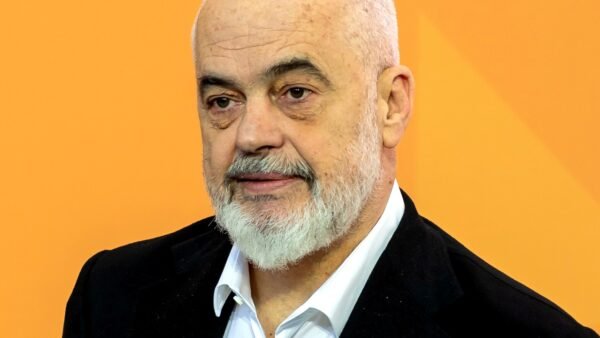
Youth Protests Escalate in Albania as Thousands Demand PM Edi Rama Resign
Thousands of young Albanians marched through Tirana this week demanding Prime Minister Edi Rama resign, as the leaderless…
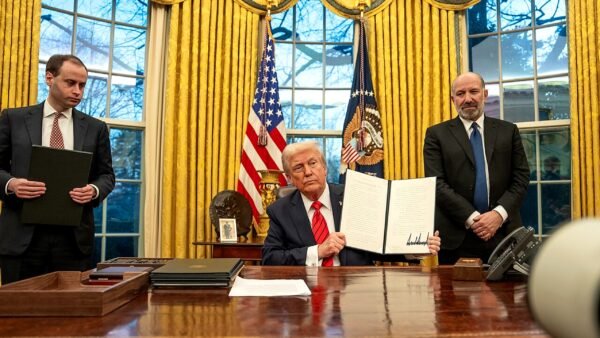
Trump Waives Most of the Lindsey O. Graham Sanctions Law, Shelving Russia Tariffs Two Days Before They Took Effect
President Trump signed an executive order Friday waiving most of the Lindsey O. Graham Sanctioning Russia and Iran…