
Trump Waives Most of the Lindsey O. Graham Sanctions Law, Shelving Russia Tariffs Two Days Before They Took Effect

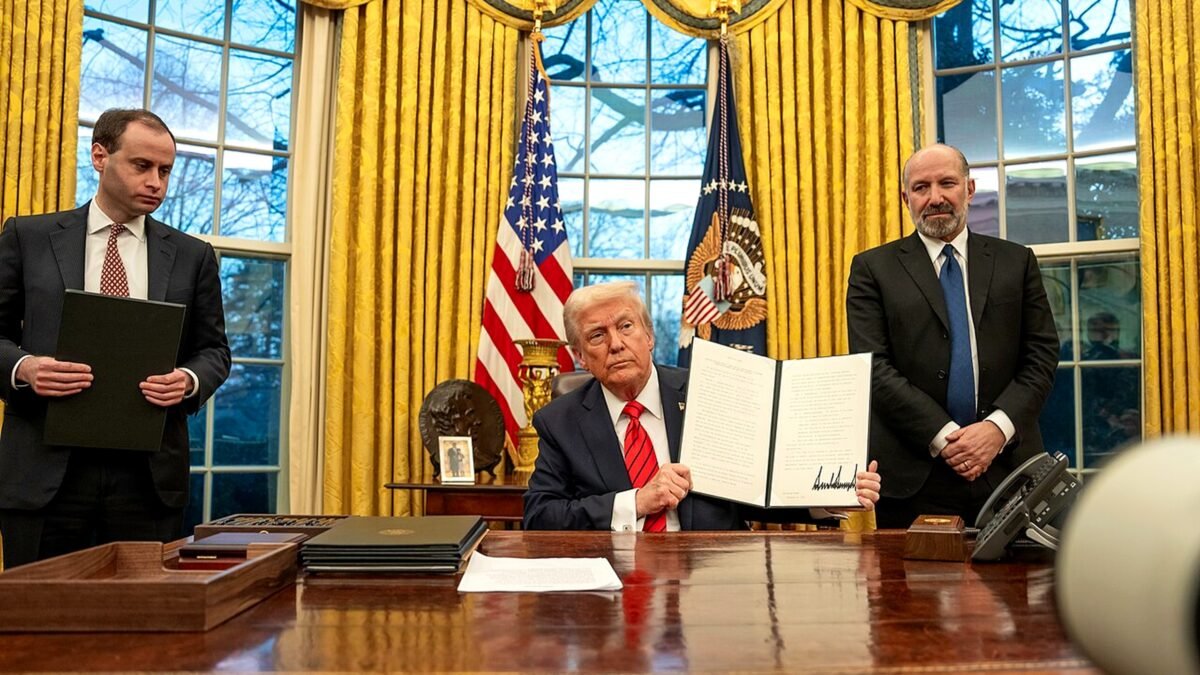
President Donald Trump signed an executive order on Friday, October 16, waiving nearly all of the sanctions and tariffs in the Lindsey O. Graham Sanctioning Russia and Iran Act of 2026 — the law Congress passed with sweeping bipartisan support to squeeze Moscow and the countries that buy its oil — just two days before the measures were due to take effect.
The order, released by the White House on Friday evening, certifies to Congress that the waivers are “in the national interests of the United States,” according to Reuters. It shelves a penalty package that would have imposed tariffs of up to 100 per cent on goods from the five largest importers of Russian crude oil or gas, suspended sanctions on Russia’s top officials, state banks and shadow-fleet tankers, and scrapped duties of up to 500 per cent on Russian goods — all before a single dollar was collected.
The move is the latest in a rapid sequence of steps that have brought Trump into open alignment with Moscow’s preferences and pushed relations with Kyiv to their worst point in years. It comes a week after Trump blindsided European leaders by striking a deal to import Russian diesel into the United States, a step that drew bipartisan blowback at home and left Ukraine’s president, Volodymyr Zelenskyy, saying he felt betrayed, according to CNN.
What the waiver actually does
The executive order, titled “Implementing the Lindsey O. Graham Sanctioning Russia and Iran Act of 2026,” formally invokes the law’s own escape hatch. Trump signed the underlying act into law on September 18, barely four weeks earlier, and it gave the president broad authority to waive its provisions on national-interest grounds — a power he has now used for most of the law’s teeth, according to the text of the order quoted in news reports.
Among the waived provisions, according to the order’s text: the application of duties under sections 112 and 113 of the act; sanctions the law required on Russia’s top officials by office, beginning with the president of the Russian Federation; penalties on Russian state banks and shadow-fleet tankers; a tariff of up to 500 per cent on Russian goods; and tariffs of up to 100 per cent on the five largest buyers of Russian crude oil and gas. The waiver remains in force until Trump or the secretary of state decides otherwise, meaning the tariff decisions are now entirely in the White House’s hands, according to the analysis of the order.
Most of the Graham Act’s measures were due to bite on October 18, 30 days after enactment — and that was the date the order uses for judging new purchases of Russian oil or gas by the largest importers. The older sanctions architecture, built by executive order over several years, remains in place; only the new, statutory layer has been suspended.
The law Congress wrote — and the vote Trump overrode
The Lindsey O. Graham Sanctioning Russia and Iran Act was the late South Carolina senator’s signature Russia policy, named for him after his death in July. It passed Congress by a vote of 86 to 11, a margin that left no doubt about legislative intent. Its purpose was to harden pressure on the Kremlin at the very moment the war in Ukraine was approaching a critical juncture for Kyiv — and to punish the trade flows that finance it, above all Russian crude oil and gas.
The act’s central weapon was secondary tariffs: within 30 days, duties of up to 100 per cent would fall on all goods entering the United States from the five largest importers of Russian crude or gas, and on any country that knowingly bought Russian oil or gas after the law’s enactment, plus top facilitators of sanctions evasion. The U.S. Trade Representative, working with the secretaries of state, treasury and energy, was to track those purchases and report back to the president on whether waivers should change.
That design reflected a specific theory: that only credible, automatic economic pain could force Moscow toward a settlement Ukraine could accept. By waiving the law two days before the trigger, Trump has kept the theory off the table — for now.
Why Trump did it: diesel, fuel prices and the midterms
The waiver did not arrive out of nowhere. In early October, Trump announced that the United States had agreed to purchase diesel from Russia in an effort to bring down global energy prices — and Treasury licensed Russian-origin diesel imports on October 9. Trump has said openly that he wants fuel prices lower ahead of the November midterm elections, and has blamed Ukrainian strikes on Russian oil refineries for pushing pump prices up, calling the strikes “a disgrace,” according to USA Today and CNN.
The White House has heaped pressure on Ukraine to halt those strikes. Kyiv briefly acceded to the request, then resumed attacks — while Russia has continued pounding Ukraine’s energy infrastructure through the week, CNN reported. Trump has escalated his feud with Zelenskyy in recent days, publicly criticising him and, according to Reuters, even suggesting that Ukraine needs a new leader.
On October 15, a bipartisan group of 22 U.S. lawmakers wrote to Trump, Secretary of State Marco Rubio and Treasury Secretary Scott Bessent urging him to enforce the Graham Act and terminate the diesel deal. The letter said that as Russia prepares to wage a fifth winter campaign against Ukraine, Washington had an opportunity to “reinvigorate peace efforts by placing maximum pressure on Vladimir Putin and the governments and networks that finance his war.”
Lawmakers on both sides have warned that the administration is defying a federal law meant, in their words, to prevent American dollars from financing Putin’s war, CNN reported. That argument is now the core of the Washington fight: is this a national-interest waiver, as the order certifies, or the nullification of a statute Congress just wrote?
Reactions: alarm in Europe, relief in New Delhi, fury in Congress
European allies reacted with deepening alarm. CNN reported that cracks are appearing in Washington’s support for Kyiv, and European capitals have spent the week absorbing a cascade of U.S. moves — the diesel deal, the pressure to stop Ukrainian refinery strikes, the apparent withdrawal of U.S. intelligence sharing and restrictions on the Starlink satellite internet service that Ukraine relies on, and now the waiver itself. At Friday’s EU summit in Brussels, leaders publicly rallied around Zelenskyy — but privately, the waiver has confirmed their fear that American support can no longer be assumed.
In India, the reaction was closer to relief. India is among the biggest buyers of Russian oil, and it raised concerns about the Graham Act’s secondary tariffs from the start, Reuters reported. With the waiver, the 100-per-cent tariff threat over New Delhi’s energy purchases is, for now, suspended — though nothing in the order says it cannot return.
Kyiv has not yet issued a formal response, but the direction of travel is unmistakable: Ukraine’s most important backer is now its most unpredictable. Zelenskyy’s complaint that the diesel deal left him feeling “betrayed” was, as CNN noted, only the opening line of a much darker week for Ukrainian-American relations.
Analysis: Why It Matters
Start with what actually happened: a president signed a sanctions law, waited four weeks, then used its own escape clause to suspend most of it two days before it bit. The law was not defeated in Congress; it was defanged at the desk where it was signed. That is a legal manoeuvre, and it is also a message — to Moscow, to Kyiv, to Congress and to every country weighing whether to buy Russian energy. The message is that the United States, as currently governed, will not be the enforcer of the punishment it legislated.
The second thing to notice is the timing logic. Everything about this week — the diesel deal, the “disgrace” attack on Ukraine’s refinery campaign, the pressure to halt strikes, now the waiver — points in one direction: fuel prices in the United States before November 3. Trump has treated the price at the pump as a midterm variable, and every Russian-policy decision of the past ten days has been calibrated to it. That is a coherent political strategy. It is also a strategy that trades long-term deterrence of Russia for short-term relief at American petrol stations — and voters on November 4 will render their own verdict on whether that trade was worth it.
Third, the waiver exposes the structural weakness of the Graham Act’s design. Congress wrote the harshest Russia sanctions law in years and then handed the president a broad, unilateral waiver key — “in the national interests of the United States” is a standard so elastic it can justify almost anything. The 86-to-11 vote reflected genuine bipartisan intent, but the waiver clause made the whole edifice conditional on the president’s will. Future Congresses will have to decide whether to keep writing laws with trapdoors built in, or to draft the kind of sanctions that cannot be suspended with a Friday-evening signature.
Fourth, consider the view from Moscow. Russia did not have to spend a single barrel of diplomatic capital to escape the Graham Act; the American president suspended it of his own motion, days after agreeing to buy Russian diesel and while denouncing Ukraine’s refinery strikes. Combined with Friday’s declaration of a non-negotiable “security zone” inside Ukraine, this is shaping into one of Moscow’s better weeks of the war — military pressure on Kyiv’s energy grid intensifying, U.S. sanctions pressure dissolving, and Ukrainian-American ties visibly straining. Whether that translates into battlefield or negotiating gains depends on what Putin does with the opening.
Finally, the deeper fracture is the one with Europe. Washington’s European allies have spent the week watching the two pillars of American Ukraine policy — sanctions enforcement and military-intelligence support — wobble simultaneously. At Brussels on Friday they closed ranks around Zelenskyy, but closing ranks is not the same as replacing the superpower. If the waiver holds and the Graham Act’s 100-per-cent tariffs never materialise, the countries buying Russian energy — India, China, Turkey and others — will recalibrate accordingly, and the entire Western sanctions architecture will feel the slack.
What to Watch Next
- Whether Congress fights back: the 86-to-11 vote was not a suggestion. Watch for a bipartisan response — legislation tightening or repealing the waiver authority, oversight hearings, or a formal challenge to the “national interest” certification. The 22-lawmaker letter of October 15 was the opening move; the next ones will be sharper.
- The midterm effect: the stated rationale for the diesel deal and the waiver is lower fuel prices before November 3. Watch petrol-price data and polling in the final two weeks — if prices don’t fall, the political logic of the whole sequence collapses.
- Ukraine’s refinery campaign: the White House wants Ukrainian strikes on Russian refineries stopped; Kyiv has already resumed them once after pausing. Watch whether the waiver’s suspension of secondary tariffs changes Kyiv’s calculus — or Washington’s pressure campaign.
- Europe’s next move: with the U.S. suspending its own sanctions push, attention shifts to Brussels’ 22nd sanctions package and whether European leaders will move to fill — or merely manage — the gap left by the waiver.
- The winter campaign: Russia is preparing its fifth winter offensive against Ukraine’s energy infrastructure, and October 18 — the date the Graham Act’s penalties were to start — now passes without them. Watch whether Moscow treats the waiver as a signal of broader American disengagement from the economic war.
Sources
- Reuters (via Devdiscourse): Trump waives many Russia-related sanctions, tariffs before they were to take effect under new law
- USA Today: Trump says he won’t impose sanctions on Russia, thwarting Congress
- CNN: Trump waives Russia-related sanctions before they even kick in as Ukraine ties worsen
- The Daily Letter: Live coverage with full text of the executive order

About the Author — Abdul Mannan
Related Articles
Putin Declares New ‘Security Zone’ Inside Ukraine Non-Negotiable as Moscow Widens Its Territorial Claims
Putin, in military uniform at a command post, said the 660km zone — 70% already under Russian control…

Thousands Rally in New Delhi Demanding Resignation of Election Chief Gyanesh Kumar Over Voter Roll Purge
Thousands thronged Connaught Place in New Delhi waving the national flag and demanding the election chief's resignation over…
Trump Calls Ukraine’s Refinery Strikes ‘a Disgrace’ as EU Leaders Rally Around Zelenskyy at Brussels Summit
Donald Trump branded Ukraine's renewed strikes on Russian oil refineries 'a disgrace' in a Newsmax interview, hours before…