
Trump Delays Final Call on Russia Sanctions for Up to 60 Days

Trump Delays Final Call on Russia Sanctions for Up to 60 Days
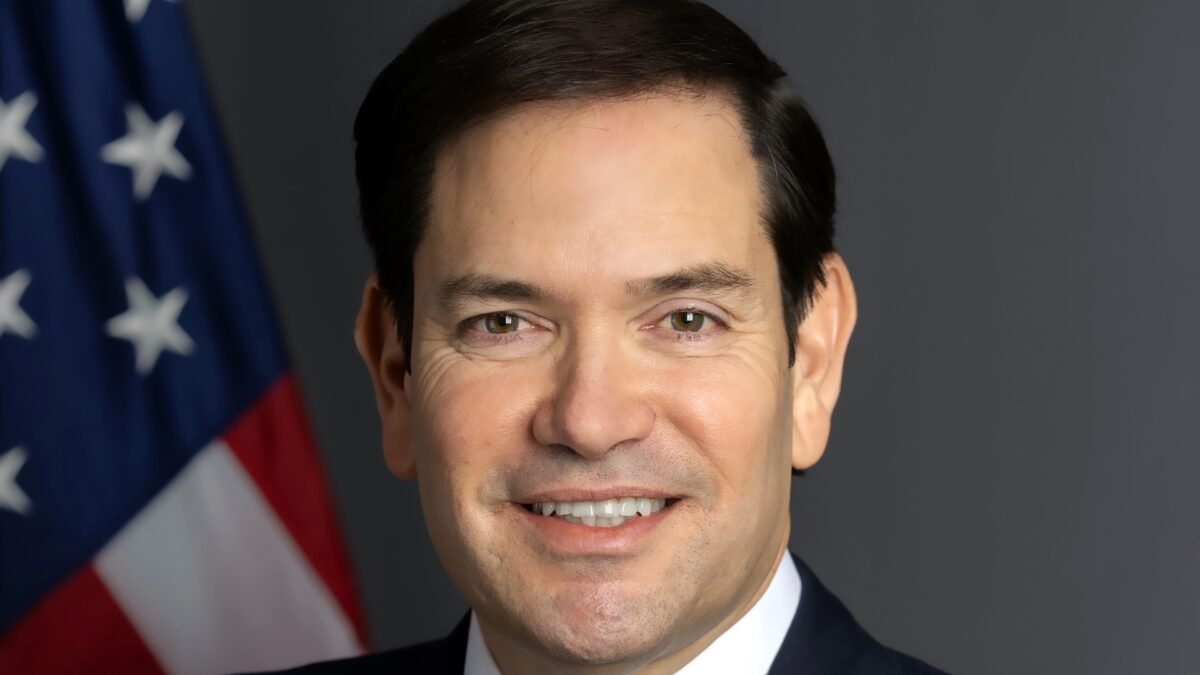
US President Donald Trump said on Saturday that he has not yet reached a final decision on the Russia sanctions he waived a day earlier, as Secretary of State Marco Rubio announced the administration would use up to 60 days to assess the economic impact of the measures before deciding whether to impose them, according to Reuters.
“A lot of you don’t know what my decision is yet, but we’ll figure it out, and you’ll figure it out,” Trump told reporters at his Mar-a-Lago club in Palm Beach, Florida, on Saturday.
The remarks came the day after Trump signed an executive order waiving key sanctions and tariffs under the Lindsey O. Graham Sanctioning Russia and Iran Act — known as the Graham Act — legislation he himself signed into law in mid-September after Congress passed it. The measures, which included tariffs of up to 100 per cent on Russian goods and penalties on countries buying Russian oil and gas, were due to take effect next week.
Rubio, speaking to reporters on Saturday before boarding a plane for a week-long trip to Uzbekistan and India, said the president wants to take up to 60 days to analyse what imposing both the sanctions and the tariffs would mean for the global and American economies.
“I think the president wants to take the 60-day period of time to sort of analyse what imposing both sanctions and tariffs will mean to the global economy and even to the US economy,” Rubio said at Joint Base Andrews, Maryland, according to Reuters and The Hindu BusinessLine.
Rubio Names India as Key Complication
Rubio pointed specifically to India as the complication that makes a snap decision difficult. The Graham Act does not only target Russia: it also authorises tariffs on goods imported from countries that buy Russian energy supplies. India, an important American partner, has diversified its energy sourcing but remains heavily dependent on Russian oil, Rubio said.
The threat had been sharp. The legislation would have imposed tariffs of up to 100 per cent within 30 days on all goods brought into the United States from the five largest importers of Russian crude oil or gas, as well as on countries that knowingly bought Russian oil after the law took effect or ranked among the top five facilitators of sanctions evasion. Most significantly, that meant China and India.
It also included sanctions against senior Russian figures, including Russian President Vladimir Putin, Russian financial institutions, and Moscow’s so-called “shadow fleet” of vessels used to circumvent existing embargoes — all now waived.
According to The Hindu BusinessLine, Trump’s executive order states that the waivers will remain in effect until the president or the secretary of state, in consultation with the treasury secretary and the trade representative as appropriate, determine that further action is appropriate. The order invoked a national-interest certification, with Trump telling Congress that suspending the measures at this time serves the national interests of the United States.
Rubio said the administration is weighing the sanctions against a volatile global energy backdrop. “When the Graham Act was passed, the waivers were put in to study the different things going around the world, such as the pressure on global energy supplies due to the Iran war, the attack of Houthis in Saudi Arabia and the Ukraine-Russia war,” he said. “So I think you have to take all of that into account and weigh it against each other.”
A Row That Keeps Deepening
The waiver has drawn sharp criticism from Kyiv and from lawmakers on both sides of the aisle in Washington, and it lands in the middle of a rapidly deepening row between Trump and Ukrainian President Volodymyr Zelenskyy.
Zelenskyy warned on Saturday that the executive order would embolden Putin and prolong the war. In an earlier message, he said it was unfortunate that the United States had decided to “completely disregard” the sanctions law. “This Act could have helped enormously — and still can! But it needs to actually work, and every voice in support of it matters,” he said, according to CNN.
In Moscow, Russian envoy Kirill Dmitriev welcomed the waiver, calling it “an important and truly historic moment” and arguing that the sanctions would have inflicted “serious damage” primarily on the American and global markets.
In Washington, even staunch Trump allies pushed back. Democrats, including Virginia Congressman Don Beyer, accused Trump of capitulating to Moscow and turning his back on Kyiv and Zelenskyy.
The personal friction between the two presidents has been public all week. Trump said Zelenskyy was “more difficult to deal with” than Putin, while the Ukrainian president, addressing an EU summit, said it was nice to be among “real leaders.” Asked whether Trump was using Ukraine as a scapegoat for his own problems — high fuel prices and the ongoing Iran war — Zelenskyy paused for 15 seconds and then, with a smile, told reporters: “This is my answer.”
Despite the tension, Zelenskyy said on Saturday that negotiators from the two countries had talked on Friday and that a meeting between the sides could be arranged next week, CNN reported.
Diesel, Midterms and the Iran War
The waiver follows a week of pressure on Ukraine from the White House. Trump struck a controversial deal with Putin last week to import Russian diesel, then pressed Kyiv to halt strikes on Russian refineries as he seeks to ease oil prices ahead of the midterm elections at home. Ukraine briefly complied but has since resumed its attacks on Russian energy infrastructure, while Russia has continued pounding Ukraine’s energy grid throughout the week — including what Zelenskyy described as one of the biggest attacks on Ukrainian energy infrastructure of the war.
The political calendar looms over everything. The waiver comes just weeks before November’s midterm elections, with Trump under pressure over high energy prices as the war with Iran disrupts global oil supplies. Republicans hold a narrow 53-47 Senate majority and a 218-214 House edge, and polls have shown voter anxiety over the cost of living as the dominant issue of the cycle.
Analysts cited by the BBC said Russia would be the biggest beneficiary of the waiver — relief for Moscow’s depleted finances at precisely the moment when sanctions could have tightened the screws.
Rubio’s 60-day review therefore does more than buy analytical time. It buys political time: the review window stretches well past the November 3 vote, meaning the final decision on the sanctions will fall on the far side of the election that may have shaped it.
Analysis: Why It Matters
The 60-day review is, at one level, an entirely reasonable act of economic statecraft. Tariffs of up to 100 per cent on India — one of the United States’ most important strategic partners in Asia — would have been a geopolitical grenade, detonating supply chains, refinery operations and trade relationships far beyond anything it did to Russia’s war chest. Pausing to model the blast radius is what a serious administration does. Rubio’s framing — weighing sanctions against the Iran war, Houthi attacks on Saudi Arabia and the fragile state of global energy supply — is an honest description of a genuinely complicated picture.
But it is also strategic ambiguity dressed as due diligence, and the timing gives the game away. A decision due “up to 60 days” from now conveniently lands after the midterms. That means the waiver is, in effect, a promise to America’s voters that their fuel bills will not be worsened by Washington’s foreign policy before they cast their ballots — and a promise to Moscow that the pressure campaign can wait. Trump did not specify a timeline in Friday’s executive order itself; it was Rubio who supplied the 60-day figure, leaving the president the room to say, truthfully, that his decision is not yet made. It is a posture of studied indecision, and it serves the White House perfectly.
There is a deeper tension in the architecture of the Graham Act that this episode exposes. The law’s genius, in the eyes of its backers — named for the late Senator Lindsey Graham, a noted Russia hawk — was its secondary pressure: make buying Russian oil toxic for third countries and you strangle the revenue stream. But that weapon points as much at New Delhi and Beijing as at Moscow. Rubio naming India specifically is a quiet admission that Washington’s sanctions strategy and its Indo-Pacific strategy are now in direct conflict, and the sanctions are losing. India gets temporary relief; the lesson for every other oil-importing partner is that America’s tariff threats are negotiable when the domestic politics get hot.
Kyiv’s leverage, meanwhile, is visibly eroding. A week ago Ukraine’s complaint was that Washington was slowing Starshield satellite terminals and pressing for a refinery-strike halt; now the fight is over whether Congress’s own sanctions will ever be implemented. Zelenskyy’s message — “real leaders” in Brussels, the EU preparing its 22nd sanctions package while Washington waives its own — draws a deliberate contrast, but it also underscores his isolation. When European Commission President Ursula von der Leyen promises to increase pressure on Russia and the American president promises to study the economic impact for two more months, Zelenskyy is left betting that European unity outlasts American ambivalence.
The credibility cost to Congress is not trivial either. Lawmakers passed the Graham Act, Trump signed it, and days before it was due to bite he suspended it under a national-interest certification that offered no detailed justification. That is the president’s legal prerogative under the statute. But it teaches every future sanctions regime a lesson: American penalties on Russia are only as durable as the electoral calendar allows. Dmitriev’s glee — “historic moment,” benefits to economic cooperation — is the Kremlin reading the same calendar Washington is. The question the 60 days will answer is not really about economic models. It is whether a post-midterm White House still needs to keep petrol prices low more than it needs to keep pressure on Putin.
What to Watch Next
- The 60-day clock: Whether the review ends with the sanctions being implemented, renewed in part, or quietly shelved altogether — and whether Congress tries to force the president’s hand before the window closes.
- Rubio in India: The secretary of state’s week-long tour of Uzbekistan and India will be the first test of New Delhi’s read on the waiver. Watch for any public Indian statement on its Russian oil purchases.
- The Zelenskyy meeting: Ukrainian and American negotiators talked on Friday, with a meeting possible next week. Its tone will signal whether the refinery-strike dispute and the sanctions row are managed or metastasising.
- Midterm fallout: The November 3 vote was the unspoken driver of the waiver. Its outcome may determine whether the 60-day review ends with a whimper or a bang.
- Europe’s 22nd package: EU leaders are preparing a new sanctions package against Russia. A transatlantic split — Brussels tightening while Washington pauses — would be a landmark divergence in Western Russia policy.
Sources
- Reuters: Rubio says Trump to take up to 60 days to weigh Russia sanctions
- The Hindu BusinessLine: Trump seeks 60 days to assess Russia sanctions and tariffs, Rubio says
- CNN: Trump waives Russia-related sanctions before they kick in, prompting backlash from Ukraine and US lawmakers
- The Wall Street Journal: Trump waives sanctions against Russia just before new law takes effect

About the Author — Abdul Mannan
Related Articles
Trump Rallies Supporters in Highland Heights, Backing Barr and Gallrein Ahead of Nov. 3 Midterms
President Donald Trump headlined a midterm rally at Truist Arena in Highland Heights, Kentucky, stumping for GOP nominees…
Millions Expected as ‘No Kings: Vote Early’ Rallies Sweep All 50 States in Final Midterm Push
'No Kings: Vote Early' day of action brings 3,000+ rallies and marches to all 50 states on October…
‘It Wasn’t Me’: Trump Denies Ordering Starshield Slowdown for Ukraine as Zelenskyy Says Speeds Still Not Restored
Trump denied he ordered limits on Ukraine's Starshield service as a Reuters report said the slowdown order came…