
Indonesian Markets Reel as MSCI Threatens to Cut Emerging-Market Status

Indonesian Markets Reel as MSCI Threatens to Cut Emerging-Market Status
Indonesia is facing its gravest market crisis in years after MSCI, the world’s largest index provider, warned that it could strip the country of its emerging-market classification and relegate it to “standalone” status — a category that currently contains troubled economies such as Lebanon, Zimbabwe, Argentina and Palestine, and no Asian market at all.
The warning, issued on Friday, 16 October, landed like a thunderclap. Jakarta’s benchmark equity index tumbled 11.6 per cent in a single session, its worst one-day loss in nearly three decades, according to Reuters. Trading was suspended for 30 minutes at the open after the market sank 8 per cent. The plunge extended year-to-date losses to roughly 40 per cent, and the rout continued into the new week: on Monday, 19 October, Indonesian stocks fell a further 5 per cent to their lowest level since October 2020 — a six-year low, CNBC reported.
MSCI’s statement on Thursday cited “continued suspected coordinated trading behaviour and lack of evidence of meaningful enforcement”, according to Reuters, a stark judgement on the integrity of Southeast Asia’s largest stock market. The index provider is expected to make a final decision by June, leaving months of uncertainty hanging over the country’s financial system.
Foreign investors have already fled in droves. According to Reuters, offshore investors have net-sold $4.88 billion of Indonesian equities so far this year — the largest annual outflow in at least 16 years. The rupiah, which touched a record low of 18,190 per US dollar in June, is again hovering near the 18,000 level, raising the spectre of a full-blown currency-and-market spiral.
Goldman Sachs Warns of $5.6 Billion in Passive Outflows
The scale of the potential exodus is staggering. Goldman Sachs said in a note published on Sunday that a full removal from MSCI’s emerging-market indexes would trigger about $5.6 billion of forced selling by passive funds tracking those benchmarks — equivalent to roughly 18 days of average daily trading volume, according to a report on the bank’s analysis carried by Traders Union.
The pain would not stop there. Goldman Sachs said an additional $2.7 billion could flow out if FTSE Russell, the other major index provider, follows MSCI’s lead, and noted that actively managed funds hold more than $8 billion in Indonesian equities that could also be put at risk by a reclassification.
The bank’s own stance on Indonesian equities is cautious. Analyst Alvin So holds an underweight rating on the market and wrote: “Valuations have compressed significantly, but remain above historical troughs; index, earnings, and macro risks constrain a re-rating.”
In other words, even after a 40 per cent fall, Indonesian stocks are not cheap enough to tempt bargain hunters back — not while the index itself, corporate earnings, and the macroeconomic backdrop all point the wrong way.
From Frontier Warning to Standalone Threat
This is the second time this year that MSCI has sounded the alarm over Indonesia. In January 2026, the index provider warned that the country could be demoted to “frontier” status, a classification for smaller and less liquid markets. That warning sparked an earlier rout in Indonesian assets.
The new threat goes considerably further. Standalone status is the bottom rung of MSCI’s classification ladder — a designation for markets that are effectively uninvestable for international funds. None of the other economies in the standalone group, which includes Lebanon, Zimbabwe, Argentina and Palestine, is an Asian one, which would make Indonesia’s demotion an unprecedented humiliation for a G20 economy.
At the heart of MSCI’s complaint is suspicion of orchestrated trading. Indonesian regulators have long battled allegations of price manipulation in smaller listed firms, where coordinated buying can push share prices to absurd valuations before collapsing. On Friday, the same day MSCI issued its warning, Indonesia’s financial regulator unveiled sanctions against parties alleged to have manipulated trading in three listed companies, according to Reuters.
The timing was presumably intended to show that Jakarta is taking enforcement seriously. Whether it will be enough is another matter: MSCI’s statement pointedly noted the “lack of evidence of meaningful enforcement” — suggesting the index provider is unimpressed by sanctions that arrived only after the axe was raised.
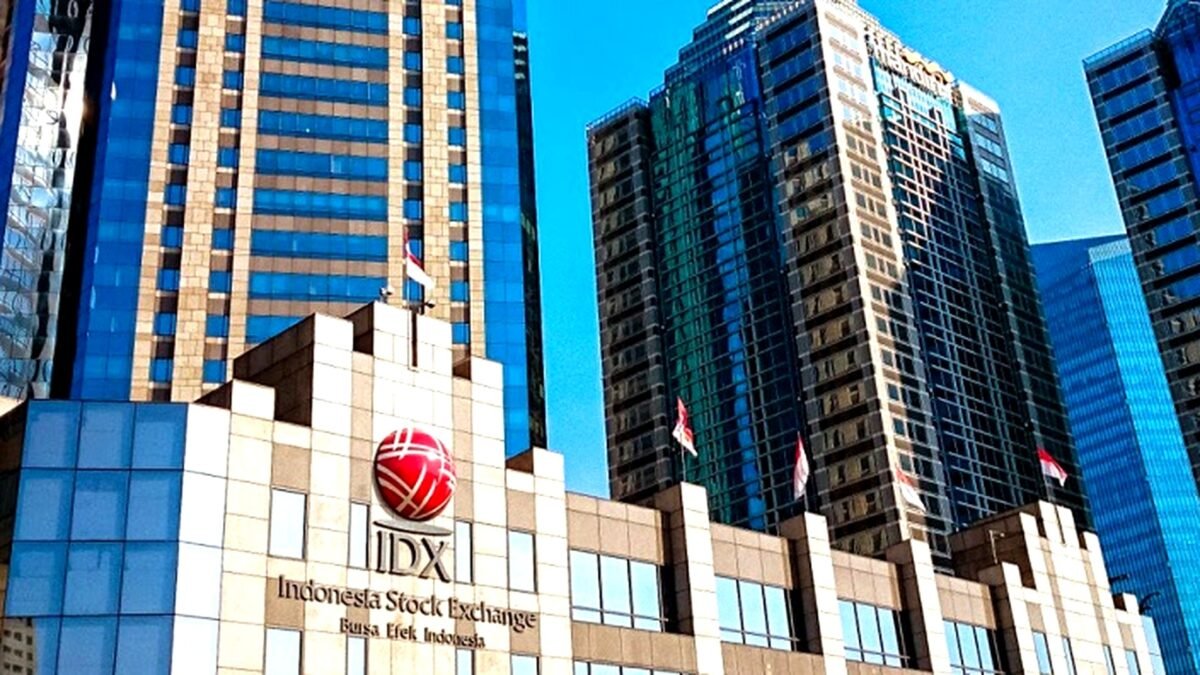
The Indonesia Stock Exchange (IDX) said it was seeking clarification from MSCI and pointed to reform progress it says is under way. But reassurances from the exchange have done little to calm investors so far.
Analysis: Why It Matters
Standalone status would be far worse than a frontier demotion. MSCI’s classification system runs from developed to emerging to frontier, with standalone sitting outside the ladder entirely — a category for markets so problematic that standard index rules cannot accommodate them. For Indonesia, a G20 economy that has spent decades presenting itself as an investment-grade success story, being grouped with Lebanon, Zimbabwe, Argentina and Palestine would be a devastating reputational blow. The label would signal to every global asset allocator that the country’s market infrastructure cannot be trusted, and such labels, once attached, are notoriously slow to remove.
This is fundamentally a governance crisis, not just a market sell-off. MSCI is not punishing Indonesia for poor economic performance or weak earnings; it is questioning whether the market’s prices are real. “Suspected coordinated trading behaviour” is an accusation that strikes at the credibility of the entire price-discovery mechanism. If investors cannot trust that quoted prices reflect genuine supply and demand, the entire edifice — valuations, risk models, portfolio allocations — collapses. The fact that Indonesia’s regulator only unveiled sanctions against alleged manipulators on the very day MSCI issued its warning compounds the damage: it looks less like reform and more like damage control, which is presumably why MSCI found “no evidence of meaningful enforcement”.
The episode exposes the credibility gap at the heart of President Prabowo Subianto’s economic ambitions. The president has made attracting foreign capital a central pillar of his economic programme, seeking to finance infrastructure, industrialisation and a broader development agenda. Yet foreign investors have responded with the largest annual sell-off in at least 16 years, according to Reuters. There is a painful irony here: the harder Jakarta chases foreign money, the faster it flees — because investors do not put capital into markets they believe are rigged. Until the integrity question is answered with convincing, sustained enforcement, every presidential roadshow and investment summit will be fighting a losing battle against the MSCI headline.
Index labels move real money, which is why this warning has such teeth. It is tempting to dismiss MSCI’s classifications as arcane industry plumbing, but the Goldman Sachs figures illustrate the mechanics: roughly $5.6 billion of passive selling on full removal, equal to 18 days of normal trading volume, would mean sellers overwhelming buyers for nearly a month straight. Passive funds do not exercise judgement; they replicate indexes, and when the index changes, they sell automatically. That is why the Friday crash was so violent — active investors were front-running the passive exodus, trying to sell before the machines do. This feedback loop is exactly how an index decision can turn a paper downgrade into a real economic event, depressing the rupiah, widening bond spreads, and tightening financial conditions across the economy.
Contagion is the open question, and Indonesia’s real economy is stronger than its stock market suggests. The risk now is that the equity rout bleeds into the currency and the sovereign bond market, forcing Bank Indonesia into a painful choice between defending the rupiah with rate hikes and supporting growth. Yet it is worth remembering what Indonesia’s market actually represents: an economy of nearly 280 million people, abundant natural resources, a young workforce and a government with genuine reform capacity when it chooses to use it. The factories, mines and consumers have not changed because MSCI issued a statement. The market’s 40 per cent year-to-date decline, in that light, is as much a crisis of confidence as of fundamentals — and confidence crises can be reversed faster than structural ones, provided Jakarta acts decisively rather than cosmetically.
What to Watch Next
- The June decision deadline. MSCI is expected to issue its final verdict by June, and every reform announcement between now and then will be read as evidence for or against demotion. Watch for a formal consultation or a concrete list of demands.
- Enforcement, not announcements. MSCI wants evidence of “meaningful enforcement”, not Friday press releases. Track whether the regulator’s sanctions against the three firms lead to real penalties, prosecutions or delistings — and whether similar actions follow.
- Whether FTSE Russell moves. Goldman Sachs said a further $2.7 billion could leave if FTSE Russell follows MSCI. Any signal from the second major index provider would deepen the crisis significantly.
- The rupiah and Bank Indonesia. With the currency near 18,000 per dollar, watch the central bank’s posture: intervention to defend the rupiah, or a rate hike that could squeeze the domestic economy further.
- Prabowo’s response. The president has staked his economic agenda on foreign investment. Whether he treats this as a technocratic market issue or a political crisis — and what powers he gives the regulator — will shape the outcome as much as any market signal.
Sources

About the Author — Abdul Mannan
Related Articles

Penske Automotive Agrees to Go Private in $16.3 Billion Buyout by Penske Corp and Mitsui
Penske Automotive Group has agreed to be taken private by Penske Corporation and Japan's Mitsui & Co. in…

US Car Buyers Hit Record $787 Monthly Payments as $1.7 Trillion Auto-Loan Market Flashes Warning Signs
Record $787 monthly payments, $1.71 trillion in auto debt and near-record subprime delinquencies — fresh data shows America's…

Harvard’s Endowment Surges 27.1% to $68 Billion, Powered by $2.2 Billion SpaceX Stake
Harvard's endowment gained 27.1% in fiscal 2026, its strongest return since 2021, as a $2.2 billion SpaceX position…