
Penske Automotive Agrees to Go Private in $16.3 Billion Buyout by Penske Corp and Mitsui

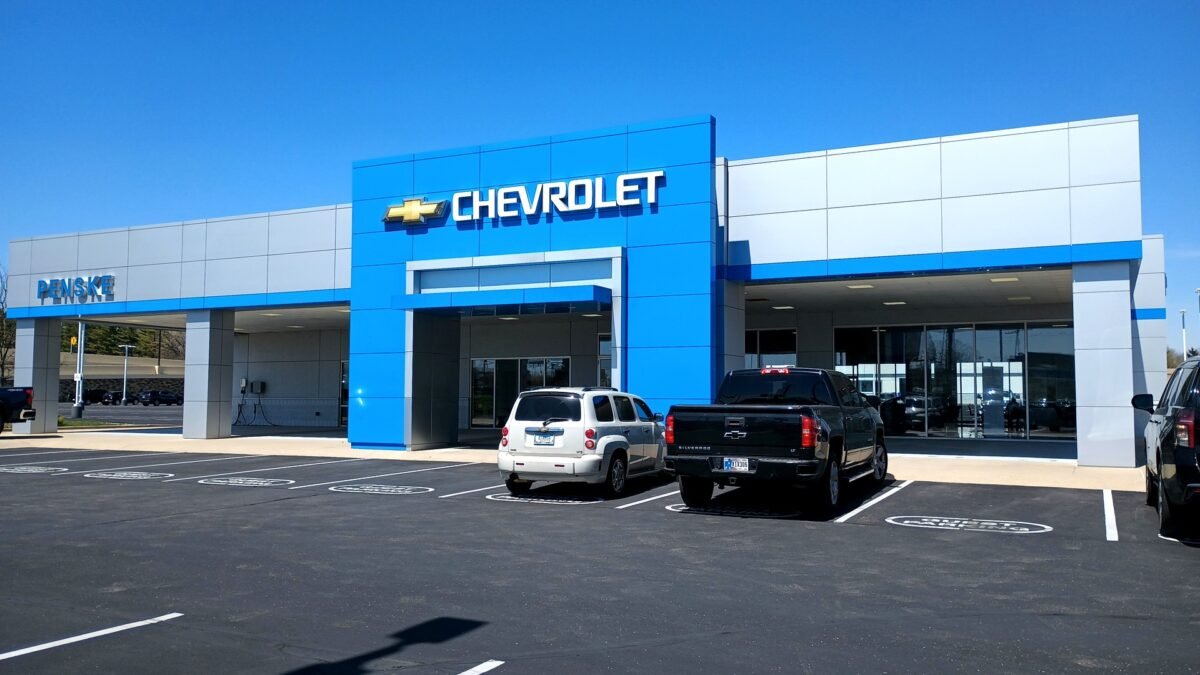
Penske Automotive Group, one of the world’s largest car dealership operators, has agreed to end its life as a public company. The Michigan-based auto retailer said on Thursday that it had entered into a definitive merger agreement to be taken private by its two biggest shareholders — Penske Corporation, the transportation and motorsport empire of Roger Penske, and Japan’s Mitsui & Co. — in a transaction that values the company at roughly $16.3 billion including debt.
Under the terms of the deal, minority shareholders will receive $212.00 in cash for each share they hold, through a buyer vehicle named Motown Acquisition Corp., according to a press release issued by the company. The purchase price represents a premium of about 8.6% to Penske Automotive’s closing price on July 21, 2026, the day before the initial buyout proposal was made public, and a premium of roughly 20% and 26% respectively to the company’s 60-day and 90-day volume-weighted average prices in the run-up to that approach, the company said.
Compared with the stock’s closing price of $194.79 on October 14, the last trading day before the definitive agreement was announced, the offer carries an 8.84% premium. Shares of the New York-listed company jumped about 8.5% in premarket trading on Thursday to around $211.40, heading for their largest single-day percentage gain since July 22, according to Dow Jones Market Data cited by Barron’s. The stock has already had a strong year, climbing nearly 23% in 2026 to date and comfortably beating the S&P 500’s roughly 13% gain, Reuters reported.
Once the transaction closes, Penske Automotive Group will cease to trade on the New York Stock Exchange. Penske Corporation, which currently owns a little over 52% of the auto retailer, will hold approximately 64% of the privatised company, while Mitsui — which has been an investor for 25 years and holds around 20% — will own the remaining 36%. The deal is expected to close in the first quarter of 2027, subject to shareholder and regulatory approvals and other customary closing conditions. Notably, the agreement is not subject to a financing condition, the company said.
Approval by unaffiliated shareholders — those outside the Penske-Mitsui investor group — will be required, with a majority of votes cast needed for the deal to proceed. A special committee of independent, disinterested directors unanimously recommended the transaction after evaluating it with independent legal and financial advisers, and the full board subsequently approved it, according to the company.
The company said it still plans to report third-quarter 2026 results on October 28 but will not hold an earnings conference call because of the pending transaction. It also expects to keep paying regular quarterly cash dividends through closing, within limits set out in the merger agreement, and will pay a prorated dividend covering any partial quarter before the deal completes.
A quarter-century partnership turns private
Roger Penske, the 89-year-old chairman and chief executive of Penske Automotive Group, framed the buyout as a natural evolution of the company’s ownership rather than a change of direction. “This transaction marks an important next chapter for PAG. Mitsui has been a shareholder for 25 years, and we have had a productive relationship over the past quarter-century,” he said in the company’s statement. “Together with Mitsui, we will build on PAG’s operational excellence and draw on our combined capabilities and networks to drive innovation and expand PAG’s business through new opportunities and collaborative projects.”
Penske Automotive Group was founded as United Automotive Group in 1990 and was acquired by Penske Corporation and Roger Penske in May 1999; it adopted its current name in 2007. Today it operates 320 retail automotive franchises — 146 in the United States and 174 outside the country — along with 23 CarShop used-vehicle dealerships in the US and the United Kingdom and 37 commercial-truck dealerships across the American south and midwest, the company says. Its British arm includes Sytner Group, the UK’s largest car dealer group, which has been part of Penske Automotive since 2002. UK trade publication AM Online reported that no changes to Sytner’s management, dealership network or UK investment plans have been announced.
Financially, the retailer has been one of the stronger operators in auto retail. Revenue for the second quarter ended June 30 grew about 11% year on year to $8.5 billion, with earnings of $3.62 a share beating Wall Street’s call for $3.42, according to FactSet figures reported by Barron’s. Solid performance in the parts-and-service divisions has helped offset broader pressure on new-vehicle margins across the sector.
The market’s reaction extended beyond Penske Automotive itself. Shares of rivals CarMax and Lithia Motors rose 3.4% and 0.6% respectively in premarket trading on Thursday, while Carvana slipped 0.8%, Barron’s reported — a sign that investors are reading the buyout as evidence of latent value in the dealer sector.
Analysis: Why It Matters
1. Private ownership gives a dealer giant room to manoeuvre
Auto retail sits at an awkward intersection right now. New-vehicle margins have been under steady pressure as inventories normalise after the pandemic-era shortages that sent dealership profits soaring. At the same time, dealers must invest heavily in digital sales platforms, electric-vehicle servicing capability and acquisitions of smaller family-owned franchises — all capital-intensive moves whose payoffs arrive over years, not quarters. Quarterly earnings scrutiny can punish exactly the kind of long-cycle investment that keeps a dealership group competitive.
That is the standard rationale for a go-private deal, and it is particularly credible here because the buyers are not financial engineers. Penske Corporation and Mitsui are not private-equity funds with a five-year exit clock; they are industrial owners with quarter-century track records in this business. A private Penske Automotive can fund acquisitions and invest in service operations without managing the optics of every quarterly margin figure — while remaining under owners who understand dealerships. For minority shareholders, the question is whether $212 a share is adequate compensation for giving up that future.
2. The premium looks modest — and that matters
The headline 8.6% premium to the pre-proposal price is thin by the standards of large buyouts, which often run into the double digits. The 26% premium to the 90-day volume-weighted average price is more generous, but even that is partly a reflection of where the shares traded in midsummer rather than where the company’s fundamentals sit today. The share price’s immediate move to within cents of the offer price — just 66 cents below it at midday on Thursday, per TradingView’s report — suggests the market believes the deal will close at the agreed terms, but it also suggests investors see little chance of a competing bid emerging.
The investor-rights law firms that quickly announced investigations into whether the price fairly values the company — firms such as Brodsky & Smith, Ademi and others, which routinely scrutinise going-private deals — will face an uphill argument given the special committee’s unanimous recommendation and the backing of independent advisers. Still, their presence is a reminder that when a controlling shareholder buys out minorities, the conflict-of-interest dynamics are real, and the minority vote required for approval is the mechanism that keeps the process honest. That vote, rather than litigation, is where the premium debate will be settled.
3. It is a vote of confidence in the dealership model
There has been no shortage of predictions that traditional car dealerships would be hollowed out — first by the direct-sales model of electric-vehicle start-ups, then by online used-car platforms. Penske Automotive’s trajectory tells a different story: steady growth, 320 franchises across three continents, and a buyout at $16.3 billion led by owners doubling down rather than exiting. The company’s own numbers show why: parts and service — the high-margin, recurring side of the business — keep growing even as new-vehicle margins normalise.
That is why rival dealer stocks rose on the news. CarMax and Lithia are not party to this transaction, but investors treated the deal as a benchmark valuation for the sector — a “mark-to-market” moment suggesting that well-run dealership groups are worth more than the public market has been paying. If the thesis holds, this deal may not be the last consolidation move in auto retail.
4. The UK angle is quiet — but worth watching
For Britain, the deal’s most tangible footprint is Sytner, the Nottingham-based dealer group that sits at the top of the AM100 rankings. The company’s statement that no changes to Sytner’s management, network or investment plans have been announced will reassure staff and customers, and private ownership could plausibly mean more patient capital for Sytner’s UK expansion. But there is an asymmetry worth noting: British car buyers and workers will now have their largest dealer group controlled entirely from Bloomfield Hills and Tokyo, with no public disclosure obligations to UK markets. Private owners owe their reporting to regulators, not to minority shareholders — which makes the company’s existing governance commitments worth tracking once the deal closes.
5. The deal clock starts now — and it is not risk-free
A going-private transaction between existing majority owners clears many of the usual hurdles — there is no financing condition here, which removes the biggest single source of deal risk. But two gates remain: the minority shareholder vote and regulatory approvals, including competition review given the buyer’s existing majority stake and the companies’ overlapping footprints in truck leasing and commercial vehicles. The spread between the market price and the $212 offer is the market’s estimate of that residual risk, and at under 1% it signals high confidence. Even so, deals of this size attract antitrust scrutiny on both sides of the Atlantic, and the early-2027 target leaves a long runway for questions to surface.
What to Watch Next
- The minority shareholder vote. Approval requires a majority of votes cast by unaffiliated shareholders. Watch for proxy filings that disclose the valuation analyses behind the special committee’s recommendation — they will show whether $212 was at the top, middle or bottom of the advisers’ range.
- Regulatory clearance. The companies will need competition approval, with both the US and UK aspects of the business in scope. The timeline to the targeted Q1 2027 close will be tested by the length of these reviews.
- Third-quarter results on October 28. With no earnings call scheduled, the numbers will have to speak for themselves — and they will be the last clean look at the company’s standalone performance before the vote.
- Whether investor-rights investigations gain traction. Routine at announcement, but if they produce evidence that the board did not adequately canvass alternative bids, the narrative could shift ahead of the vote.
- Sector read-across. Watch whether CarMax, Lithia, AutoNation and Carvana sustain their post-announcement gains — a persistent re-rating would confirm that the Penske deal has reset how the market values auto retail.
Sources

About the Author — Abdul Mannan
Related Articles

US Car Buyers Hit Record $787 Monthly Payments as $1.7 Trillion Auto-Loan Market Flashes Warning Signs
Record $787 monthly payments, $1.71 trillion in auto debt and near-record subprime delinquencies — fresh data shows America's…

Harvard’s Endowment Surges 27.1% to $68 Billion, Powered by $2.2 Billion SpaceX Stake
Harvard's endowment gained 27.1% in fiscal 2026, its strongest return since 2021, as a $2.2 billion SpaceX position…
India Says First Phase of US Trade Deal Finalised, Enters Legal Drafting
Commerce Minister Piyush Goyal says the first tranche of the India-US bilateral trade agreement is undergoing legal drafting,…