
Kenya Confirms Eighth Ebola Case as DR Congo Outbreak Reaches Eighth Province

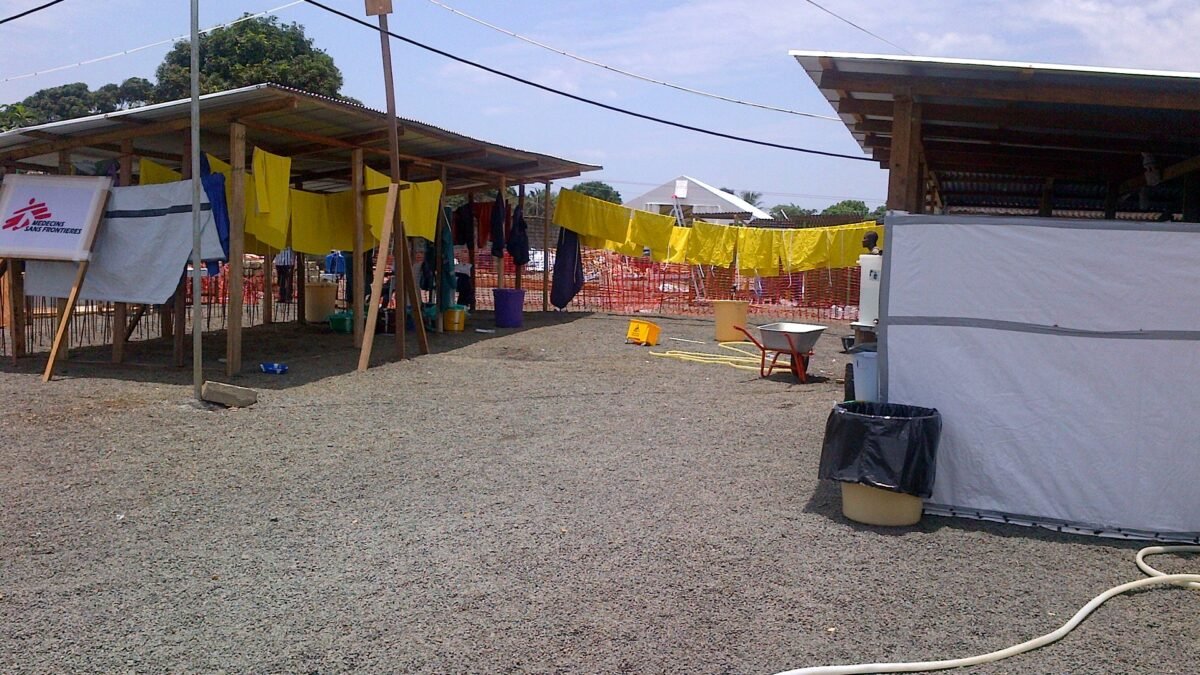
Kenya Confirms Eighth Ebola Case as DR Congo Outbreak Reaches Eighth Province
Kenya has confirmed its eighth case of Ebola, health authorities announced on Sunday, as the deadly outbreak at the centre of the region’s worst health crisis in years showed fresh signs of widening its reach. The Democratic Republic of the Congo officially confirmed on the same day that the virus has now spread to an eighth province, underscoring that transmission has yet to be brought under control, according to Reuters.
Kenya’s Director-General for Health, Patrick Amoth, told Citizen TV that one person had tested positive out of 38 people screened on Sunday. The new patient is a 49-year-old man who is not a healthcare worker: he worked as a patient attendant at the Nairobi hospital where Kenya’s first Ebola patient died earlier this month, cleaning utensils and linens, and was probably exposed to that first case, according to Reuters.
Amoth said the man developed fever, headache and muscle pain. The symptoms began on Saturday, at which point he was separated from other people in quarantine, and the positive test result came back on Sunday, a health ministry source told Reuters. The patient has since been isolated and is expected to receive the same monoclonal antibody treatment administered to the seven earlier confirmed patients, all of whom are responding well, according to Kenyan reporting.
The latest infection brings Kenya’s confirmed tally to eight, with one death reported since the virus was first detected in the country — the index patient, a man who travelled from the Democratic Republic of the Congo to Nairobi and died at a Nairobi hospital on October 5.
Kenyan outlets reporting the announcement added further detail: all seven previously confirmed patients received monoclonal antibodies and are responding well, including a 65-year-old patient whose condition has stabilised, and another shipment of medicine from Rwanda arrived on Sunday night, according to Kenya Dispatch and Tukio. Members of the public showing symptoms such as fever, unusual tiredness, muscle pain, vomiting or diarrhoea have been told to seek medical attention promptly, and the ministry’s toll-free 719 helpline remains active for guidance.
Inside the Quarantine Net — Again
Like every Kenyan case after the first, the eighth infection was caught inside the country’s quarantine system. The 49-year-old was among those already identified as a contact of the index patient, according to Kenyan reporting — a sign that contact tracing is doing its job, but also a measure of how far the exposure net around that single October 5 hospital death has had to stretch.
The arc of Kenya’s outbreak so far reads like a textbook case of how Ebola travels through the seams of ordinary life. The first patient arrived from the Democratic Republic of the Congo, was treated in Nairobi, and died on October 5. On Saturday, October 17, the health ministry confirmed the country’s first known in-country transmission: four new cases, including three health workers — two men and a woman aged 29, 35 and 32 — who had treated the index patient between October 3 and 4 and had been in quarantine since October 9, plus a male relative of the deceased patient who had been in quarantine since October 6. That took the total to seven.
Sunday’s eighth case follows the same pattern: someone linked to that first patient’s orbit, already under observation, testing positive after developing symptoms. Amoth told Citizen TV that the risk to the general public remains low and that there is no evidence of community transmission — language consistent with his earlier statements. The system’s credibility will ultimately be measured not by the cases it catches inside quarantine, but by whether any case emerges from outside it.
DR Congo: Official Confirmation for the Eighth Province
Across the border, Congolese authorities confirmed on Sunday that the outbreak has reached North Ubangi province in the country’s north, making it the eighth province affected, according to Reuters. Two men in their twenties tested positive in the Wapinda health zone, and one of them has died, according to the health ministry report cited by regional outlets. The ministry did not specify the source of infection.
The North Ubangi cases had first been reported by Reuters on Thursday, citing two health officials, before the authorities issued an official confirmation — the National Institute for Biomedical Research verified the two cases, including the one death, on Sunday, according to the Voice of Healthcare network. The province borders the Central African Republic, adding a new cross-border dimension to a crisis already spilling across frontiers.
North Ubangi joins North Kivu, Ituri, Haut-Uele, Tshopo, South Kivu, Bas-Uele and South Ubangi among the provinces affected, according to reporting on the ministry’s data. The outbreak has now touched 66 health zones across the eight provinces.
The scale is now difficult to overstate. As of Friday, the country had registered 9,415 confirmed cases and 4,536 deaths since the outbreak began in May, a case fatality rate of 48.2 per cent, according to the latest ministry report. The ministry’s latest situation report recorded 67 new confirmed cases and 26 additional deaths in the 24 hours leading up to October 16. The outbreak has become the largest and deadliest ever recorded in the DRC, and the second-largest Ebola outbreak globally, after the 2014–2016 West Africa epidemic, according to regional reporting.
Ituri province in the east remains the epicentre, accounting for more than 73 per cent of all confirmed cases nationwide, followed by neighbouring North Kivu, according to government data cited by The Eastleigh Voice. Responding to that concentration, authorities in North Kivu are introducing a one-week ban from Monday on people entering the province from Ituri, according to state-run news agency ACP, with restrictions on passenger numbers in cars and on motorbikes and a suspension of large public gatherings, as reported by Al Jazeera. The measures amount to a partial internal cordon around the outbreak’s core.
A Strain With No Vaccine
Both the Congolese and Kenyan outbreaks involve the Bundibugyo strain of the Ebola virus, for which there is no approved vaccine and no specific treatment, according to Kenyan reporting — making early detection, isolation, contact tracing and supportive care the main defences. Treatment in Kenya has centred on monoclonal antibodies, which all of the country’s confirmed patients have received, with officials reporting encouraging responses.
The World Health Organization and regional bodies remain engaged: the Africa CDC has pledged support to Kenya as confirmed cases rise, according to Xinhua reporting cited by The Eastleigh Voice, while international health partners are weighing additional deployments of personnel and supplies to the new zone in North Ubangi.
Officials have stepped up surveillance and contact tracing in the newly affected area. Authorities continue to appeal for calm, stressing that the disease spreads through direct contact with bodily fluids and that early treatment significantly improves survival odds.
Analysis: Why It Matters
1. The quarantine net keeps catching — which is both reassuring and alarming
Every Kenyan infection after the first has been found inside quarantine, among people already identified as contacts of the October 5 index patient. That is the system working exactly as designed: 128 of 130 contacts traced and quarantined in the earlier phase, a 98.5 per cent rate well above the 85 per cent benchmark health authorities cite. But the pattern also reveals the index patient’s exposure radius — health workers, relatives, and now a patient attendant who cleaned utensils and linens. The longer that radius takes to exhaust itself, the more contacts accumulate, and the heavier the surveillance burden grows with each confirmed case. Kenya’s outbreak is being contained one known contact at a time; the moment one case arrives from outside the net, the maths changes.
2. A patient attendant, not a doctor — the hospital-hygiene weak point
The eighth patient is the first Kenyan case that is neither a health worker nor a relative: a 49-year-old man whose job was cleaning utensils and linens at the hospital where the index patient died. His probable exposure route is a reminder that infection-control chains in hospitals include porters, cleaners, laundry staff and food handlers — people who move through patient areas without clinical training in protective protocols. Three health workers were infected treating the index patient between October 3 and 4; now a non-clinical attendant has followed. Hospital-acquired transmission to non-clinical staff points to exposure pathways that standard staff-focused infection control may miss, and it is exactly the kind of signal that should prompt hospitals across the region to audit who enters isolation-adjacent areas, not just how clinicians suit up.
3. The Bundibugyo problem: fighting with one hand tied
Monoclonal antibodies are helping Kenya’s patients — all seven earlier cases are reportedly responding well, and a fresh shipment arrived from Rwanda on Sunday night. But supportive care is a rearguard action, not a counterattack. The Bundibugyo strain has no approved vaccine, which means there is no ring-vaccination strategy of the kind that helped end the West African and later Zaire-strain outbreaks. Containment depends entirely on finding contacts, isolating the sick and breaking transmission chains by hand. In North Ubangi, where surveillance is only now being scaled up and the source of infection is unknown, that is a slow, labour-intensive fight against a virus with a 48 per cent fatality rate.
4. North Ubangi and the geography of escape
The newly affected Congolese province borders the Central African Republic, and the Wapinda cases sit in a mining area near that frontier — the kind of mobile, hard-to-track population that epidemiologists dread. The outbreak’s expansion has followed riverine and cross-border routes that formal surveillance struggles to cover, and each new province adds another border to watch. Uganda was declared Ebola-free in August after recording 20 confirmed cases, but the region’s porous frontiers mean every new province in the DRC resets the region’s risk map. The North Kivu authorities’ decision to ban entry from Ituri for a week, limit vehicle passengers and suspend large gatherings shows governments are now reaching for blunt mobility restrictions — a sign that contact-tracing alone is not keeping pace with the virus’s geography.
5. 9,415 cases, 4,536 deaths — and the world’s attention is elsewhere
This is now the largest and deadliest Ebola outbreak in the Democratic Republic of the Congo’s history and the second-largest ever recorded, behind only the 2014–2016 West Africa epidemic. Yet the international response has been a fraction of what previous outbreaks commanded. The WHO’s Africa bureau, the Africa CDC and bilateral shipments like Rwanda’s medicine delivery are active, but there is no surge of the scale the numbers would seem to demand — while the country simultaneously battles a cholera surge of more than 125,000 suspected cases. Outbreak fatigue is real: with global attention absorbed by wars, sanctions and elections, a slow-burning epidemic in central Africa must compete for resources it is not winning. The danger of that inattention is cumulative — every week the outbreak is not extinguished is another week for it to find a new province, a new country, or a new hospital attendant.
What to Watch Next
- The eighth patient’s outcome and the rest of the contact list: with all Kenyan cases so far caught inside quarantine, the next test is whether the contact list is finally exhausted — or whether another name on it develops symptoms in the coming days.
- North Kivu’s one-week entry ban: starting Monday, the province closes to arrivals from Ituri and curbs vehicle passengers and gatherings. Whether the ban slows Ituri’s exports of infection — or simply pushes movement underground — will be visible within two incubation cycles.
- North Ubangi’s source of infection: Congolese authorities have not identified how the two Wapinda cases were infected. Finding the transmission chain there, near the Central African Republic border, is the difference between a contained pocket and a new front.
- Cross-border alerts: with Uganda previously affected and Kenya’s tally at eight, health authorities in South Sudan, Rwanda and the Central African Republic will be watching North Ubangi and Ituri closely for imported cases.
- Treatment supply lines: Kenya’s reliance on monoclonal antibodies — with another Rwandan shipment arriving Sunday — makes the regional supply of therapeutics a quiet but critical variable. Any interruption would leave the Bundibugyo strain’s no-vaccine reality fully exposed.
Sources
- Reuters — “Kenya confirms eighth Ebola case as regional outbreak spreads” (Oct 18, 2026)
- Radar Africa — “Kenya confirms eighth Ebola case as outbreak spreads across East Africa” (citing Al Jazeera, AFP, AP and Reuters)
- Kenya Dispatch — “Kenya Confirms Eighth Ebola Case After Nairobi Hospital Patient Attendant Tests Positive”
- The Eastleigh Voice — “Ebola outbreak spreads to 8th province in DR Congo”
- Know Afrika — “Kenya Confirms Eighth Ebola Case Amid Outbreak”

About the Author — Abdul Mannan
Related Articles
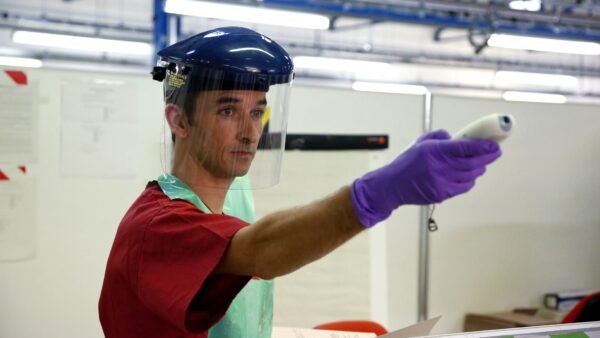
Kenya Confirms Four New Ebola Cases, Including Three Health Workers; Total Rises to Seven
Kenya's health ministry has confirmed four new Ebola cases — including three health workers who treated the country's…
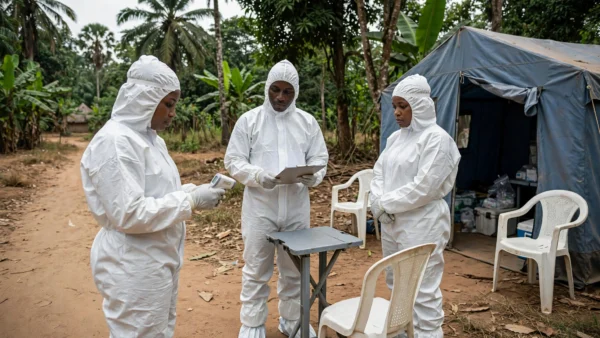
Ebola Outbreak Spreads to Eighth Congo Province as Kenya Confirms Second Case
Ebola has reached an eighth province of DR Congo, with two confirmed cases in North Ubangi near the…

Experimental Drug ANB033 Shields Celiac Patients From Gluten Damage in Early Trial
First Tracks Biotherapeutics' ANB033, an investigational CD122 antagonist, significantly protected celiac patients against gluten-induced intestinal damage and symptoms…