
Kenya Confirms Four New Ebola Cases, Including Three Health Workers; Total Rises to Seven

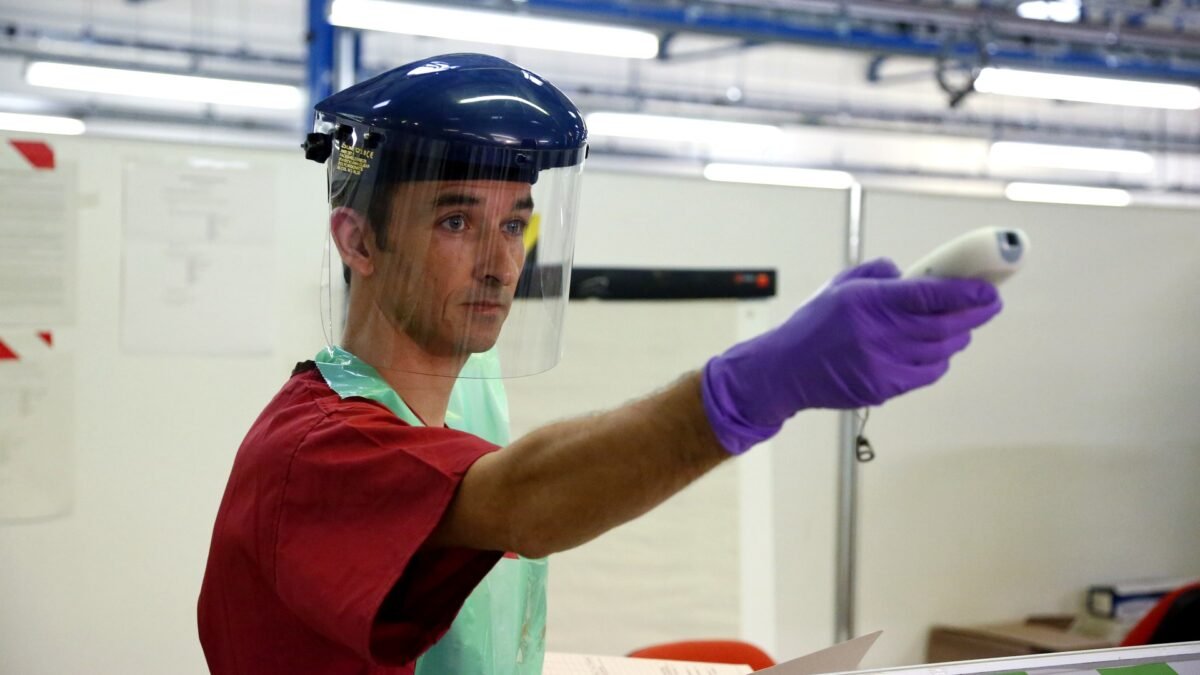
Kenya’s health ministry has confirmed four new cases of Ebola virus disease, including three health workers who treated the country’s first patient, bringing the total number of confirmed infections in the country to seven, the ministry announced on Saturday.
The announcement marks a significant escalation in Kenya’s outbreak response: the new cases are the first known infections passed on inside the country, according to Reuters. All four new patients were already in quarantine when they developed symptoms and were diagnosed, and the ministry says there is no evidence so far of the virus spreading in the wider community.
The three infected health workers — two men and a woman, aged 29, 35 and 32 — managed the index patient in hospital on October 3 and 4 and had been in quarantine since October 9, the ministry said in a statement reported by Reuters. The fourth new case is a male relative of the index patient, who died; the relative had been in quarantine since October 6.
Kenya’s Director-General for Health, Dr Patrick Amoth, said all four patients initially developed fever before being isolated and tested, according to Nairobi News and Capital FM. Their samples tested positive for Bundibugyo virus disease at both the National Virology Reference Laboratory and the Kenya Medical Research Institute (KEMRI) laboratory — dual confirmation at the country’s two top virology facilities.
“The risk to the general public remains low as there is no evidence of community transmission of the disease,” Dr Amoth said in the statement, as quoted by Capital FM. He added that the patients were receiving supportive care, noting that the second and third confirmed patients were stable and responding well to treatment.
A quarantine system being tested — and, so far, holding
The fact that all four new cases emerged from within the quarantine net is being presented by Kenyan authorities as evidence that the containment apparatus is working. The ministry said it had identified around 130 contacts of the first patient, of whom 128 — or 98.5 per cent — had been traced and placed in quarantine, a figure the ministry says exceeds the 85 per cent global benchmark considered necessary to break a chain of transmission, according to Reuters and Capital FM. Two contacts were still being traced.
The early detection of the infections, the ministry said, had limited the risk of further transmission to the patients’ families and the wider community while improving the patients’ chances of survival, Nairobi News reported. The health workers, who treated the first patient during his hospital stay, are now receiving supportive care at designated treatment facilities, according to Capital FM.
Kenya has also strengthened screening at points of entry and established an emergency hotline — 719 — for anyone who suspects they may have been in contact with an Ebola patient or develops symptoms, according to the ministry’s public communications reported by the Australian Associated Press.
How the virus reached Kenya
Kenya’s first case was a man who had been ill in the Democratic Republic of Congo for about a month before travelling by road to Uganda and flying to Nairobi on October 3, according to Reuters. He died on October 5. The Australian Associated Press identified him as a 40-year-old Kenyan man.
His journey has raised questions about screening at the Congo-Uganda border — which has been closed since May — and at Nairobi’s Jomo Kenyatta International Airport, Reuters reported. Kenya’s cases are linked to the Ebola epidemic in Congo, which the agency describes as the second-largest outbreak ever recorded, with more than 9,000 cases and more than 4,000 deaths.
The current outbreak began in mid-May in eastern DR Congo, according to the Australian Associated Press, which reported that the Congo epidemic has killed at least 4,300 people since May. The outbreak has now reached an eighth province of the country, North Ubangi, where two confirmed cases were identified in a mining area near the border with the Central African Republic earlier this month.
The Bundibugyo problem: no vaccine, no approved treatment
The strain behind the outbreak — Bundibugyo virus — is a rarer member of the Ebola family, and there are no approved vaccines or treatments for it, according to both Reuters and the Australian Associated Press. That stands in sharp contrast to the Zaire strain of Ebola, for which vaccines and monoclonal antibody treatments exist and were deployed in previous outbreaks.
Ebola is highly contagious and spreads through direct contact with the bodily fluids of an infected person — including blood and vomit — or through contact with contaminated materials and surfaces such as bedding and clothing, according to the Australian Associated Press. Care for patients therefore rests on supportive treatment: fluids, oxygen, blood pressure management and treatment of secondary infections, delivered under strict infection prevention and control protocols.
The World Health Organization has been moving to reinforce Kenya’s response. On October 9, the WHO handed over around $70,000 worth of essential supplies to Kenya’s health ministry following the country’s first confirmed imported case, including viral haemorrhagic fever kits, personal protective equipment, hazmat suits, isolation gowns, goggles and face shields, testing kits, biohazard containers for the safe transport of samples, infrared thermometers for screening, infection prevention and control supplies, and body bags for safe and dignified burials, according to UNifeed, the UN’s video news service.
“Protecting health workers is essential to saving lives,” said Dr Neema Rusibamayila Kimambo, the WHO’s representative in Kenya, at the handover event, according to UNifeed. She commended the Kenyan government for what she described as its swift and coordinated response following confirmation of the country’s first imported case of Bundibugyo Ebola virus disease.
Analysis: Why It Matters
The infection of three health workers is the development that changes the texture of this outbreak. Health-worker infections are a classic signal in Ebola epidemics: they indicate that the virus was circulating in a clinical setting where, in principle, infection prevention and control should be at its tightest. The three workers treated the index patient on October 3 and 4 — the very first days of Kenya’s encounter with this virus, when the diagnosis may not yet have been confirmed and full Ebola protocols may not yet have been in place. That timing matters. It suggests these infections were likely acquired before the alarm was fully raised, rather than through a failure of established protocols. Still, each infected health worker represents both a human cost and a practical one: experienced staff removed from the response at the moment they are needed most.
The second significant feature of Saturday’s announcement is what it says about Kenya’s quarantine system. Every one of the four new cases was caught inside quarantine — the relative isolated since October 6, the health workers since October 9. Contact tracing at 98.5 per cent, comfortably above the 85 per cent benchmark the ministry cites, is genuinely impressive for a country confronting its first Ebola cases. The honest caveat is the two contacts still being traced. In Ebola response, the arithmetic is unforgiving: a single untraced contact who develops symptoms outside the net can restart a transmission chain. The ministry’s transparency about those two outstanding contacts is therefore as important as the headline figure.
Third, the Bundibugyo factor cannot be overstated. Public understanding of Ebola is shaped by the Zaire-strain outbreaks, where the Ervebo vaccine and antibody treatments transformed the response. Bundibugyo offers none of that armoury. Supportive care saves lives — the ministry’s note that earlier patients are stable and responding well is encouraging — but without a vaccine, containment leans entirely on the old disciplines: find every contact, isolate the sick, protect the carers, communicate honestly with the public. Kenya is running a 1976 playbook against a 2026 outbreak, and so far it is working. The question is whether it can hold if case numbers grow.
Fourth, the regional dimension looms over everything. The Congo outbreak — more than 9,000 cases, more than 4,000 dead, now in eight provinces — is the second-largest ever recorded, and it is the engine supplying Kenya’s importation risk. The index patient’s overland journey through Uganda, a border closed since May, and a flight into Nairobi’s main international airport illustrate how porous the region’s defences are. Kenya’s strengthened screening and its 719 hotline are necessary, but they are downstream measures. The upstream battle is in eastern Congo, and it is not being won.
Finally, the credibility of official communication will decide how the coming weeks unfold. Dr Amoth’s statement that public risk “remains low” is, on the current evidence, accurate — all new cases were in quarantine, no community transmission detected. But that credibility is a wasting asset that must be renewed with each announcement. The ministry’s decision to disclose the health-worker infections promptly, rather than have them surface through rumour, was the right call. Ebola outbreaks are lost as often to mistrust as to the virus itself; communities that believe the authorities cooperate with contact tracers, and those that do not, hide the sick.
What to Watch Next
- The two outstanding contacts. The ministry reported 128 of 130 contacts traced and quarantined. Whether the remaining two are found — and found before any symptoms appear — is the single most important near-term indicator of whether containment holds.
- The condition of the four new patients. With no approved treatment for Bundibugyo virus, outcomes depend on supportive care. Their progress will shape both the human story and public confidence in the response.
- Any signal of community transmission. The ministry says there is none. The moment a case appears outside the known contact chain, the outbreak enters a different and more dangerous phase — wider testing, possible movement restrictions, and far greater public anxiety.
- Screening and border measures. The index patient’s route — by road through Uganda, then by air into Nairobi — exposed gaps. Watch for tighter screening announcements at Jomo Kenyatta International Airport and land borders in the coming days.
- The Congo outbreak’s trajectory. Kenya’s risk is imported risk. With the Congolese epidemic at more than 9,000 cases and spreading to new provinces, regional health authorities and the WHO will be watching for further cross-border spillover — Uganda contained its own brush with the virus in August, but the region remains exposed.
Sources
- Reuters — Kenya confirms four new Ebola cases, bringing total number to seven
- Australian Associated Press — Number of Ebola cases in Kenya rises to seven
- Capital FM Kenya — Ebola cases rise to seven as four new cases detected in quarantine
- Nairobi News — Kenya confirms four new Ebola cases, total rises to seven
- UNifeed (WHO) — WHO hands over Ebola response supplies to Kenya

About the Author — Abdul Mannan
Related Articles
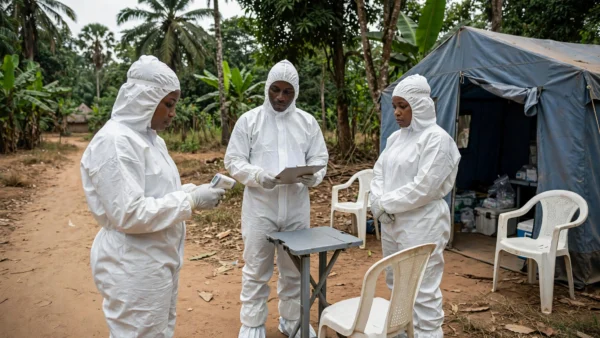
Ebola Outbreak Spreads to Eighth Congo Province as Kenya Confirms Second Case
Ebola has reached an eighth province of DR Congo, with two confirmed cases in North Ubangi near the…

Experimental Drug ANB033 Shields Celiac Patients From Gluten Damage in Early Trial
First Tracks Biotherapeutics' ANB033, an investigational CD122 antagonist, significantly protected celiac patients against gluten-induced intestinal damage and symptoms…

Lancet Commission Names Obesity the Largest Preventable Threat to Global Health, Ahead of Pandemics and Antimicrobial Resistance
A new Lancet Commission launched in Berlin ranks obesity as the largest avoidable threat to human health over…