
Burnham Vows to End ‘Rip-Off’ Parking Charges as Sweeping New Driver Rights Go Before Parliament

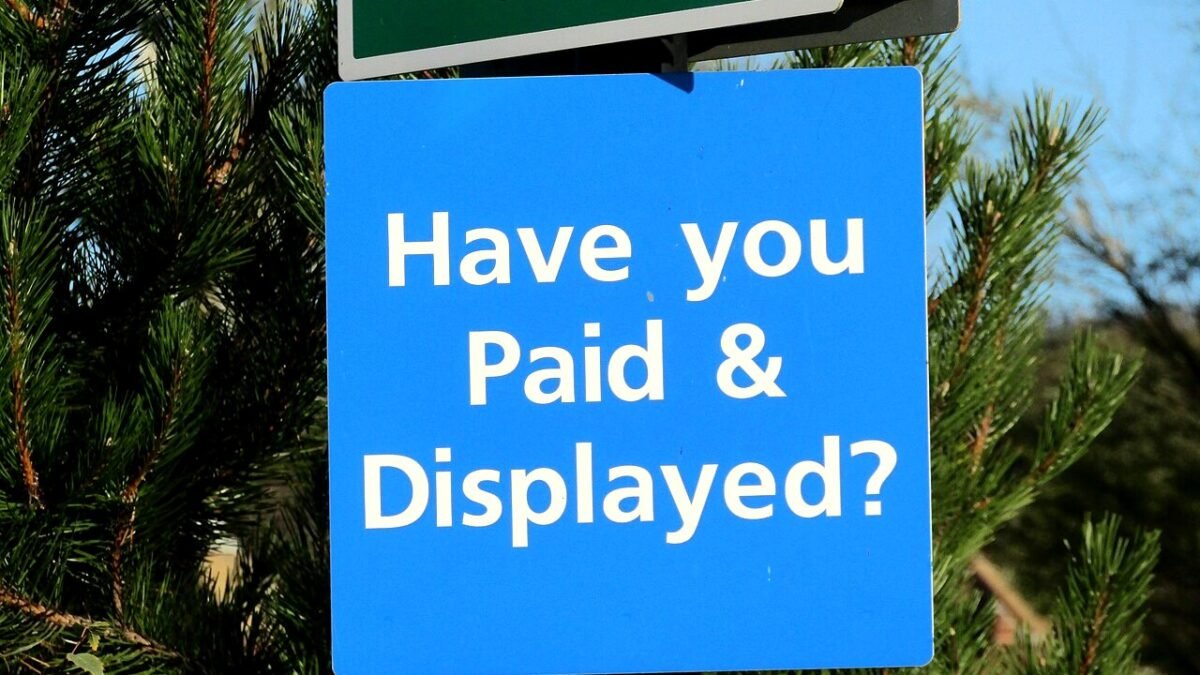
Burnham Vows to End “Rip-Off” Parking Charges as Sweeping New Driver Rights Go Before Parliament
Drivers across England, Scotland and Wales are set for the biggest shake-up of private car park rules in a generation, after Prime Minister Andy Burnham unveiled a new statutory Code of Practice that hands motorists guaranteed grace periods, strict caps on fines and powerful new rights to challenge charges they believe are unfair.
The new code, which is to be laid before Parliament on Tuesday, takes aim at what the government describes as the unfair and often aggressive practices of some private parking companies, and follows years of mounting public anger over charges that drivers say have left them feeling, in Burnham’s own words, “ripped off and out of pocket”.
Under the rules set out by the prime minister, every driver using a private car park will be guaranteed a five-minute window on arrival to decide whether to stay and park, plus a further ten-minute grace period to leave the car park once their paid session has ended, before any penalty can be imposed, according to reporting by The Times and the BBC.
Charges will be cancelled on appeal where the motorist was caught out by circumstances beyond their control, including vehicle breakdowns inside the car park, medical emergencies, broken ticket machines, and even honest mistakes such as stopping briefly to check directions before driving off again.
And for the small slip-ups that have triggered some of the most notorious fines, the code introduces a sharp new ceiling: a maximum charge of £20 on appeal for minor errors such as mistyping a single digit of a number plate, forgetting to display a parking permit, or forgetting to confirm a vehicle registration at the payment machine.
The maximum private parking charge itself will be frozen at £100, the same limit that applies under the current industry code, while operators will be banned from automatically charging motorists simply for entering a car park without paying, The Times reported.
“Being a few minutes late back to your car or typing one digit of your numberplate wrong shouldn’t end with a hefty fine landing on your doormat,” Burnham said. “These charges leave people feeling ripped off and out of pocket, so I’m putting a stop to them.”
“We are introducing clearer rules, longer grace periods and lower charges for genuine mistakes, while going after the deliberate scams that rip drivers off,” the prime minister added, according to coverage of the announcement.
The enforcement mechanism is the lever the industry has long feared: private parking operators that refuse to comply with the code risk losing access to the DVLA’s database of vehicle keepers, the gateway that allows firms to trace the owner of a car from its number plate and pursue payment through the post. Without it, a company can still issue a charge, but collecting it becomes dramatically harder.
The announcement applies to England, Scotland and Wales. Northern Ireland is not covered.
The scale of the business the code seeks to regulate is vast. Analysis of government data by the RAC found a record 17 million private parking tickets were issued in 2025/26, a 17 per cent increase on the previous year. Analysis carried out by the Press Association and the RAC Foundation suggested that with each charge worth up to £100, drivers could collectively face private parking charges worth more than £4.6 million every single day.
Separate figures cited by The Times put the number of fines issued at almost 14.4 million a year, a 148 per cent increase since 2019, over a period in which the number of private car parks has mushroomed from about 10,000 in 2012 to almost 50,000 today.
The human cost behind those numbers has been illustrated by cases that became national talking points. In one case reported by the BBC, a woman was taken to court in a £1,906 claim after taking longer than five minutes to pay at a car park in Derby; the charge was eventually dropped.
The AA, one of Britain’s largest motoring organisations, said the changes could finally give drivers meaningful protection. The organisation has previously warned that some drivers simply pay up even when they believe they have done nothing wrong, fearing they would not get a fair hearing on appeal and worrying about the prospect of legal action.
“Many of the principles within the new framework are already reflected in the existing voluntary Code of Practice,” the British Parking Association told the BBC, while welcoming the changes. The current industry code, created by the British Parking Association and the International Parking Community, was introduced in 2024.
The government’s own consultation on cracking down on unscrupulous parking companies in England, Scotland and Wales closed more than a year ago, according to The Times, but the measures it produced had never been put into effect, until now.
The parking code is the latest in what Burnham’s government has been calling a “series of everyday fixes” aimed at the small frictions of daily life. It follows the prime minister’s announcement on Monday of a national campaign against nuisance behaviour on public transport, under which people who play music out loud on buses and trains face fines of up to £100.
Analysis: Why It Matters
A revolt years in the making
This code did not emerge overnight. Parliament legislated for a single statutory code of practice for private parking as far back as 2019, in the Parking (Code of Practice) Act, after years of MPs being flooded with complaints from constituents about signs they could not read, machines that swallowed money and demands that arrived weeks after the event. A government-drafted code was briefly published in 2022, then withdrawn after legal challenges from parking companies. What followed was a four-year vacuum filled only by a voluntary industry code, while the number of tickets kept climbing. The significance of Monday’s announcement is not that anyone discovered the problem, it is that a government has finally decided to finish the job it started seven years ago, and to put the result into law rather than guidance. That history is worth keeping in mind, because the industry that challenged the 2022 code in court has not gone away, and the BPA’s polite statement of welcome will be tested the moment the code’s fine print lands.
The DVLA lever is what makes this real
Strip away the grace periods and the £20 cap and the beating heart of the new code is a single sentence: behave, or lose access to the DVLA database. To understand why that matters, follow the paper trail of a typical private parking charge. Unlike a council ticket, which is backed by statute and enforced by the local authority, a private charge is a claim for breach of contract, and the contract is the signage in the car park. The firm does not stop you; a camera photographs your number plate, the operator buys your keeper details from the DVLA, and the demand lands on your doormat. Break the link to the DVLA and the entire business model collapses: the company can photograph every plate in the country and still have no one to write to. That is why ministers have reached for this lever rather than, say, banning charges outright. It is regulation by choke point, and it is elegant, provided the threat is credible and the compliance mechanism that sits behind it has teeth.
The industry’s defence deserves a hearing, but not the last word
The British Parking Association is entitled to its observation that much of the new code mirrors the existing voluntary framework, and in narrow terms it has a point: the industry code introduced in 2024 already contained grace periods and caps. But that defence contains its own rebuttal. If the principles were already in place, the 17 million tickets issued last year and the 148 per cent rise since 2019 suggest they were not being applied with the consistency the industry claims. A voluntary code that good operators follow and bad operators ignore is, from the motorist’s perspective, a lottery. The AA’s assessment cuts closer to the lived experience of drivers: people have been paying charges they did not owe because fighting felt riskier than paying. That is not the signature of a healthy, well-regulated market. It is the signature of a market where the power imbalance is so severe that the customer has given up exercising rights they already had.
“Everyday fixes” is a governing philosophy, not just a slogan
It would be easy to dismiss parking codes and loud-music fines as small beer next to the economy or the NHS. That would be a mistake, and Burnham’s team clearly knows it. Placing the parking announcement back-to-back with the transport nuisance campaign is deliberate: it frames the government as attentive to the texture of ordinary life, the doormat demands and the carriage loudmouths, in a way that abstract growth figures never can. There is also a shrewd political calculation here. Parking charges are one of the few issues on which there is a genuine national consensus; nobody, from any party, has ever stood up to defend the £1,906 Derby court claim. These are low-cost, high-salience wins. But they also set a standard. A government that promises to fix the small things will be judged on whether the fixes actually work, which makes the enforcement detail of this code, not the headlines, the part that will matter in a year.
£4.6 million a day is the number that explains everything
Pause on the statistic for a moment: if every private parking ticket issued were paid at the maximum, drivers would hand over more than £4.6 million a day. That figure, derived from government data analysed by the Press Association and the RAC Foundation, is the single most important number in this story, because it explains both the fury of motorists and the fury of the industry. To the motorist it reads as extraction. To the operator it reads as the revenue stream that keeps thousands of car parks, from retail parks to hospital-adjacent sites, financially viable without subsidy. Both readings can be true at once, and the code’s real test will be whether it can trim the sharp edges of the first without destroying the second. Caps of £20 for honest mistakes and grace periods measured in minutes do not abolish the charge; they civilise it. If, a year from now, ticket volumes have fallen while car parks still function, the code will have worked. If operators simply find new ways to monetise the margins, or challenge the code as they did its predecessor, the announcement will join a long shelf of parking promises.
What to Watch Next
- The laying of the code on Tuesday: The fine print matters. Watch for how the code defines “honest mistakes”, how the £20 appeal cap is administered, and whether the grace periods are measured by camera timestamp or payment-terminal clock, because those definitions are where disputes will live.
- The industry’s response: The BPA’s welcome is conditional on the detail. Watch for whether operators, singly or collectively, mount a legal challenge as they did to the 2022 code, and whether any firm dares to test the DVLA-access sanction in the early months.
- The single appeals service: The 2019 Act envisaged one independent appeals body for private parking. Watch whether Tuesday’s code finally delivers it, because an appeal right is only as good as the body that hears it.
- Ticket volumes: The RAC’s figures give us a baseline. Watch the 2026/27 numbers when they land: a genuine fall would be the first hard evidence that the code changed behaviour rather than just headlines.
- Scotland and Wales in practice: The code applies across three nations with different devolution settlements. Watch for divergence in how it is enforced and whether motorists in each nation actually experience the same protections.
Sources
- The Times: Private parking firms told to cap fines for motorists
- BBC reporting: Burnham vows end to ‘rip-off parking charges’ under new rules
- BriefTea: 10 minutes free now in private car parks
- Brit Brief: New UK Parking Code Gives Drivers 5-Minute Rule and Appeal Rights
- StartNews: coverage including Evening Standard and Scotsman reporting on the announcement

About the Author — Abdul Mannan
Related Articles
UK Launches ‘Share the Journey, Not the Noise’ Campaign With £100 Bus Fines for ‘Loudcasting’
The government has launched a national rail campaign against 'loudcasting' and published guidance letting English councils fine bus…
Four Arrested as Manhunt Ends After Nottingham Police Officer Shot in City Centre
Two men and two women have been arrested after a police officer was shot in the foot in…
Police Officer Shot in Nottingham City Centre as Manhunt Launched for Two Suspects
A police officer was shot in the foot after approaching two suspects in Angel Row, Nottingham, in the…