
UK Launches ‘Share the Journey, Not the Noise’ Campaign With £100 Bus Fines for ‘Loudcasting’

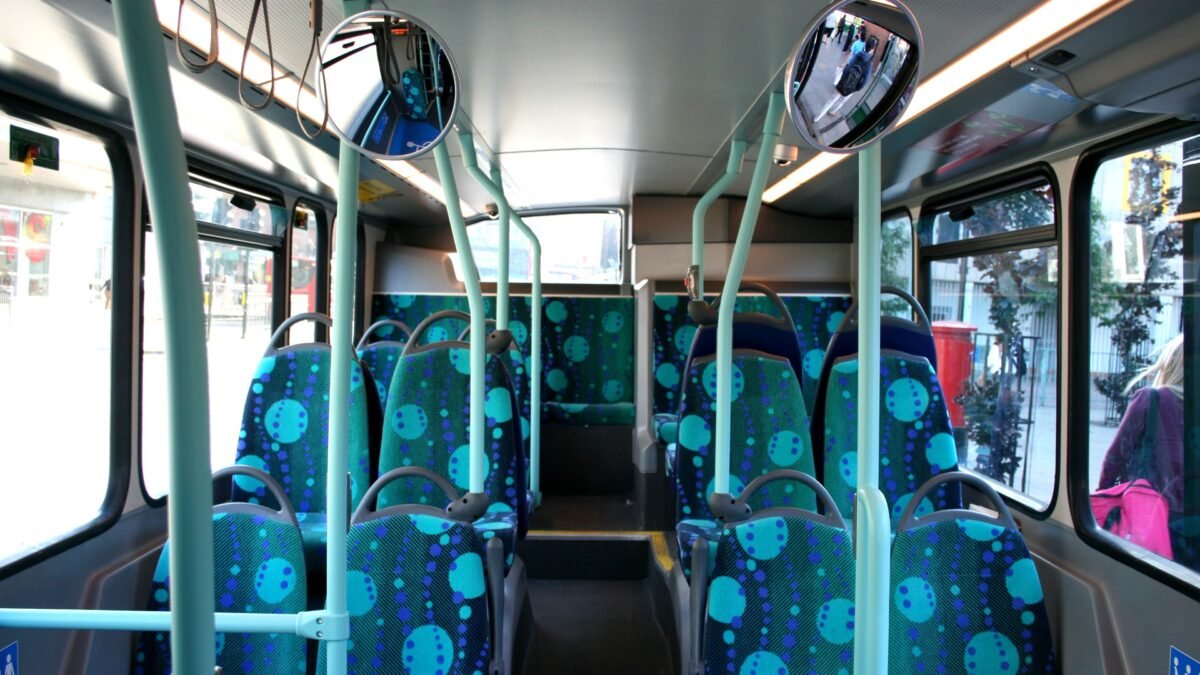
The British government has declared war on one of the defining irritations of modern commuting: passengers who blast music and videos from their phones in shared carriages and buses. On Monday 19 October, the Department for Transport unveiled a national campaign to stop so-called “loudcasting” on the railways, alongside new guidance enabling local authorities in England to fine bus passengers up to £100 for antisocial behaviour, according to a DfT press release.
Under the measures, train passengers will be told to “share the carriage, not the noise”, with audio reminders of the rules broadcast across the rail network. If a passenger refuses to turn their device down when asked by authorised rail staff, they can be removed from the train at the next station or face fines of up to a maximum of £1,000, the DfT said.
On buses, councils across England can now draw on powers introduced through the Bus Services Act 2025, which came into force on 5 August 2026, to issue fixed penalties of up to £100 for nuisance behaviour including loud music, vaping, littering and threatening behaviour. Each set of local rules must be signed off by the Transport Secretary before it can be enforced.
The announcement marks the most concerted government attempt yet to tackle what ministers describe as a daily source of misery for commuters, and it comes with polling cited in coverage suggesting around 60 per cent of voters support tougher action against passengers who play loud audio without headphones.
What the campaign does
The railway element is an industry-led national campaign — a first attempt to end what the DfT calls the patchwork of different campaigns run by individual train operators. Most operators will carry the messaging across websites, social media, in carriages and at stations, with posters and announcements explaining that loud audio without headphones is against the rules, according to the department.
The phrase at the heart of the push, “loudcasting”, is a government coinage designed to give a name to an old habit. The term covers the playing of loud audio — music, videos, games, voice notes, hands-free calls — from phones and tablets in public spaces without headphones.
The rail campaign will be backed by the threat of real penalties. The legal power behind it sits in the railway byelaws, which already prohibit playing music from a device without headphones where it causes annoyance to other passengers. A passenger who refuses to comply when challenged by authorised staff can be removed at the next station, and courts can impose fines of up to £1,000 following referral by the British Transport Police or Police Scotland.
Announcing the launch, Prime Minister Andy Burnham said: “We’ve all been on the train when someone starts blasting music or videos from their phone. It gets on your nerves and can quickly spoil the journey.” He added: “So we’re launching a nationwide campaign reminding passengers to use headphones on trains. On top of that, we’re giving local leaders new powers to tackle loud music, vaping and littering on buses. It’s a simple thing, but one that will make journeys that little bit better for all of us.”
The £100 bus fines
The bus measures are potentially more significant in enforcement terms because they create a new, on-the-spot penalty where none previously existed in England. The Bus Services Act 2025 gave every local transport authority in England the power to set and enforce its own local rules for bus networks. The DfT guidance published on Monday explains how those powers can be used in practice.
Under the scheme, councils can issue fixed penalties of up to £100 for behaviour including playing music or videos without headphones, vaping, littering and threatening behaviour. Crucially, bus drivers will not be responsible for enforcement. Instead, authorised officers — including newly empowered transport safety officers and the police — will deal with incidents.
Enforcement will follow a three-step approach, the DfT said: engaging with the person causing the nuisance, explaining the rules and their impact on other passengers, and taking enforcement action only if they refuse to comply. Each local byelaw needs the Transport Secretary’s sign-off, which means the rollout will be staggered as councils draft rules and submit them for approval.
Transport Secretary Heidi Alexander said: “It is so frustrating when the actions of an inconsiderate few spoil journeys for the rest of us, whether that is vaping, littering or blasting music out loud. Even small changes in behaviour can make a massive difference to people’s experience on public transport.”
No ‘special bus police’
Ministers have been at pains to stress that the bus measures will not mean an army of new inspectors patrolling every route. Science minister Chris McDonald told Times Radio the fines would be policed “in the same [way] that any rule or law is enforced in the UK”, and the government insisted the regulations would not result in a “special bus police”, according to The Times.
The enforcement model instead leans on existing capacity — transport safety officers and police — applying a discretionary, escalating approach. The DfT says the legal power is designed to give authorities a tool they previously lacked, rather than to generate a wave of fines. Whether that reassurance holds will depend on how aggressively the first councils to adopt the byelaws choose to use them.
Early political reaction has been positive in the areas where the issue is felt most keenly. In Lancaster, the local MP welcomed the plans, telling a local radio station that the new powers would help tackle an irritant familiar to commuters everywhere.
A devolution patchwork
The new bus powers apply to England only. Scotland, where the debate has run in parallel, already has its own regime: railway byelaws enforced through the British Transport Police and Police Scotland allow courts to impose fines of up to £1,000 on passengers who play loud audio that annoys others. Separately, Scotland has recently raised fines for certain other antisocial behaviours on trains from £40 to £70, according to The National via Scottish coverage.
That means the UK now has two overlapping systems — a Westminster-led campaign plus English bus byelaws, and Scotland’s pre-existing rail enforcement framework. How the new bus powers would apply to Transport for London’s network, which carries millions of passengers daily across the capital, remains unclear from Monday’s announcement.
Why the government is doing this now
The DfT framed the launch as part of the government’s “everyday fixes” — small, tangible improvements to daily life. In the press release, the department argued that the campaign demonstrates how, under public ownership, train operators can deliver more joined-up action focused on passenger experience.
The timing also reflects a political calculation. With around 60 per cent of voters reportedly backing tougher measures against noisy passengers, according to reports cited in coverage, the policy is a low-cost, high-visibility intervention at a moment when the government is keen to show it is listening to the small irritations that define public life as much as the big ones.
Transport campaigners have long argued that antisocial behaviour is one of the main reasons people avoid public transport, particularly late at night, and that women and young people are disproportionately affected by threatening or intimidating behaviour on buses and trains.
Analysis: Why It Matters
1. The politics of small annoyances
The most interesting thing about Monday’s announcement is what it says about how this government wants to be seen. “Loudcasting” is not a flagship policy; it will not appear in an economic forecast or a spending review. But governments increasingly live or die by whether voters feel life getting better in small, observable ways — the commute, the high street, the doctor’s surgery queue. The DfT’s “everyday fixes” branding is a deliberate pitch to that politics. It is the same instinct that produced fixed-penalty fines for mobile-phone use while driving: find the irritation that every commuter recognises, put a penalty on it, and let the public debate do the advertising. The risk for ministers is the inverse — that voters notice the £100 fines far more than they notice any improvement, and judge the whole exercise as performative.
2. ‘Loudcasting’ is a deliberate act of language
Governments coin words when they want a behaviour to become socially unacceptable. “Drink-driving”, “fly-tipping”, “cold-calling” — each was, at some point, an awkward neologism before it became a moral category. “Loudcasting” follows the pattern: give the thing a name, and the name does half the enforcement work before a single fine is issued. The audio reminders, posters and station announcements are less about the £1,000 maximum than about resetting the norm, so that the person playing TikTok at full volume on the 7.42 becomes the one who feels embarrassed, not the passengers tutting around them. Whether the word sticks — and it is, admittedly, an ungainly one — will tell us how seriously the public takes the campaign.
3. Enforcement is where this will be won or lost
The three-step model — engage, explain, enforce — sounds sensible, but it places real pressure on a small number of transport safety officers across England’s bus networks. The government has explicitly ruled out a “special bus police”, which means enforcement will compete for attention with everything else those officers and the police are asked to do. The first councils to win Transport Secretary sign-off for their byelaws will be watched closely: issue a flurry of fines and the policy looks serious; issue none, and it looks like theatre. The railway side is arguably on firmer ground, since the byelaw power already exists and authorised staff are already on trains — the campaign is mainly marketing for a sanction that was technically available before.
4. A devolved patchwork is the price of the design
Because the bus powers ride on English local-government legislation, the rollout will be inherently uneven: different councils, different timelines, different appetite for enforcement. London’s position is the conspicuous gap — TfL’s vast bus network is precisely where loud music on night buses is a notorious problem, yet Monday’s announcement left how the new powers apply there unclear. Scotland, meanwhile, already had the £1,000 rail fine through its own byelaw route. The result is a policy that looks national in its press release but fragmented in its execution — a familiar shape for British public policy, and one that will invite comparison between authorities that act and those that do not.
5. The precedent question
If this works, it will not be the first time Britain has successfully regulated a small daily behaviour into oblivion: the 2007 smoking ban transformed pubs within months, and the mobile-phone driving penalties changed a norm in a generation. But both of those were backed by sustained, visible enforcement. The softer comparison is the long-running campaign against fare-dodging, where posters and announcements never quite substituted for staff on the gates. The loudcasting campaign will likely succeed or fail on the same axis: not the wording of the posters, but whether passengers ever actually see someone challenged. Ministers clearly believe the norm-shift can do most of the work. The next twelve months will test that belief.
What to Watch Next
- Which councils move first. Local authorities must draft byelaws and win Transport Secretary sign-off before a single £100 fine can be issued. The first approvals will reveal how quickly the guidance turns into real rules.
- The first fines. Whether enforcement officers use the penalties sparingly or visibly — and how the first contested cases play in the press — will define public perception of the whole scheme.
- The rail campaign rollout. With most operators expected to carry the “share the carriage, not the noise” messaging across stations, carriages and apps, watch for passenger surveys on whether behaviour actually changes.
- London’s position. Clarification is needed on how the bus powers apply to the TfL network, the largest in the country and arguably the most affected by the problem.
- The next ‘everyday fix’. The DfT has framed this as part of a series; what ministers choose next — litter, fare evasion, station accessibility — will show how far the politics of small annoyances extends.
Sources
- Department for Transport — “Share the journey, not the noise” press release, 19 October 2026
- The Times — “Noisy rail passengers to face prosecution and £1,000 fines”, 19 October 2026
- Railway News — “Government to Introduce New Fines for Antisocial Behaviour on Public Transport”, 19 October 2026
- LADbible — “Passengers who blast music from their phones on buses could be fined £100”, 19 October 2026
- Beyond Radio — “Lancaster MP welcomes plans to fine bus and train passengers for playing loud music”, 19 October 2026

About the Author — Abdul Mannan
Related Articles
Four Arrested as Manhunt Ends After Nottingham Police Officer Shot in City Centre
Two men and two women have been arrested after a police officer was shot in the foot in…
Police Officer Shot in Nottingham City Centre as Manhunt Launched for Two Suspects
A police officer was shot in the foot after approaching two suspects in Angel Row, Nottingham, in the…
Yvette Cooper Warns of ‘More Challenging’ NHS Winter as Government Pledges £140m for Urgent Care
Health Secretary Yvette Cooper has warned of a 'more challenging' NHS winter after a record-hot summer, announcing £140m…