
Japan Launches World-First Mission to Bring Samples From a Martian Moon Back to Earth

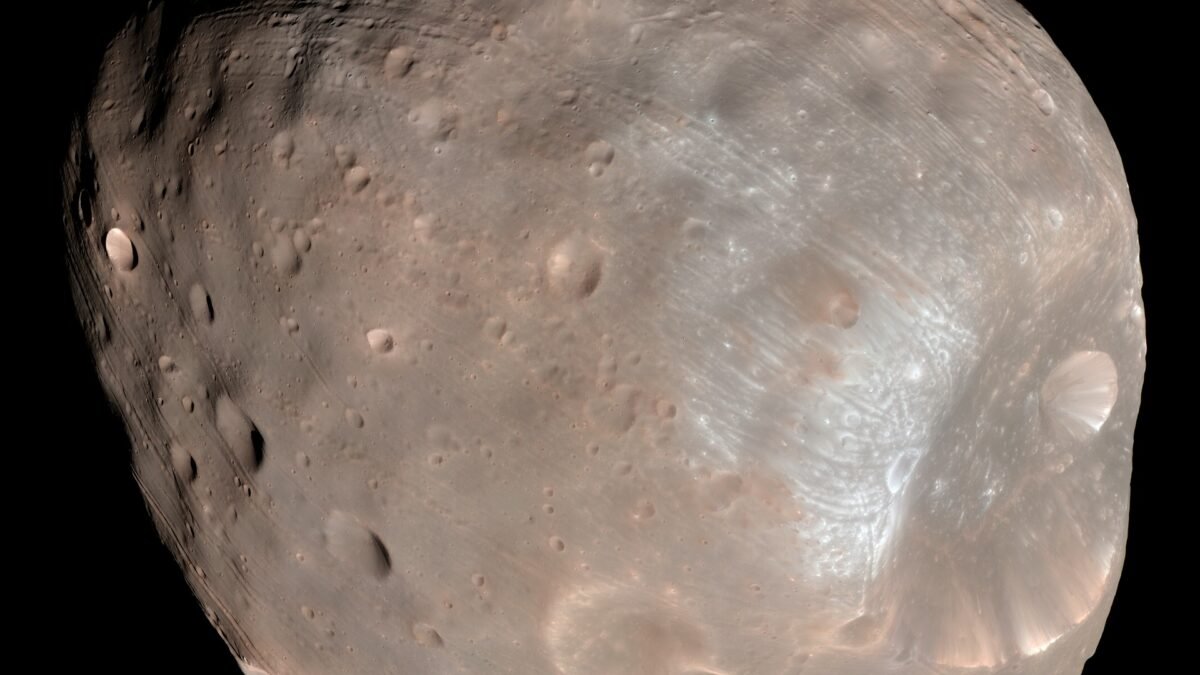
Japan has begun the most ambitious sample-return journey ever attempted beyond the Moon. Before dawn on Tuesday, the Japan Aerospace Exploration Agency launched its Martian Moons eXploration spacecraft — known as MMX — aboard an H3 rocket from the Tanegashima Space Center in southern Japan, setting off on a five-year voyage to scoop up soil from the Martian moon Phobos and carry it home to Earth, according to The Business Standard and specialist outlet NASA Spaceflight.
The H3 rocket lifted off at 4:41:03 a.m. Japan time on 20 October (19:41 UTC on 19 October), and the 4,480-kilogramme spacecraft separated from the launcher’s upper stage about 71 minutes later, on course for Mars. Flight controllers in the JAXA mission control room rose to their feet in applause as officials confirmed the launch was a success, and the agency’s English-language webcast carried the celebrations live, NASA Spaceflight reported.
If the mission completes as planned, the return capsule is expected to deliver dust, soil and rock collected from Phobos to Earth in 2031 — the first time material from the Martian system has ever been brought back for laboratory study. “There’s a lot of adrenaline and a lot of excitement and a lot of wow,” NASA astrophysicist Tom Statler, who is involved in the project, told The Business Standard.
The five-year round trip
MMX faces a long and carefully choreographed itinerary. The spacecraft will cruise for roughly ten months before arriving at Mars in August 2027, when its propulsion module will fire to place it in a quasi-satellite orbit around Phobos — a position that keeps the probe hovering close to the moon as both circle the planet, according to NewsBeep’s mission breakdown, which draws on JAXA’s published timeline.
The science campaign then unfolds over about three years. Starting in September 2027, MMX will survey Phobos from orbit, mapping its terrain and probing its gravity field, internal structure and mineral composition, the South Korean outlet Dong-A Science reported. A small rover called Idefix — jointly developed by France’s space agency CNES and Germany’s DLR — will be deployed to the surface in late 2028 or early 2029 and is expected to spend about 100 days examining the soil and helping to select landing sites, according to Dong-A Science and NewsBeep.
After the mapping campaign, MMX will make two separate touchdowns on Phobos to collect material from two different surface locations, stowing the samples in a return capsule. Toward the end of its stay, the spacecraft will also perform a series of flybys of Deimos, the smaller of Mars’ two moons, before departing the Martian system in November 2030 for the return leg, NewsBeep reported.
Ten grams that could rewrite textbooks
JAXA aims to collect at least ten grammes of material — roughly two teaspoons of moondust — from Phobos, according to The Business Standard and Dong-A Science. The tiny quantity belies the scientific stakes. Phobos and Deimos are among the most mysterious objects in the inner solar system, and planetary scientists have never held a piece of either in their hands.
The central question is how the moons formed. One theory holds that they are debris flung into orbit when Mars was struck by a large asteroid in the distant past. Another says they are captured asteroids that wandered too close and were snared by the planet’s gravity. Regardless of which story proves true, scientists expect Phobos to contain traces of Mars itself, blasted off the planet’s surface by ancient impacts — making the samples a back door into Martian geology without ever having to land on the planet, The Business Standard reported.
Lindsay Hays, NASA’s acting planetary science director, said the findings are also expected to shape future Mars exploration missions, including ones involving astronauts, according to The Business Standard. Markus Grebenstein, the rover chief at the German Space Agency, called the mission a generation-defining opportunity. “It is a once-in-a-lifetime chance. We are part of the first sample return mission from the Martian system,” he told the outlet.
An international effort — and a budget in the hundreds of millions
MMX is led by JAXA, but five of the world’s space agencies have joined forces on the mission. NASA, the European Space Agency, CNES and DLR are all formal partners, The Business Standard reported. The mission carries a reported total budget of $578 million: Japan is contributing about $350 million, NASA about $87 million, the French space agency roughly $68 million, Germany’s DLR around $56 million and ESA approximately $17 million, according to the outlet.
Each partner brings distinct hardware or expertise. The Idefix rover is a Franco-German project. NASA scientists are embedded in the science teams. The arrangement makes MMX one of the most genuinely multinational deep-space missions of its decade — and a working model for how the cost of planetary exploration can be shared across agencies.
Japan’s long road to this launch
The liftoff also marks a milestone for Japan’s flagship H3 rocket: MMX is its first interplanetary mission. The launcher’s 2023 maiden flight ended in a high-profile failure when the second-stage engine failed to ignite, but the vehicle has since completed a string of largely successful launches, according to news aggregator Metapress’s mission coverage.
For JAXA itself, MMX is a shot at redemption in the Martian system. The agency’s only previous mission to the planet — the Nozomi orbiter — failed to enter Mars orbit after years of technical trouble, The Business Standard noted. Russia, meanwhile, has failed in all three of its attempts to explore Phobos, as well as several other Mars missions, the outlet reported.
But Japan arrives with an unmatched record in the one skill that matters most for MMX: bringing extraterrestrial material home. The country has already completed two successful asteroid sample-return missions — Hayabusa in 2010 and Hayabusa2 in 2020 — making it the only nation to have retrieved samples from asteroids and returned them to Earth. That heritage is precisely why JAXA was trusted to lead a mission this audacious.
Analysis: Why It Matters
The first round trip to the Martian system
Every previous sample-return mission has stayed close to home: Apollo’s Moon rocks, Hayabusa’s asteroid grains, NASA’s OSIRIS-REx sample from Bennu. MMX crosses a line. A round trip to the neighbourhood of Mars — and back — would be the first demonstration that humanity can reach another planet’s system, touch it, and come home. That is not a small technical footnote; it is the dress rehearsal for every future Mars sample-return effort, crewed or robotic.
Ten grams is plenty — JAXA has proved it twice
To a casual reader, ten grammes of dust sounds like a lot of money and five years of waiting for very little. But JAXA’s own history says otherwise. The Hayabusa2 mission returned only a few grammes of material from the asteroid Ryugu in 2020, and those grains have since fuelled dozens of peer-reviewed studies — from the discovery of amino acids to insights about the early solar system’s water. Ten grammes of Phobos, potentially containing fragments of Mars itself, would be among the most analysed material ever brought back from space.
The unannounced race to bring Mars home first
MMX is launching into a competitive field. China plans to launch its own Mars sample-return mission in 2028, with both countries targeting 2031 for the return — meaning Japan and China could be racing, almost neck and neck, to be the first to deliver Martian-system material to Earth, The Business Standard reported. Meanwhile NASA is still debating how to retrieve the more than 30 sample tubes its Perseverance rover has already sealed on the Martian surface, a mission whose costs and architecture remain unresolved. Whoever gets there first will own one of the defining scientific achievements of the decade.
Small moons, big archives
Phobos may look like an afterthought — a lumpy rock about 22 kilometres across, circling Mars three times a day — but its scientific value is disproportionate to its size. Small airless bodies preserve the early solar system in a way planets do not, because they lack the geology that erases the past. If Phobos turns out to be a captured carbon-rich asteroid, it could hold pristine organic material older than the Earth itself. If it is impact debris from Mars, it offers Martian crust without the enormous cost of a surface mission. Either answer rewrites textbooks.
Proof of the new space playbook
MMX is also a proof of concept for how big science now gets done: five agencies, one $578 million budget, shared hardware, shared credit. In an era when single-agency flagship missions face chronic cost overruns — NASA’s own Mars Sample Return being the cautionary example — the MMX model shows that distributed, international planetary science can still reach for genuinely historic firsts. Tuesday’s successful launch suggests the playbook works, at least as far as the pad.
What to Watch Next
- August 2027 — Mars arrival: the critical orbital-insertion burn that places MMX in a quasi-satellite orbit around Phobos. Miss it, and the five-year mission ends there.
- Late 2028/early 2029 — the Idefix rover: the Franco-German rover’s deployment to the surface and its roughly 100-day scouting campaign to pick landing sites.
- 2030 — the touchdowns: MMX’s two planned landings on Phobos to scoop up the samples from two separate sites — the riskiest manoeuvres of the mission.
- 2031 — the homecoming: the return capsule’s arrival on Earth, and whether Japan or China delivers Martian-system samples first.
- China’s response: the timeline of Beijing’s own 2028 Mars sample-return mission, and whether the two 2031 targets turn this into the decade’s defining space race.
Sources
- The Business Standard — “Japan launches spacecraft to explore Mars’ mysterious moons, bring back soil samples”
- NASA Spaceflight — “Japanese MMX mission launches to study Martian moons”
- Astronomy magazine — “Japan sends MMX toward the Martian moons”
- Dong-A Science — “Japan’s JAXA launches MMX to return Phobos samples by 2031”
- IFL Science — “World-First Sample-Return Mission To A Martian Moon Set To Launch From Japan Today”

About the Author — Abdul Mannan
Related Articles

Siemens and Nvidia Unveil AI-Driven Factory Automation at Erlangen, Target Up to 80% Automation
Siemens has unveiled new AI-driven manufacturing tools developed with Nvidia at its Erlangen electronics factory, aiming to lift…
RIKEN Scientists Achieve 99.99% Fidelity Controlling Silicon Qubits in Parallel
RIKEN researchers have shown silicon spin qubits can be driven in parallel without losing accuracy, clearing a key…

Intel Promises 700 TOPS for Humanoid Robots With Razor Lake-AX Chip Due in 2028
Intel SVP Cho Min-sung confirmed at a Seoul conference that the Razor Lake-AX processor will launch in 2028…