
UN Condemns Deadly Drone Strikes in Sudan After Abyei Market Attack Kills Dozens

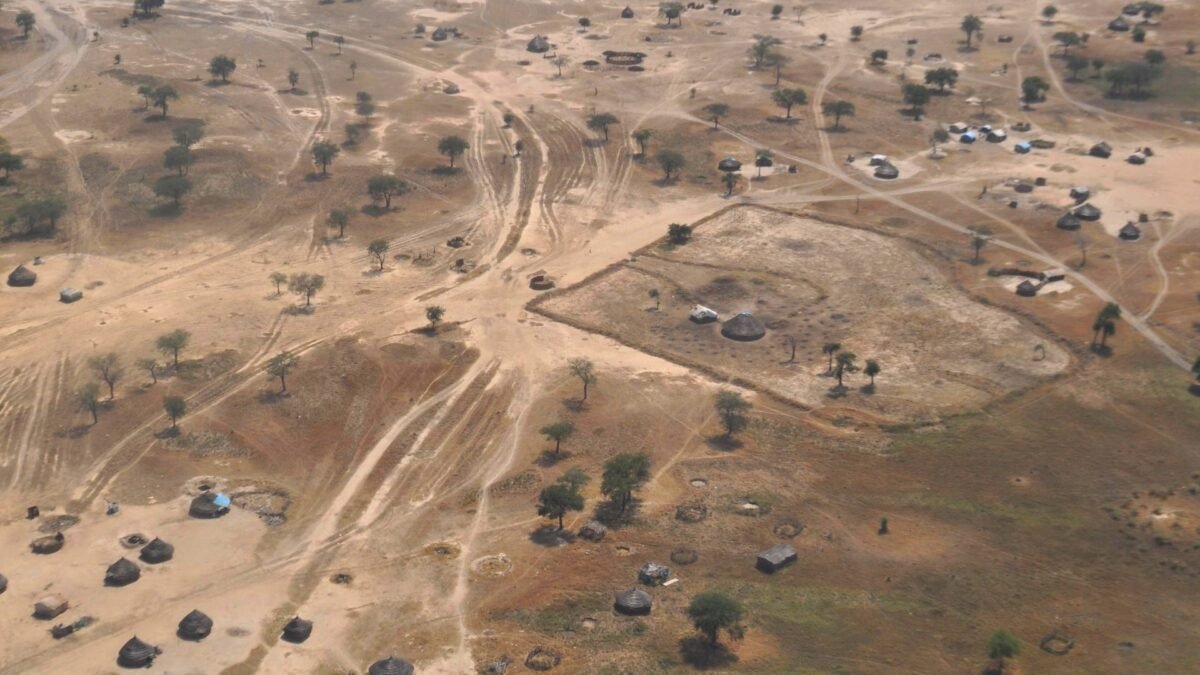
A market turned into a killing field
Drones struck a busy market in the disputed Abyei region on Monday morning, killing dozens of civilians and drawing condemnation from the United Nations, according to Reuters and UN officials. The attack on Amiet Market, north of Abyei town, came at about 11am local time on 19 October, hitting the market’s central and southern sections and its northern gate, South Sudan’s foreign ministry said in a statement.
The caretaker information minister for Abyei, Yohana Akol Ngor, told Reuters that the strike had killed at least 73 people and wounded 19 others. He blamed the Sudanese Armed Forces for the attack, although he did not provide evidence for the claim. By Tuesday, Ngor said the confirmed death toll had risen to 153, warning that the number could climb further because emergency workers were still recovering bodies from fires caused by the strikes. “It has reached 153 — those we can confirm killed and the number will even rise,” he told Reuters. “The fire is still burning. So the recovery process of the dead ones is still continuing. The situation is terrible.”
Some local outlets reported an even higher toll, citing officials who said more than 220 people had been killed. Reuters said it could not immediately verify the casualty claims. About 8,000 people have been displaced by the bombing, according to Ngor.
The victims included South Sudanese citizens and Sudanese civilians who had been displaced to the area by Sudan’s wider conflict, and the medical charity Médecins Sans Frontières said it was treating more than 20 wounded people, including burn victims, at Ameth Bek Hospital in Abyei town.
Juba summons Sudan’s envoy; UN condemns “unequivocally”
South Sudan’s Ministry of Foreign Affairs and International Cooperation said on Monday evening that it had summoned Sudan’s ambassador to Juba to convey the government’s “strong protest and deep concern” over the attack. “The Government of the Republic of South Sudan condemns in the strongest terms possible the attack on Amiet Market,” the ministry said in a statement reported by Radio Yei. It urged Khartoum to raise any issues concerning Abyei through diplomatic channels rather than force, and to prevent similar incidents.
The United Nations added its voice on Tuesday. “We are alarmed by the continued deadly drone strikes across the country that are killing civilians, including children, and that are disrupting essential services,” UN spokesperson Stéphane Dujarric told journalists in New York, according to UN News. “We condemn all of these attacks unequivocally.”
Rosemary DiCarlo, the Under-Secretary-General for Political and Peacebuilding Affairs, told the UN Security Council on Friday that external actors should stop fuelling the violence and the use of drones in Sudan, and once again called on the warring parties to return to the negotiating table.
Part of a wider wave of drone attacks
The Abyei strike was not an isolated incident. UN News reported that Monday alone saw drone strikes injure at least 19 people in the Abyei market and hit several locations in the capital, Khartoum, including an area near the airport, where one civilian was reportedly killed and some flights were cancelled.
Over the weekend, drone attacks reportedly killed at least 19 people, including 10 children, and injured others across West Darfur, South Darfur and North Kordofan states, according to UN News. In West Kordofan on Sunday evening, the Sudan War Observatory, a group that monitors the conflict, said army drones struck mourners in the village of Al-Dabab: a truck carrying about 200 mourners was hit, killing 145 people, and five more died when a funeral tent was struck, it said. About 150 people were injured, and drones also hit a market in Al-Mujlad, where the toll was not yet known. The group said the drones were probably launched from the army-held city of Kadugli.
The Sudanese army has not responded to the allegation that it carried out the West Kordofan strikes, but says it does not attack civilians even when it believes RSF fighters are among them. Officials in Sudan’s military-led government said the Rapid Support Forces are active in parts of Abyei, a claim Abyei’s Ngor denied. The UN peacekeeping force in the region, UNISFA, had warned in May that the presence of the RSF in Abyei had increased insecurity there.
Why Abyei is so dangerous a place to bomb
Abyei is an oil-rich area claimed by both Sudan and South Sudan, and its final status has never been determined. A UN peacekeeping force, the UN Interim Security Force for Abyei (UNISFA), has been deployed there since 2011, when fighting between the two countries’ forces threatened to derail South Sudan’s independence.
The region is home to the Ngok Dinka, who have longstanding ties to South Sudan, and to Misseriya herders from Sudan who pass through seasonally. Intercommunal violence, particularly between Ngok Dinka and neighbouring Twic Dinka communities, has flared repeatedly in recent years. Amiet Market, where Monday’s attack occurred, serves as an important trading hub for both communities.
The outbreak of war between Sudan’s armed forces and the RSF in April 2023 — former allies who had jointly seized power in a 2021 coup — has further destabilised the already fragile region. Abyei borders Sudan’s South Kordofan state, which has become a major battleground, and both the Sudanese military and the RSF have extensively deployed drones in the conflict.
A war increasingly fought from the sky
The drone campaign has become one of the defining features of Sudan’s war. UN officials say the rising use of armed drones is killing civilians, including children, and disrupting essential services across the country. The war has forced more than 14 million people from their homes, while 20 million people face acute hunger, with a rising risk of famine in parts of Darfur and Greater Kordofan.
The regional fallout is widening. Chadian authorities have accused Sudan’s military of carrying out drone strikes on its territory, which UN experts say is regularly used by RSF supply lines. On 10 October, an air strike close to Sudan’s border with Egypt killed more than 70 artisanal miners, according to a local rights group. The Sudanese rights group Emergency Lawyers said dozens of people were killed in attacks on 17 and 18 October in Al-Muglad in West Kordofan, attributing them to the Sudanese army.
Analysis: Why It Matters
1. The war’s deadliest tactic is going unpunished
The Amiet Market strike, alongside the reported killing of mourners in Al-Dabab, shows how drone warfare has moved from the front lines into civilian life. Drones are cheap, deniable and devastating — and both sides in Sudan now use them routinely. When a market or a funeral can be struck from the sky with no warning, the distinction between battlefield and civilian space collapses entirely. The UN’s condemnation is strong in language but, as DiCarlo’s repeated calls for negotiations suggest, short on leverage.
2. Abyei’s dispute makes every attack a diplomatic incident
Unlike strikes inside Sudan’s recognised territory, the Abyei bombing immediately became a dispute between two sovereign states. South Sudan’s decision to summon Sudan’s ambassador elevates a battlefield event into a bilateral crisis. Abyei’s unresolved status — disputed, militarised and economically vital — means every violent episode there risks pulling Juba and Khartoum toward confrontation, even as both governments have far bigger problems of their own.
3. The numbers fog is itself a symptom of the crisis
Death tolls from the market strike range from 73 to 153 to more than 220, and each figure comes with different sourcing and confidence levels. This is not merely a reporting problem: it reflects a place where emergency services cannot recover bodies because fires are still burning, where journalists cannot safely enter, and where both sides have incentives to shape the narrative. The fog of war around casualty figures is one reason independent verification — which Reuters explicitly said it could not achieve — matters so much.
4. The drone war is regionalising
From Chad’s accusations to the strike near Egypt’s border to the diplomatic crisis with South Sudan, Sudan’s drone campaign is spilling across borders. DiCarlo’s plea for external actors to stop fuelling the violence points to the uncomfortable truth: the drones themselves come from somewhere, and the war is increasingly sustained by outside supply lines. Every cross-border incident adds another neighbour to the list of aggrieved parties.
5. Condemnation without consequences changes nothing
The UN condemned, South Sudan protested, and MSF treated the wounded — the familiar choreography of Sudan’s war. But three and a half years into a conflict that has displaced more people than almost any other current war, the pattern of strike, condemnation and escalation continues unchanged. Until the external supply of drones and weapons is addressed, and until the warring parties face real costs for hitting civilian targets, markets like Amiet will keep becoming killing fields.
What to Watch Next
- The death toll and body recovery: whether the confirmed count stabilises at 153 or rises further as emergency workers complete the recovery in Amiet Market.
- Khartoum’s response: whether the Sudanese military comments on — or denies — the army-blame allegation, and whether the ambassador summoning produces any diplomatic result.
- UNISFA’s position: whether the UN peacekeeping force in Abyei issues its own assessment of the strike and its effect on the disputed region’s security.
- The drone supply question: whether DiCarlo’s call for external actors to stop fuelling drone use leads to any concrete action at the Security Council.
- Further retaliation: whether the RSF or Sudan’s army escalates drone strikes in response, and whether the violence spreads further into disputed border areas.
Sources
- Reuters — Drone strike on disputed Sudan-South Sudan area kills dozens, minister says
- UN News — UN condemns deadly wave of drone strikes in war-torn Sudan
- The Eastleigh Voice — 153 dead, 8,000 displaced after drone attack on disputed Abyei market
- Abay Times — Drone strike on Abyei market kills over 220, official says
- Access Radio (Radio Yei) — South Sudan summons Sudan’s ambassador over Abyei market strike

About the Author — Abdul Mannan
Related Articles

Rubio Lands in Mumbai for Three-Day India Visit as Trade Deal Nears ‘Landing Point’
US Secretary of State Marco Rubio arrived in Mumbai on October 20 for a three-day official visit, meeting…

Alberta Votes Overwhelmingly to Stay in Canada in Historic Referendum, Handing Carney a Defining Win
Alberta voters have decisively rejected the path toward separation from Canada, with about 76% choosing to remain —…
Houthi Missiles Kill Dozens of Recruits at Yemen Training Camp in Deadliest Strike Since War Reignited
Three ballistic missiles struck a training camp for government security forces in Yemen's Shabwa province on Monday, killing…