
Houthi Missiles Kill Dozens of Recruits at Yemen Training Camp in Deadliest Strike Since War Reignited

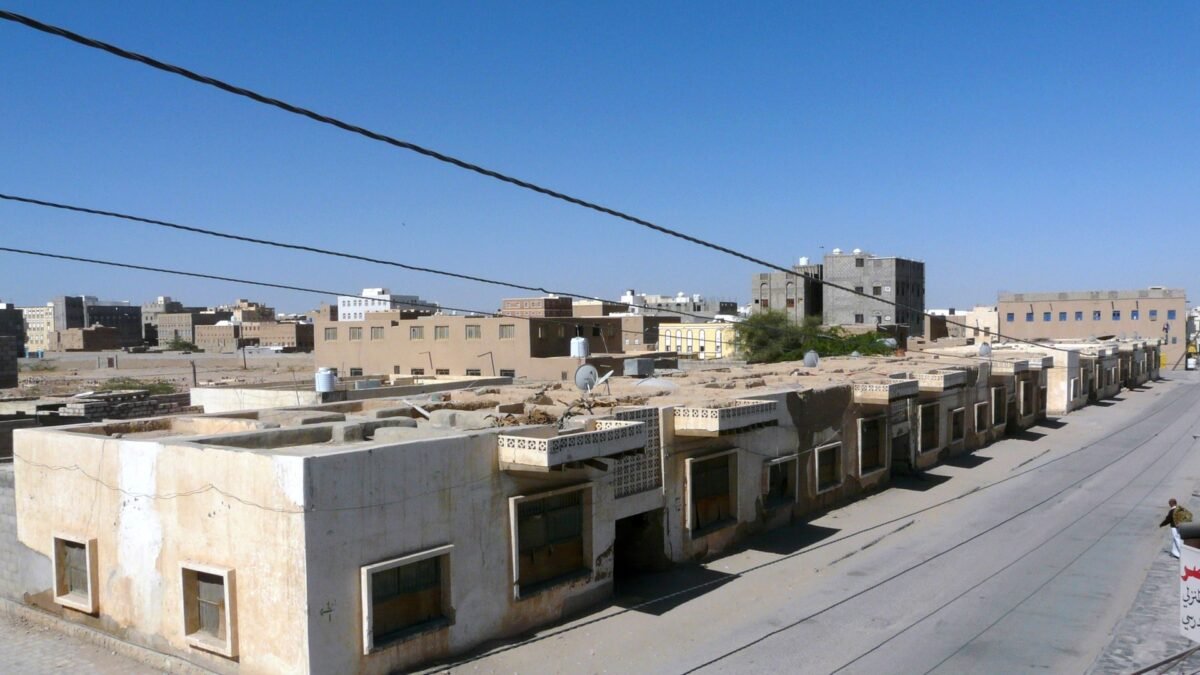
At least 53 young recruits were killed and more than 200 wounded on Monday when three ballistic missiles struck a government security forces training camp in Yemen’s southern Shabwa province, in the deadliest single attack since the country’s civil war reignited last month, according to the Shabwa provincial government and multiple news agencies.
The missiles hit the al-Alam camp in the Jardan district near Ataq, the provincial capital, at a moment when the recruits were standing lined up in formation for a training drill, a Yemeni military official told the Associated Press on condition of anonymity. The facility is formally known as the Martyr Ahmed al-Sulaimani Training Centre and was being used to train new members of the internal security forces drawn from several provinces.
Shabwa’s provincial government described the toll as preliminary and warned it could climb, according to reports by Al Jazeera and Reuters. Governor Awad al-Wazir later told Reuters that 58 people had been killed and 14 remained missing, while Shabwa deputy governor Fahad al-Khalifi told Agence France-Presse that hospitals across the province had been overwhelmed and that the most seriously wounded were being transferred to the neighbouring governorates of Hadramout and Aden, where Yemen’s government is based.
The attack was claimed by the Houthi movement, whose military spokesman Yahya Sarea said on X that the group had targeted a gathering of “Saudi enemy” forces at al-Alam camp, which he alleged was run by Saudi officers. Sarea offered no evidence for the claim, and the Saudi authorities did not immediately respond, according to Reuters and the BBC.
Yemen’s internationally recognised government condemned the strike. Rashad al-Alimi, chairman of the Presidential Leadership Council, described it as a “criminal attack” and vowed a “firm response,” adding that the targeting of the recruits reflected what he called the Houthis’ resort to “cowardly terrorist attacks.” Al-Alimi also telephoned United Nations Secretary-General António Guterres to press for the Houthis to be designated a foreign terrorist organisation, according to the BBC and the Associated Press. Information Minister Moammar al-Eryani called the strike a war crime, arguing that the training centre had no military role.
Shabwa’s provincial government said it would investigate how so many troops were left exposed to attack and called on Yemen’s president, the Saudi-led coalition and the government to speed up the delivery of air defence and early warning systems to the province, the Associated Press reported.
A war that never really ended
The strike comes five weeks into a sharp new escalation of a war that had been largely frozen by a 2022 truce. In mid-September, the Houthis launched a fresh offensive pushing south along the Red Sea coast toward the Bab al-Mandab strait, the narrow waterway linking the Red Sea to the Gulf of Aden and one of the world’s most important shipping lanes. The group seized the port of Mokha and several islands in the strait before government forces, backed by the Saudi-led coalition, launched a counteroffensive named Dawn of Yemen in early October to retake the lost ground.
Fighting has been fiercest around the strait and the besieged government-held city of Taiz, with government forces also contesting ground in Marib and al-Jawf provinces. Local authorities in Marib said the Houthis had also fired ballistic missiles at the densely populated city of Marib, which hosts large numbers of displaced people, though casualty figures there were not immediately clear, according to the Associated Press.
The Houthis have simultaneously widened their targeting of Saudi Arabia itself, striking Riyadh’s King Khalid International Airport and the headquarters of state oil giant Saudi Aramco in Dhahran, moves that analysts say are aimed at extracting economic costs from the kingdom and pressuring it into concessions. Riyadh, for its part, has shown no willingness to trade territory for calm: a regional source briefed on Saudi policy told AFP earlier this month that the kingdom would not agree to a truce or ceasefire until the Yemeni government regained the territory lost in recent weeks, and would not bow to what it called Houthi “military blackmail.”
The conflict in Yemen has become another front in the wider confrontation between the United States and Israel on one side and Iran on the other, with the Houthis aligned with Tehran. Saudi Arabia has faced a sustained wave of Houthi missile and drone attacks since the war’s resumption, while the Saudi-led coalition has carried out dozens of strikes against Houthi-held territory. Houthi-run media reported that a Saudi air strike on a home in the Sahar district of Saada province on Sunday killed at least 10 people and injured 23, most of them women and children, according to Al Jazeera.
Massed recruits, a recurring tragedy
The al-Alam strike follows a grim pattern. Training camps, where large numbers of troops gather in predictable formations at fixed hours, have repeatedly proved among the most vulnerable targets in this war. In January 2020, a missile and drone strike on a training camp in Marib killed at least 111 government troops, the deadliest such attack of the conflict’s earlier phase, and like Monday’s strike it was not intercepted.
The Shabwa provincial government said the recruits killed at al-Alam were new trainees, still in the training and preparation phase of their service. Footage verified by Reuters from Shabwa province showed injured people and bloodied bodies scattered across the ground, while doctors in Ataq issued urgent pleas for blood donations, according to Reuters and the Associated Press.
Shabwa itself is one of Yemen’s most strategically significant provinces: an energy-rich region overlooking the Gulf of Aden and home to the Balhaf liquefied natural gas facility, the country’s largest industrial investment. Government forces have been fighting across multiple fronts there as the war’s centre of gravity shifts south and east.
Analysis: Why It Matters
1. The deadliest day of a war that is getting deadlier
Whatever the final toll, Monday’s strike is the largest single loss of life since Yemen’s civil war reignited in September, eclipsing anything in the past five weeks of fighting. Reliable death tolls from the renewed war are hard to gather, but estimates run into many thousands, and the World Health Organization had already recorded more than 5,000 casualties in Yemen since early August, including nearly 1,000 deaths, according to The National. The al-Alam strike will harden attitudes on both sides at exactly the moment when diplomacy needs them softened.
2. A strike designed to be seen
The Houthis did not merely claim the attack; they framed it as a deliberate blow against what they called “Saudi enemy” forces, even producing an account of Saudi officers killed at the camp. The government, meanwhile, presented the victims as barely-trained police recruits and called it a war crime. The gap between those two accounts is the whole war in miniature: one side’s terrorist massacre is the other side’s legitimate strike, and neither side has any incentive to narrow the distance. What is certain is that the strike was timed for maximum visibility, with recruits standing in formation, and that the images of carnage will be doing political work for weeks.
3. The exposed-training-camp problem
The provincial government’s decision to open an inquiry into how so many troops were massed in the open, within range of Houthi ballistic missiles, is itself significant. It is an admission that the attack was not only brutal but preventable, and it raises questions about command negligence that will not be answered by blaming the Houthis alone. The January 2020 Marib precedent shows that this lesson was available six years ago and was not learned. For the government’s own credibility, the inquiry will have to be more than ceremonial.
4. Bab al-Mandab, the prize behind the bloodshed
The timing of the strike is inseparable from the fight for the Bab al-Mandab strait. The Houthis pushed toward the chokepoint in September; the government’s Dawn of Yemen counteroffensive has been clawing ground back since early October. Whoever controls the strait controls one of the world’s great trade arteries, and the al-Alam strike is the Houthis’ signal that they can impose pain far behind the front line if the counteroffensive continues. The risk is that both sides now read escalation as the only language that works.
5. A regional war with a local human cost
Yemen was already one of the world’s worst humanitarian crises before September, and the renewed war is compounding it daily. The 184,000-plus displaced since August, the overwhelmed hospitals of Shabwa, the children of Saada — these are the costs that never appear in the strategic analyses about straits and shipping lanes. Monday’s strike will be remembered in those analyses as an escalation marker. In Shabwa, it will be remembered as the day the province buried dozens of its sons.
What to Watch Next
- The Saudi response. Al-Alimi’s call for a “firm response” and the Saudi-led coalition’s stated position against any ceasefire suggest retaliation is coming. The scale and targeting of that retaliation will determine whether this stays a Yemen war or widens further.
- The toll. The casualty figures remain preliminary, with 14 people still missing according to the governor. The final count will shape the political pressure on all sides.
- The inquiry. Watch whether Shabwa’s promised investigation into the exposed recruits produces resignations or reforms, or quietly dies.
- Air defences. The province’s plea for air defence and early warning systems is a test of how quickly the Saudi-led coalition can protect its partners’ rear areas.
- The UN designation push. Al-Alimi’s request to designate the Houthis a foreign terrorist organisation would deepen Yemen’s international isolation and further complicate the already dire humanitarian situation.
Sources
- Reuters via The Business Standard: “Houthi attack kills 53 at Yemen government training camp, officials say”
- Reuters World News Summary: “Houthi attack kills 58 at Yemen government training camp, governor says”
- SOFX: “Houthi Missiles Kill 58 Recruits at Shabwa Base in Deadliest Strike Since September” (citing Reuters, The Guardian, Al Jazeera)
- Associated Press via PBS NewsHour: “Houthi rebels strike Yemen’s government forces with ballistic missiles, killing at least 53”
- 2Day Bulletin: “Houthi Attack on Yemen’s Shabwa Camp Leaves 53 Dead, Hundreds Injured”

About the Author — Abdul Mannan
Related Articles

Exiled Rwandan Critic Robert Kabera Found Beheaded in Uganda
The body of former RDF sergeant major Robert Kabera, a YouTube critic of President Paul Kagame, was found…

Putin Proposes Three-Way Summit With Trump and Xi on Ukraine at APEC — Without Zelenskyy
Vladimir Putin has proposed a three-way summit with Donald Trump and Xi Jinping on the sidelines of November's…
Australian MP Helen Haines in Critical Condition After Suspected Targeted Vehicle Attack in Wangaratta
Australian independent MP Helen Haines is in a critical condition after being struck by a car outside her…