
Trump Launches $25 Million Fraud Whistleblower Programme Offering Cash Bounties to Tipsters

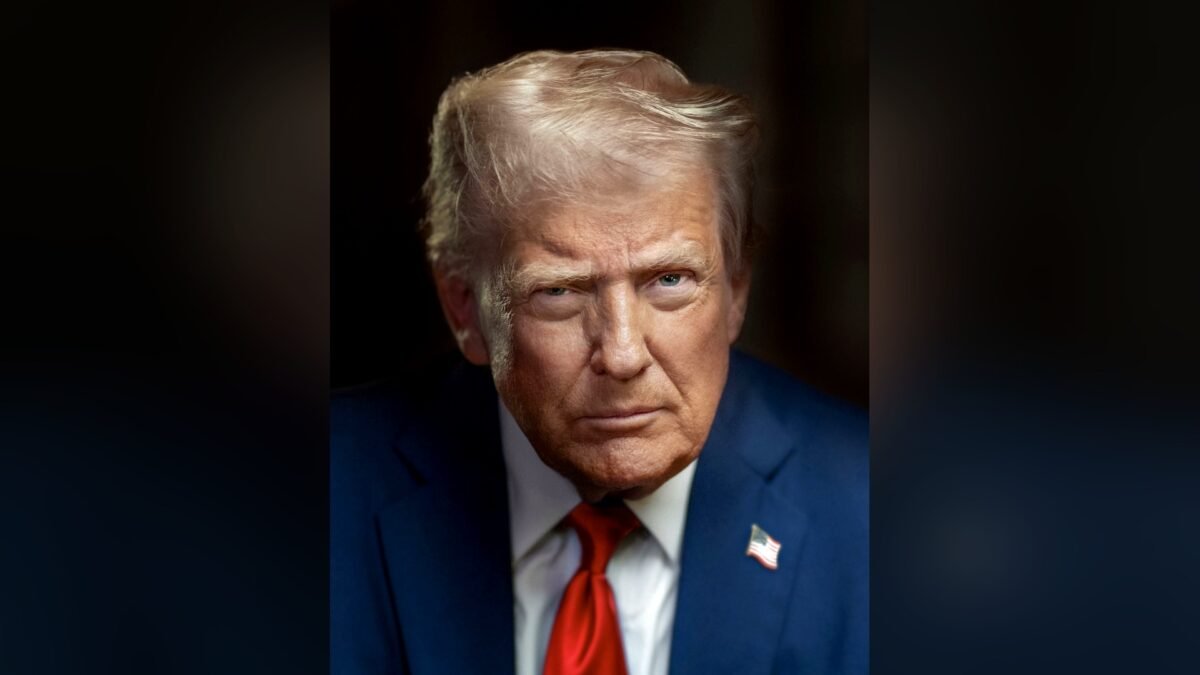
President Donald Trump on Tuesday announced a new federal programme that will pay cash rewards to members of the public who report fraud against government funds, launching the initiative by naming a 24-year-old conservative online influencer as its first recipient, according to Reuters and USA Today.
The $25 million Fraud Whistleblower Incentive Program, to be administered by the Department of Justice, offers tipsters between $10,000 and $30,000 for information that leads to criminal charges or enforcement actions, according to a White House official cited by the outlets. Speaking from the Oval Office on 20 October, Trump went further, telling reporters that whistleblowers would receive a 1 per cent “commission” on recovered fraud money with “no limit” on the payout.
“People will make millions of dollars by turning others in,” Trump said, according to Reuters. “You could have stolen $2 trillion, or whatever the ultimate number is going to be, and at 1% people will make millions and millions of dollars for turning in what actually is a somewhat routine crime.”
Vice President JD Vance, whom Trump tapped earlier this year to lead a new anti-fraud task force, attended the announcement alongside Medicare and Medicaid Administrator Mehmet Oz. The discrepancy between Trump’s description of an uncapped 1 per cent commission and the White House’s stated $30,000 ceiling was not immediately explained; a White House official pointed to Trump’s remarks when asked for clarification, according to USA Today.
The Justice Department described the programme differently again in its own statement, saying awards of $10,000 to $30,000 would be issued in its “sole discretion” for tips leading to criminal charges, and that the Treasury Department is committing $25 million toward the effort, Reuters reported.
The first award is to go to Nick Shirley, a pro-Trump YouTuber whose viral video in December 2025 alleged widespread fraud at Somali-owned childcare centres in Minnesota. Senior administration officials have amplified and credited Shirley’s video as the basis for plans to cut some federal funding to the state, according to Reuters. A White House official told media outlets that Shirley would receive $10,000, though the cheque was not presented publicly at the event, the New York Post reported.
“There’s never been an incentive for anyone to ever expose fraud,” Shirley said at the White House. “When you expose fraud, you help save America.”
Vance praised the vlogger in warm terms. “Nick is going to get a financial reward for doing so,” he said, adding that Shirley had “done more than anybody that I’ve met recently as a citizen journalist to uncover the fraud,” according to Reuters.
The Minnesota Department of Children, Youth, and Families disputed some of Shirley’s claims as misleading and exaggerated, Reuters reported. One Minneapolis woman whose childcare centre Shirley profiled later pleaded guilty to fraud charges, according to the outlet.
A centrepiece of the midterm campaign
The announcement sits at the heart of a midterm campaign in which Trump has paired his fraud crackdown with a series of direct cash pledges to voters. The whistleblower programme combines two strands Trump has seized on in his midterm campaign push: fighting fraud and distributing government funds directly to Americans, USA Today reported.
In recent weeks Trump has promised $5,000 to every adult American if Republicans maintain control of Congress, announced $500 rebate cheques for Americans he said were overcharged for Affordable Care Act health policies, and $90 payments to 21 million seniors, according to USA Today. During a rally in Kansas on 20 October he announced a new $8 billion programme to help farmers offset record-high diesel prices — the administration’s second such attempt this month — at a time when the Iran war has disrupted global energy markets.
The focus on fraud comes as Trump and Republican leaders have struggled to sell their economic agenda ahead of an election in which polling indicates the cost of living is a top concern for voters, USA Today noted. White House spokeswoman Lauren Bis framed the programme as accountability: “Every day, President Trump’s Task Force to Eliminate Fraud is zeroing in on the rampant abuse of taxpayer dollars and giving Americans the accountability they deserve,” she said.
Vance has spent months travelling the country promoting the anti-fraud effort, accusing Democrat-led states of not doing enough to stop fraud in government programmes such as Medicaid, which provides health insurance for lower-income individuals, according to USA Today. Earlier this month he announced that Microsoft and seven other companies were suspended from a programme allowing businesses to seek permanent residency in the United States for foreign workers, accusing them of abusing the system. At the same event, Labor Department Inspector General Anthony D’Esposito said he is conducting an investigation into “visa fraud” at nine universities.
Congressional Republicans have sought to amplify the fraud push. House GOP leaders raised the issue repeatedly over the summer, floating anti-fraud programmes as a key element of a party-line bill they hoped to pass, and the House Oversight and Reform Committee in March grilled Minnesota’s governor and attorney general in a heated hearing about the fraud scandal in the state’s social services programmes, USA Today reported.
The Minnesota scandal behind the first cheque
A sprawling fraud case has ensnared dozens of people in Minnesota, many of them US citizens of Somali descent, and Trump has seized on the scandal during his midterm rallies, frequently lashing out at the Somali American community and tying fraud to his broader campaign against immigrants, according to USA Today.
At his 19 October rally in Kansas, Trump said of Somalis: “They come here with low IQs and no money and they get rich,” while also attacking Representative Ilhan Omar, a Minnesota Democrat and American citizen born in Somalia. Federal agents searched Omar’s home this month as part of an investigation aimed at revoking her citizenship and deporting her, USA Today reported.
The administration’s reliance on Shirley’s video as the evidentiary springboard for funding decisions — even as Minnesota state officials called parts of it misleading — has already drawn scrutiny. Critics cited in the coverage argue the White House is elevating an ally’s social media post over the findings of state investigators, a charge the administration rejects.
There are already established channels to compensate fraud whistleblowers. The False Claims Act allows individuals to file civil lawsuits on the government’s behalf against those suspected of defrauding federal programmes and potentially “receive a portion of the government’s recovery,” according to the Justice Department, USA Today noted. The new programme differs in that it offers direct, faster cash awards from a fixed $25 million pot rather than a share of court-awarded damages — though with far lower maximum payouts than a successful False Claims Act case might yield.
Analysis: Why It Matters
On its face, the Fraud Whistleblower Incentive Program is a straightforward accountability measure: the federal government loses vast sums to fraud each year, and whistleblowers have historically been among the most effective tools for recovering it. Direct cash rewards, set by the Justice Department’s own discretion, could widen the net of people willing to come forward beyond the lawyers and insiders who typically pursue False Claims Act cases. There is a genuine policy kernel here, and it should not be dismissed simply because of the noisy politics around it.
But the details announced on Tuesday raise questions that go well beyond the policy kernel. The most immediate is the gap between the president’s sales pitch and the programme’s actual terms. Trump promised an uncapped 1 per cent commission — “millions and millions of dollars” — while his own Justice Department described awards capped at $30,000, payable only in its “sole discretion” and only after a criminal charge or enforcement action. That is not a small drafting discrepancy; it is the difference between a lottery ticket and a modest tip fee. When the White House, asked to reconcile the two, simply pointed back to Trump’s comments, it left the programme’s real terms opaque to precisely the citizens it is trying to recruit.
The choice of first recipient is equally revealing. Nick Shirley is not a career investigator or a government insider; he is a 24-year-old partisan content creator whose video the administration has already used to justify funding threats against a state — even though Minnesota’s own officials found parts of his reporting misleading or exaggerated. Rewarding him first sends an unmistakable signal about what kind of “whistleblowing” this White House values: viral, politically useful exposure rather than the slower work of auditors and prosecutors. The guilty plea from one Minnesota operator shows Shirley’s video did touch real fraud — but a guilty plea in one case does not validate every claim in a viral montage, and making the vlogger the face of a federal programme risks encouraging copycats to prioritise spectacle over accuracy.
That risk matters because bounties create incentives, and incentives shape behaviour. A fixed pot of $25 million with discretionary payouts after successful prosecutions has at least one built-in guardrail: false or frivolous tips earn nothing. But an administration loudly promising uncapped millions risks a flood of low-quality or malicious reports — against neighbours, business rivals, political enemies — that enforcement agencies must then triage. The Justice Department has not yet published intake rules, tip standards, or appeal procedures, so the public is being invited to report first and learn the rules later.
The midterm timing is impossible to ignore. The whistleblower programme is the latest entry in an extraordinary season of direct cash promises: $5,000 per adult, $500 ACA rebates, $90 for seniors, $8 billion for farmers facing record diesel prices. Each is pitched as relief for cost-of-living pressures that polling shows are hurting Republicans. There is nothing illegitimate about a government spending to ease household costs, but the pattern — announced at rallies, in the final weeks of a campaign, with the biggest cheques conditional on keeping Republicans in power — blurs the line between governance and vote-buying. Voters can draw their own conclusions; the calendar speaks for itself.
Fraud is also functioning as a political cudgel in ways that complicate the accountability narrative. The same apparatus — Vance’s task force, the House Oversight hearings, the visa and university probes — repeatedly points at Democrat-led states, Somali Americans, and now a Democratic congresswoman whose home was searched this month. Fraud is real and prosecuting it is right; but when enforcement spotlights fall so consistently on the administration’s political adversaries, it invites the suspicion that the crusade is as much about the midterms as about the money. The administration’s answer is that fraud is concentrated where its investigators find it. The counter is that investigators tend to look where they are told.
What to watch next is concrete. The Justice Department must publish the programme’s intake portal and rules: who qualifies, what evidence is required, how “sole discretion” is exercised, and whether tipsters are protected from retaliation. Congress will decide whether the $25 million Treasury commitment survives scrutiny or gets folded into the broader anti-fraud bill House Republicans have been drafting. State attorneys general — particularly in Minnesota — will be watching whether federal funding threats tied to Shirley’s video escalate. And the first real test of the programme will not be the cheque to a friendly vlogger but the first award to an unknown tipster in an unglamorous case, paid at the official $30,000 rate rather than the president’s promised millions. That gap between promise and paperwork will define whether this programme is remembered as an accountability innovation or a midterm prop.
Sources

About the Author — Abdul Mannan
Related Articles
Florida Prepares to Execute 77-Year-Old Vietnam Veteran for 1986 Killing of Sheriff’s Deputy
Florida is set to execute William Reaves Jr., 77, by lethal injection at 6 p.m. Tuesday for the…

Trump Declares East Potomac Golf Course Work Starts “Immediately” After Calling Judge a “Crazed Lunatic”
President Donald Trump declared on Monday that renovation work on Washington's historic East Potomac Golf Links would begin…
Trump Blames Immigration for France Riots, Warns Paris Could Become a ‘Muslim City Very Soon’
President Donald Trump on Monday blamed immigration for France's worst unrest in years, predicting Paris would become 'a…