
Florida Prepares to Execute 77-Year-Old Vietnam Veteran for 1986 Killing of Sheriff’s Deputy

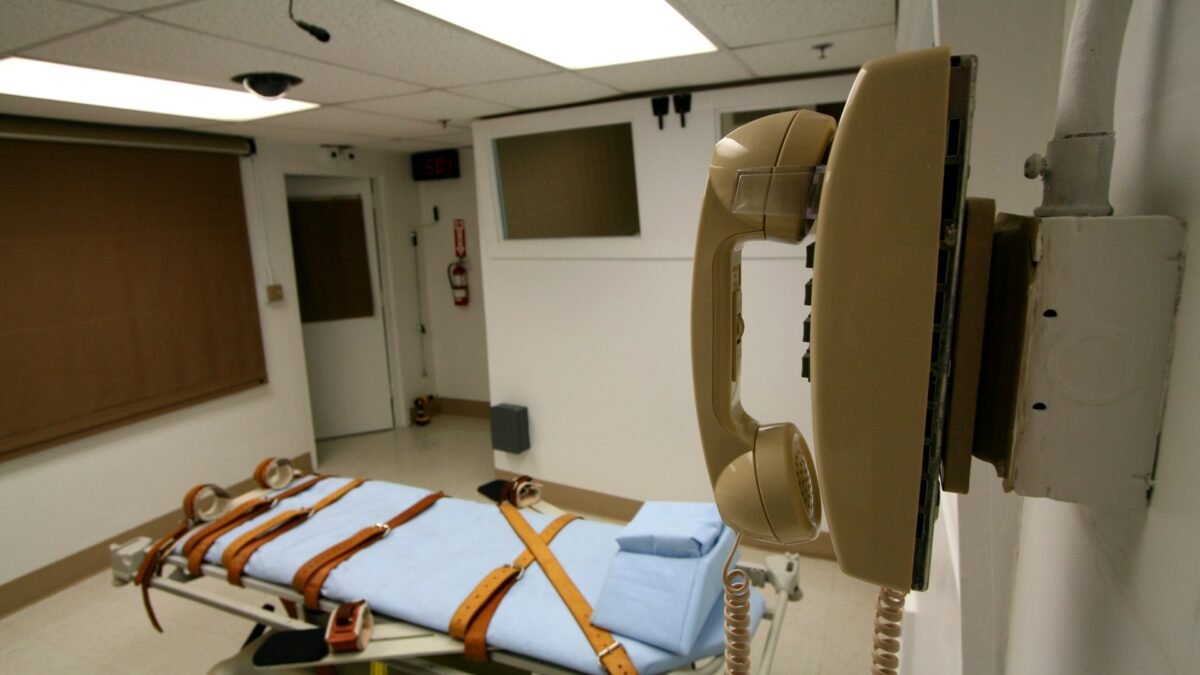
Florida is preparing to carry out a lethal injection tonight that would make the state’s tally of executions in 2026 one of the highest in modern American history. William Reaves Jr., a 77-year-old Vietnam veteran convicted of murdering an Indian River County sheriff’s deputy nearly four decades ago, is scheduled to die at Florida State Prison near Raiford at 6 p.m. local time on Tuesday, 20 October.
The execution would be the 18th in Florida this year, one short of the 19 executions the state carried out in 2025 — a record under the state’s modern death-penalty era. According to the state’s corrections department and reporting by local outlets, all final appeals have now failed. The U.S. Supreme Court denied Reaves’s requests for a stay of execution and a writ of certiorari on Tuesday afternoon, according to a copy of the order released by the court’s public information office and reported by TCPalm at 2:29 p.m. Eastern Time. The Florida Supreme Court had already denied his appeal and request for a stay on 14 October, as reported by the same outlet.
Reaves was sentenced to death for the 23 September 1986 shooting of Indian River County Sheriff’s Deputy Richard Raczkoski, who was 29 years old. Raczkoski was the first Indian River County sheriff’s deputy killed in the line of duty, and he remains, by local accounts, the only one.
The facts of the killing, as recorded in court documents and archived news reports summarised by USA Today, have never been seriously in dispute. In the early hours of that Tuesday morning, at about 3 a.m., Raczkoski responded to a 911 call from a pay phone at a convenience store in Vero Beach. No one spoke on the line. When Raczkoski arrived, Reaves was standing by the phone booth.
The deputy ran a warrant check and, told there were no warrants pending, began trying to arrange a cab for Reaves, according to court records cited in the reports. Then a .38-calibre pistol tumbled out of Reaves’s waistband. The deputy put his knee on the gun, prosecutors said at trial, but Reaves grabbed it. When Reaves pointed it at him, the deputy started to draw his own weapon before backing up and running away. Reaves pulled the trigger seven times, striking Raczkoski four times — in the back, as the deputy moved away. He died later that morning.
Reaves fled Florida and was arrested in Georgia two days later. In initial interviews with sheriff’s deputies, he admitted emptying the clip of his .38 pistol at the deputy, court records show, and said he was “wired on cocaine” at the time and did not want to go back to prison. A friend to whom he fled testified that Reaves had told him: “I just shot a cop, I just shot a police.” The same friend testified that the deputy had begged, “Don’t shoot me. Don’t shoot me. Don’t kill me,” and that Reaves had replied, “One of us got to go, me or you.” The jury convicted him of premeditated first-degree murder and recommended the death penalty.
A conviction with a long second chapter
Reaves’s path to tonight’s execution has been unusually long even by the standards of American death-row cases, which routinely stretch for decades. He was first convicted and sentenced to death in 1987. That conviction was later overturned because of a conflict of interest involving the prosecutor. After a second trial, he was convicted again and sentenced to death in 1992, according to reports on the case.
The death warrant was signed on 18 September by Governor Ron DeSantis — his 18th death warrant this year, according to the News Service of Florida. State Attorney General James Uthmeier wrote in paperwork supporting the warrant that the record was legally sufficient and that no court had issued a stay, according to WPTV. Indian River County Sheriff Eric Flowers had publicly pressed for the case to be treated as a priority, the News Service of Florida reported.
What distinguishes this execution from the 17 that preceded it in Florida this year is the campaign mounted in Reaves’s final days by fellow veterans — a last-ditch clemency effort that has turned the case into a test of how the American justice system treats combat trauma.
The veterans’ appeal
On 19 October, one day before the scheduled execution, 100 military veterans from across the branches of the U.S. military sent a letter to Governor DeSantis urging him to commute Reaves’s death sentence, according to Floridians for Alternatives to the Death Penalty, which published the letter. Their argument is not that Reaves did not commit the killing, but that the jury that recommended his death never heard the full medical evidence of the combat-related post-traumatic stress disorder that shaped him.
Reaves served in the U.S. Army’s 4th Infantry Division during the Vietnam War. He had asked for a transfer from an assignment in Panama to Vietnam, arriving in November 1969 at the age of 20, the veterans’ letter states. He served as an infantry machine gunner in the Central Highlands and in Cambodia, enduring ambushes and sniper fire and watching fellow soldiers die; within a week of arriving in country, a friend died in his arms. He earned the Combat Infantryman Badge and the Air Medal, and he received an honourable discharge.
After returning home, Reaves struggled with combat trauma and a severe substance-use disorder. He sought help but did not receive adequate treatment, the letter says. Years after his conviction, the U.S. Department of Veterans Affairs determined that he was 100 per cent disabled by service-related PTSD. The jury that recommended death never heard that determination or the expert evidence developed after trial explaining how his trauma affected his behaviour that night in 1986.
“As veterans, we know that service carries obligations in both directions,” the letter states. “We ask service members to risk their lives for this country; in return, our country assumes a solemn duty not to abandon them when they come home carrying wounds we cannot see.”
The defence lawyer who represented Reaves in his 1987 trial, Cliff Barnes — a judge and lawyer with a 45-year career — told TCPalm’s opinion writer that Reaves stood out among the thousands of defendants he had encountered. “This man was maybe the most gentle, polite, respectful, remorseful defendant that I’ve ever come across,” Barnes said. “That’s not going to save his life, but that’s the memory I have of him.”
The framing was captured in USA Today’s pre-execution reporting, which posed the question directly: was this a case of PTSD or murder? That framing is precisely what the courts have now declined to revisit. Neither the Florida Supreme Court nor the U.S. Supreme Court found a legal basis to halt the execution on those grounds.
What happens next
A team of TCPalm journalists is stationed at Florida State Prison today to cover the execution and its aftermath, the outlet reported in its live coverage. If the execution goes ahead as scheduled at 6 p.m., Reaves will be the 18th person executed in Florida in 2026 — and the case will join a growing national debate about the intersection of military service, untreated trauma and the death penalty.
Analysis: Why It Matters
Florida’s death-row machinery has been running at an unprecedented pace under Governor DeSantis. Eighteen death warrants in a single year is not a number the state reached by accident; it reflects a deliberate policy choice, and each of those 18 cases has its own human story. The Reaves case matters because it sits at the junction of two of the most contested questions in American criminal justice — whether the death penalty can ever account for the full complexity of who a person is, and whether a state’s power to punish can coexist with its duty to veterans.
1. The machinery of modern capital punishment is moving faster
Florida executed a record 19 people in 2025. It is now one short of that record with months to spare. For context, the state did not execute anyone at all in some recent years. The acceleration is part of a national pattern in which capital punishment is increasingly concentrated in a small number of states and, within those states, is carried out at a pace that strains the ordinary timelines of appeals. Reaves’s case took 39 years to reach its end — but the warrants that make these executions possible are now being signed at a rate of more than one a month. The system is not slow any more; it is methodical and quick, and it is choosing its cases.
2. The PTSD argument asks what a jury is supposed to weigh
The veterans’ letter makes a careful, limited claim: not that Reaves is innocent, but that the jury that decided whether he should live or die did so without evidence it was entitled to hear. The VA’s finding of 100 per cent service-connected disability came after the trial. This is the crux of many modern death-penalty challenges — the argument is not about guilt, which is settled, but about whether the sentencing was fully informed. Courts have generally held that new evidence must meet a high bar to reopen a settled sentence. The question the public is left with is a moral rather than a legal one: if a jury recommends death without knowing the defendant’s service record, was the recommendation made on a complete picture of the person being sentenced?
3. The military connection cuts both ways
Reaves’s status as a decorated combat veteran complicates the usual political geometry of death-penalty cases. Tough-on-crime politics and veteran advocacy usually occupy the same coalition. Here, they collide. The sheriffs and prosecutors who pressed for the warrant speak for law enforcement; the 100 veterans who signed the clemency letter speak for the military community. Neither side is claiming the facts of the shooting are different. They are arguing about what those facts mean — and whether service to the country should count as a mitigating force against the ultimate punishment. The outcome, with the execution going ahead, suggests that in Florida’s current political climate, finality has the stronger pull.
4. The case reveals the limits of remorse
His own trial lawyer’s testimony — gentle, polite, respectful, remorseful — is the kind of character evidence that in a different case might have been front and centre at sentencing. It arrived, instead, as an epitaph. The American death penalty has always claimed to reserve itself for the worst of the worst; the Reaves case raises the uncomfortable possibility that the machinery, once set in motion, no longer discriminates very finely between the hardened and the broken. A 77-year-old man with a VA disability rating and a lawyer who remembers his gentleness is scheduled to die tonight under the same procedures as the other 17.
5. The numbers will keep being debated
If tonight’s execution proceeds, Florida will stand at 18 executions for 2026. Whether it reaches or exceeds 19 is now a matter of gubernatorial discretion — the warrants are signed by the governor, and the pace is his to set. Nationally, the death penalty continues its long decline in usage even as it intensifies in a handful of states. Florida’s record-setting pace is, in that sense, both a local policy choice and a national story: a test of whether concentrated, high-frequency capital punishment remains politically sustainable when the cases behind the numbers — veterans, the elderly, the traumatised — refuse to fit the simple narratives the system was built on.
What to watch next
- Whether the 6 p.m. execution goes ahead on schedule or is interrupted by a last-minute court order — TCPalm’s live coverage is tracking developments at Florida State Prison.
- Whether Governor DeSantis signs further death warrants before the end of 2026, and whether the state matches or exceeds its 2025 record of 19 executions.
- How the veterans’ clemency campaign influences the ongoing national debate about PTSD evidence in capital cases, including any renewed legislative attention.
- The response of veterans’ organisations and death-penalty opponents to the execution of a decorated combat veteran.
- Whether similar challenges based on undisclosed trauma evidence are raised in other Florida capital cases scheduled for 2026.
Sources
- USA Today — “Vietnam vet faces execution for cop killing. Was it PTSD or murder?”
- TCPalm — Live updates: Florida to execute cop killer after 38 years on death row
- The Florida Press — William Reaves Execution Set Oct. 20 for 1986 Deputy Killing
- TCPalm (opinion) — “Florida lawyer can’t forget ex-client about to be executed”
- Floridians for Alternatives to the Death Penalty — Veterans urge DeSantis to stop execution of William Reaves

About the Author — Abdul Mannan
Related Articles

Trump Declares East Potomac Golf Course Work Starts “Immediately” After Calling Judge a “Crazed Lunatic”
President Donald Trump declared on Monday that renovation work on Washington's historic East Potomac Golf Links would begin…

Trump Blames Immigration for France Riots, Warns Paris Could Become a ‘Muslim City Very Soon’
President Donald Trump on Monday blamed immigration for France's worst unrest in years, predicting Paris would become 'a…
Trump Signs Executive Order Creating NIH Women’s Health Division, White House Task Force Led by Melania Trump
President Trump signed an executive order creating a Women's Health Division at the NIH and a White House…