
Iran Says Saudi Arabia and Houthis Have Not Answered Its Mediation Offer as Gulf Crisis Widens

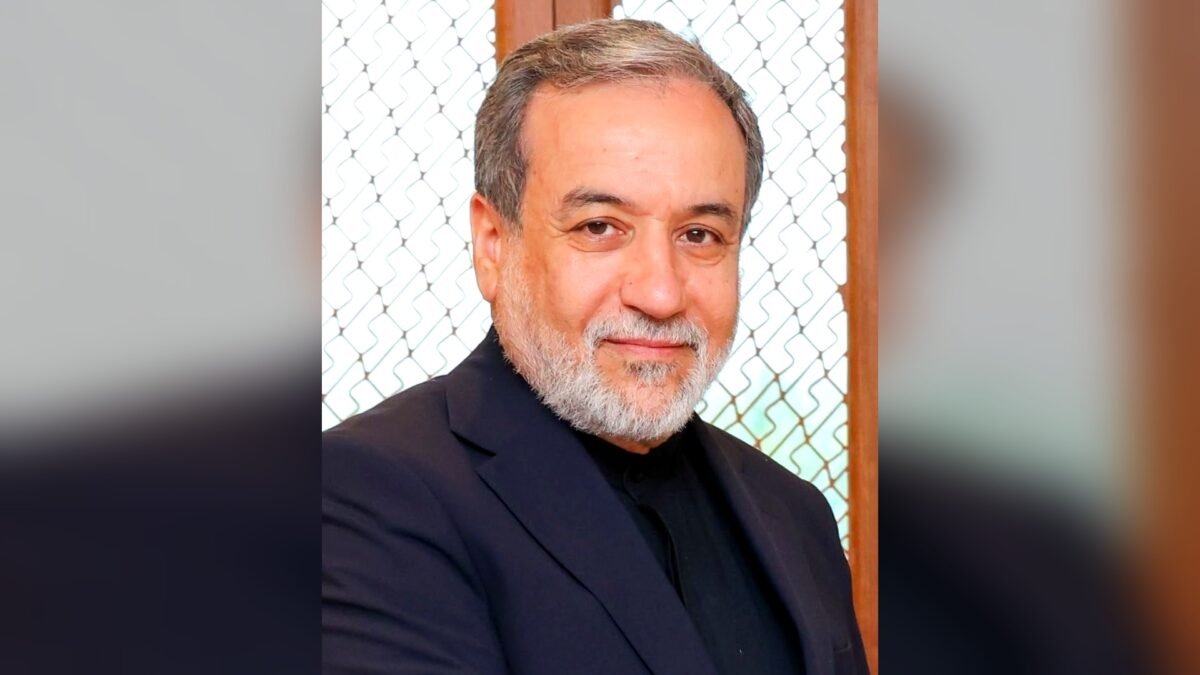
Iran has received no answer from Saudi Arabia or Yemen’s Houthis to its offer to help broker talks aimed at ending the fighting between them, Iranian Foreign Minister Abbas Araqchi said on Tuesday, in a sign that diplomacy is lagging well behind an escalating confrontation that has now drawn in the United Kingdom’s air force, rattled Gulf markets and pushed oil prices to their highest in five months.
Speaking in a television interview with Iraq’s Al Ekhbariya TV aired on Tuesday, Araqchi said Tehran had offered to facilitate dialogue between Riyadh and the Iran-aligned Houthis as the group’s missile and drone strikes on Saudi Arabia intensified earlier this month, according to Reuters. Neither side, he said, had responded to the offer.
The interview marks the third public step in Iran’s mediation push this month. Araqchi first raised the proposal in a telephone call with Saudi Foreign Minister Prince Faisal bin Farhan on 11 October, two days after a Houthi strike on Riyadh’s King Khalid International Airport that Saudi authorities say killed 13 people and injured more than 300. He renewed the offer on 17 October during a meeting with Egyptian Foreign Minister Badr Abdelatty on the sidelines of the Organisation of Islamic Cooperation foreign ministers’ session in Baghdad, telling him that twelve years of tension and conflict had demonstrated there was no military solution to the Yemen question, according to regional media reports of the talks.
“Any foreign intervention would complicate matters,” Araqchi told Al Ekhbariya, responding to the possibility that Egypt might join Saudi Arabia in the war against the Houthis. He added that Cairo had previously told Tehran it would “not directly” interfere in the Yemeni conflict.
Egypt, one of the Arab world’s largest military powers, is now weighing precisely that decision. Its parliament on Monday adjourned for a second time a vote on authorising the armed forces to support Saudi Arabia if Riyadh requests it, delaying the decision until 26 October, Reuters reported. The delay prolongs deliberations over a potentially far deeper Egyptian role in a conflict that has already begun disrupting Red Sea shipping and Suez Canal revenues.
Egypt’s constitution requires a two-thirds parliamentary majority to approve sending the armed forces on a combat mission beyond the country’s borders, after consultation with the National Defence Council, which approved the request on Sunday. President Abdel Fattah el-Sisi said on Saturday that Egypt would take “any measure” necessary to protect Gulf allies — a sharper public commitment than Cairo has made in years — while stressing that any role would be purely defensive. “We’re talking only about defence,” he said.
The opposition Egyptian Social Democratic Party instructed its lawmakers to abstain from the vote, saying parliament had not received sufficient information about the mission’s objectives, scope, duration, cost or risks to Egyptian troops — while affirming support for Saudi security and warning against an open-ended military commitment, Reuters reported. The Grand Imam of Al-Azhar, Ahmed el-Tayeb, called on Sunday for an urgent mediation effort by Arab and Muslim leaders to contain the conflict and avert further bloodshed.
A war that keeps widening
The mediation offer comes against a backdrop of rapidly escalating violence. The Houthis, the Iran-aligned movement that controls Sanaa and much of northern Yemen, struck Saudi airports and energy facilities almost daily this month after the collapse of a truce with Riyadh, according to regional reporting.
On Monday, the Houthis claimed strikes on an Aramco site in Yanbu, the Shaybah oilfield and the Riyadh and Abha airports, Reuters reported. Saudi authorities did not immediately confirm the claims, and Reuters said it could not independently verify them. But the pressure on Saudi aviation is undeniable: more than 45 per cent of departures from the kingdom’s airports have been cancelled since 8 October, according to aviation analytics firm Cirium.
The conflict has already reached deep into Yemeni territory in the other direction. A Houthi missile strike on a government training camp in Yemen’s Shabwa province on Monday killed 58 people and injured more than 200, Reuters reported. Last week, five missiles struck the Al-Maashiq presidential palace compound in Aden, which houses the Saudi-backed Yemeni government, killing five people and injuring sixteen, according to Yemeni officials; the Houthis said they had targeted a Saudi military operations centre inside the complex.
The economic fallout spread quickly on Tuesday. Most Gulf stock markets fell in early trade, Reuters reported, with Saudi Arabia’s benchmark TASI index dropping 1.1 per cent and Qatar’s QSI index falling to its lowest level in over six years. Brent crude climbed to 110.07 dollars a barrel, its highest since May, as traders worried about supply security through the Strait of Hormuz.
The strain on Riyadh is visible elsewhere too. Saudi Arabia on Monday postponed its flagship Future Investment Initiative conference — the kingdom’s premier showcase for foreign capital — until next year, organisers said, as Houthi attacks made hosting an international gathering in the capital untenable.
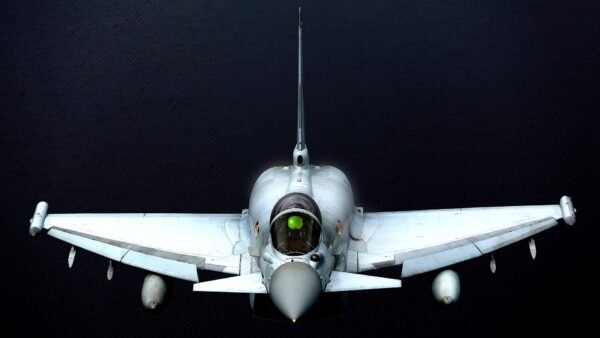
International involvement is meanwhile deepening. The United Kingdom has approved the deployment of RAF Typhoons on defensive counter-air duties in support of Saudi Arabia, describing the recent Houthi escalation as “outrageous”, according to the British defence secretary. The move makes London the first Western power to commit military aircraft to the kingdom’s defence in the current crisis.
Oil keeps flowing — for now
One remarkable feature of the crisis is that the region’s most important economic artery has proved surprisingly resilient. Persian Gulf oil exports have surpassed pre-war levels, according to ship tracker Kpler, as an improvised shipping system operating under US protection keeps tankers moving through the Strait of Hormuz despite repeated Iranian attacks on vessels.
Middle East oil flows averaged more than 24 million barrels a day in the week through 18 October, above pre-war levels of 23.3 million, the Wall Street Journal reported, citing Kpler data. Flows through the strait itself came to about 14 million barrels a day — roughly 82 per cent of pre-war levels. Pipelines across Saudi Arabia and the United Arab Emirates are carrying much of the difference: in September, about 40 per cent of non-Iranian crude shipped out of the Gulf bypassed the strait entirely, compared with 17 per cent before the war.
“The big picture is that the system for shipping through a dangerous Strait of Hormuz is now well-established and the risk appetite of those involved in exporting oil has risen,” Hamad Hussain, a senior commodities economist at Capital Economics, told the Wall Street Journal.
The resilience matters because it is changing the strategic calculus. Tehran’s ability to threaten the strait has long been its strongest lever against both Washington and the Gulf states. If that lever is weakening, Iran has fresh incentive to insert itself into the diplomacy — which is exactly what Araqchi is doing.
Analysis: Why It Matters
A mediator nobody trusts — but everybody needs
The central awkwardness of Araqchi’s offer is impossible to miss: Iran is the principal foreign backer of the Houthis, the very movement it now proposes to mediate with. From Riyadh’s perspective, inviting Tehran to broker talks with the Houthis looks less like diplomacy and more like negotiating with the group’s quartermaster. That is almost certainly why no answer has been forthcoming — and why one may never come.
But the deeper point is that Iran does not necessarily need to be trusted to be useful. The October 11 phone call between Araqchi and Prince Faisal was itself a signal that the two foreign ministers, whose countries restored diplomatic relations in 2023 under a China-brokered agreement after a seven-year rupture, still have a direct channel. The OIC meeting in Baghdad put the mediation offer in a multilateral frame, which matters because it gives Riyadh a face-saving route to engage: talking to Iran through an Islamic summit is different from answering Tehran bilaterally while Houthi missiles fall on Riyadh airport.
Tehran’s calculation is equally clear-eyed. A wider war that pulls in Egypt and keeps Western air forces permanently stationed in Saudi airspace is a nightmare for Iran’s regional position. Offering mediation lets Iran play statesman, blame the military track it claims to oppose, and keep a seat at any table where the future of the Red Sea corridor gets decided. Even an unanswered offer is, in that sense, a down payment on relevance.
Egypt’s delay is the real decision
The most consequential sentence in Tuesday’s reporting is not Araqchi’s “any foreign intervention would complicate matters” — it is the announcement that Egypt’s parliament has adjourned until 26 October. That delay is not procedural drift. It is a deliberate pause, and everyone in the region knows it.
Consider what Cairo is weighing. On one side: a 5.3 billion dollar Saudi deposit at Egypt’s central bank falls due this month, along with 267 million dollars in interest; the kingdom is a financial lifeline for an Egyptian economy under severe pressure. On the other side: a two-thirds constitutional bar for overseas combat missions, an opposition party demanding answers on objectives and risks, a grand imam calling for mediation, and the Suez Canal — already haemorrhaging revenue since Houthi attacks in the Bab al-Mandeb began in 2023, with losses Egypt’s foreign minister has put at about 11 billion dollars — hanging on the outcome.
By giving mediation “one last week”, Cairo is doing three things at once: pressuring Riyadh to keep the door open to talks, pressuring the Houthis to de-escalate while a vote looms, and buying its own military time to prepare a deployment that is credible from day one if diplomacy fails. A parliament that votes “no” on 26 October would be a shock; a parliament that votes “yes” after a week of silence would be an ultimatum. The week in between is the negotiation.
Oil resilience has an expiry date
The Kpler figures are genuinely impressive — 24 million barrels a day through a war zone is a logistical achievement. But the same data contains its own warning. The system is expensive, risky and depends on improvised convoying under American protection. Traders are right to be nervous: Brent at 110 dollars reflects a market that has priced in resilience while quietly preparing for its failure.
Thinning global inventories leave almost no margin for error, and the operation’s costs ultimately reach consumers at the pump — in Britain, in America, in Egypt. Every week the conflict continues, the improvised shipping system becomes more normal and more vulnerable at the same time. Normality breeds complacency; vulnerability breeds speculation. Araqchi’s mediation bid should be read in part as Tehran’s recognition that its leverage over the strait is a wasting asset — the pipeline bypass routes are growing, and each month of successful transit erodes Iran’s strongest card.
Britain’s Typhoons change the geometry
The RAF deployment, framed in London as purely defensive, is nonetheless a landmark. A Western power has now committed combat aircraft to the direct defence of Saudi airspace against an Iranian-backed movement. That raises the stakes for any Houthi strike that gets through — a missile that kills British-advised personnel, or damages an asset under RAF protection, would internationalise the conflict overnight.
It also narrows the mediation space. The more Western forces are positioned in and around Saudi Arabia, the more Tehran can frame the crisis as a Western encirclement — and the more Riyadh can afford to let an Iranian offer go unanswered, because its skies are increasingly guarded by others. Araqchi’s warning that foreign intervention “would complicate matters” is, in this light, directed as much at London as at Cairo.
What to watch next
- 26 October — Egypt’s parliament reconvenes. A yes vote authorises El-Sisi to deploy forces if Riyadh asks; a delay or a no vote signals Cairo is not yet convinced the mission is worth the price. Either way, the vote will be read in Riyadh, Sanaa and Tehran as the defining signal of how far the war widens.
- Riyadh’s response to the mediation offer. Silence is itself a position, but it has a cost: the longer the kingdom ignores the offer, the harder it becomes to accept later without looking desperate. A Saudi statement acknowledging Iran’s outreach — even to reject it — would be the first crack in the deadlock.
- The Houthis’ next strike. The movement has shown it can hit the Saudi capital, oil facilities and government installations in Yemen. An attack on a civilian target during the diplomacy window would likely end the week of grace; restraint would strengthen the case for talks.
- Oil and shipping through Hormuz. Brent at 110 dollars and 82 per cent of pre-war strait flows is a knife’s edge. Any Iranian attack on a tanker during the October 26 window would send prices sharply higher and put Tehran’s “mediator” posture under strain.
- The FII postponement’s signal. Saudi Arabia’s decision to delay its flagship investment conference tells foreign investors the kingdom expects the crisis to last. Watch whether international firms and airlines follow Riyadh’s own assessment and scale back commitments — that, more than any communique, will measure the conflict’s true cost.
Sources
- Reuters: Iran says Saudi Arabia, Houthis have not answered mediation offer
- Reuters: Egypt delays vote on military support for Saudi Arabia until October 26
- TBS News: Egypt delays vote on military support for Saudi Arabia until 26 October
- Wall Street Journal: More oil is now coming out of the Persian Gulf than before the Iran war
- Reuters: Most Gulf bourses retreat after Houthis claim attacks on Saudi energy, airport sites

About the Author — Abdul Mannan
Related Articles
UK to Deploy RAF Typhoon Fighter Jets to Defend Saudi Arabia Against Houthi Attacks
Britain will fly RAF Typhoons on defensive missions over Saudi Arabia to intercept Houthi missiles and drones, Defence…

Hegseth Makes Unannounced Visit to Israel for Talks With Netanyahu Days Before Election
U.S. Defense Secretary Pete Hegseth made an unannounced visit to Israel on Monday, meeting Benjamin Netanyahu at Ovda…

Macron Takes France’s Fuel Plea to the Gulf as Hormuz Disruption Tightens Its Grip
Emmanuel Macron is in Doha on a state visit, the final leg of a four-nation Gulf tour to…