
Macron Takes France’s Fuel Plea to the Gulf as Hormuz Disruption Tightens Its Grip

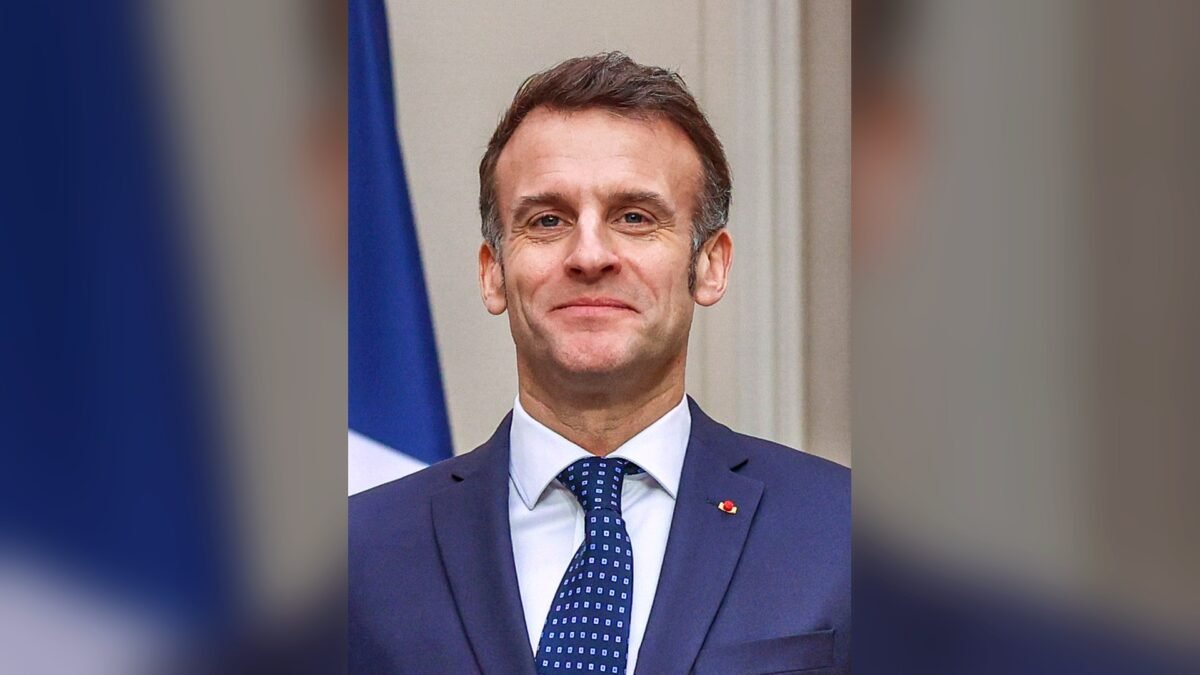
A President Abroad While France Burns
French President Emmanuel Macron arrived in Doha on Tuesday for a state visit to Qatar, the final and most formal leg of a four-nation Gulf tour built around a single urgent mission: securing enough fuel to keep France running through the winter. The trip, announced by the Qatari Amiri Diwan, puts energy diplomacy, defence partnerships and the fate of the Strait of Hormuz at the centre of France’s foreign policy this week.
Macron’s Gulf tour spans 19 to 21 October and covers Kuwait, the United Arab Emirates, Bahrain and Qatar, according to the Élysée Palace. The visit had been planned months in advance, the French presidency said — but it is landing in the middle of one of France’s most severe waves of social unrest in recent years, and its agenda has been reshaped around the fallout of a war thousands of kilometres from French shores.
“It is a conflict in which France did not take part, and for which we are suffering the consequences,” the president said, as quoted by Le Monde, which is travelling with the delegation. The chokehold on the Strait of Hormuz — the narrow waterway carrying a vast share of the world’s oil and gas exports — has driven fuel prices to record levels in France and helped ignite the protests now convulsing French cities.
Kuwait: The Opening Leg
The tour began on Monday in Kuwait, where Macron met Emir Sheikh Meshal Al Ahmad Al Jaber Al Sabah for private talks lasting about 90 minutes, according to the Emirates News Agency (WAM). The two countries signed several cooperation agreements covering defence, aviation, investment and artificial intelligence, signalling that the trip is about far more than hydrocarbons.
Kuwait is the smallest of the four stops in energy terms, but the agreements struck there set the tone: Paris wants a package deal — fuel volumes today, strategic investment tomorrow.
Abu Dhabi: Received by the UAE President
Later on Monday, Macron landed in Abu Dhabi, where he was received at the airport by UAE President Sheikh Mohamed bin Zayed Al Nahyan. According to WAM, an official welcoming ceremony featured the national anthems of both countries and a guard of honour, attended by the Crown Prince of Abu Dhabi and senior ministers.
The Élysée said Macron is seeking firm commitments from regional producers to increase oil and diesel supplies to France. Other stated objectives include securing alternative energy sources, diversifying supply routes and cushioning French households from the energy crisis, WAM reported. Talks in the Emirates were also expected to cover defence and security cooperation and emerging technologies, particularly artificial intelligence, alongside private-sector economic meetings.
The delegation underlines how seriously Paris is taking the mission. Macron is travelling with senior executives from TotalEnergies and Engie, France’s two largest energy groups, the Élysée said. The head of the Campus AI venture — a project backed by multibillion-dollar Emirati investment and being developed near Paris — is also on board, according to the UAE-based outlet iranianuae.ae.
The UAE and France have had a comprehensive strategic energy partnership since 2022. In February 2025 the two countries established a broad framework for cooperation in artificial intelligence, including large-scale data-processing infrastructure in France with projected investment of up to €50 billion, iranianuae.ae reported. Macron last visited the Emirates in December 2025, when he met Sheikh Mohamed at the Zayed National Museum.
Doha: The State Visit
The Qatar leg carries the heaviest ceremonial weight. Sheikh Tamim bin Hamad Al Thani will hold formal discussions with Macron on strengthening bilateral relations and coordinating on regional and international issues, with an emphasis on security, stability and peace, the Qatari state news agency QNA reported.
The relationship has deep commercial roots. Bilateral trade exceeded €1.3 billion in 2024, according to QNA. Qatar made a landmark commitment in 2024 to invest €10 billion in key sectors of the French economy — including food security, the digital economy, artificial intelligence, semiconductors, the energy transition, aerospace, healthcare, tourism and culture. Around 665 French companies operate in Qatar, and QatarEnergy and TotalEnergies are partners in the expansion of the North Field East project, described by QNA as the largest single project in the history of the liquefied natural gas industry.
Doha is also a mediator Paris cannot afford to ignore. Qatar has been working to mediate between the United States and Iran, though those talks have, as Le Monde put it, “never seemed so deadlocked”. The Élysée insists that Hormuz “is not a bargaining chip but a common good” — a position that will be tested in meetings with the Emir.
The Fuel Emergency Behind the Diplomacy
The urgency of the mission is written on French petrol station forecourts. Months of disruption to shipping through the Strait of Hormuz, a consequence of the United States–Iran war that began in late February, have sent energy prices soaring across Europe. On the eve of the trip, the Élysée spoke vaguely of securing “additional volumes” of diesel and oil from Gulf producers, according to Le Monde.
Paris is also examining less conventional options. On Monday the government was considering tapping into stocks of diesel and jet fuel held in reserve in Oman, which Le Monde reported could be useful for France’s overseas territories such as Mayotte and Réunion.
Yet the limits of what the Gulf can offer are becoming plain. Doha, like its neighbours, has seen its own hydrocarbon exports plunge amid the crisis, Le Monde reported, and the Gulf producers share Paris’s frustration: none of them has much influence over a war that remains entirely in the hands of Washington and Tehran.
Iran has stepped up its attacks in recent weeks on “shuttle” oil tankers — medium-sized vessels, some from the Emirates and Saudi Arabia — which the United States Navy now escorts at considerable expense through the waterway, according to Le Monde. Tehran, the newspaper reported, is trying to increase pressure on Washington ahead of the US midterm elections on 3 November, while the regime fears the White House could resume the war after the vote. France and Britain have previously proposed forming an international maritime coalition to protect vessels in the strait, but that plan remains dependent on the US and Iran reaching a political agreement, according to the Élysée’s account reported by iranianuae.ae.
A President Criticised for Leaving
The tour went ahead despite calls from some opposition figures for its cancellation, after the weekend’s unrest. The Élysée said the trip had been planned months in advance — and Macron himself made the case that leaving was the point.
On Saturday 17 October, nationwide protests over the rising cost of living, higher fuel prices and the state of public services — particularly education — descended into clashes with police, fires and the looting of shops in several cities. According to figures from France’s Interior Ministry, around 550,000 people took part in the protests, while organisers put the number at 800,000. More than 2,000 people were arrested as the unrest escalated, iranianuae.ae reported.
In a televised address on Sunday evening, Macron expressed anger and shame over the violence and vowed that those responsible for vandalism and looting would be prosecuted. He also tied rising fuel costs to the Persian Gulf conflict — and insisted his visit to the Gulf states was essential to securing France’s energy supplies.
The Iranian regime, meanwhile, was quick to comment on the weekend’s clashes, Le Monde reported, seizing on the protests — including recent high-school demonstrations — as evidence of its influence and its capacity to cause disruption far beyond the region.
Analysis: Why It Matters
Fuel has become France’s foreign policy
For decades, French presidents travelled to the Gulf to sell weapons, reactors and Rafales. This tour reverses the direction of the transaction: Macron has gone as a buyer, asking for diesel. That inversion tells the story of the past eight months — a major war, a choked strait, and a European economy that discovered its energy security was a hostage of somebody else’s conflict. When a president’s most important international trip of the autumn is a shopping expedition for fuel, the age of cheap, reliable energy is definitively over.
The limits of chequebook diplomacy
There is something poignant about the choreography. Macron arrives with the chiefs of TotalEnergies and Engie, signs defence and AI agreements, and talks of strategic partnership — but what he needs most is a few more tankers of diesel, and the producers he is courting are themselves wounded by the same crisis. As Le Monde noted, Gulf exports have plunged and the producers have no more leverage over the war than Paris does. Diplomacy can buy goodwill; it cannot un-block a strait. That structural reality is why the Élysée’s insistence that Hormuz is a “common good” sounds less like a policy than a plea.
Qatar’s quiet power
The Doha stop matters more than the ceremony suggests. Qatar sits at the intersection of almost every line of this crisis: a major LNG exporter whose cargoes must pass through Hormuz, a mediator between Washington and Tehran, and an investor with €10 billion committed to the French economy. The February 2024 state visit by the Emir already produced security and defence cooperation; this return visit tests whether the relationship can deliver when it counts. If Doha can nudge the American–Iranian deadlock even slightly, the fuel prices burning French streets might finally start to fall.
A presidency squeezed from both ends
Macron is caught in a vice. At home, fuel prices helped trigger the worst unrest of his recent presidency, with the Interior Ministry counting half a million demonstrators and looting in city centres. Abroad, the causes of that unrest lie in a war France did not start and cannot end. His Sunday address tried to hold both lines at once — condemnation of the violence, and an insistence that the answer lies in diplomacy in the Gulf. It is a defensible strategy, but a politically exposed one: every day the tanks stay empty, the opposition’s question — why did you leave the country? — gets louder.
The midterm clock is ticking
Le Monde’s reporting contains the trip’s most consequential detail: Tehran is calibrating its pressure around the US midterm elections on 3 November, and fears Washington could escalate after the vote. That means the window for any French-mediated or Gulf-mediated breathing space is narrow — measured in weeks, not months. Macron’s Gulf tour is therefore not just about this winter’s fuel; it is a race against an American political calendar that France cannot control. If the talks fail and the strait stays choked, the riots of October may look like a prologue.
What to Watch Next
- The Doha outcomes: whether the state visit produces concrete supply commitments or new mediation language on Hormuz — communiqués will be parsed for any shift in Qatar’s posture toward Washington and Tehran.
- The Bahrain stop: the least covered leg of the tour could still yield defence or energy announcements before Macron returns to Paris.
- Fuel price movements in France: markets will judge the tour’s credibility in the coming days; further spikes could revive protests just as the government tries to pass a budget.
- The Hormuz military picture: any further Iranian action against “shuttle” tankers — or a US response — would instantly overshadow the diplomacy.
- The 3 November midterms: Washington’s posture toward Iran after the vote will decide whether the Gulf’s deadlock, and France’s fuel crisis, hardens into a long-term condition.
Sources
- Le Monde — “On tour in the Persian Gulf, Macron seeks a solution to soaring fuel prices” (20 October 2026)
- Qatar News Agency (via Fana News) — “Qatar, France: Historic Ties and Growing Strategic Partnership” (19 October 2026)
- iranianuae.ae — “Macron Arrives in UAE to Secure Fuel Supplies for France” (19 October 2026)
- The Voice News Magazine — “Macron begins Gulf tour focused on fuel supplies and strategic ties” (18 October 2026)
- Reuters (via Devdiscourse) — “France’s Macron to visit Kuwait, UAE, Bahrain and Qatar in October” (14 October 2026)

About the Author — Abdul Mannan
Related Articles
Riyadh’s Iconic Kingdom Centre Empties Its Offices as Houthi Attacks Rattle Saudi Capital
Management at Riyadh's 99-storey Kingdom Centre ordered all office staff to work remotely until further notice after overnight…
Tugboat Hit by Two Projectiles Off the UAE as Attacks on Gulf Shipping Reach a Wartime Weekly High
A tugboat was struck by two projectiles off the UAE's Khor Fakkan coast as UKMTO recorded 12 attacks…
Hamas Widens Search for Hostage Remains as Egypt Sends Excavators; Trump Sets 48-Hour Watch
Hamas expanded its search for hostage remains in Gaza on Sunday as Egypt deployed excavators to Khan Younis,…