
TSMC Halts Steel Work at All Taiwan Sites After Four Workers Killed in Kaohsiung Collapse

The accident
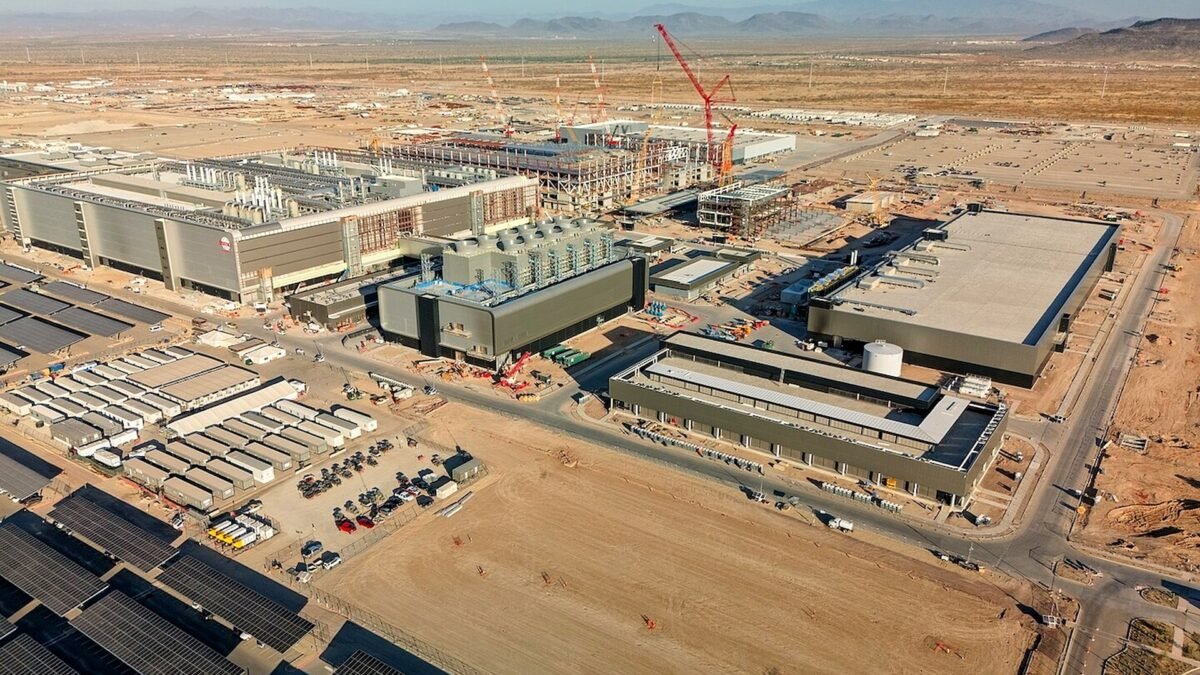
Four construction workers have been killed at a Taiwan Semiconductor Manufacturing Company (TSMC) construction site in the southern city of Kaohsiung, the chipmaker said on Wednesday, in one of the deadliest industrial accidents in the Taiwanese technology sector in years. The company said it had suspended related construction work at the site and all similar steel-structure work at its construction sites across Taiwan pending an investigation, according to Reuters.
The four workers died on Tuesday while working on the steel structure of a new factory, TSMC said in an emailed statement on Wednesday. “We and our construction contractor immediately suspended related construction work at the site, and we have also suspended similar steel structure work at all our construction sites across Taiwan pending our investigation,” the company said. It added that its on-site safety team was cooperating with the relevant authorities and the construction contractor to investigate the incident and ensure appropriate remedial steps are taken.
What happened at the site
According to local media reports, the accident took place at the F22 construction site in Kaohsiung’s Nanzih district, part of TSMC’s expanding factory footprint in the city. Local broadcaster CTS News reported that the men were welding on a steel structure when a beam collapsed, sending four workers — along with the steel beam — falling from a height of about 10 metres. The report said the workers were wearing safety ropes as required, but the ropes failed to save them because a bolt holding a steel-structure connection plate on an upper floor gave way first, rendering their harnesses ineffective.
Investigators believe the collapse may have been caused by fatigue from repeated use of the bolts, or by too few bolts being used to support the structure, though the precise cause remains under investigation, according to the local reports. The Southern Taiwan Science Park Administration, which oversees the industrial zone where the site is located, has ordered a work stoppage at the site while the inquiry proceeds.
TSMC’s response
TSMC moved quickly to acknowledge the deaths and to widen the pause beyond the single site. The company said it had suspended similar steel-structure work at all of its construction sites across Taiwan — a sweeping halt rather than a localised one — and committed to cooperating with the authorities and the contractor on the investigation. The company did not disclose how long the suspensions would last or whether the stoppages would affect the completion timelines of the factories under construction.
The response follows the established pattern for major industrial accidents in Taiwan, where regulators can order work stoppages across sites and where contractors face potential criminal liability. Taiwan’s occupational safety authorities routinely investigate fatal workplace accidents, and companies can be fined or have executives held accountable if negligence is found.
A company expanding at breakneck speed
The tragedy has struck TSMC at the peak of the most aggressive expansion in its history. The world’s largest contract chipmaker — the manufacturer behind the advanced chips that power the global artificial-intelligence boom — is racing to add capacity in Taiwan, Japan, and the United States at the same time.
Only a day before the accident, on 20 October, TSMC announced that its second factory in Kumamoto, Japan — operated by its Japan Advanced Semiconductor Manufacturing (JASM) subsidiary — had been approved to produce advanced chips using 3-nanometre process technology, with total equipment investment in the venture expected to exceed US$23 billion, according to ANI. The facility is targeted for commercial production in December 2028, and the Japanese government has designated it a subsidy recipient under the country’s semiconductor reindustrialisation programme.
The Japan announcement landed alongside a blockbuster set of quarterly results. TSMC was expected to report a sixth consecutive quarter of record profit for the July–September period, with analysts forecasting net profit of around T$746 billion (US$23.4 billion) — a roughly 65 per cent year-on-year surge — driven by demand for AI chipmaking capacity and its advanced CoWoS chip-packaging technology, according to Reuters. TSMC is a key supplier to Nvidia and Apple, and its market capitalisation stands at around US$2.1 trillion, nearly double that of South Korean rival Samsung Electronics.
In the United States, the company has committed US$265 billion to its Arizona operations — where 3nm production at its second fab is targeted for the second half of 2027 — and, according to Reuters, is evaluating a potential further investment in Texas. The company also announced in August that it would establish a new joint venture with Sony Semiconductor Solutions in Kumamoto to develop and manufacture next-generation image sensors, with commercial production scheduled to begin in 2029.
Analysis: Why it matters
Safety at the speed of scale
TSMC’s challenge has always been technological: each new chip node demands feats of engineering that border on the impossible. But the Kaohsiung accident is a reminder that the company’s most formidable constraint may be an older one — human safety at the speed and scale of its build-out. A firm simultaneously raising fabs in Kumamoto, Kaohsiung, and Arizona is also, necessarily, one of the world’s largest managers of construction risk. Four workers fell despite wearing safety ropes; the preliminary account of the bolt failure suggests the margin between procedure and catastrophe was paper-thin.
The subcontractor chain
The men who died were subcontractors’ workers, not TSMC employees. That is typical of the chip industry’s capital-spending model, in which specialist construction firms carry out the steelwork, cleanroom fit-outs, and tool installations that a fab requires. It also means the most dangerous work in the semiconductor boom — welding steel frames metres in the air, installing tonnes of ultra-clean equipment — is performed by people one or two contractual steps removed from the company whose name is on the site. Taiwan’s investigators will now work backwards along that chain: who specified the bolts, who installed them, who checked them, and who signed off.
The keystone company cannot afford a reputational crack
TSMC is not merely a large company; it is the keystone of the artificial-intelligence economy. Nvidia, Apple, and the hyperscalers all depend on its capacity; governments from Washington to Tokyo to Taipei treat its fabs as strategic assets. That strategic centrality buys it political goodwill and subsidies — Japan’s government is committing around US$4.1 billion to the Kumamoto II fab alone — but it also magnifies every stumble. A safety failure at the world’s most important chipmaker will be watched not only by labour regulators but by the governments and customers underwriting its expansion.
Labour safety in Taiwan’s chip boom
Taiwan’s semiconductor construction boom has been accompanied by recurring scrutiny of working conditions at building sites. The island’s occupational safety record has improved over the decades, but fatal industrial accidents remain politically sensitive, particularly when they occur at a flagship company in which the state has a stake. How TSMC and the authorities handle the Kaohsiung investigation — its thoroughness, its transparency, and whether it leads to systemic changes in contractor safety regimes — will set the standard for the entire industry’s expansion era.
What to watch next
- The investigation’s findings. Whether the collapse is traced to bolt fatigue, insufficient bolting, or another cause — and whether negligence charges follow — will determine whether this was a tragic anomaly or a systemic failure in contractor oversight.
- How long the work stays suspended. TSMC has halted similar steel work at all of its Taiwan construction sites. If the pause lasts weeks rather than days, investors will begin asking whether fab completion schedules — and the AI-capacity build-out — slip.
- Whether the Japan timeline holds. The Kumamoto II fab’s December 2028 production target and its 3nm ambitions are now paired, in the public mind, with images of a fatal collapse. Any safety-driven redesign of construction protocols could ripple across the company’s global project pipeline.
- The regulatory response. Watch for fines, criminal referrals, or new safety directives from Taiwan’s occupational safety authorities — and for whether the Southern Taiwan Science Park imposes new conditions on fab construction.
- The earnings call. TSMC’s next earnings call will be the first time the company’s leadership answers questions about the accident publicly. Analysts will want to know the financial and schedule impact; journalists will want to know what changes.
Sources
- Reuters — TSMC says four construction workers killed at Taiwan site, halting work
- CTS News — TSMC Kaohsiung plant worker accident report (bolt failure, 10m fall)
- Scoop / Bloomberg Tech — TSMC suspends some construction after deadly accident kills four
- ANI via TradingView — TSMC plans 3nm semiconductor manufacturing at second Japan factory, investment to exceed US$23 billion
- Tech Times — Japan clears TSMC Kumamoto for 3nm chip production

About the Author — Abdul Mannan
Related Articles

Mars’ Giant Valles Marineris Canyon Is Still Tectonically Active Today, Scientists Find
Scientists have found direct seismic evidence that Mars' giant Valles Marineris canyon is still tectonically active today, from…

Japan Launches World-First Mission to Bring Samples From a Martian Moon Back to Earth
Japan's JAXA has launched the MMX spacecraft aboard an H3 rocket, beginning a five-year voyage to collect soil…
Siemens and Nvidia Unveil AI-Driven Factory Automation at Erlangen, Target Up to 80% Automation
Siemens has unveiled new AI-driven manufacturing tools developed with Nvidia at its Erlangen electronics factory, aiming to lift…