
Indonesia Erupts in Protest as Wildfire Haze Chokes Southeast Asia

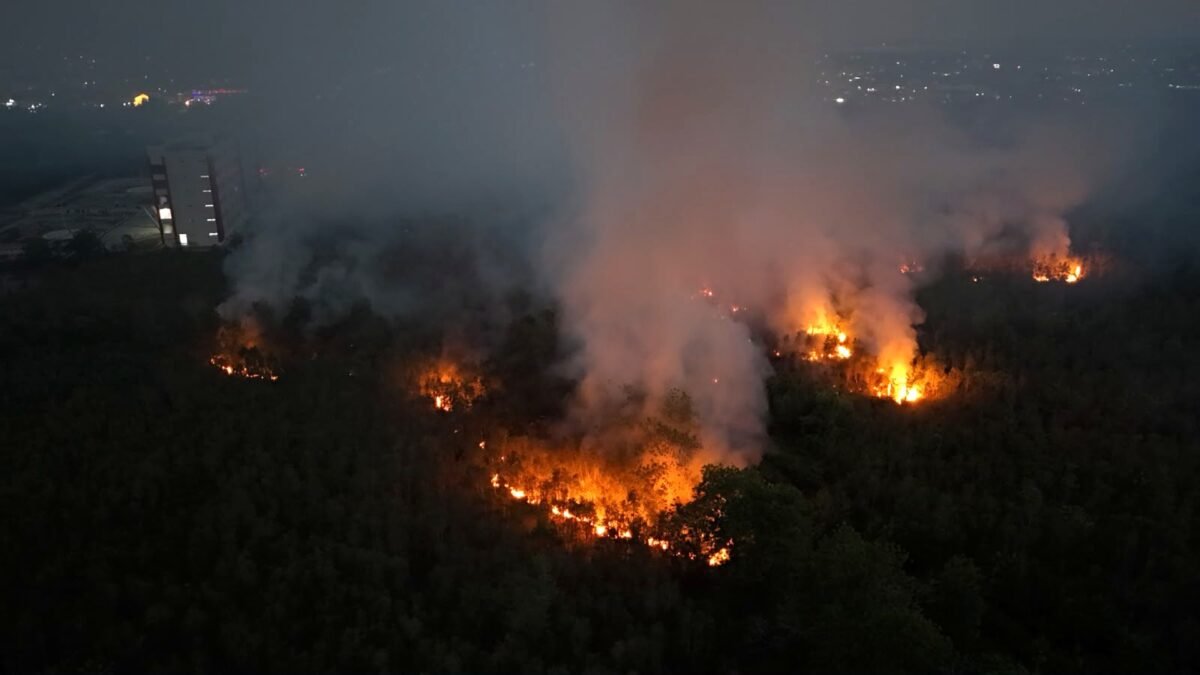
Protests sweep Indonesia as wildfire haze chokes the region
Indonesians took to the streets in several cities on Tuesday, raging against wildfires and a toxic haze that has made thousands of people unwell for weeks on end, in a crisis that has now engulfed much of Southeast Asia, according to reporting by the AFP news agency.
The demonstrations, called by students, were deliberately timed to coincide with the second anniversary of President Prabowo Subianto’s administration, which was sworn in on 20 October 2024. Protesters in the capital Jakarta, as well as in Bandung and Yogyakarta on Java, in Pekanbaru on Sumatra, and in Makassar on South Sulawesi, railed against what they described as government ineptitude and corruption — and above all the failure to put out fires that have ravaged vast areas of Borneo and Sumatra since July.
“If we burn, you burn with us!” read one protest banner carried in Jakarta. “I have the right to breathe. Extinguish the fires immediately,” read another, according to AFP.
In Jakarta, hundreds of university students gathered around the Tugu Tani monument in the city centre, while Greenpeace activists draped banners from the monument at the capital’s central Bundaran HI roundabout on Tuesday morning — one of them reading “Haze & Prabowo’s Regime = National Disaster.” Police detained six of the Greenpeace activists before the student marches began, a campaigner for the NGO told AFP.
The Jakarta Post reported that the protests combined environmental anger with broader grievances over the rising cost of living, corruption and civil liberties. Students demanded that the government declare the prolonged forest and peatland fires a national disaster, prosecute the companies responsible for environmental damage, and make education and healthcare more affordable. A day earlier, in Palangka Raya — the Borneo city at the centre of the fire zone — dozens of residents protested to demand that authorities declare a state of emergency.
The human toll in Palangka Raya
Few places have felt the crisis as acutely as Palangka Raya, the capital of Central Kalimantan on the island of Borneo, where weeks of thick haze have turned daily life into an ordeal. Residents told AFP of their despair.
“This haze is really bad. Sales are quiet. Prices keep going up, but there’s no income,” said Melsi, a 40-year-old streetside drinks vendor, crying as she spoke to AFP. “What can we do? We’re the little people, we can’t do anything but hope that the government will handle it.”
Sifra, a 29-year-old homemaker, said her husband and two children had been coughing for a month. “Even inside the house, the smoke gets in. Honestly, since the haze, my body aches, as if I’ve been beaten up. The immune system is down. I get coughs and colds easily,” she told AFP.
Weeks of persistent haze have forced schools to close in affected areas, disrupted flights, and pushed air-pollution readings far beyond safe levels, according to regional reports. The fires have also pushed pollution higher in neighbouring Malaysia and Singapore, turning a domestic emergency into a regional one.
Worst on record?
According to a report published on Wednesday citing the World Meteorological Organization, the current haze crisis may be Southeast Asia’s worst on record. A report citing the Nusantara Atlas wildfire monitor said more than 1.9 million hectares of land burned in Indonesia during the first nine months of 2026. Estimates vary between monitors depending on methodology, but all agree the scale is enormous — and the fires are still burning.
An intense episode of El Niño has contributed to the hot, dry conditions behind the crisis, while land-clearing practices — including illegal burning to clear land for agriculture — continue to feed the flames. Peatlands, which smoulder for weeks and release enormous quantities of smoke, are burning again, as they did catastrophically in 2015, when prolonged fires caused at least US$16.1 billion in economic losses in Indonesia alone.
The government’s response
The Indonesian government says it has deployed more than 60,000 personnel, including volunteers, nationwide to fight the fires, with aircraft assigned to water-bombing and cloud-seeding operations — although thick haze has intermittently grounded some aircraft, a spokesperson for the National Disaster Mitigation Agency said.
Japan sent three CH-47 Chinook helicopters to Kalimantan from 16 to 29 September to assist. During more than 40 aerial firefighting operations, the helicopters dropped approximately 220 tonnes of water. The mission ended after Indonesia indicated it could continue the response independently — though the National Disaster Management Agency stressed that the end of Japan’s mission did not mean the fires were extinguished, particularly in peatland areas.
On 15 October, Indonesian Foreign Minister Arrmanatha Nasir said President Prabowo had accepted offers of assistance from neighbouring countries. Malaysia offered to send aircraft, helicopters and around 50 firefighting personnel, while Singapore offered assistance with civil firefighting operations and cloud seeding. According to The Jakarta Post, presidential chief of staff Listyo Sigit Prabowo said the president chaired a limited meeting at Merdeka Palace in Jakarta on Monday to discuss accelerating firefighting efforts.
A regional diplomatic strain
The haze has strained relations across the region. A Malaysian MP urged ASEAN pressure on Indonesia over the haze, prompting a sharp response from former Indonesian trade minister Muhammad Lutfi. Lutfi asserted that the haze issue should not lead to Indonesia’s isolation from ASEAN, noting that land clearing is allegedly carried out by palm oil corporations — and claiming that Malaysian companies operating in Indonesia are among them, according to a report quoting his Instagram statement.
Lutfi argued that the significant profits in the palm oil trade are generated downstream, and said Indonesia’s push to prioritise domestic refining had rattled processors in Europe and Malaysia. “As soon as we stopped supplying cheap crude palm oil to overseas processing refineries, they panicked,” he was quoted as saying.
The diplomatic friction comes in a week when Prabowo has already clashed publicly with the global index provider MSCI, which he accused of trying to “intimidate” Indonesia after a market-downgrade warning that triggered a stock-market rout — a sign of a presidency that is feeling besieged on multiple fronts.
Analysis: Why It Matters
An environmental disaster has become a political one
Forest fires are, in some sense, an annual season in Indonesia. What makes this October different is the calendar. By staging their demonstrations on the second anniversary of Prabowo’s government, the student movement has fused a public-health catastrophe with a political verdict — two years in, and the smoke is worse than ever. That framing is deliberate, and it is dangerous for the administration, because it converts a problem the government can call an act of nature into a problem the government can be accused of owning. Haze that “has made thousands unwell for weeks” becomes evidence not of El Niño, but of governance failure.
The “national disaster” demand is about power, not just procedure
The protesters’ central concrete demand — that the fires be declared a national disaster — deserves more attention than it gets. Such a declaration would unlock central-government funds, command military-scale logistics, and, crucially, signal that the state accepts ultimate responsibility. That is precisely why governments hesitate: the declaration is an admission. Palangka Raya’s residents demanding a state of emergency understand the politics instinctively — in a country where disaster declarations move resources, refusing one while people cannot breathe looks like abandonment. Watch whether Prabowo, who built his political persona on decisive action, chooses to embrace the label or fears what it confesses.
2015 taught everyone the script; nobody rewrote it
The ghosts of 2015 hang over everything here. That fire season cost Indonesia alone at least US$16.1 billion, choked the region for months, and produced pledges — better peatland protection, enforcement against corporate burning, regional early-warning cooperation — that were supposed to prevent exactly this. Eleven years later, peatlands burn again, corporate suspects are unnamed, and Malaysia and Singapore are again breathing Indonesia’s smoke. Original commentary is obliged to say the uncomfortable part plainly: recurring disasters are no longer disasters; they are policy. When the same catastrophe returns on schedule, the honest question is not what caused it but what was never done.
The palm-oil subplot is the story beneath the smoke
Muhammad Lutfi’s intervention reveals why the fires are so politically protected. His argument — that Malaysian and European processors profit from Indonesian land while criticising Indonesian haze — turns the moral spotlight around: the haze, he implies, is produced by an economic order the critics themselves benefit from. It is a partly true and partly deflection, which is what makes it effective. The serious point underneath deserves attention: Indonesia’s downstream-processing push genuinely does rearrange who profits from the plantation economy, and fire enforcement genuinely does threaten powerful interests. Until fire prevention is more profitable than fire clearance, the incentives will keep winning.
A region watching for rain, and for leadership
As long as peatland fires remain active and sustained rainfall remains uncertain, the transboundary haze will keep threatening the region — that is the WMO’s warning. But the deeper uncertainty is political. ASEAN’s machinery moves slowly and consensually; member states can offer helicopters and cloud-seeding, but they cannot order Jakarta to act. What to watch next: whether the October 20 protests grow into a sustained movement like those that have toppled policies before in Indonesia; whether Prabowo declares a national emergency; whether the health toll gets an official count; and whether the first serious rains arrive before the political season hardens into confrontation. The smoke will eventually clear. The verdict on who let it burn will take longer.
What to Watch Next
- Whether President Prabowo responds publicly to the national-disaster demand — and whether protests planned beyond Jakarta sustain momentum.
- How long the El Niño-driven dry season lasts, and when the first sustained rains arrive over Kalimantan and Sumatra.
- The ASEAN response: whether Malaysia and Singapore’s firefighting offers translate into coordinated action or into diplomatic pressure.
- Any official tally of the health and economic damage — hospital admissions, flight disruptions, school closures — which will shape the political fallout.
- Enforcement: whether any plantation companies are named and prosecuted for illegal burning, the demand protesters have made for a decade.
Sources
- AFP via Metapress — “Indonesian anger builds over wildfires, toxic haze” (21 Oct 2026)
- The Jakarta Post (via ANI) — “Student protests erupt across Indonesia over rising living costs, forest fires”
- seasia.co — “WMO Says Indonesia’s Haze Crisis May Be Southeast Asia’s Worst on Record” (21 Oct 2026)
- AFP via Business Today Malaysia — “Indonesian Anger Builds Over Raging Wildfire And Toxic Haze” (21 Oct 2026)

About the Author — Abdul Mannan
Related Articles
Russia Frees Detained American Teacher Stephen Hubbard as Witkoff Holds Ukraine Talks with Putin
Russia freed 74-year-old American teacher Stephen Hubbard after four years in Russian custody, with Vladimir Putin announcing the…
Georgian Court Begins Hearings on Bid to Ban Five Main Opposition Parties
Georgia's Constitutional Court in Batumi has begun three days of hearings on a ruling-party lawsuit seeking to outlaw…

Witkoff to Meet Putin in St Petersburg With Updated Peace Proposal After ‘Constructive’ Oslo Talks
US envoy Steve Witkoff will meet Vladimir Putin in St Petersburg on Wednesday with an updated peace proposal,…