
Russia Frees Detained American Teacher Stephen Hubbard as Witkoff Holds Ukraine Talks with Putin

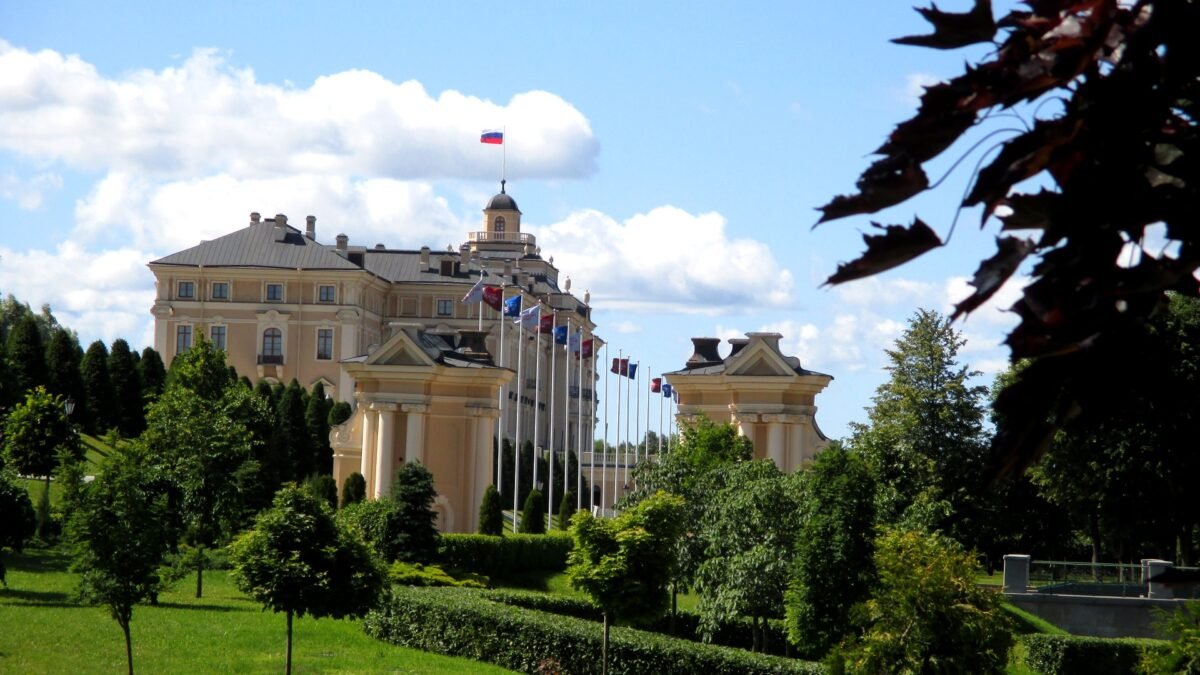
Russia frees detained American teacher as envoy talks begin
Russia has freed Stephen Hubbard, the 74-year-old retired American teacher held in Russian custody for more than four years on charges of fighting as a mercenary in Ukraine, with his release announced during a meeting between President Vladimir Putin and United States special envoy Steve Witkoff in St Petersburg on Wednesday.
Putin told Witkoff at the Constantine Palace that Hubbard had been released and was at St Petersburg’s Pulkovo airport, according to Reuters. A video shared with CNN showed Hubbard meeting Witkoff and Russian negotiator Kirill Dmitriev at the airport on Wednesday, with the former teacher standing and walking on his own. A US official told CNN that Hubbard was out of Russia and on his way back to the United States.
President Donald Trump confirmed the release in a Truth Social post, writing: “Stephen is on his way back home and will soon be with his family.” He added: “The United States, out of respect for President Trump, was not required to give anything in return — an unprecedented situation for Russia. There was no ‘swap’ necessary for this release … Welcome home Stephen, it’s great to have you back,” according to The Times.
Witkoff thanked Putin in the televised opening of the talks, saying: “I wanted to thank you very much. The president sends his thanks. Our whole nation sends it’s thanks… Because of you, he’s going home to his family.” The envoy went on to call Putin a “humanitarian”, according to CNN.
Four years in custody, charges Washington called fabricated
Hubbard, a Michigan native, had been living in the Ukrainian city of Izyum since 2014 when he was seized from his home by Russian forces in April 2022, just weeks after Russia’s full-scale invasion, according to Reuters. Russian prosecutors alleged he had signed up to a Ukrainian territorial defence unit, received training, weapons and ammunition, and was promised $1,000 a month, and Russian state media reported that he pleaded guilty.
His family and the US State Department said the charges were fabricated. His US-based lawyer, Martin De Luca, previously told Reuters that Hubbard had told him the charges against him were false and that he was not in any combat or military unit. In a 2024 interview with Reuters, Hubbard’s sister, Patricia Fox Hubbard, disputed the idea that her brother had taken up arms for any government, calling him “so non-military” and pointing to his advanced age. The Biden administration designated Hubbard as wrongfully detained.
After a closed-door trial, Hubbard was sentenced in October 2024 to six years and ten months in a penal colony on mercenary-activity charges, according to Reuters. As of Wednesday, he was the only US prisoner held by Russia who was designated by Washington as “wrongfully detained”. His family had previously expressed concern over his health, and CBS News reported that Hubbard, who is in poor health, was expected to be flown to Texas for treatment at a military hospital, according to the New York Post.
“I’ve been talking to President Putin about Mr Hubbard”
Trump had signalled the release was imminent a day earlier. “I’ve been talking to President Putin about Mr. Hubbard. I’ve been talking to him at length. I’ve asked him to release him. Let’s see what happens,” Trump told reporters at the White House on Tuesday, according to The Times.
In his Truth Social post, Trump also tied the release to his decision to waive US sanctions against Russia last week, writing: “If sanctions would have been placed, certainly those negotiations would have come to a complete and total halt,” according to The Times. The waiver drew bipartisan criticism in the US, according to CNN.
A three-hour meeting, and an agenda that went far beyond Hubbard
The St Petersburg talks ran for around three hours, the ninth time Witkoff has met Putin in person, according to Reuters. The agenda spanned Russia’s willingness to help resolve tensions over Iran, potential Russian fertiliser exports to the United States, and the future of peace negotiations over Ukraine.
Witkoff urged Putin to consider resuming trilateral peace talks between the US, Russia and Ukraine. “One thing that I hope to accomplish today is to have some good conversation between us about the resumption potentially of trilateral talks between Ukraine and Russia and the United States,” Witkoff told Putin, according to Reuters. “Even if we don’t have a resolution today, if we just talk about and sort of consider what that next step might be I think that would be important and the world is waiting to hear that.” The Kremlin later said Russia was willing to resume trilateral talks in November, according to CNN.
Putin offered to help Trump in dealing with Iran, saying Russia had a decades-long relationship with Tehran that it had repeatedly offered to leverage over US concerns about Iran’s nuclear programme, according to Reuters. He also said Russia could supply large quantities of fertiliser to the United States to help American farmers, and raised the prospect of a potential meeting in China next month with Trump that the Kremlin has suggested could also include Chinese President Xi Jinping.
Jared Kushner, Trump’s son-in-law who has also been involved in the peace negotiations, joined the meeting remotely after contracting flu, according to CNN.
The backdrop: Oslo progress and a strained US-Ukraine relationship
The St Petersburg meeting came a day after Witkoff met Ukrainian President Volodymyr Zelensky in Norway on Tuesday. A US official told CNN the Oslo talks had made “meaningful progress”, with Ukraine bringing “new ideas and proposals, which were discussed in detail”, and the two sides now in “strong alignment” on next steps. The discussions covered a comprehensive peace framework including long-term security guarantees for Ukraine, a post-war economic and prosperity plan, and a broader European security architecture, according to CNN.
But Kremlin aide Yuri Ushakov poured cold water on those discussions on Wednesday, saying the positions held by Kyiv and European allies “contained little of actual value for resolving the Ukrainian crisis”, according to CNN. Ukraine and its allies have reiterated Kyiv’s red lines for any negotiations: future security guarantees to ensure Russia does not invade again, and a rejection of any demands to give up territory Ukraine controls.
The talks also unfolded against a strained US-Ukraine relationship. Kyiv has accused Washington of limiting intelligence sharing on incoming Russian missiles, slowing vital Starlink services and delaying weapons supplies, according to CNN. The latest encounter comes more than two years after Trump promised during his successful election campaign to end the Ukraine war within 24 hours, according to Reuters.
Analysis: Why It Matters
1. A release with no swap is unusual — and deliberate
American prisoners in Russia have, in recent years, overwhelmingly come home through exchanges, with each side trading detainees it had been holding. Trump’s insistence that “there was no ‘swap’ necessary” — an “unprecedented situation for Russia” — is therefore doing real political work. It frames the release not as a transaction between adversaries but as a unilateral gesture made “out of respect” for the US president personally. That framing serves both sides: Moscow gets to present itself as acting in good faith, and Washington gets to claim a win that cost it nothing. The question is whether one gesture becomes a pattern. Advocacy groups have already pressed Washington to keep seeking the return of other Americans who remain detained in Russia, and Hubbard’s freedom will be cited by both supporters and critics as the yardstick against which the next case is measured.
2. The choreography mattered as much as the content
Putin did not bury the announcement in a joint statement at the end of the day. According to Reuters, the talks began with the goodwill gesture: Russia opened with Hubbard’s release and only then moved to the harder dossier. That is textbook negotiation sequencing — lead with a concession to create a constructive atmosphere, then spend the hours on territory, security guarantees and the rest. It also put Witkoff in the position of thanking Putin on camera before any hard bargaining began, a visual Moscow will be content to have circulated. None of this resolves the underlying disputes, but it does show that both sides currently find value in being seen to be talking — and in giving the other side something to take home.
3. “Humanitarian” is a loaded word
Witkoff’s decision to praise Putin as a “humanitarian” on television — the Russian president is subject to an International Criminal Court arrest warrant — will be read in at least two very different ways. In Washington, it is the register of deal-making: lavish praise as lubricant, designed to keep a negotiation partner at the table. In Kyiv and European capitals, it will land as the register of legitimation: language that softens the standing of a leader whose forces continue to strike Ukrainian cities. The tension between those two readings is the defining feature of Trump’s Russia diplomacy — engagement that critics call cosying up to Moscow and supporters call the only way wars end. Expect this sentence to be quoted back repeatedly if and when the talks falter.
4. Process is racing ahead of substance
The flurry of meetings — Oslo on Tuesday, St Petersburg on Wednesday, a possible trilateral resumption in November — creates an impression of momentum that Witkoff himself invoked. But Ushakov’s blunt dismissal of the Oslo output, and Ukraine’s insistence on security guarantees and no territorial giveaway, underline how little has actually moved on the questions that decide wars. The ancillary items on the St Petersburg agenda are revealing in their own way: fertiliser exports for US farmers, an Iranian mediation channel, a possible three-way meeting with Xi in China. Russia is offering Trump a package of deliverables that are politically useful at home while the core dispute — what ends the war in Ukraine — remains where it was. Watch whether November produces a real negotiating session with technical working groups and verifiable commitments, or simply another round of televised handshakes.
5. The sanctions question is now the central argument
Trump’s claim — that imposing the waived sanctions would have brought the Hubbard negotiations to “a complete and total halt” — turns the release into evidence for a specific theory of statecraft: that pressure and engagement cannot run at the same time, and that waiving the stick was the price of the carrot. Critics who attacked the waiver as bipartisan folly will counter that leverage given away in advance is leverage lost, and that a prisoner Moscow may well have intended to release anyway should not buy sanctions relief. Hubbard’s homecoming is now, unavoidably, the first exhibit in that debate. Which interpretation hardens will shape how Congress and European allies respond to the next waiver, extension or escalation — and whether sanctions remain a tool of pressure or become, in practice, a bargaining chip.
What to Watch Next
- The November trilateral: Whether Russia’s stated willingness to resume three-way talks actually produces a scheduled session — with a format, attendees and an agenda — or remains a Kremlin talking point.
- Hubbard’s recovery: His reported transfer to Texas for medical treatment, and whether he or his family makes a public statement about his years in custody.
- The other detainees: With Hubbard no longer the sole “wrongfully detained” American in Russia’s hands, advocacy groups will press Washington on who comes next and how.
- Oslo’s “new ideas”: Whether the proposals Ukraine brought to the Norway talks emerge publicly, and how they square with Kyiv’s stated red lines on guarantees and territory.
- The sanctions lever: Whether the waived measures return, and how the proposed Trump meeting in China — possibly with Xi — shapes the diplomacy around both Ukraine and Iran.
Sources
- CNN: “Russia frees 74-year-old American Stephen Hubbard captured in occupied Ukraine”
- CNN: “Russia willing to resume trilateral peace talks in November, Kremlin says after Witkoff meeting”
- The Times: “Trump envoy thanks ‘humanitarian’ Putin after release of retired teacher”
- Reuters (via 935 The Lloyd): “Putin hosts Trump envoy for new Ukraine peace talks, frees US citizen held in Russia”
- New York Post: “Russia frees imprisoned US citizen Stephen Hubbard after plea from Trump”

About the Author — Abdul Mannan
Related Articles

Indonesia Erupts in Protest as Wildfire Haze Chokes Southeast Asia
Nationwide student protests erupt on President Prabowo's second anniversary as wildfires and toxic haze choke Southeast Asia in…
Georgian Court Begins Hearings on Bid to Ban Five Main Opposition Parties
Georgia's Constitutional Court in Batumi has begun three days of hearings on a ruling-party lawsuit seeking to outlaw…
Witkoff to Meet Putin in St Petersburg With Updated Peace Proposal After ‘Constructive’ Oslo Talks
US envoy Steve Witkoff will meet Vladimir Putin in St Petersburg on Wednesday with an updated peace proposal,…