
Britain Approves Long-Delayed Jackdaw Gas Field in North Sea, Pairing Decision With £2 Billion Clean-Energy Fund

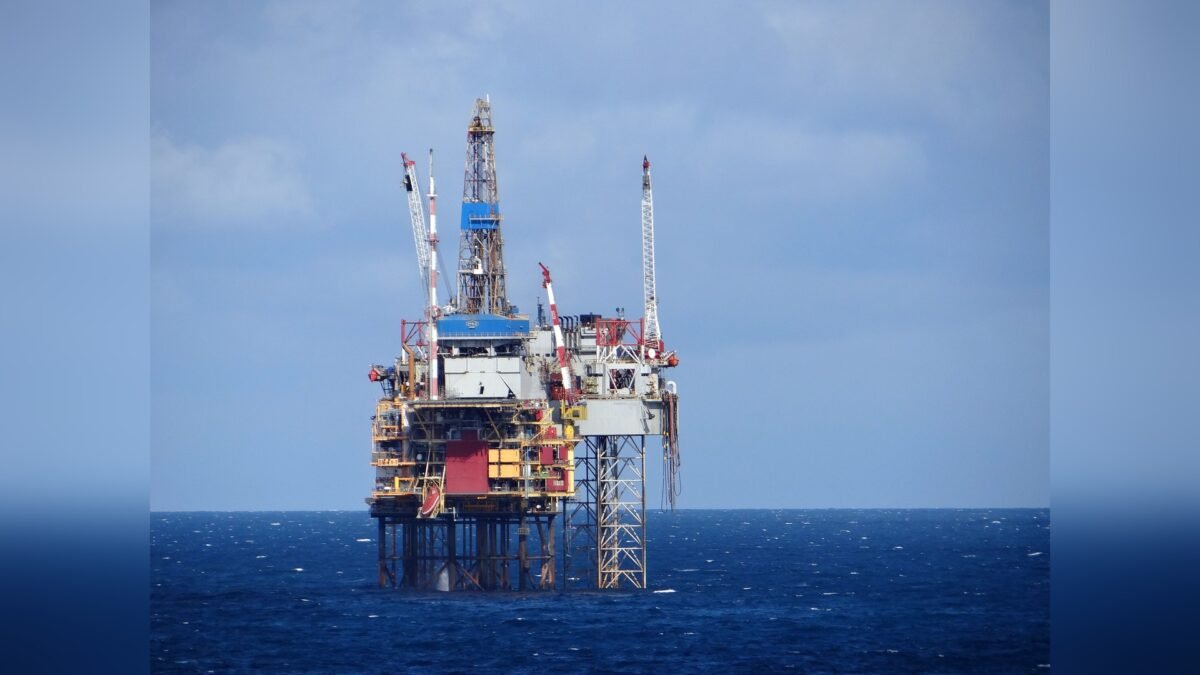
Decision Ends Years of Legal Battles
The British government on Wednesday approved the long-delayed Jackdaw gas field in the North Sea, ending years of legal and political wrangling that had pitted the Labour government’s climate commitments against its drive to strengthen energy security, according to Reuters.
Energy Security and Net Zero Secretary Miatta Fahnbulleh gave the green light to the scheme and confirmed that the regulator, the North Sea Transition Authority, could now formally approve the project, with gas expected to start flowing to British homes and businesses within weeks, possibly by the end of the month.
Jackdaw, operated by Adura — the joint venture between Shell and Norway’s Equinor — will produce up to 40,000 barrels of oil equivalent of natural gas per day at peak output, according to Adura, and is expected to supply roughly 6 per cent of Britain’s North Sea gas production. The company says the field represents about £2.1 billion of investment and could heat the equivalent of around 1.4 million UK homes at peak production.
Prime Minister Andy Burnham described the decision as “pragmatic”, saying it would “protect hundreds of jobs and help keep millions of homes warm this winter”, while stressing that it would not hinder the government’s renewable-energy targets. “At a time when people are really struggling, it’s right that we look in a responsible way at maximising the existing energy reserves we have in Britain that could help,” he said.
The announcement came alongside the creation of a new Energy Wealth Fund, backed with an initial £2 billion downpayment, which will channel North Sea tax revenues into renewable and low-carbon projects. “I want Britain’s energy wealth to spark a new wave of clean power,” Chancellor John Healey said in a social media post, adding that the decision meant “we invest in green transition and benefit from our existing natural resources.”
A Field Stuck in Courtrooms for Years
The approval closes one of the most contested chapters in recent British energy politics. The previous Conservative government first approved Jackdaw in 2022, but climate campaigners Greenpeace and Uplift challenged the decision in court, alongside the approval for the Rosebank oil and gas field off Shetland. The Scottish courts overturned the licences after the UK Supreme Court ruled that developers must account for the climate impact caused by the burning of fossil fuels in their planning applications — so-called downstream emissions.
Fresh applications were lodged in 2025, and a fresh round of public consultations on the proposals took place this year and closed in August, the Press Association reported. The government’s decision on Wednesday morning was the first approval under the tougher regime.
Environmental groups reacted swiftly. The Green Party leader, Zack Polanski, condemned the decision as “climate vandalism”, calling it “a betrayal of all of our futures” and saying Labour had “abandoned all credibility in the fight against climate change”. Ami McCarthy, head of politics for Greenpeace UK, said approving Jackdaw “shows the toxic grip fossil fuel lobbyists still hold over our energy policy”, adding that the project “won’t lower energy bills, won’t boost energy security and will create just 27 full-time jobs”.
Tessa Khan, executive director of the campaign group Uplift, said Labour’s climate credibility was now “on the line” with Rosebank becoming the defining test. “Approving it would see the Government knowingly breach safe climate limits,” she said. WWF chief impact officer Kate Norgrove called the decision “disappointing” and urged the government to reject Rosebank, “the even more damaging” scheme.
The pressure extended into Labour’s own ranks. Labour MP Alex Sobel said the field “won’t draw gas for many years”, would not affect global prices and would send “mixed messages” on investment in renewables and home-heating decarbonisation. Fellow Labour MP Richard Burgon described the approval as “an absolutely terrible decision” that would “do nothing to lower people’s energy bills or improve our energy security”, insisting that “investing in renewable energy is the way to do that”.
Industry figures welcomed the move. Neil McCulloch, chief executive of Adura, said: “Jackdaw represents a significant prize in its own right: £2.1 billion of investment and enough gas to heat the equivalent of around 1.4 million UK homes at peak production. Our attention now turns to Rosebank. It follows Jackdaw in the regulatory process, but the case for approval is equally strong.” The Unite union also welcomed the decision.
Trump Claims a Win
The decision was quickly claimed as a victory by US President Donald Trump, who has repeatedly urged British leaders to expand drilling in the North Sea. In a post on Truth Social on Wednesday morning, Trump wrote: “Great news for the wealth and prosperity of the United Kingdom, and the wonderful region of Aberdeen. The UK has started drilling in the North Sea, one of the greatest and most prosperous areas of OIL in the World. They should go FULL BLAST!!! This will make the UK very wealthy again,” according to the New York Post.
Trump, who has pushed British leaders for years to “open up” the North Sea, has made cheaper energy a central theme of his dealings with London. The timing is notable: Britain is grappling with high energy costs for households and industry, with the Iran war continuing to stoke energy prices, according to Reuters.
The Rosebank Question
Attention has already turned to Rosebank, the largest untapped oil field in the North Sea, on which the government is making a separate decision. Fahnbulleh drew a deliberate distinction between the two projects, telling BBC Radio Scotland: “Jackdaw is producing gas that predominantly is used in the domestic market, Rosebank is a different proposition because it is oil that is exported.”
“This decision will support the country’s energy security with homegrown gas this winter and help minimise the UK’s use of imported higher emission fuels as we continue our transition to renewables and nuclear,” Fahnbulleh said. “The decision is compatible with our legally binding climate commitments, and we remain resolute in ending new licences for oil and gas and achieving net zero by 2050.”
That pledge matters politically. Labour’s 2024 manifesto committed to issuing no new oil and gas licences for the North Sea. Ministers and proponents of Jackdaw have argued that neither Jackdaw nor Rosebank count as new fields, given that the wheels were in motion to tap them before Labour came to power. Fahnbulleh acknowledged the approval would not bring down household bills — even as the government estimated the field would deliver an economic boost of around £2.9 billion, according to the Press Association.
Analysis: Why It Matters
Burnham’s balancing act gets its first real test
Andy Burnham has been prime minister for barely three months, and Jackdaw is the first decision that forces him to choose between two of his government’s defining promises: cheaper, more secure energy and credible climate leadership. He chose both — approving the field while launching the £2 billion Energy Wealth Fund — but the two halves of the announcement were aimed at different audiences. The fund is the political sweetener designed to keep environmentalist Labour MPs onside; the approval itself is aimed at voters worried about bills and jobs, and at a US president who has made British drilling a personal crusade.
The law reshaped the field — but not its fate
What is striking is how the legal battle transformed the project without stopping it. The 2025 court rulings forced the government to assess the emissions from burning Jackdaw’s gas — the downstream accounting that environmental lawyers hoped would make such approvals politically impossible. The government did the accounting, held the consultations, and approved it anyway. That sets a precedent: fresh consent under tougher rules is still consent. Campaigners will have noticed.
The numbers nobody agrees on
The debate over Jackdaw’s value hinges on numbers that each side frames differently. The government and Adura cite roughly 6 per cent of North Sea gas output, up to 40,000 barrels a day, 1.4 million homes heated and a £2.9 billion economic boost. Greenpeace counters with a far narrower figure: just 27 full-time jobs. Both can be true — the field is capital-intensive, mostly automated once producing, and the wider supply-chain and tax-revenue effects accrue differently from headcount. But the clash of statistics shows why energy politics now trades in rival arithmetics rather than shared facts.
A warmer world, a colder winter
The approval landed in the same week Britain experienced its hottest summer on record and the United Nations declared the 1.5°C climate target effectively gone — a juxtaposition the government clearly anticipated, hence the Energy Wealth Fund’s unveiling in the same breath. Burnham’s argument is that domestic gas displaces imported, higher-emission liquefied natural gas shipped around the world, making Jackdaw the lower-carbon option within a realistic transition. Critics argue that argument only holds if the fund’s green investment genuinely materialises — otherwise the fund is simply the price of buying permission to drill.
Rosebank is the real vote
Everything about the Jackdaw announcement — the fund, the careful language about net zero, the explicit Jackdaw-versus-Rosebank distinction — suggests the government already has one eye on the next, harder decision. Rosebank is oil for export, not gas for British boilers, and rejecting the climate campaigners’ case there will be far more difficult to frame as pragmatic. As Tessa Khan put it, Labour’s climate credibility is now on the line — and credibility, unlike gas, is not something you can extract from a field.
What to Watch Next
- The formal go-ahead from the North Sea Transition Authority, expected imminently, and the first flow of gas — promised within weeks.
- The separate Rosebank decision, which Adura is pressing for with the argument that the same rigorous process should yield the same answer.
- Whether the £2 billion Energy Wealth Fund’s initial investment choices convince sceptical Labour MPs and campaigners that the green half of the bargain is real.
- Legal challenges: Greenpeace and Uplift have shown they will litigate every stage, and a new judicial review of the downstream-emissions assessment cannot be ruled out.
- The Autumn Budget on October 28, where Chancellor Healey must show how energy-security spending and net-zero investment fit inside a sharply constrained fiscal envelope.
Sources
- Reuters: “UK approves long-delayed Jackdaw gas field”
- Press Association (via Oldham Times): “Jackdaw gas field approval triggers backlash from environmentalists”
- Press Association (via Gazette & Herald): “Jackdaw gas field approved as Government seeks to improve energy security”
- New York Post: “Britain approves massive North Sea drilling project under Trump pressure”

About the Author — Abdul Mannan
Related Articles
UK Inflation Hits 3.5% and National Debt Crosses £3 Trillion in Brutal Pre-Budget Double Blow
Britain’s economy has been dealt a brutal double blow exactly one week before Chancellor John Healey delivers his…
King Charles Praises Sultan of Oman’s ‘Noble Efforts’ to Keep Strait of Hormuz Open at Windsor State Banquet
King Charles used the Windsor state banquet for Sultan Haitham bin Tariq of Oman to praise Muscat's 'noble…

Two Men Re-Arrested in RAF Fairford Plot Investigation as UK Police Say Iranian State Involvement ‘Highly Likely’
Counter-terrorism police have re-arrested two men on suspicion of assisting Iran's foreign intelligence service over the suspected plot…