
King Charles Praises Sultan of Oman’s ‘Noble Efforts’ to Keep Strait of Hormuz Open at Windsor State Banquet

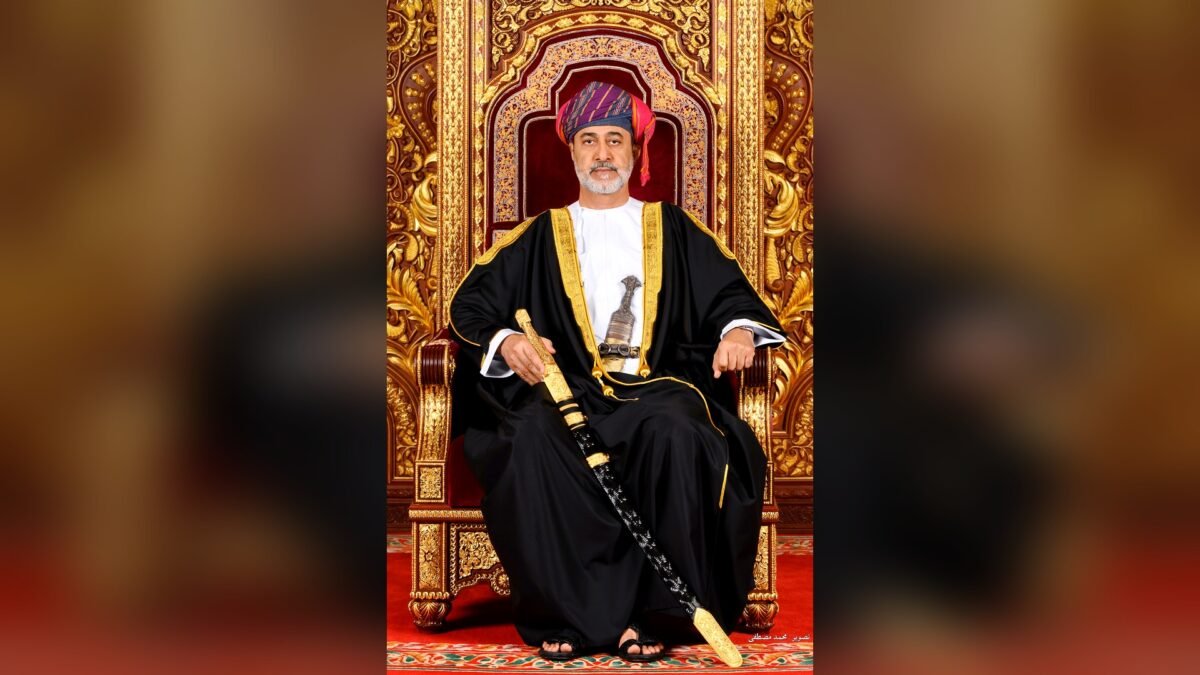
A state visit 44 years in the making
King Charles III used the glitter of a Windsor state banquet to deliver one of the most pointed diplomatic messages of his reign on Tuesday night, telling the Sultan of Oman that the world owes his country gratitude for trying to keep the Strait of Hormuz open. In a toast before around 160 guests in St George’s Hall, the King praised the “noble efforts” of Sultan Haitham bin Tariq Al Said to hold open “one of the world’s most important shipping routes”, saluting Oman’s “constructive neutrality” at a moment when access to the Gulf’s narrow maritime corridor has become one of the sharpest points of tension in the Middle East.
The banquet was the centrepiece of the first day of the first state visit to Britain by a ruler of Oman in 44 years, according to royal correspondents covering the event. The Sultan, who arrived at Windsor Castle earlier on Tuesday, sat between the King and the Princess of Wales at the top table of a 50-metre-long table laid with 480 knives, 480 forks and 160 spoons, under a dragon candelabra commissioned in 1833 by King William IV.
“I would especially like to recognise, at a time when conflict has returned so painfully to the region, Oman’s enduring commitment as a trusted interlocutor to all parties,” Charles told the room, in remarks reported by The Times and other outlets present. “Oman’s noble efforts in trying to keep open one of the world’s most important shipping routes have been of great service to the whole international community, and particularly to the most vulnerable of those affected.”
The King added: “Oman’s role across the Gulf and her ‘constructive neutrality’, as you put it, matters far beyond Hormuz, and is worthy of our utmost respect.”
Speaking warmly of the two countries’ long history, he said: “Oman is one of Britain’s oldest allies and, after all these years, I pray, one of your closest friends.” It was, he said, “a treasured moment to receive dear and old friends”.
Arabic, a Prophet’s words, and a soft drink for the toast
Those present described a speech deliberately tailored to its guest. The King spoke in Arabic at points during the toast, including a quotation from the Prophet Muhammad, prompting what The Times described as smiles and nods from the Sultan — a gesture of cultural respect that set the tone for an evening carefully blended between British and Omani custom.
That blending was visible on the table as much as in the words. There was no bespoke after-dinner cocktail, the traditional signature of recent state banquets. In its place, the royal kitchens created an Omani-inspired kahwa — a lightly spiced Arabic coffee served with dates — for the start of the evening, and three special tea blends for its close: an iced Earl Grey with date, an iced mint with rose water, and a warm cardamom-spiced blend sweetened with Windsor honey.
The Sultan, a Muslim who does not drink alcohol, toasted the King with a soft drink, while fine wines — including a 1979 Château Margaux and a 1998 Taittinger Comtes de Champagne, according to royal reports — were poured for the guests who wanted them. Salt dishes at the table carried a light imprint of the King’s royal cypher, a new addition for the visit.
The menu itself drew from across the King’s estates: a croute of Scottish langoustine and Cornish crab with avocado, tomato consommé and celery; pot-roasted Windsor pheasant in a Dijon mustard sauce with spiced quince, stuffed cabbage and braised fondant potatoes; and baked Alaska with Balmoral plum and Windsor Estate honey ice cream for dessert.
Tiaras, tailcoats and the Order of Al Said
The dress code was white tie, and the royal family did not hold back. Queen Camilla wore a bright blue gown with the Girls of Great Britain and Ireland tiara — one of Queen Elizabeth II’s favourite jewels, a wedding present originally given to the Duchess of York in 1893. The Princess of Wales paired a butter-yellow Elie Saab gown with the Queen Mary’s Lover’s Knot tiara, the diamond-and-pearl piece made famous by Diana, Princess of Wales. Earlier in the day, when greeting the Sultan at Windsor, she had worn a long green Alexander McQueen coat and pinned Princess Diana’s Queen Alexandra Three Feathers brooch to it, a nod to her late mother-in-law’s 1981 wedding jewels.
Both the King and the Prince of Wales wore the Windsor tailcoat with its distinctive scarlet collar and cuffs. Charles also wore the insignia of the Order of Al Said, the Omani honour which the Sultan had presented to him earlier in the day — a visible emblem of the day’s reciprocity.
Eight working members of the royal family attended, including the Princess Royal, the Duke and Duchess of Gloucester, and senior political figures: Prime Minister Andy Burnham was present, marking his debut state banquet since taking office, alongside Dame Emily Thornberry, the chief of MI6 Blaise Metreweli, and the chief executives of Shell, BP and Airbus. From the Omani side, guests included the Sultan’s son Sayyid Theyazin bin Haitham Al Said, walking with the Queen in the procession, and Olympic sailor Mohsin Al Busaidi and athlete Mazoon Al Alawai.
The King drew attention to the sons on both sides. He told the Sultan he had been “especially delighted to see our sons, the Prince of Wales and His Highness Sayyid Theyazin, become joint patrons of the Jewel of Arabia Expedition”, a project highlighting Omani culture and environment. “There can be few happier symbols of success,” he said, “than a living relationship being passed from one generation to the next.”
The Sultan’s answer: dialogue, not conflict
The Sultan’s reply was brief but pointed. “In a region that has known too much conflict, Oman has chosen a different path, an independent path,” he said. “Britain has been a friend on this path and has stood beside us in this duty.” Oman, he added, “seeks solutions … we believe in dialogue”.
That message landed against an unusually urgent strategic backdrop. Oman sits astride the Strait of Hormuz, the narrow waterway through which a huge share of the world’s seaborne oil moves, and Britain maintains a strategic naval base at the Omani port of Duqm. Since the US–Israel war against Iran began in late February, Muscat has acted as a mediator in talks between Washington and Tehran, a role Britain and its allies have every reason to keep alive as military pressure in the Gulf builds.
The diplomacy continues in plainer clothes on Wednesday: the Sultan is due at Downing Street for talks with Prime Minister Burnham, with security, trade and investment expected to top the agenda, while members of his delegation meet British business leaders.
It was also, noted The Times, the first incoming state visit since the Duke and Duchess of Sussex returned to the UK. As private individuals, the couple do not take part in royal engagements.
Analysis: Why It Matters
1. Statecraft, served with tea
A state banquet is never just a dinner, and this one was choreographed as a message. By swapping the customary bespoke cocktail for kahwa and date-sweetened teas, by having the Sultan toast with a soft drink without apology or fuss, and by the King speaking Arabic and quoting the Prophet Muhammad, Windsor turned ceremony into vocabulary: respect, rendered in the guest’s own idiom. None of this is accidental. Every state visit uses symbolism; the choice here — to make the Omani elements the evening’s signature rather than an accommodation — tells you how hard London is courting Muscat right now. When a King learns your phrases, he is telling your region’s other capitals something too.
2. Why Oman is suddenly indispensable
The speech’s centre of gravity was not the pageantry but the strait. “Noble efforts” to keep Hormuz open is diplomatic language with a hard edge: it is a public thank-you to the one Gulf capital still talking to almost everyone, and a quiet signal to Washington and Tehran alike that Britain values the channel Muscat keeps open. Oman’s “constructive neutrality” — the Sultan’s own phrase, quoted back to him by the King — is easy to romanticise, but it is really a working asset: a mediator needs credibility with all sides, and Oman has spent years building precisely that. In a Gulf where tankers are being hit and oil routes are being squeezed, a trusted telephone line is infrastructure. The banquet was Britain investing in that infrastructure in public.
3. The generational insurance policy
Charles’s praise for William and Theyazin’s joint patronage of the Jewel of Arabia Expedition was the most personal passage of the night, and it served a strategic purpose. Alliances between states are renewed — or allowed to wither — between generations. By publicly anointing the heirs’ friendship as a “happier symbol of success”, the King was writing the next chapter of the relationship before the current one ends. It is the soft-power equivalent of a joint venture: bind the successors early, and the partnership survives whoever sits on either throne in twenty years’ time.
4. A debut at the top table for Burnham
For Prime Minister Andy Burnham, the banquet was a first outing on the most traditional stage in British public life — and, more importantly, a first private audience with a Gulf ruler whose cooperation his government may soon need. The Sultan comes to Downing Street on Wednesday for the real business: security cooperation, trade and investment. But the Tuesday-night symbolism matters for Burnham too: a new prime minister photographed at ease among tiaras and tailcoats signals continuity to foreign capitals, even when the domestic politics at home are anything but settled. Expect the Wednesday talks to produce the concrete deliverables — defence understandings, investment pledges — that banquets are designed to warm up.
5. The interview that shared the day
No modern royal event happens in a vacuum, and this one shared its day with the release of a GQ interview in which the Duke of Sussex said he wants to “work it out” with his father and brother. A spokesman for the Sussexes said the interview was recorded in September and that its Tuesday publication was GQ’s decision, not theirs — but in the compressed economy of royal news, timing is rarely read as coincidence. The palace’s response was the banquet itself: carry on, smile, and let the pageant do the talking. It is worth noting what the coverage chose to foreground instead — a King praising a peacemaker, a Prime Minister at the table, tiaras from the late Queen’s collection. In the contest for the day’s narrative, Windsor offered ceremony as a counter-programme. Whether that was the plan or merely good fortune, it worked: the world’s cameras stayed in St George’s Hall.
What to Watch Next
- The Downing Street talks: Wednesday’s Burnham–Haitham meeting is where the banquet’s warmth gets priced. Watch for announcements on defence cooperation, Duqm base arrangements, and Omani investment into Britain.
- Hormuz diplomacy: the King publicly banked on Oman’s mediator role. Any movement in the US–Iran channel via Muscat in the coming weeks will show whether that praise was retrospective or anticipatory.
- Britain’s own Gulf posture: the UK is separately preparing to deploy RAF Typhoons to defend Saudi Arabia from Houthi attacks — the military track running alongside the diplomatic one.
- The succession storyline: whether the William–Theyazin patronage project gets follow-up outings, turning a nice speech line into a durable institutional link.
- The Sussex question: with Harry’s reconciliation remarks now public, watch whether any royal channel — public or private — acknowledges them, or whether the official silence holds.
Sources
- The Times — “King Charles praises Sultan of Oman’s ‘noble efforts’ on Strait of Hormuz”
- USA Today — “Princess Kate dazzles in Princess Diana’s iconic tiara at state dinner”
- People — “Queen Camilla Sports One of Queen Elizabeth’s Favorite Tiaras for State Banquet at Windsor Castle”
- Jamaica Inquirer — “King Charles welcomes Omani sultan, hails peace efforts in UK state visit”
- Hello! — “King Charles hosts state banquet for the Sultan of Oman”

About the Author — Abdul Mannan
Related Articles
Two Men Re-Arrested in RAF Fairford Plot Investigation as UK Police Say Iranian State Involvement ‘Highly Likely’
Counter-terrorism police have re-arrested two men on suspicion of assisting Iran's foreign intelligence service over the suspected plot…
Covid Inquiry Finds UK Care Home Residents Were ‘Sacrificed’ as Virus ‘Spread Like Wildfire’
Baroness Hallett's sixth report finds care homes were an 'afterthought' as protecting the NHS was prioritised, rejecting Matt…
UK Unemployment Falls to 4.7% in Pre-Budget Boost, but Job Vacancies Sink to Five-Year Low
Official figures show the UK jobless rate fell to 4.7% in the three months to August, but vacancies…